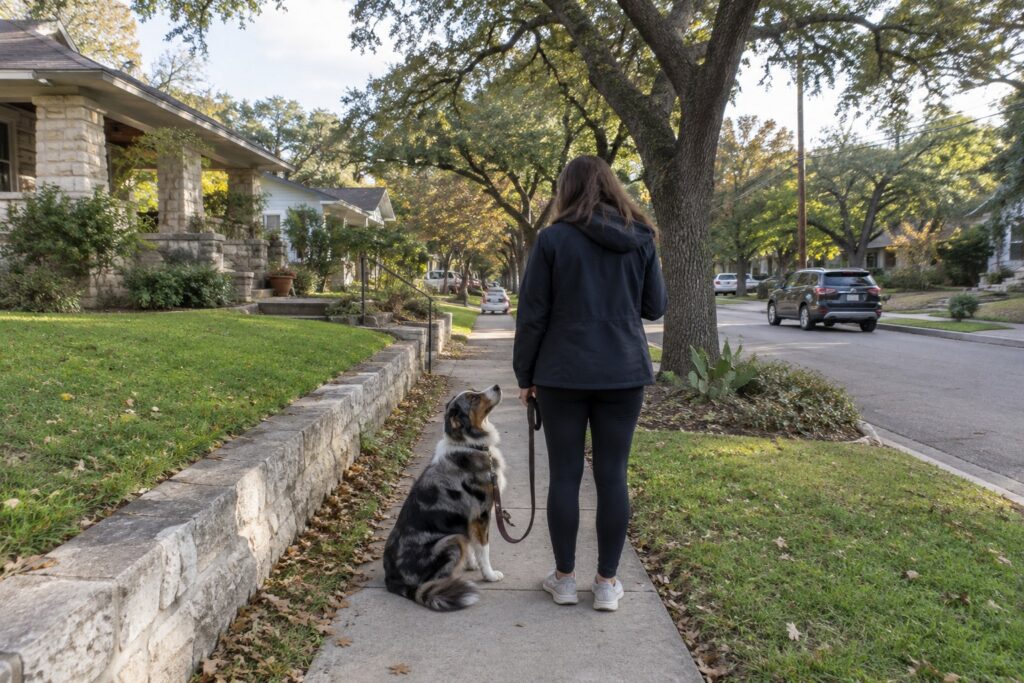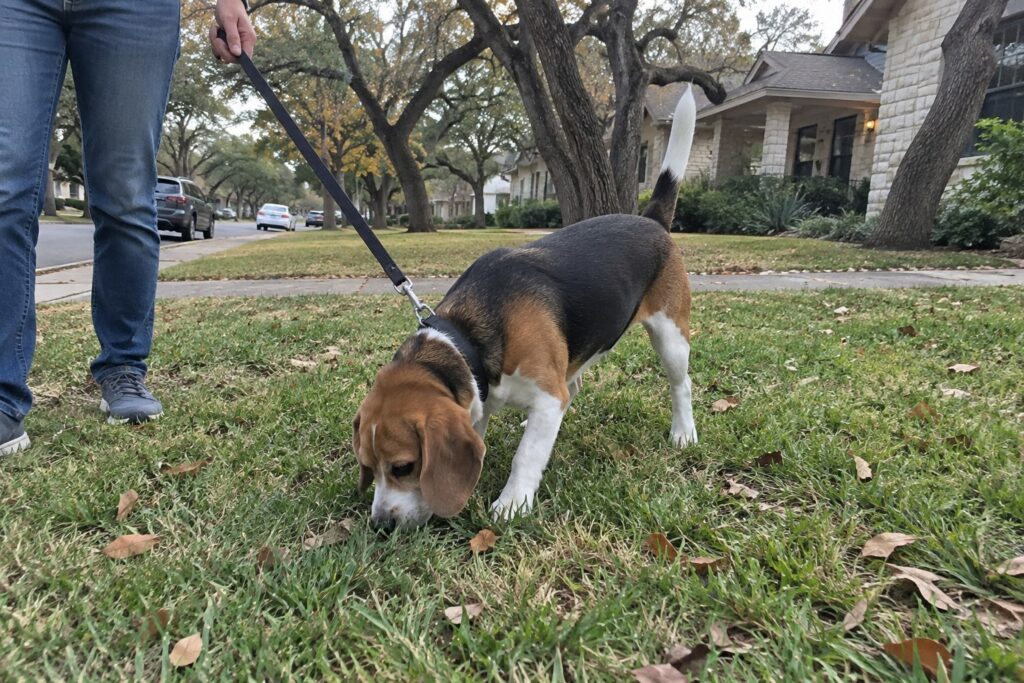

If your dog lunges, barks, or pulls aggressively when passing other dogs or people on a walk, you are not alone. Leash reactivity is one of the most common behavioral challenges that Austin dog owners bring to professional trainers, and it is one of the most misunderstood.
Many owners assume their reactive dog is aggressive, dominant, or broken in some way. In reality, leash reactivity is almost always rooted in frustration, fear, or an overflow of arousal that the dog does not have the skills to manage. Understanding what is driving the behavior is the first step toward addressing it effectively.
At All Dogs Unleashed, we work with leash reactive dogs throughout the Austin area and have helped hundreds of owners reclaim calm, enjoyable walks. Here is what you need to know about leash reactivity and how professional training can make a lasting difference.
What Is Leash Reactivity?
Leash reactivity refers to an exaggerated or intense behavioral response to a trigger (usually another dog, a person, a cyclist, or a vehicle) that occurs specifically while the dog is on leash. The response typically includes lunging, barking, growling, spinning, or hard pulling toward or away from the trigger.
The key distinction is that the behavior is leash-specific. Many dogs that appear highly reactive on leash are actually fine off-leash with other dogs or with strangers in a controlled environment. This inconsistency points to the leash itself as a variable, and that makes sense once you understand what the leash does to a dog’s behavioral options.
Why the Leash Matters
Dogs are hardwired with three behavioral responses to perceived threats or intense stimulation: fight, flight, or freeze. Off-leash, a dog that feels uncomfortable around another dog or person has the option to simply move away. That ability to create distance gives the dog control over the situation, which reduces anxiety.
On a leash, flight is not an option. The dog is tethered, cannot increase distance, and if it is also being held back by a handler who is tightening the leash in anticipation of the reaction, the dog receives physical feedback that confirms something threatening is approaching.
When a dog cannot escape, it escalates. What might be a brief investigation or a calm pass-by off-leash becomes explosive reactivity on leash because the dog’s only available option for managing an overwhelming situation is to make the trigger go away through noise and movement.
Common Causes of Leash Reactivity in Austin Dogs
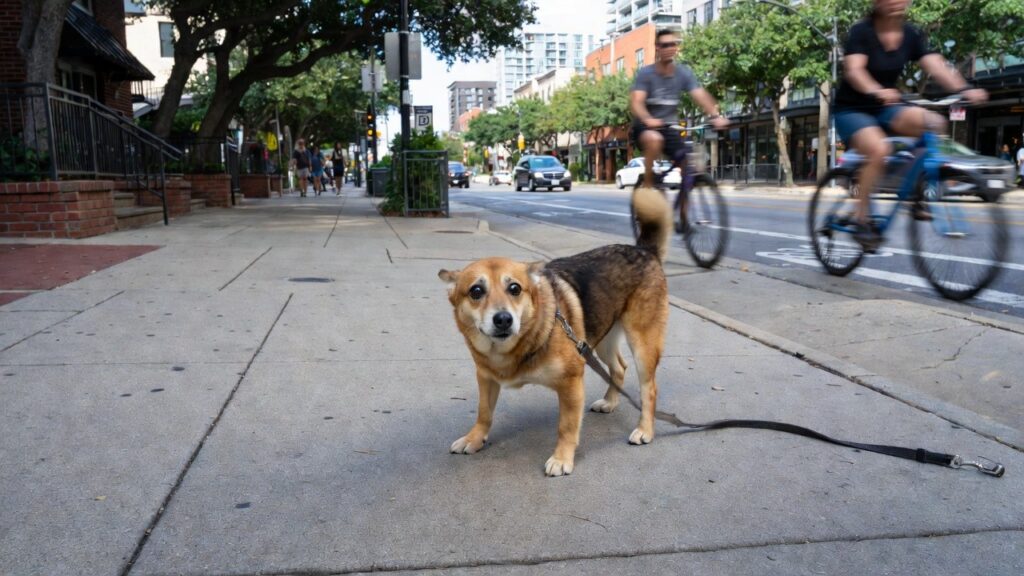
Several factors can contribute to leash reactivity, and most reactive dogs have a combination of more than one:
- Undersocialization: Dogs that did not have adequate positive exposure to other dogs, people, bikes, or vehicles during the critical socialization window (roughly 3 to 14 weeks of age) often develop over-reactive responses to these stimuli as adults. Austin’s busy urban environment, with its heavy foot traffic, cyclists, and diverse street activity, exposes these gaps quickly.
- Frustration arousal: Some leash reactive dogs are not fearful at all. They are overly excited and want to reach the other dog or person but are held back by the leash. The inability to act on the impulse generates frustration, which spills over into the reactive display. These dogs often wag their tails and try to lunge forward rather than backward.
- A history of bad experiences: A negative encounter with another dog or person on leash, even a single incident, can be enough to establish a reactive pattern. The dog learned once that another dog on leash means something scary happened, and the brain generalizes the association.
- Handler tension: Dogs read their handler’s body language and emotional state continuously. If the handler tightens the leash, holds their breath, or changes their posture every time they see another dog approaching, the dog picks up on these signals and interprets them as confirmation that the oncoming stimulus is something to be concerned about.
- Lack of impulse control training: Dogs that have never been taught how to regulate their own arousal and focus on their handler amid distractions have no framework for managing reactive impulses when triggers appear.
What Leash Reactivity Looks Like
The reactive display varies from dog to dog, but common signs include:
- Forward lunging with hard vocalization: Barking and pulling hard toward the trigger. This is common in frustration-based reactivity.
- Backward or lateral lunging: Pulling away from the trigger while barking. Common in fear-based reactivity.
- Stiff body, hard stare, low growl: A tightly held posture and fixed gaze that precede an explosive response. This is often a warning sign owners miss before the full reaction occurs.
- Spinning and frantic movement: Some dogs spin circles or move chaotically when overwhelmed rather than directing energy at the trigger.
- Air snapping: Some dogs snap at the air rather than at the trigger, a sign of extreme arousal or conflict.
It is also worth noting that reactivity exists on a spectrum. Some dogs show a brief bark and recover quickly. Others sustain a prolonged, intense response that takes minutes to de-escalate. The severity of the reactivity and the dog’s ability to recover from it are both important factors in building a training plan.
How Professional Training Addresses Leash Reactivity
Leash reactivity is treatable with the right approach, but it requires systematic, methodical work. The goal is not simply to suppress the behavior. It is to change the dog’s underlying emotional response to its triggers so that the reactive display is no longer needed.
Step 1: Identifying the Dog’s Threshold
Every reactive dog has a threshold distance, the point at which the trigger becomes too stimulating for the dog to remain calm. Training begins well below that threshold and gradually moves closer over time as the dog’s skills and confidence develop.
Pushing a reactive dog past its threshold in the name of “exposure” is counterproductive and can worsen reactivity. Professional trainers know how to identify and work within threshold consistently.
Step 2: Building Focus and Impulse Control
Before addressing the reactive trigger directly, dogs need a foundation of focus skills. This means teaching the dog to orient to the handler, maintain engagement despite distractions, and regulate arousal on cue. These skills are taught first in low-distraction environments and then gradually tested in more challenging settings.
Step 3: Changing the Emotional Association
The core of leash reactivity training is counter-conditioning: systematically pairing the trigger (at a distance) with something highly positive, like a high-value treat. Over time, the dog learns a new association. The sight of another dog on the street no longer predicts stress or frustration. It predicts something good. As the emotional response shifts, the reactive display fades.
Step 4: Proofing in Real Austin Environments
Training does not transfer to real life on its own. Reactive dog training must be practiced in the actual environments where the reactivity occurs: Austin sidewalks, parks, parking lots, and trails. Our team helps owners practice in these settings with professional support so the skills developed in controlled training translate to everyday walks.
Training Options for Reactive Dogs in Austin

At All Dogs Unleashed, we offer several options depending on the severity of the reactivity and the owner’s goals:
- Board and train programs: For dogs with moderate to severe reactivity, an intensive board and train program allows a trainer to work with the dog daily in a controlled environment, building foundational skills rapidly before the dog transitions back home.
- In-home dog training: A trainer comes to you and works directly in the environments where your dog’s reactivity occurs. This is especially effective for dogs whose reactivity is highly context-specific.
- Training programs: Our structured training programs provide a comprehensive skill-building framework that includes reactivity protocols for dogs across the spectrum.
Reclaim Your Walks With Help From All Dogs Unleashed
Leash reactivity does not have to define your dog’s walks or your experience as an owner. With the right training approach, most reactive dogs in Austin can learn to walk calmly past their triggers and enjoy their time outside.
All Dogs Unleashed is here to help. Call us at (512) 963-6017 to discuss your dog’s reactivity and find the right training program for your situation.
Frequently Asked Questions
Is leash reactivity the same as aggression?
Not necessarily. Many leash reactive dogs are not aggressive, they are frustrated, fearful, or overly excited. The reactive display can look alarming, but the underlying cause is different from true aggression and requires a different training approach. A professional assessment helps identify which is at play.
Can older dogs overcome leash reactivity?
Yes. While changing established behavioral patterns takes time and consistency, dogs of all ages can make meaningful progress with the right training approach. Older reactive dogs benefit from the same systematic counter-conditioning and focus-building work as younger dogs.
How long does it take to reduce leash reactivity?
It depends on the severity of the reactivity, the dog’s history, and the consistency of training. Some dogs show improvement within a few weeks of dedicated work. Others with deep-rooted reactive patterns may take several months of consistent practice. Progress is usually gradual but steady when the approach is correct.
My dog only reacts on walks. Should I still seek professional help?
Yes. Leash reactivity that is not addressed tends to intensify over time, not resolve on its own. Early intervention produces faster, more durable results than waiting until the behavior becomes entrenched.
About All Dogs Unleashed
All Dogs Unleashed is a professional dog training company located at 111 Congress Ave. #201, Austin, TX 78701 serving the Austin, TX area. We offer a full range of services including dog boarding, daycare, grooming, in-home training, and structured board and train programs.
Business Name: All Dogs Unleashed
Address: 111 Congress Ave. #201, Austin, TX 78701
Phone: (512) 963-6017
Website: https://www.alldogsunleashed.com/austin/