
Austin is a vibrant, loud, and sometimes unpredictable city. Summer thunderstorms roll in fast and heavy, rattling windows and setting off car alarms. The Fourth of July and New Year’s Eve bring extended fireworks displays throughout the city. Events like SXSW and ACL draw massive crowds to areas like Zilker Park and Sixth Street, filling the air with amplified music, noise, and unfamiliar energy. For most people, this is the texture of life in a city they love. For a dog with fear or phobias, it can be genuinely distressing.
Fear-based behavior is one of the most common issues dog owners face, and one of the most frequently misunderstood. Fearful dogs are not “bad dogs” or poorly trained dogs; they are dogs whose nervous systems have learned to associate certain stimuli with threat. Understanding that distinction is the first step toward actually helping them.
This guide covers the most common fear and phobia patterns seen in Austin dogs, what’s happening in the brain and body when a dog is afraid, the two primary therapeutic approaches (desensitization and counter-conditioning), and when it’s time to bring in professional support.
Understanding Fear vs. Phobia in Dogs
Fear and phobia exist on a spectrum, and the distinction matters for how you respond.
Fear is a normal, adaptive response to actual or perceived threat. A dog that startles when a car backfires and then recovers within a few seconds is experiencing a normal fear response. The reaction is proportionate and temporary.
A phobia is an excessive, disproportionate, and persistent fear response that occurs even when the stimulus poses no real threat. A dog with a thunderstorm phobia may begin showing signs of distress (panting, pacing, hiding, trembling) hours before a storm arrives, based on subtle barometric pressure changes that trigger an established terror response. The fear is not proportionate to the actual danger and does not naturally diminish over time. Phobias typically worsen without intervention.
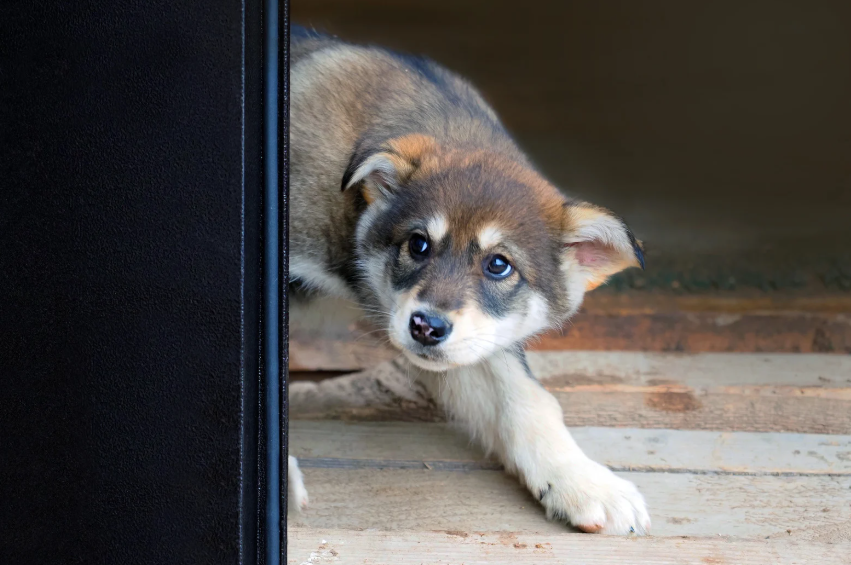
Signs of fear in dogs include:
- Trembling or shaking
- Panting when not hot
- Pacing or inability to settle
- Hiding or attempting to escape
- Excessive yawning or lip licking
- Ears flattened, tail tucked
- Loss of appetite
- Vocalization (whining, howling, barking)
- Destructive behavior during triggering events
Severe phobia responses can include self-injury (dogs that break through barriers or chew through walls to escape), incontinence, and complete shutdown.
Common Phobias in Austin Dogs
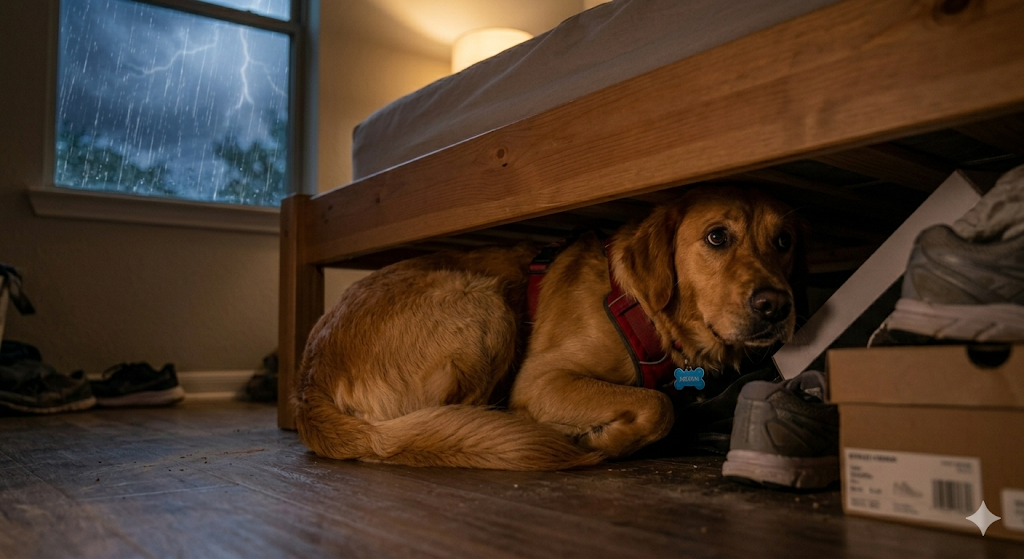
Thunderstorm phobia is extremely common in Central Texas, where summer storm season brings frequent, intense storms. Dogs with storm phobias are often reacting to a combination of factors: thunder, lightning, rain, barometric pressure changes, and the build-up of static electricity. This multi-sensory trigger makes storm phobia one of the more complex fears to address.
Fireworks phobia peaks around the Fourth of July and New Year’s Eve but is exacerbated in Austin by the frequency of private firework use in surrounding areas throughout summer. Dogs with fireworks phobia experience the sudden, unpredictable explosive sounds as a genuine threat, and the random, prolonged nature of fireworks periods makes the fear response hard to extinguish.
Noise sensitivity more broadly (construction sounds, traffic, backfiring vehicles, amplified music) is particularly relevant in Austin given the city’s density and event culture. Dogs in neighborhoods near Sixth Street, the Domain, or event venues are exposed to high levels of noise regularly, and sensitive dogs can develop generalized noise phobia over time.
Stranger phobia and crowd fear are relevant for Austin dogs whose owners enjoy the city’s social scene. Crowded outdoor bars, festival environments during SXSW and ACL, and busy street scenes like those on South Congress or South Lamar can overwhelm dogs with fear of unfamiliar people or crowd noise.
Vehicle phobia affects some dogs who are fearful of cars, trucks, or motorcycles, creating significant challenges for urban walking.
Desensitization: Changing the Fear Response Through Gradual Exposure
Desensitization is the process of gradually exposing a dog to a fear-inducing stimulus at a level low enough not to trigger a full fear response, then incrementally increasing exposure over time. The goal is to reduce or eliminate the fear response through repeated, neutral experiences with the stimulus.
For thunderstorm phobia, this might involve playing recordings of thunder at very low volume while the dog eats, plays, or rests, gradually increasing volume over many sessions as the dog remains relaxed. For stranger phobia, it might mean beginning with a stranger standing at a distance and having the dog do known behaviors while the stranger is present, then incrementally reducing the distance as the dog habituates.
The critical rule with desensitization is staying below threshold. If the dog shows fear responses during a session, the exposure intensity is too high and needs to be reduced. A dog in active fear is not habituating; it is rehearsing fear. Effective desensitization requires patience and precise threshold management that is often more successfully implemented with professional guidance than by owners working alone.
Counter-Conditioning: Building a New Emotional Association
Counter-conditioning works alongside desensitization by pairing the feared stimulus with something the dog genuinely enjoys, typically high-value food, in order to change the emotional association. The logic is straightforward: if every time a dog hears thunder it receives real chicken, the brain begins to associate thunder with chicken rather than with threat.
The effectiveness of counter-conditioning depends on:
- Using genuinely high-value rewards (not ordinary kibble if the dog has a strong fear response)
- Delivering the reward consistently and immediately when the stimulus occurs
- Working below threshold so the dog can actually eat and engage with the reward
- Maintaining the protocol over enough repetitions to shift the association
Counter-conditioning and desensitization are most effective when used together and when started during low-intensity exposures rather than during an active fear event. Attempting to counter-condition a dog in the middle of a panic response rarely works because the fear circuitry overrides the dog’s ability to respond to food.
When to Seek Professional Help
Many mild fear responses can be addressed with patient owner-led work. But several situations call for professional support:
- The phobia is severe enough to cause self-injury or extreme distress
- The phobia is worsening over time despite management efforts
- The fear response is generalizing to new stimuli
- The owner is unable to stay below the dog’s threshold in everyday life
- The dog’s fear is affecting its quality of life in daily routines
A professional trainer can assess the severity of the fear response, develop a systematic desensitization and counter-conditioning protocol, and guide the process in a way that avoids inadvertently worsening the phobia. In some cases, the trainer will also recommend a veterinary consultation to discuss whether anti-anxiety medications can support the training process by reducing baseline anxiety.
Frequently Asked Questions
Will my dog grow out of its fear of thunderstorms?
Without intervention, fear and phobias typically worsen over time rather than improving on their own. The fear response reinforces itself through repeated exposure to the triggering stimulus. Active work through desensitization and counter-conditioning, ideally with professional support, is necessary to see meaningful improvement.
Should I comfort my dog when it’s scared?
This is a common source of confusion. Comforting a dog during fear does not reinforce the fear itself; fear is not a voluntary behavior. Providing calm, steady presence can help some dogs regulate. However, highly anxious behavior from the owner can increase the dog’s arousal. Aim for calm, neutral comfort rather than anxious reassurance.
Can I use a Thundershirt or similar product for my dog’s fear?
Pressure wraps can reduce anxiety in some dogs and are worth trying as part of a broader management strategy. They are unlikely to resolve a phobia on their own, but when combined with desensitization and counter-conditioning, they can reduce baseline arousal enough to make the training more effective.
What should I do during a storm or fireworks event if my dog is already panicking?
Focus on management: provide a safe, enclosed space your dog can go to (many fearful dogs prefer small, dark spaces during storms), reduce sound transmission with white noise or music, and avoid forcing the dog out of its safe space. Do not punish fear responses. After the event, work with a trainer to build a desensitization protocol for future occurrences.
Does Austin’s noise environment make fear and phobias worse for dogs?
It can, particularly for dogs already predisposed to noise sensitivity. Austin’s event culture, traffic, and construction noise create frequent exposures to unpredictable loud stimuli. Dogs that haven’t been proactively desensitized to urban noise can develop generalized noise sensitivity over time. Early socialization and proactive exposure work is particularly valuable in a city as stimulating as Austin.
How long does it take to treat a dog’s phobia?
The timeline varies significantly based on the severity of the phobia, the dog’s individual temperament, and the consistency of the training protocol. Mild fears can show significant improvement in weeks. Severe, long-standing phobias require months of consistent work and may never fully resolve, though quality of life can be meaningfully improved through management and behavior modification.
Help Your Anxious Dog Find Relief in Austin
Fear and phobias are not a life sentence for your dog, but they do require thoughtful, consistent work to address. The team at All Dogs Unleashed has experience working with fearful and anxious dogs and can develop a structured plan tailored to your dog’s specific triggers and temperament through training programs designed specifically for fearful dogs.
Reach out at (512) 253-8819, explore our board and training options or come by 3704 Mountain View Ave, Austin, TX 78734 to learn about the in-home dog training option to start working on your dog’s fears in the environment where they’re most present.