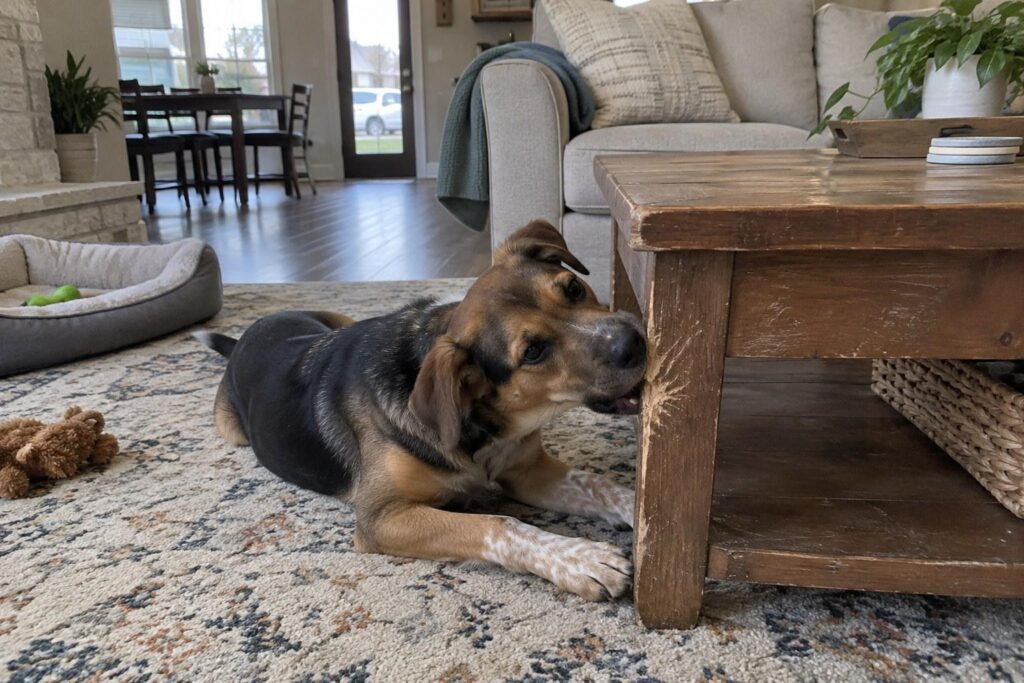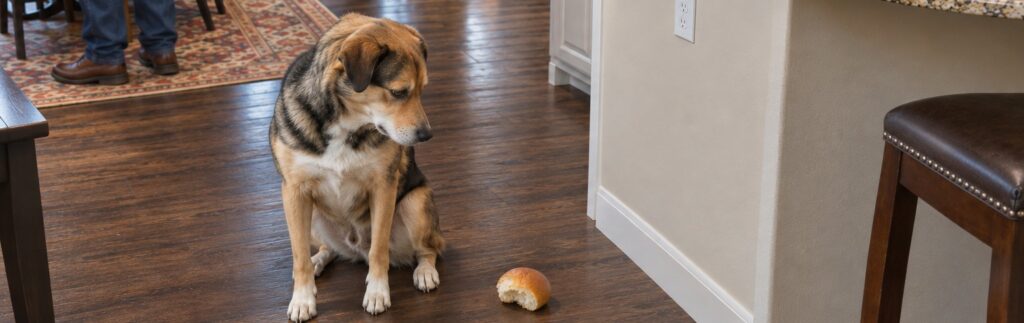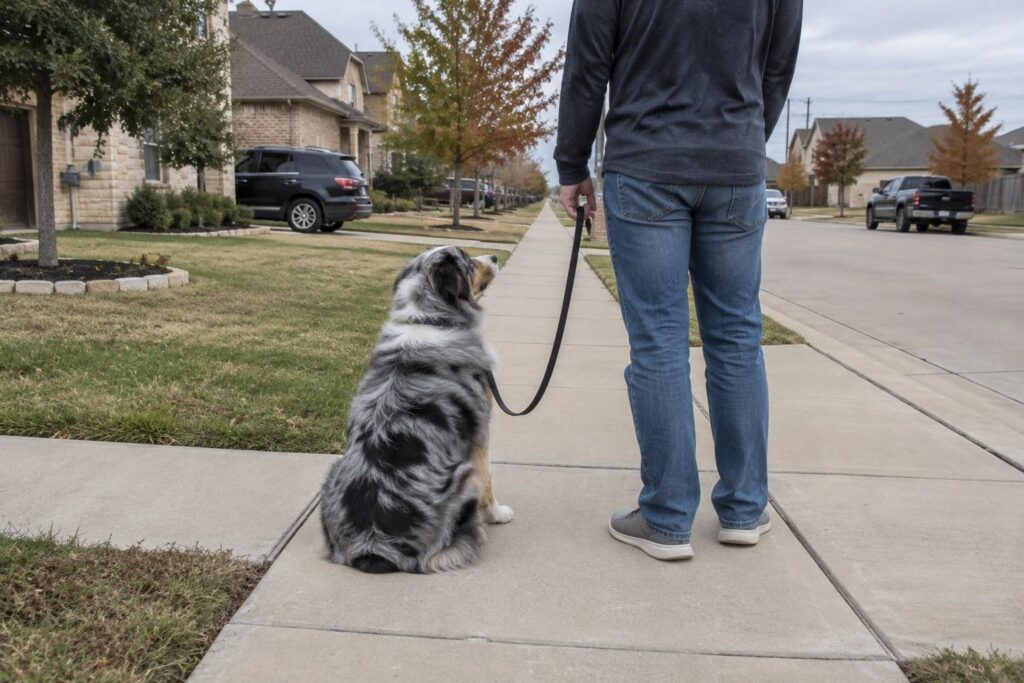

If you want to dog proof Christmas tree displays before the holidays get busy, late November is the right time to plan. A tree brings new smells, dangling objects, water, and wires into your living room all at once, and most dogs treat that as an invitation to investigate.
At All Dogs Unleashed OKC, we help Oklahoma City families every December whose dogs have chewed ornaments, tipped trees, or raided gift piles. The good news is that a few setup choices and some steady training prevent nearly all of it. Below you will find the practical steps we recommend, from anchoring the tree to teaching a reliable “leave it” and “place” so your dog can enjoy the season with you.
Want a calmer, better mannered dog before the guests arrive? Our trainers can build a plan around your home and your holiday schedule.
Key Takeaways
- Anchor the tree to a wall or ceiling hook and use a heavy, wide base so a curious or excited dog cannot pull it over.
- Cover the tree stand so your dog cannot drink the water, which may contain sap, preservatives, or bacteria.
- Skip tinsel, keep glass and edible ornaments high, and hide or protect every electrical cord in the tree area.
- According to the ASPCA, mistletoe and holly can cause stomach upset and more serious problems in dogs, while poinsettias are usually only mildly irritating, so keep all holiday plants out of reach.
- Management buys you time, but training a solid “leave it” and “place” is what lets your dog relax around the tree all season.
Why Christmas Trees Attract Dogs
To your dog, a Christmas tree is a strange new object that smells like the outdoors and suddenly appears in the middle of their territory. Understanding why your dog is drawn to it helps you choose the right fix.
New Smells and Textures
A live tree carries outdoor scents, sap, and needles, and some dogs, especially young males, treat it like a fence post. An artificial tree is less tempting by smell but still offers branches to chew and lightweight parts that come off easily. Either way, the first few days are when your dog is most curious, so supervision matters most then.
Things That Dangle and Move
Ornaments sway when the heater kicks on or someone walks by, and that movement triggers play and prey instincts. A low hanging ball looks a lot like a toy. Puppies and young retrievers are the usual culprits, but plenty of adult dogs join in once one ornament hits the floor and rolls.
How to Dog Proof Christmas Tree Setups Step by Step
A good setup makes it physically hard for your dog to get hurt or cause damage. Think in layers. Make the tree stable, limit access, remove the most dangerous items, and then train. Each layer covers for the others on days when you are distracted.
Choose the Right Spot
Put the tree in a corner rather than the middle of the room, so your dog can only approach from one or two sides. Avoid placing it next to furniture your dog can jump from, and keep it away from the main path between the back door and the couch. If you have a room you can close off when nobody is home, that is the best location of all.
Anchor the Tree
A tree that tips can injure your dog, break glass ornaments, and pull cords out of the wall. Start with a wide, heavy stand. Then tie the trunk to a wall or ceiling hook with clear fishing line or a sturdy cord. This one step prevents most tree accidents caused by big dogs, zoomies, and wagging tails.
Use a Barrier When Needed
For puppies or dogs who will not stop testing the tree, an exercise pen or decorative gate around the base works well. Remove it once your dog walks past the tree calmly.
Live Versus Artificial Trees
Both can work in a home with dogs. Here are the main tradeoffs.
| Factor | Live Tree | Artificial Tree |
|---|---|---|
| Smell appeal | High; may invite sniffing or leg lifting | Lower; less interesting to most dogs |
| Water in stand | Yes; must be covered | No water to manage |
| Needles | Drop and can irritate a dog’s mouth or stomach if chewed | Plastic tips can come off when chewed |
| Stability | Heavy trunk, but depends on the stand | Often lighter; anchoring is important |
| Best for | Calm adult dogs with good manners | Puppies and dogs still learning house rules |
Tree Water, Tinsel, Ornaments, and Cords
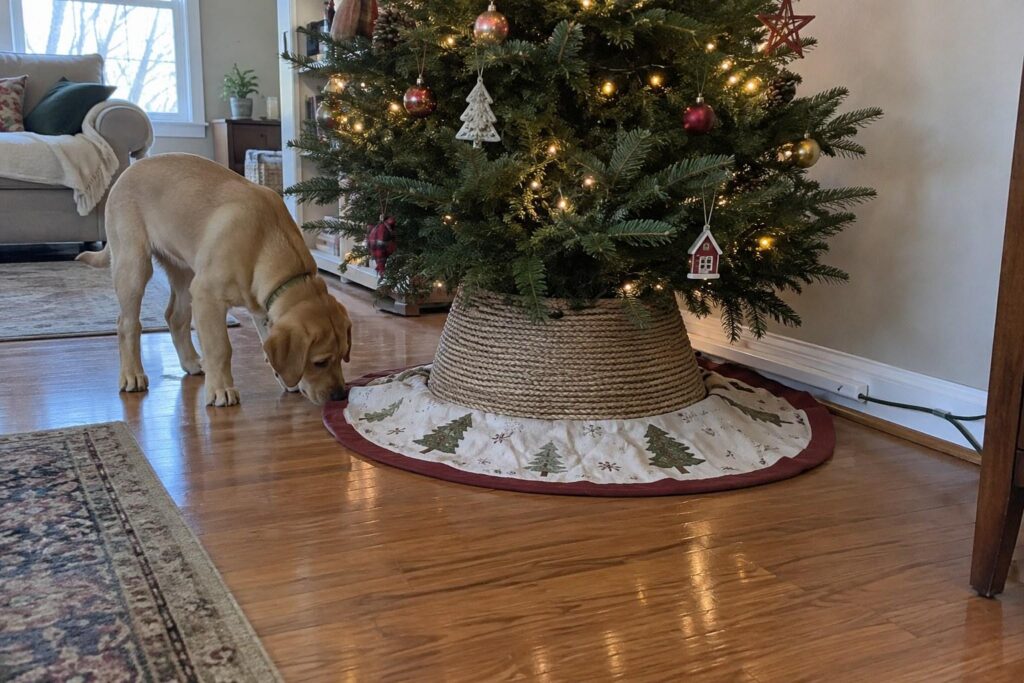
Once the tree is stable, look at everything your dog could drink, swallow, or chew. These small items cause most of the emergency vet visits owners tell us about after the holidays.
Tree Water
The ASPCA advises keeping tree water covered because it can contain fertilizers, preservatives, and bacteria that may upset your dog’s stomach. Use a stand with a cover, or wrap the base with a tree skirt secured tightly enough that your dog cannot push a nose underneath. Always keep fresh water in your dog’s own bowl so the tree stand is never the easier option.
Tinsel and Ribbon
Tinsel looks harmless, but long, thin strands can be dangerous if swallowed. The ASPCA warns that tinsel can cause intestinal blockages that may require surgery. The simplest choice in a dog household is to skip tinsel entirely. The same logic applies to curling ribbon on gifts, which dogs love to pull and chew.
Ornaments
Keep the bottom third of the tree plain or decorated with shatterproof, unbreakable ornaments too large to swallow. Hang glass, heirloom, and homemade ornaments high. Avoid edible decorations like popcorn strings, candy canes, and salt dough ornaments, since they smell like food and invite your dog to grab them. Use ribbon or soft ties instead of metal ornament hooks, which can be swallowed.
Lights and Electrical Cords
Chewing on a live cord can cause burns or electrical shock. Run cords along walls and behind furniture, use cord covers, and unplug the lights whenever you leave the house or go to bed. Battery operated candles are a safer choice than open flames anywhere a tail can reach.
Gifts Under the Tree
Wrapped gifts are a puzzle toy to many dogs, especially if one contains food. Keep chocolate, nuts, and anything with xylitol out from under the tree entirely, since the ASPCA lists chocolate and xylitol among holiday foods that are toxic to dogs. Consider waiting to place presents until Christmas Eve if your dog is still learning.
| Hazard | Main Risk | Simple Fix |
|---|---|---|
| Tree water | Stomach upset from additives or bacteria | Covered stand or secured skirt |
| Tinsel and ribbon | Intestinal blockage if swallowed | Skip tinsel; tie gifts with paper or fabric |
| Glass ornaments | Cuts to mouth and paws | Hang high; use shatterproof ones low |
| Cords and lights | Burns and electrical shock | Cord covers; unplug when away |
| Food gifts | Toxic ingredients like chocolate or xylitol | Store off the floor and out of reach |
If your dog’s habits around the tree are part of a bigger pattern of grabbing, chewing, and ignoring cues, our two-week Board and Train program builds reliable obedience in a structured setting, then teaches you how to keep it going at home.
Holiday Plants and Dog Safety
Holiday plants add color, but some are a real concern for dogs. The safest rule is to keep every live plant out of reach unless you know it is safe, and to call your veterinarian or the ASPCA Animal Poison Control Center if your dog eats something questionable.
Mistletoe and Holly
According to the ASPCA, mistletoe can cause vomiting and diarrhea in dogs, and larger amounts can lead to more serious problems including breathing difficulty and abnormal heart rate. Holly can also cause vomiting, diarrhea, and drooling. Hang mistletoe well above jumping height and keep holly arrangements off coffee tables and end tables.
Poinsettias
Poinsettias have a scary reputation, but the ASPCA describes them as only mildly irritating to the mouth and stomach, sometimes causing vomiting. That does not make them a chew toy. Keep them up high and watch for drooling or vomiting if your dog gets into one.
Lilies and Amaryllis
Lilies are most dangerous to cats, and the ASPCA warns that even small exposures can cause kidney failure in cats. If you share your home with both dogs and cats, keep lilies out entirely. Amaryllis, a common holiday bulb, is also listed by the ASPCA as toxic to dogs and can cause vomiting, drooling, and tremors.
| Plant | Concern for Dogs (per ASPCA) | What to Do |
|---|---|---|
| Mistletoe | Stomach upset; larger amounts more serious | Hang high or use artificial |
| Holly | Vomiting, diarrhea, drooling | Keep off low surfaces |
| Poinsettia | Mild mouth and stomach irritation | Keep out of reach |
| Amaryllis | Vomiting, drooling, tremors | Keep out of reach |
| Lilies | Severe risk mainly for cats | Avoid in homes with cats |
For a full list of plants that are toxic to pets, the ASPCA toxic and non-toxic plants database is a reliable reference. When in doubt, choose artificial greenery for any spot your dog can reach.
Training Your Dog to Respect the Tree
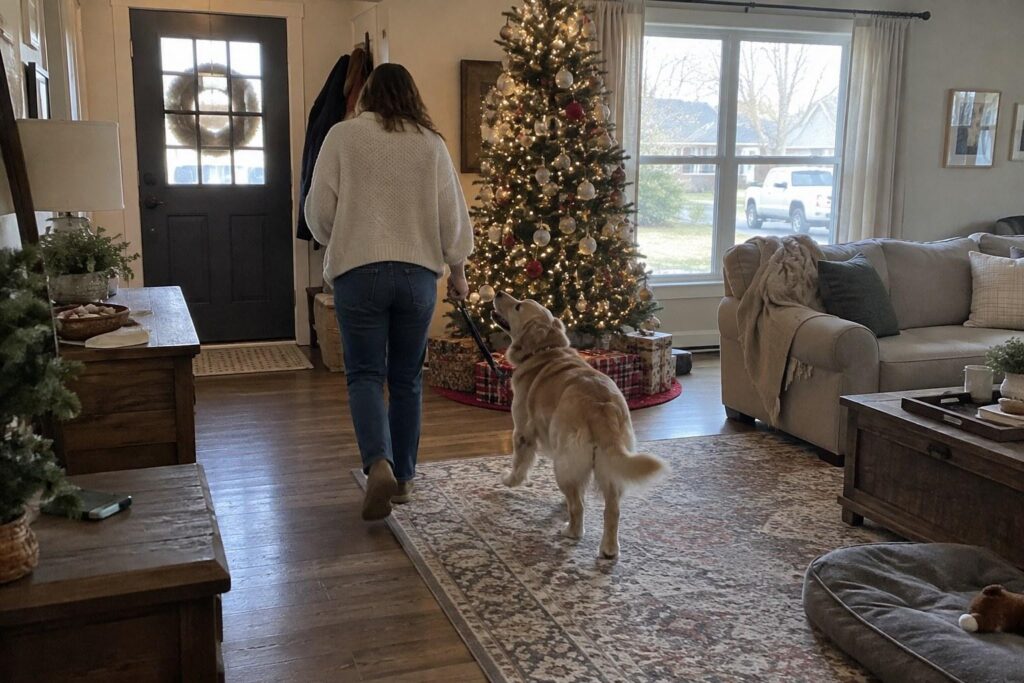
Setup handles the risks, but training changes the behavior. When we work with families on holiday manners, the two skills that make the biggest difference are “leave it” and “place.” Both are useful far beyond December.
Practicing “Leave It” Around the Tree
Start “leave it” away from the tree with a treat in your closed hand. When your dog stops pawing and looks away, mark and reward from your other hand. Build to a treat on the floor, then to toys, and only then to a plain ornament on the floor with your dog on leash. Once that is solid, practice walking past the decorated tree on leash, rewarding your dog for ignoring it. Keep sessions short and end on a success.
Teaching “Place” for Busy Moments
A “place” cue sends your dog to a bed or mat and asks them to stay there until released. It is the perfect job while you decorate, open gifts, or greet guests. Set the bed within sight of the family but well away from the tree. Reward often at first, then gradually ask for longer stays with more activity around them.
Supervision and Redirection
For the first week, supervise closely or use a crate, pen, or closed door when you cannot watch. If your dog approaches the tree, calmly interrupt and redirect to a chew or the “place” bed. Consistency from every person in the house is what makes the lesson stick.
Meeting Your Dog’s Exercise Needs
A tired dog is far less interested in the tree. Keep up daily walks and add short training sessions or food puzzles on busy days. Fifteen minutes of focused training can take the edge off as much as a long walk for many dogs. If your dog still struggles with basic cues, our post on building a well-behaved dog with obedience training in OKC covers the foundations.
Puppies, Rescue Dogs, and Holiday Guests
Every dog handles the season a little differently. Age, history, and household traffic all change how much management and training you need.
Puppies
Puppies explore the world with their mouths, so expect them to test everything. Use a pen or gate around the tree, keep the bottom branches bare, and lean heavily on crate time and supervision. Our week-by-week puppy training schedule can help you fit “leave it” practice into a young dog’s routine.
Newly Adopted Dogs
A rescue dog in their first holiday season may not know any house rules yet, and the extra noise and visitors can be a lot. Keep the tree area simple and give your new dog a quiet retreat away from the activity. Our article on what Oklahoma City owners should expect from rescue dog training explains how to set realistic goals.
Guests and Gatherings
Visitors leave doors open, drop food, and sometimes hand dogs treats they should not have. Brief guests on your rules, keep plates and gifts off low tables, and give your dog a “place” job or a quiet room during the busiest part of the party. If you are traveling and need a safe spot for your dog, our dog boarding in Oklahoma City has limited holiday capacity, so we recommend booking at least two weeks ahead.
When to Call a Professional Trainer
Most dogs settle around the tree within a week or two with good setup and steady practice. Some dogs need more help, and that is completely normal.
Signs Your Dog Needs More Support
Consider professional help if your dog repeatedly chews cords or ornaments despite management, guards stolen items and growls when you approach, ignores “leave it” whenever something exciting is involved, or becomes overwhelmed and reactive with guests in the house.
In-Home Lessons Versus Board and Train
If you want to work on tree manners in the actual room where the problem happens, in-home dog training lets a trainer coach you and your dog in your own living room. If your dog needs a broader reset on obedience and impulse control, the two-week Board and Train program begins with an evaluation, includes daily training at our facility, and ends with a turnover session where you learn to handle your dog, with written instructions to take home. Board and Train also comes with guaranteed results and lifetime support at no additional charge. Not sure which fits? Read how to choose between Board and Train and in-home dog training in Oklahoma City.
Ready to enjoy a tree that stays standing all season? Call All Dogs Unleashed OKC at (405) 299-3386 and we will help you choose the right training path for your dog.
About All Dogs Unleashed OKC
All Dogs Unleashed OKC helps Oklahoma City dog owners build calm, reliable manners that hold up in real life, including the excitement of the holiday season. Our two-week Board and Train program leads our services, backed by guaranteed results and lifetime support, and we also offer private in-home lessons, refresh training, and boarding. From puppies testing their first tree to adult dogs who grab anything within reach, we teach practical skills like “leave it” and “place” that make every season easier.
Frequently Asked Questions
How do I keep my dog from knocking over the Christmas tree?
Use a wide, heavy stand and anchor the trunk to a wall or ceiling hook with fishing line or sturdy cord. Place the tree in a corner away from furniture your dog jumps on. For energetic dogs or puppies, add an exercise pen around the base for the first week or two while you train calm behavior near the tree.
Is Christmas tree water bad for dogs?
It can be. The ASPCA notes that tree water may contain fertilizers, preservatives, and bacteria that can upset your dog’s stomach. Use a covered stand or a tightly secured tree skirt so your dog cannot reach the water, and keep their own bowl full. Call your veterinarian if your dog drinks it and shows vomiting or diarrhea.
Are poinsettias poisonous to dogs?
Poinsettias are usually only mildly toxic. The ASPCA says they can irritate the mouth and stomach and sometimes cause vomiting, but serious poisoning is unlikely. Mistletoe and holly are a bigger concern for dogs. Keep all holiday plants out of reach and contact your veterinarian or the ASPCA Animal Poison Control Center if your dog eats one.
What decorations are safest for a home with dogs?
Choose shatterproof ornaments too large to swallow for the lower branches, and hang glass or sentimental pieces high. Skip tinsel, edible ornaments, and long curling ribbon. Use cord covers for lights, unplug them when you leave, and choose battery operated candles. Keep wrapped food gifts, especially anything with chocolate or xylitol, off the floor.
How long does it take to teach a dog to leave the tree alone?
Many dogs improve within one to two weeks of short daily “leave it” sessions combined with good management, though every dog is different. Puppies and high energy dogs may need longer. Consistency matters most, so make sure everyone at home uses the same cues and rewards, and supervise closely until your dog reliably ignores the tree.
Can a trainer help with holiday behavior problems?
Yes. A trainer can teach “leave it,” “place,” and calm greetings that carry over to the tree, gifts, and guests. All Dogs Unleashed OKC offers in-home lessons for coaching in your own home and a two-week Board and Train program for a broader reset, which includes guaranteed results and lifetime support at no additional charge.
With a stable tree, safer decorations, and a dog who understands “leave it,” it is easy to dog proof Christmas tree displays and still enjoy every part of the season. If you would like help building those habits, call All Dogs Unleashed OKC at (405) 299-3386 or reach out online. You can also visit us at our Park Avenue location in downtown Oklahoma City.
Ready to Get Started with All Dogs Unleashed OKC?
Give your dog the skills to stay calm around the tree, the gifts, and the guests this year. Call (405) 299-3386 to talk with our team about Board and Train or in-home lessons. You can also visit All Dogs Unleashed OKC at 101 Park Ave Suite 1300, Oklahoma City, OK 73102.