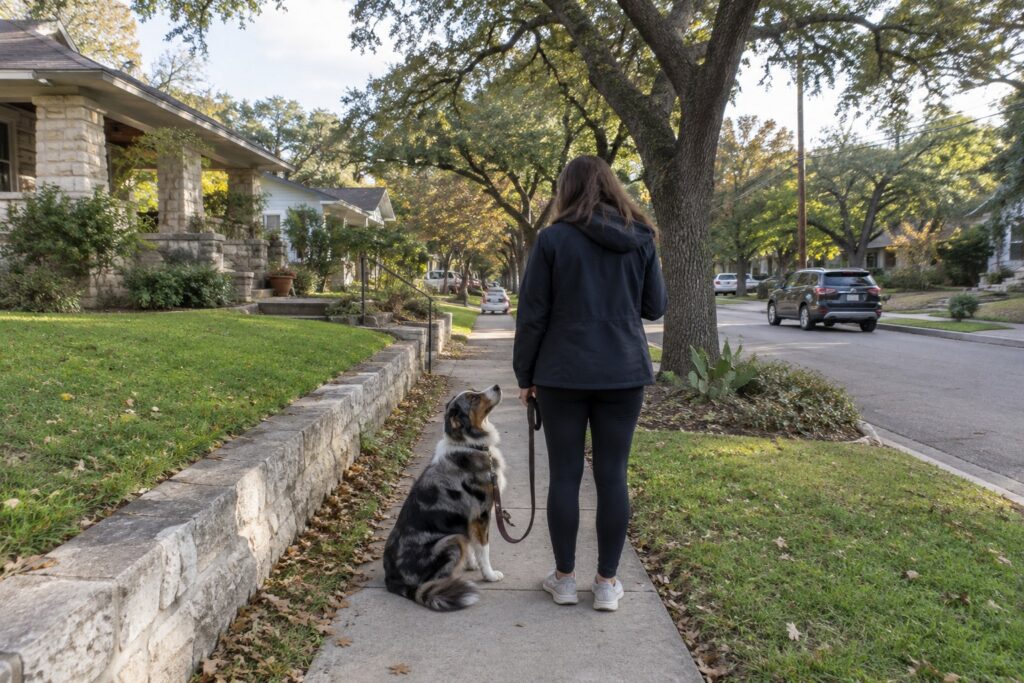

Austin is a city built for dogs. From the wooded paths of Barton Creek Greenbelt to the open fields of Emma Long Metropolitan Park, there are countless places where you can enjoy the outdoors alongside your dog. But those experiences become genuinely enjoyable only when your dog responds reliably off-leash. Without that foundation, every trail hike, off-leash area visit, or backyard moment carries unnecessary risk.
Off-leash reliability is one of the most sought-after training goals for Austin dog owners, and it is also one of the most misunderstood. This guide breaks down what it takes to achieve real off-leash control and how the professionals at All Dogs Unleashed can help your dog get there.
What Off-Leash Reliability Actually Means
Off-leash reliability does not simply mean your dog comes when called in the living room. It means your dog responds to commands in high-distraction environments, outdoors, around other dogs, people, wildlife, and traffic, when the stakes are real.
True reliability includes:
- Recall: Coming when called every time, not just when there is a treat in your hand
- Stay: Holding a position even when distractions arise
- Heel: Walking close to you without pulling or wandering
- Leave it: Ignoring tempting objects, animals, or people on command
- Place: Going to and remaining on a designated spot even in busy environments
Reaching this level of consistency requires structured training, not just repetition. Dogs need a clear communication system, progressive exposure to distractions, and a handler who knows how to reinforce behaviors at the right moment.
Why Off-Leash Training Is Especially Important in Austin
Austin presents unique challenges and opportunities for off-leash training. The city has several designated off-leash areas, but those spaces are only safe when dogs are truly under voice control.
Consider the Barton Creek Greenbelt. Trails there are narrow, shared with cyclists, and populated with wildlife including deer, squirrels, and the occasional snake. A dog that bolts after a distraction on those trails can be injured, lost, or become a danger to others. The same applies to Walnut Creek Metropolitan Park and other popular dog-friendly green spaces throughout the area.
Beyond parks, many Austin neighborhoods have unfenced properties, busy roads, and shared community spaces where off-leash behavior matters every day, not just during dedicated outings.
The Building Blocks of Off-Leash Training
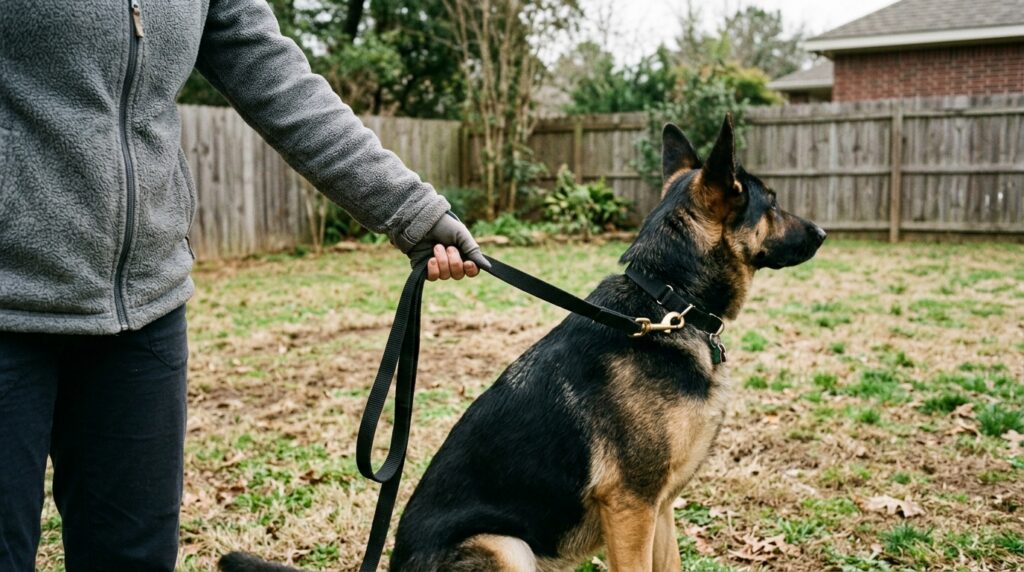
Effective off-leash dog training in Austin TX follows a progression. You cannot skip steps and expect lasting results. Here is how a well-structured program builds reliability:
- Foundation obedience on leash: Before practicing off-leash, your dog must respond reliably to commands with the leash attached. The leash teaches consequences and gives your dog clear communication.
- Long-line training: A 20- to 30-foot long line bridges the gap between leash work and true off-leash freedom. It allows your dog to practice recall with distance while still giving you the ability to enforce commands.
- Distraction proofing: Training in controlled environments is only the beginning. Your dog must practice in places that resemble real life, around other dogs, near traffic, in parks, and in new locations entirely.
- Variable reward schedules: Dogs trained only with consistent food rewards often perform well in training but poorly in the real world. Gradually shifting to variable rewards builds persistence and reliability across all contexts.
- Handler education: Off-leash reliability is a two-way relationship. Handlers must learn proper timing, leash mechanics, and how to read their dog’s body language to prevent problems before they happen.
Board and Train: The Most Effective Path to Off-Leash Reliability
For most Austin dog owners, the fastest and most effective route to off-leash reliability is a board and train program. Rather than fitting in 15-minute practice sessions around a busy schedule, your dog lives and trains with professional handlers every day. Behaviors are shaped, reinforced, and distraction-proofed in a way that weekly group classes simply cannot match.
During a board and train program at All Dogs Unleashed:
- Your dog receives structured daily training sessions focused on real-world obedience
- Skills are built progressively, with off-leash work introduced once foundation behaviors are solid
- Your dog is exposed to varied environments, other dogs, and real-life distractions
- Handlers teach you, the owner, how to maintain and build on those results after your dog comes home
The result is a dog that has not just learned commands in a controlled setting but has internalized them across contexts.
Continued Training After Board and Train
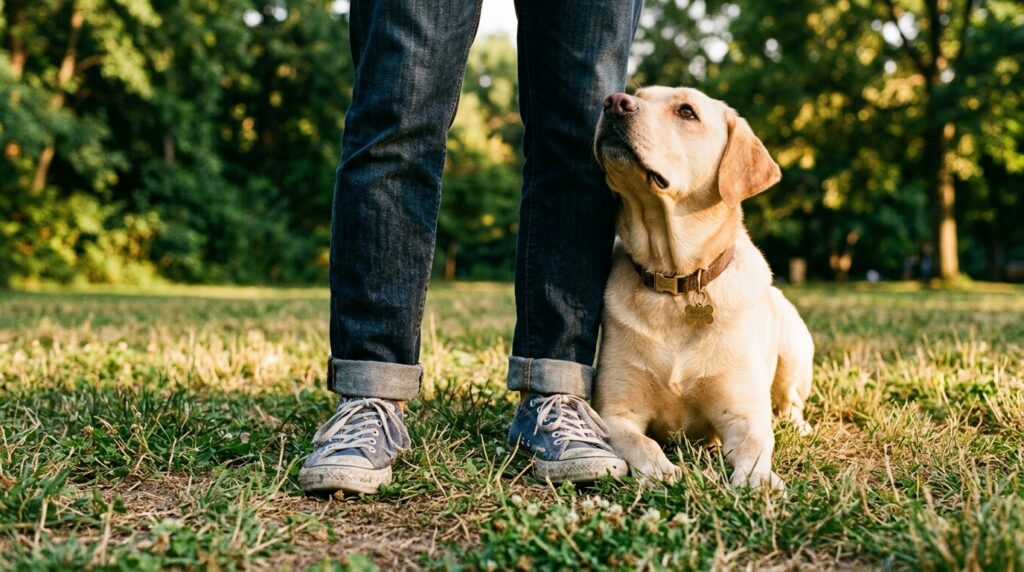
Off-leash reliability is not a one-time achievement. Dogs need ongoing practice to maintain and sharpen their skills, especially as they encounter new environments, move through different life stages, or face new challenges.
All Dogs Unleashed offers training programs designed to support your dog after a board and train program. These follow-up sessions help owners stay consistent, troubleshoot any regression, and continue building on the foundation their dog developed during the intensive program.
Consistency between sessions is just as important as the sessions themselves. Practicing recall daily in a low-distraction environment, rewarding voluntary check-ins during walks, and maintaining clear expectations at home all contribute to lasting off-leash reliability.
Common Mistakes That Undermine Off-Leash Progress
Even dogs with solid training can develop unreliable recall if certain habits creep in. Watch out for these common pitfalls:
- Calling your dog only when the fun stops: If “come” always means the end of a run or the beginning of something unpleasant, your dog will start ignoring it. Frequently call your dog to you, reward generously, and then let them go back to what they were doing.
- Repeating commands: Saying “come, come, come” teaches your dog that the first command is optional. Give the command once, then follow through.
- Skipping the long line phase: Jumping from on-leash work to fully off-leash situations before reliability is established often sets dogs up to practice ignoring commands.
- Inconsistent expectations: If your dog is allowed to wander freely sometimes and not others, they learn that your commands are conditional. Off-leash training requires clear, consistent expectations.
- Training only at home: Home is the easiest environment for your dog. Training there is important, but it must be paired with practice in new locations to build real reliability.
Frequently Asked Questions
What age can a dog start off-leash training?
Most dogs can begin foundation obedience work as early as 8 weeks old. Off-leash work specifically is typically introduced once solid on-leash obedience is established, which for many dogs happens between 6 and 12 months of age. The timeline depends more on the individual dog’s progress than their age.
How long does it take to achieve off-leash reliability?
It depends on the dog’s starting point, temperament, and training method. A board and train program typically accelerates results significantly. Many dogs make substantial progress in 2 to 4 weeks of intensive training, followed by consistent owner practice afterward.
Can older dogs learn off-leash reliability?
Absolutely. Adult dogs can and do achieve excellent off-leash skills. Older dogs sometimes learn faster than puppies because they have better focus. The key is using the right training approach and being consistent.
Is off-leash training safe to practice near Austin’s busy trails?
Off-leash practice should always begin in controlled environments before progressing to busy public areas. Working with a trainer to build reliability gradually is the safest approach. High-traffic areas like the Barton Creek Greenbelt should be reserved for dogs with well-established off-leash skills.
What training method does All Dogs Unleashed use?
All Dogs Unleashed uses balanced training methods that combine clear communication, structure, and positive reinforcement. The approach is tailored to each dog’s temperament and learning style, with a focus on building real-world reliability rather than just performance in controlled settings.
Do I need to continue training after my dog completes a program?
Yes. Dogs benefit from ongoing practice and reinforcement throughout their lives. All Dogs Unleashed offers follow-up training programs to help owners maintain and build on their dog’s progress after completing an initial program.
Ready to Start? Contact All Dogs Unleashed in Austin
If you want a dog that comes when called every single time, on the trail, at the park, or in your neighborhood, the team at All Dogs Unleashed is ready to help. Call (512) 253-8819 to learn about available programs and find the right fit for your dog.
All Dogs Unleashed is located at 3704 Mountain View Ave, Austin, TX 78734.