
Bringing a new puppy home in Austin is an exciting milestone, but it comes with plenty of challenges, and one of the biggest is crate training. When done right, the crate becomes your pup’s personal safe haven, a quiet retreat they willingly go to on their own. Done wrong, it can lead to anxiety, barking, and a dog that digs, scratches, or refuses to go near the crate at all.
If you’re starting from scratch or struggling with a pup who won’t settle, these step-by-step crate training tips are designed to help Austin families build a positive experience from day one. And if you need extra help, All Dogs Unleashed is right here in the Lake Travis area, ready to support you and your dog every step of the way.
Why Crate Training Matters for Austin Puppies
A crate isn’t a punishment. It’s a management tool and a comfort zone. Puppies are den animals by nature, and a properly sized, well-introduced crate appeals to that instinct. Here’s why it’s worth the effort:
- It keeps your puppy safe when unsupervised, protecting both your pup and your home
- It speeds up house training by leveraging a puppy’s natural reluctance to soil their sleeping area
- It reduces anxiety and gives your dog a predictable place to decompress
- It prepares your dog for travel, vet visits, and boarding situations
Austin’s climate adds a layer of consideration: hot summer days mean your puppy may spend more time inside. A crate-trained dog who is comfortable indoors is a calmer, more confident companion all year long.
Step 1: Choose the Right Crate
Before you begin training, you need the right setup.
- Size matters: The crate should be large enough for your puppy to stand, turn around, and lie down comfortably, but not so large that they can eliminate in a corner and sleep away from it. If you have a large-breed puppy, buy a crate with a divider panel you can adjust as they grow.
- Crate types: Wire crates offer ventilation and visibility, which many puppies prefer. Plastic travel crates feel more den-like. Either can work depending on your puppy’s temperament.
- Placement: Put the crate in a low-traffic area that stays part of the household activity, such as a living room corner or bedroom. Avoid garages in Austin’s summer heat.
Step 2: Introduce the Crate Gradually
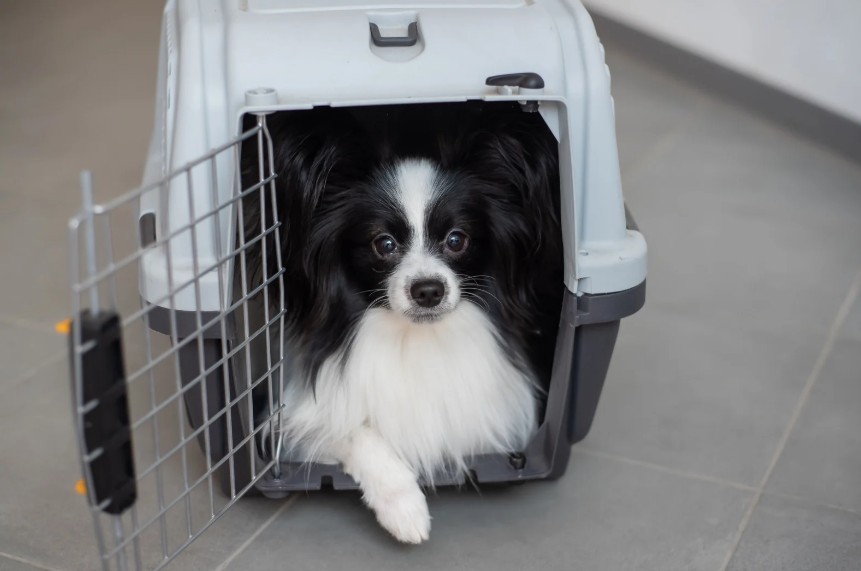
Never push or force your puppy into the crate, especially early on. Forced introductions create negative associations that are difficult to undo.
- Leave the crate door open and let your puppy explore at their own pace
- Toss treats or kibble just inside the opening so they step in voluntarily
- Feed meals near or inside the crate to build a food-positive connection
- Praise calmly when your puppy enters on their own, avoid overly excited reactions that amp them up
- Place a worn t-shirt or blanket inside so the crate smells familiar and comforting
This stage may take a few days to a week depending on the puppy. Patience here pays off enormously down the road.
Step 3: Build Duration Slowly
Once your puppy goes in willingly, start closing the door for short periods.
- Close the door for just 10 to 30 seconds while you remain nearby and visible
- Gradually extend the time in small increments each session
- Offer a chew toy or stuffed frozen Kong inside to create a positive in-crate activity
- Stay calm and avoid making departures a big emotional event
- Only open the door when your puppy is quiet, not when they are whining or scratching, to avoid rewarding fuss
The goal is to associate crate time with calm, not chaos. If your puppy consistently panics before you even close the door, you may be moving too fast. Back up a step.
Step 4: Practice Short Departures
Once your puppy settles for 20 to 30 minutes, begin short absences from the room.
- Step out for a few minutes, return before the puppy gets distressed
- Gradually increase your time away over several days
- Keep arrivals low-key, a calm return teaches your puppy that departures are not a big deal
- Avoid crating for longer than your puppy can hold their bladder (roughly one hour per month of age, plus one)
For a two-month-old Austin puppy, that means three hours maximum during the day. Overnight crating is generally easier since puppies naturally sleep longer stretches.
Step 5: Establish a Routine
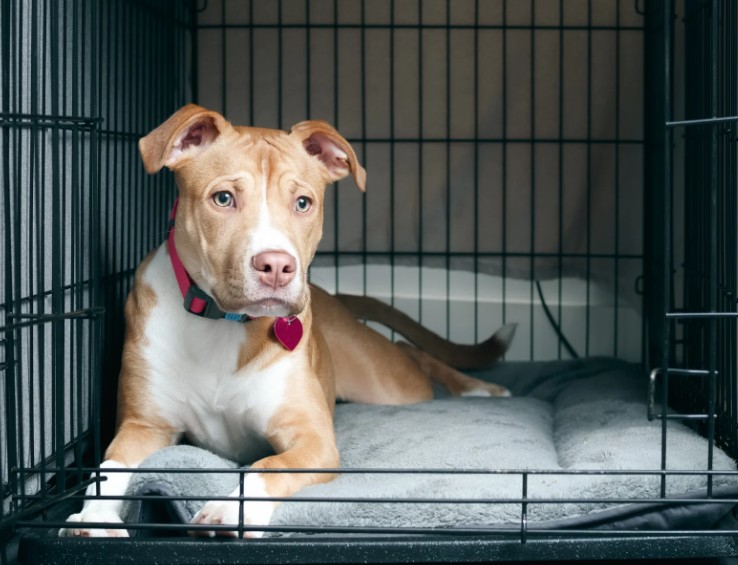
Austin families with active schedules benefit from consistent crate routines.
- Crate your puppy at regular intervals throughout the day, after meals, after play, before naps
- Use a consistent cue word like “crate,” “kennel,” or “place” every time they go in
- Pair the cue with a treat toss inside so the word predicts something good
- Use the crate during your own busy periods to prevent puppies from getting into trouble unsupervised
Structure and repetition are your best friends in the early months. Puppies thrive on predictability, and a consistent routine reduces anxiety across the board.
Step 6: Gradually Extend Crate Time to Build Comfort
Once your puppy is comfortable entering and resting in the crate with the door closed for short periods, begin extending the duration gradually. Start with five to ten minutes and work up to thirty minutes, then an hour, then longer intervals over the course of several days. The key is to never increase time so quickly that your puppy becomes distressed. Always end crate sessions before your puppy starts whining or showing signs of anxiety. Over time, your puppy will learn that the crate is a safe, predictable place and that you always return. This progressive approach builds genuine comfort rather than learned helplessness.
Step 7: Keep the Crate a Positive Place — Never a Punishment
One of the most important rules of crate training is to never use the crate as a consequence for bad behavior. Sending your puppy to the crate when you are frustrated turns it into a place associated with your displeasure. Instead, keep every crate interaction positive. Feed meals in the crate, offer treats when your puppy goes in willingly, and use a calm, upbeat tone when directing your dog to their crate. If your puppy needs a break or cool-down moment, lead them to the crate with a treat and let them choose to settle. Over time, many dogs voluntarily retreat to their crates when they want rest or feel overwhelmed — and that is exactly the goal.
Common Crate Training Mistakes to Avoid
Even well-meaning Austin dog owners can stumble here. Watch out for these pitfalls:
- Using the crate as punishment: This destroys the positive association you’ve worked to build. The crate should always be a neutral-to-positive space.
- Releasing during a whining episode: This teaches your puppy that making noise earns freedom. Wait for a pause, even a brief one, before opening the door.
- Too much too fast: Skipping gradual steps is the most common reason crate training fails. Take it slow, especially in the first week.
- Leaving puppies crated too long: Puppies have small bladders and high energy. Extended crating without adequate exercise leads to frustration and accidents.
- Ignoring signs of distress: Some puppies have genuine anxiety that goes beyond typical adjustment. If your puppy is consistently panicking, destructive, or not settling after several weeks, professional support may be needed.
When to Seek Professional Help
Crate training is manageable for most puppies, but it’s not always smooth. If you’re dealing with a puppy that screams, self-injures, or refuses to make any progress after weeks of patient effort, that could signal separation anxiety or a deeper behavioral concern, and those are best addressed with a professional trainer.
The training programs at All Dogs Unleashed are designed to meet Austin puppies and their owners where they are. Whether you’re starting from scratch or troubleshooting a specific problem, structured training support makes a significant difference.
And if your schedule requires your puppy to be away from home during the day, boarding at All Dogs Unleashed includes supervised time in a safe, structured environment, giving your pup socialization and activity while you’re out.
Frequently Asked Questions
How long does crate training take for a puppy?
Most puppies make solid progress within two to four weeks of consistent crate training. Some adjust faster, while others, especially those with anxious temperaments or past negative experiences, may take longer. Consistency and patience are the most important factors.
How long can I leave my Austin puppy in the crate?
A general guideline is one hour per month of age, plus one. So a three-month-old puppy should not be crated for more than four hours at a stretch during the day. Overnight crating is usually longer since puppies sleep more during those hours.
Should I put food and water in the crate?
Food is generally not recommended during longer crate periods since it increases the need to eliminate. A small water bowl can be offered, especially in Austin’s heat, but remove it before bedtime to avoid accidents. Frozen Kongs or chews are excellent alternatives for keeping puppies occupied.
What size crate does my puppy need?
The crate should be large enough for your puppy to stand, turn around, and lie down without excess room. Too much space allows them to use one end as a bathroom. For large breeds, use a crate with a divider panel that you adjust as they grow.
Is crate training cruel?
No. When introduced gradually and used appropriately, a crate provides dogs with a safe, familiar space they often choose on their own. The key is to never use it as punishment and to avoid leaving puppies crated for excessive periods without exercise and interaction.
What should I put inside the crate?
Start with a soft, washable blanket or mat. Add a chew toy or frozen Kong to keep your puppy occupied. A worn piece of your clothing can provide comfort through a familiar scent. Avoid toys with small pieces that could be chewed off and swallowed.
Start Crate Training Right with All Dogs Unleashed in Austin
Crate training sets the foundation for a well-adjusted, confident dog. The effort you put in during the first weeks pays dividends for years to come, from house training and separation confidence to travel-readiness and calm behavior in new environments.
If you’re in the Austin area and need hands-on support, All Dogs Unleashed is here to help. Give us a call at (512) 253-8819 or stop by at 3704 Mountain View Ave, Austin, TX 78734. We’d love to meet your pup and help you build a relationship built on trust, structure, and confidence.