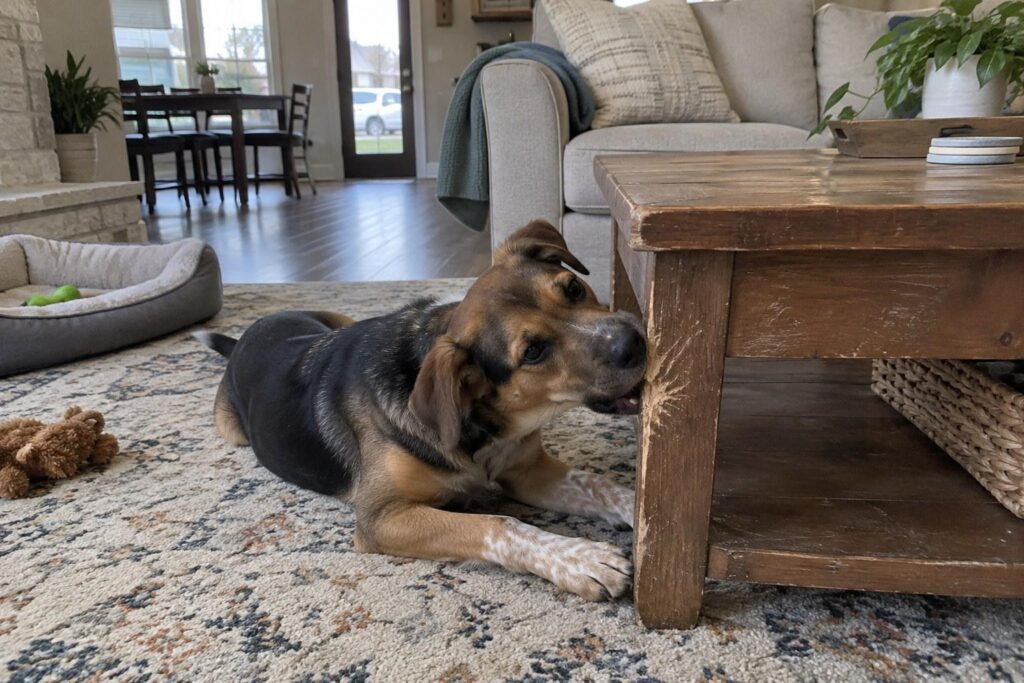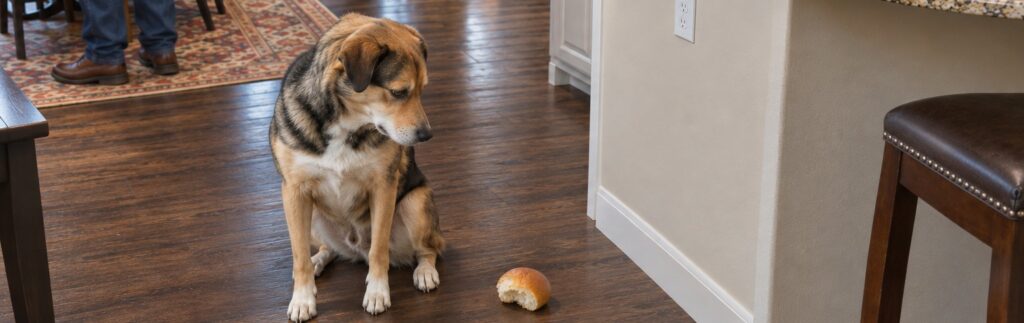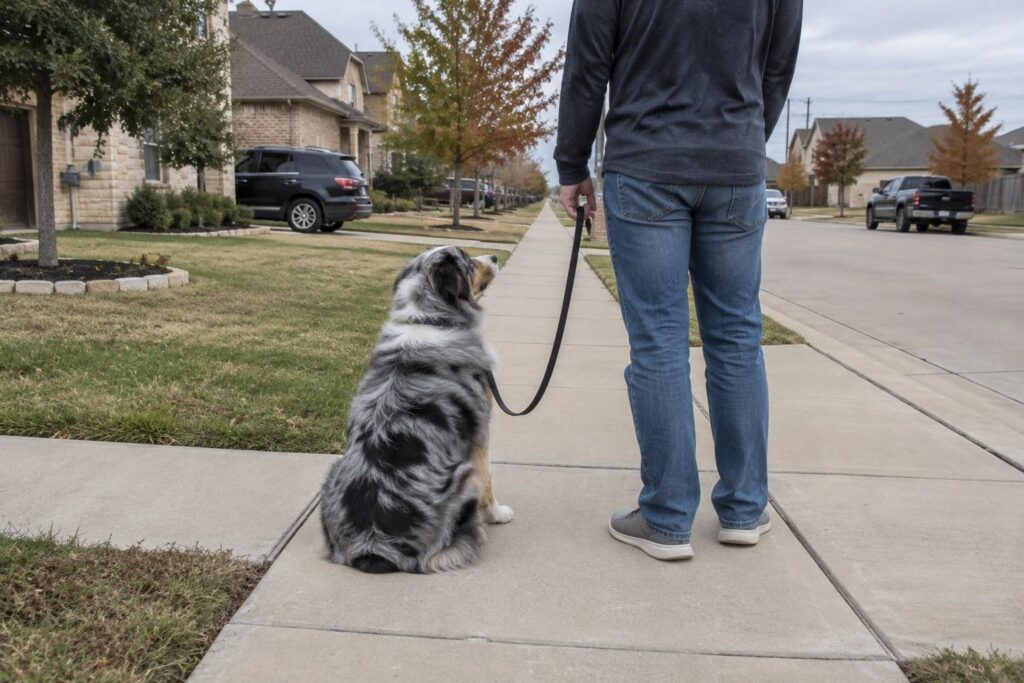

Australian cattle dog training works best when you treat your dog like the working partner it was bred to be. Blue Heelers and Red Heelers are smart, tough, and driven, and in Oklahoma, where ranch work is part of the heritage, plenty of these dogs now live in suburban backyards instead of on open pasture. That gap between instinct and lifestyle is where most problems start.
At All Dogs Unleashed OKC, we work with herding breeds every week, and we see the same patterns again and again: nipping at heels, chasing kids and cars, barking at movement, and a dog that never seems to switch off. The good news is that every one of those habits can be shaped with structure, clear communication, and the right outlets.
Ready to turn that drive into focus? Tell us about your Heeler and we will help you choose the right next step.
Key Takeaways
- Australian Cattle Dogs were bred to move cattle by nipping at their heels, so herding, chasing, and nipping are instincts to redirect rather than flaws to punish.
- Daily mental work such as obedience drills, “place” training, and food puzzles tires a Heeler more effectively than exercise alone.
- Early, careful socialization helps prevent the wariness of strangers and the possessiveness the breed can develop.
- Commands like “leave it”, “place”, and a reliable recall give you control over the chase instinct around kids, bikes, and other animals.
- The two-week Board and Train program at All Dogs Unleashed OKC builds focus and impulse control, then teaches you how to keep those results at home.
Understanding the Australian Cattle Dog Before You Train
You cannot train a Heeler well until you understand why it acts the way it does. According to the American Kennel Club breed profile, the Australian Cattle Dog is a compact, muscular herding dog developed in Australia to drive cattle over long distances. It is known for being alert, curious, loyal, and very energetic.
That history explains almost everything you see at home. A dog that was expected to work all day on rough ground does not come with an off switch. It comes with stamina, problem-solving skills, and a strong opinion about how things should move.
The Herding and Heeling Instinct
Cattle dogs earned the nickname “heeler” because they move livestock by nipping at the back of the legs. In a family home, that same instinct can show up as nipping at the ankles of running children, circling guests, or chasing the vacuum cleaner. Your dog is not being mean. It is doing a job no one asked it to do.
Training does not erase that instinct. It gives your dog rules about when movement is something to watch and when it is something to ignore.
Intelligence and Independence
Heelers learn fast, which cuts both ways. They pick up good habits quickly, and they pick up bad ones just as fast. They also tend to be independent thinkers, so a dog that knows “sit” perfectly may still test whether you mean it when something more interesting is happening.
Consistency matters more with this breed than with many others. If one person in the house lets the dog push through doors and another does not, your Heeler will notice the loophole and use it.
Loyalty and Wariness
Many cattle dogs bond tightly with one person or one family. That loyalty is wonderful, but it can turn into suspicion of strangers, guarding of people or objects, or stress around visitors. Early exposure and calm leadership keep that loyalty from becoming a behavior problem.
| Breed Trait | How It Shows Up at Home | Training Focus |
|---|---|---|
| Herding instinct | Chasing kids, bikes, cars, or other pets | “Leave it”, recall, impulse control |
| Heeling and nipping | Ankle nips, grabbing pant legs | Redirection, “drop it”, calm greetings |
| High energy | Restlessness, digging, destructive chewing | Structured exercise plus mental work |
| Intelligence | Learning tricks fast, testing rules | Consistent rules, varied drills |
| Loyalty and wariness | Barking at visitors, guarding people | Socialization, “place”, calm introductions |
How to Stop a Blue Heeler from Nipping Heels
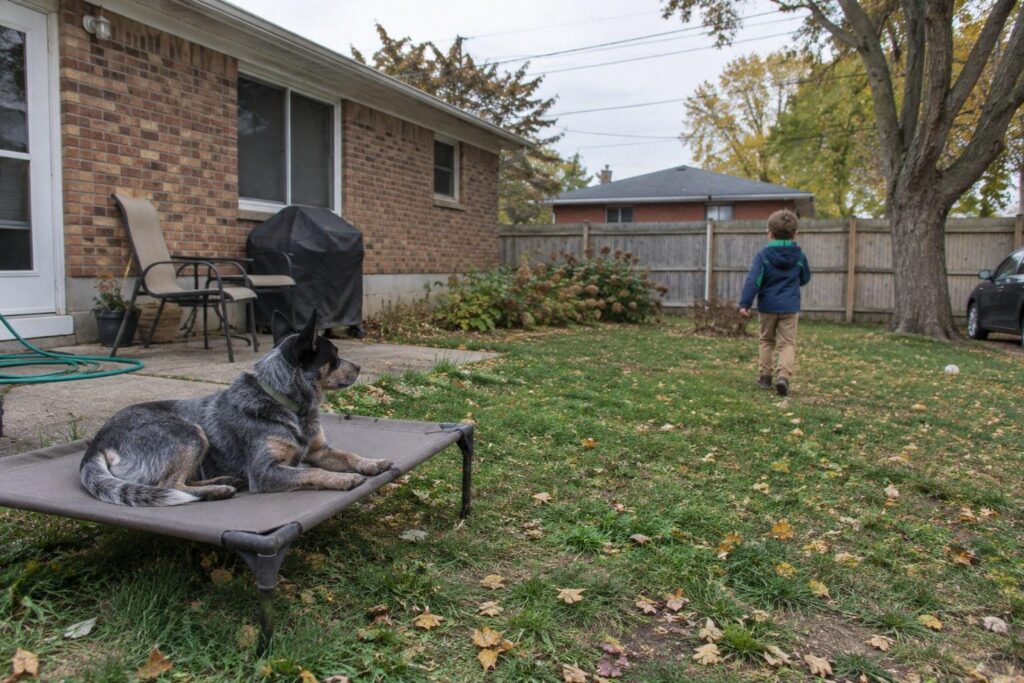
Nipping is the number one complaint we hear from Heeler owners. It usually starts in puppyhood and escalates when the dog learns that grabbing a moving foot makes things more exciting. Here is how to address it without fighting the instinct.
Stop the Game Before It Starts
Nipping is often triggered by fast movement. When kids run through the yard, the dog joins the chase. The first step is management. Use a leash, a gate, or a crate during high-excitement moments such as kids getting home from school, so the dog does not keep rehearsing the habit.
Every time a dog practices nipping, the behavior gets stronger. Prevention buys you time to teach something better.
Teach an Incompatible Behavior
A dog cannot nip ankles while lying on a bed. That is why “place” is one of the most useful commands for herding breeds. Teach your dog to go to a mat or raised cot and stay there until released, then practice it while family members walk, jog, and eventually run nearby.
Pair that with a solid “leave it” and a quick “come”. If your dog starts to fixate on moving feet, you can interrupt and redirect before the nip happens.
Give the Mouth a Job
Heelers like to use their mouths. Tug games with clear rules, such as starting only on your cue and releasing on “drop it”, give that drive a safe outlet. Durable chew toys and food puzzles help too. The goal is to make appropriate mouthing more rewarding than ankles.
Coach the Kids
Children often trigger nipping without realizing it. Teach kids to stop moving and stand still, like a tree, if the dog gets mouthy, rather than running or squealing. Always supervise young children with any herding dog, and never leave them alone together.
If nipping has turned into hard bites, guarding, or growling, it is time to bring in a professional. Our article on behavior correction for aggressive dogs in OKC explains how we approach more serious cases.
Exercise and Mental Work for a High-Energy Heeler
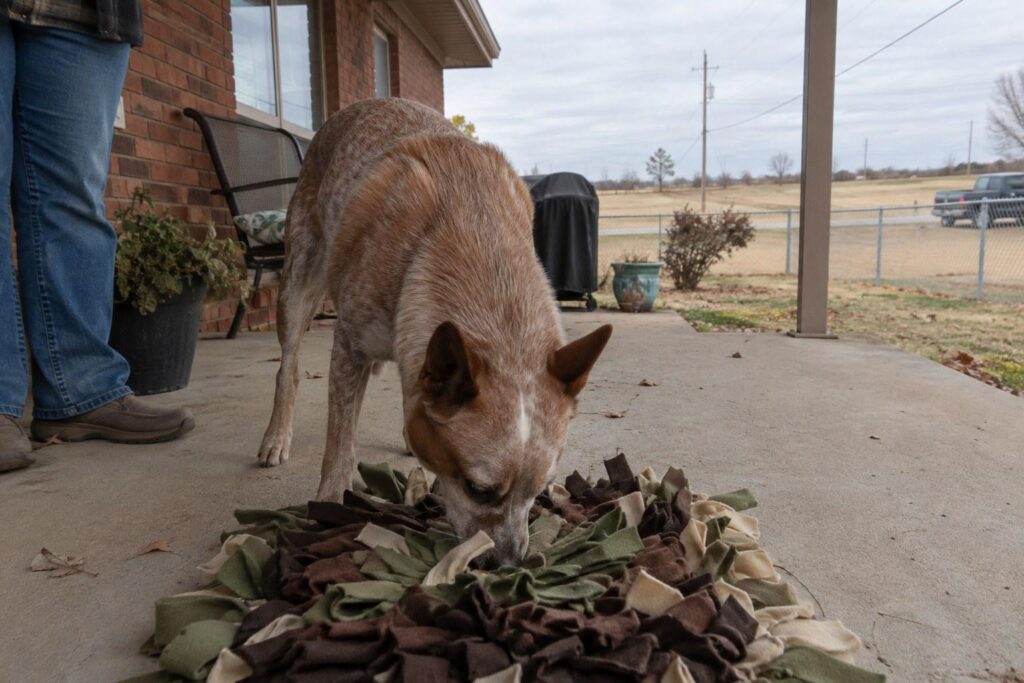
A tired Heeler is a well-behaved Heeler, but physical exercise alone rarely gets you there. Long runs can build an athlete with even more stamina. The real key is combining movement with thinking.
Physical Exercise That Actually Helps
Most adult cattle dogs do well with daily structured activity, such as brisk walks, fetch, or jogging once a veterinarian confirms joints are mature enough. Structured walks where your dog stays in a loose-leash heel are especially valuable, because they combine exercise with focus.
Oklahoma summers get hot, and cattle dogs often keep working long after they should rest. Exercise early in the morning or in the evening during the warm months, bring water, and watch for heavy panting or lagging. Talk with your veterinarian about safe activity levels for your individual dog.
Mental Work That Wears Them Out
Short training sessions of five to ten minutes, several times a day, often tire a Heeler more than an hour of fetch. Mix obedience cues like “sit”, “down”, “stay”, and “heel” with new tricks and problem-solving games.
- Food puzzles and snuffle mats at mealtime
- Hide-and-seek with toys or family members
- “Place” practice with increasing distractions
- Learning the names of toys and fetching them by name
- Scent games where the dog searches for hidden treats
Teaching an Off Switch
Many Heelers have never learned how to relax. Calm time is a skill you can train. Build a daily routine where your dog settles on “place” or in a crate after activity. Reward quiet, relaxed behavior. Over time, your dog learns that downtime is part of the job, too.
| Activity Type | Examples | What It Builds |
|---|---|---|
| Physical | Structured walks, fetch, jogging | Fitness and a healthy energy outlet |
| Mental | Puzzles, scent games, trick training | Problem-solving and focus |
| Obedience | “Heel”, “place”, “stay”, recall drills | Impulse control and responsiveness |
| Calm time | Settling on a bed or in a crate | The ability to relax at home |
If your Heeler still bounces off the walls after all of that, a structured program can reset the routine quickly. Our two-week Board and Train program gives your dog daily training in a consistent setting.
Core Commands for Australian Cattle Dog Training
Strong training rests on a handful of commands practiced until they work anywhere. These are the cues we prioritize for herding breeds because they directly control the chase and the nip.
“Leave It”
“Leave it” tells your dog to turn away from whatever it is focused on, whether that is a cat, a dropped sandwich, or a jogger. Start with a treat in your closed hand, reward when your dog backs off, and gradually raise the difficulty with moving objects.
Recall
A reliable “come” can keep a chasing Heeler safe from traffic. Practice on a long line in a fenced area first, reward generously, and never call your dog to something unpleasant. Recall should always mean good things happen.
“Place”
“Place” sends your dog to a specific spot and asks it to stay until released. It is our favorite tool for managing doorbells, dinner time, and visitors, since a dog lying on a cot cannot circle guests or herd the kids.
“Heel” and Loose-Leash Walking
Heelers are strong for their size and can pull hard when they spot a squirrel. Teaching your dog to walk at your side keeps walks pleasant and builds the habit of checking in with you. If your dog lunges or barks at other dogs on leash, see our tips on managing leash reactivity in OKC.
“Drop It” and “Wait”
“Drop it” protects against resource guarding and makes tug a safe game. “Wait” at doors and gates prevents bolting, which matters a lot for a breed that will happily take off after something moving down the street.
For a broader foundation in these skills, our article on building a well-behaved dog with obedience training in OKC walks through the basics in more detail.
Socializing Your Cattle Dog in Oklahoma City
Socialization is not about making your Heeler love everyone. It is about teaching your dog that new people, sounds, and places are normal and not a reason to guard, bark, or herd.
Start Early and Go Slow
The week-by-week puppy training schedule we share with new owners is a good starting point. With a cattle dog puppy, focus on calm, positive exposure to different people, surfaces, sounds, and environments, once your veterinarian says it is safe based on vaccinations.
Introducing Visitors
Heelers often react to people entering their home. Put your dog on “place” or on a leash before guests arrive, let the dog observe from a distance, and reward calm behavior. Ask visitors to ignore the dog at first. Over time, your dog learns that guests are not a threat or a herd to manage.
Other Pets and Small Animals
Cattle dogs can live happily with cats and other dogs, but their chase drive needs supervision. Use leashes and gates during introductions, practice “leave it” around the other pet, and never let the dog rehearse chasing.
Adult and Rescue Heelers
Plenty of Oklahoma City families adopt adult cattle dogs and cattle dog mixes from shelters and rescues. These dogs may come with unknown histories, fears, or habits. Patience and structure go a long way. Our guide to what Oklahoma City owners should expect from rescue dog training covers how to help a new dog settle in.
Choosing the Right Training Path for Your Heeler
Every cattle dog is different. Some just need a consistent owner and a few weeks of practice. Others have habits so ingrained that professional help saves months of frustration. Here is how the options compare at All Dogs Unleashed OKC.
Board and Train
Our Board and Train program is a fixed two-week program where your dog stays with us and trains every day. Each enrollment begins with an evaluation, so we understand your dog’s habits and your goals before training starts. The program ends with a turnover session, where you learn the commands and handling techniques, and you take home written instructions.
Board and Train comes with guaranteed results and lifetime support at no additional charge. For a high-drive breed, the daily repetition and consistent structure are often exactly what is needed to break nipping and chasing habits.
Private In-Home Lessons
In-home dog training brings a trainer to your house, where problems like door rushing, nipping kids, or barking at the fence actually happen. It works well for owners who want to be hands-on with every session.
Refresh Training
If your Heeler was trained before but has slipped back into old habits, refresh training helps restore those skills without starting from scratch.
| Option | Best For | How It Works |
|---|---|---|
| Board and Train | Strong nipping, chasing, or reactivity, and busy owners | Fixed two-week stay, daily training, turnover session |
| Private In-Home Lessons | Problems tied to your home and routine | Trainer works with you and your dog at your house |
| Refresh Training | Previously trained dogs that have slipped | Tune-up sessions to restore skills |
Still deciding? Our comparison of Board and Train versus in-home dog training in Oklahoma City lays out the differences in more detail.
Keeping Results Strong at Home
No matter which path you choose, results last when you keep practicing. Short daily sessions, consistent rules from everyone in the house, and plenty of mental work keep a Heeler sharp.
Want to talk through which option fits your Heeler? Call us at (405) 299-3386 and we will help you plan the next step.
About All Dogs Unleashed OKC
All Dogs Unleashed OKC helps Oklahoma City families turn energetic, strong-willed dogs into calm, reliable companions. We work with herding breeds like Australian Cattle Dogs regularly, and we understand how to channel their drive instead of fighting it. Our two-week Board and Train program, private in-home lessons, and refresh training give owners clear options for any stage of training. Call (405) 299-3386 to talk with our team about your dog.
Frequently Asked Questions
At what age should I start training my Australian Cattle Dog puppy?
You can start basic training as soon as your puppy comes home, usually around eight weeks old. Begin with name recognition, “sit”, crate routines, and gentle handling. Keep sessions short and fun. Early lessons in calm behavior and bite inhibition make a big difference later, because habits like nipping are much easier to shape in a young puppy than in a grown dog.
Why does my Blue Heeler nip at my heels?
Australian Cattle Dogs were bred to move cattle by nipping at their heels, so the behavior is instinctive. Running feet, children, and fast movement can trigger it. Manage situations that set it off, teach an incompatible behavior like “place”, and give your dog appropriate outlets such as tug with rules. If nipping becomes hard biting, contact a professional trainer for help.
Are Australian Cattle Dogs hard to train?
Cattle dogs are highly intelligent and learn quickly, but their independence and energy can make them challenging for first-time owners. They need clear rules, consistency from everyone in the household, and plenty of mental stimulation. With the right structure, they often become extremely responsive and eager to work. Problems usually come from boredom or inconsistent expectations rather than a lack of ability.
How much exercise does an Australian Cattle Dog need?
The AKC describes the breed as very energetic, and most adult Heelers need meaningful daily exercise plus mental work. Structured walks, fetch, and training games all help. Mental challenges like puzzles and scent games are just as important as physical activity. During hot Oklahoma summers, exercise early or late in the day and ask your veterinarian about safe activity levels.
Is Board and Train a good fit for a Blue Heeler?
For many Heelers, yes. Our fixed two-week Board and Train program provides daily repetition and consistent structure, which helps break habits like nipping, chasing, and door rushing. It starts with an evaluation and ends with a turnover session where you learn how to handle your dog at home. The program includes guaranteed results and lifetime support at no additional charge.
Can Australian Cattle Dogs live with kids and other pets?
Many cattle dogs do well with families, but their herding instinct means they may chase or nip running children and small animals. Supervise all interactions, teach kids to stand still if the dog gets mouthy, and train “leave it” and “place” early. Careful introductions and management help most Heelers live peacefully with kids, cats, and other dogs in the home.
Australian cattle dog training is about working with your Heeler’s instincts, not against them. With structure, mental work, and clear communication, your dog can be a loyal, focused partner. To get started, call (405) 299-3386 or reach out online. You can also visit All Dogs Unleashed OKC at our Park Avenue address in downtown Oklahoma City.
Ready to Get Started with All Dogs Unleashed OKC?
Your Heeler has the brains and drive to be an outstanding companion. Let our team help you channel that energy the right way. Call (405) 299-3386 today to schedule an evaluation. You can also visit All Dogs Unleashed OKC at 101 Park Ave Suite 1300, Oklahoma City, OK 73102.