
Aggression is one of the most serious behavior challenges a dog owner can face. Whether it is growling over a food bowl, snapping at strangers, lunging at other dogs on walks, or worse, aggressive behavior creates real safety risks and puts enormous strain on the human-dog relationship.
What makes aggression particularly challenging is that it is widely misunderstood. Many people interpret a dog’s aggressive behavior as dominance, bad temperament, or a sign that the dog is simply dangerous. In reality, aggression is almost always a communication response rooted in an emotional state, whether fear, pain, resource defense, or stress. Understanding what is actually driving the behavior is the first step toward addressing it safely and effectively.
Austin’s active social environment, with its busy sidewalks, dog parks, crowded trails, and frequent visitors to homes, creates conditions where aggression in dogs can surface and escalate quickly. All Dogs Unleashed works with Austin dog owners to assess, understand, and address aggressive behavior using evidence-based methods that prioritize safety for both the dog and the people around them.
The Different Types of Dog Aggression
Aggression in dogs is not a single, uniform behavior. It comes in several distinct forms, each with different triggers, emotional drivers, and training approaches.
Fear-based aggression is among the most common. A dog who feels trapped, threatened, or unable to escape from something frightening may respond with aggression as a last resort. Fear-aggressive dogs often display clear warning signals, including tucked tail, pinned ears, and whale eye, before escalating to a bite. These signals are frequently missed or misread by people who approach or handle the dog despite its discomfort.
Resource guarding occurs when a dog becomes aggressive in defense of food, toys, resting spots, or even people they have formed an attachment to. This type of aggression often appears suddenly, especially around mealtimes or when a dog perceives competition for a valued resource.
Redirected aggression happens when a dog who is highly aroused by one stimulus, such as a dog on the other side of a fence, is unable to access that stimulus and redirects the arousal onto whoever or whatever is nearby. This can result in bites to owners who are trying to intervene during a reactive episode.
Pain-related aggression can appear suddenly in a dog with no history of aggression if they are experiencing physical discomfort. A dog who suddenly becomes snappy with handling, especially around a specific body part, warrants a veterinary exam before any behavior modification is attempted.
Inter-dog aggression involves conflicts between dogs in the same household or between a dog and unfamiliar dogs. It can range from consistent tension and resource competition at home to intense reactivity toward all unfamiliar dogs encountered outside.
How Aggression Develops Over Time
Aggression rarely appears from nowhere. In most cases, there is a clear developmental history that, in hindsight, includes early warning signs that were missed or dismissed.
The foundation is often laid during the socialization period. Dogs who did not receive adequate positive exposure to people, dogs, or environments during their formative weeks may develop anxiety or defensiveness around those stimuli later. This does not mean every under-socialized dog will become aggressive, but incomplete socialization increases the risk significantly.
From there, the trajectory often follows a predictable pattern. A dog displays a subtle warning signal, such as stiffening, a hard stare, or a low growl, and the signal is either missed or actively punished. If punished, the dog learns to suppress the warning and move directly to more intense behavior. If missed, the trigger continues to cause stress without resolution.
Over time, the dog learns that aggression is effective at making the stressor go away. The behavior is reinforced because it works. Each successful aggressive response makes the behavior more likely to occur in the future and often more intense.
The Role of Human Behavior in Aggression
Dog owners often inadvertently contribute to the development and maintenance of aggressive behavior. This is not a matter of fault but of understanding how behavior works.
Comforting a fearful dog in a way that unintentionally reinforces anxiety, forcing interactions that the dog is clearly uncomfortable with, using punishment-based approaches that suppress warning signals, or failing to establish clear and consistent structure can all contribute to behavioral problems over time.
One of the most important things an owner can do when addressing aggression is to examine their own behavior and the dog’s environment carefully. Triggers, patterns, and reinforcement histories often become clear when the context is examined in detail.
What Not to Do When Your Dog Shows Aggression
Responding incorrectly to aggressive behavior is one of the fastest ways to make the problem worse. Several approaches that seem intuitive are actually counterproductive.
Punishing a growl is a particularly common mistake. Growling is a communication signal that a dog is uncomfortable. Punishing the growl removes the warning without addressing the underlying discomfort, which increases the risk of a dog who bites without warning. A dog who has been punished for growling has not become less aggressive. They have become less predictable.
Flooding, or forcing the dog to remain in the presence of their trigger until they calm down, can traumatize the dog further and deepen the aggressive response. Aggressive behavior requires systematic desensitization, not exposure without support.
Attempting to dominate or physically alpha-roll an aggressive dog is dangerous and counterproductive. These approaches can provoke bites and do nothing to address the emotional state driving the behavior.
How Professional Training Addresses Aggression
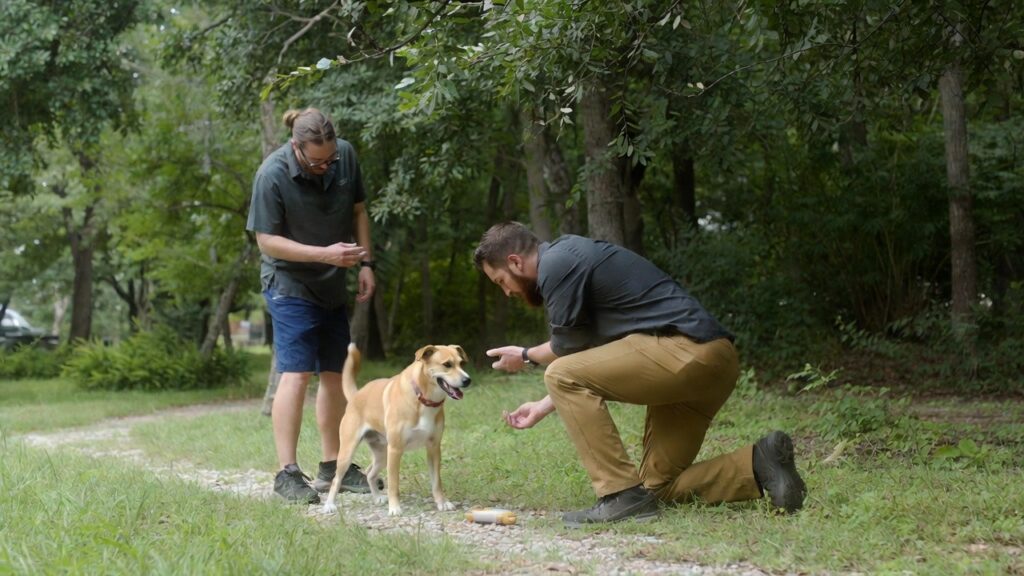
Effective aggression treatment requires a thorough assessment before any behavior modification begins. A professional trainer will evaluate the type of aggression, identify specific triggers, assess severity and bite history, and consider any medical factors that might be contributing.
From there, a behavior modification plan is built around the specific profile of that dog. This typically involves management strategies to prevent reinforcement of aggressive behavior in the short term, desensitization to gradually reduce the emotional response to triggers, counter-conditioning to build new positive associations, and obedience training to give the dog reliable behaviors to perform in previously challenging situations.
All Dogs Unleashed offers in-home dog training in Austin for owners who want a trainer working alongside them in the environment where challenges occur. For dogs that need intensive work, our board and train program in Austin provides structured daily training with professional trainers in a controlled setting. Our full suite of dog training programs gives owners options based on their dog’s specific needs and schedule.
Owner coaching is a critical component. Because so much aggression management happens in day-to-day life at home and on walks, the owner needs to understand the plan and execute it consistently.
Get Professional Help for Your Dog’s Aggression
Aggressive behavior is not something to manage alone or address with guesswork. Safe and effective behavior modification requires professional expertise and a customized plan.
All Dogs Unleashed offers professional aggression assessments and customized behavior modification programs for Austin dog owners. Whether your dog needs in-home training, a structured board and train program, or ongoing guidance through our dog training programs, our team will help you take the first step toward a safer, calmer dog.
Call (512) 963-6017 to schedule an evaluation with an Austin trainer today.
Frequently Asked Questions
Is an aggressive dog dangerous to keep?
Not necessarily, but aggression must be taken seriously and addressed promptly. The appropriate response depends on the type of aggression, its severity, its triggers, and the household context. A professional assessment will help you make an informed decision about management and training options.
Can aggressive behavior be completely eliminated?
In many cases, yes, especially when the aggression is fear-based and the dog has a good bite history. More severe cases may require ongoing management rather than complete elimination of the response. The goal is a safe, well-managed dog whose aggressive behavior has been substantially reduced.
What is the first step if my dog bites someone?
Ensure the safety of everyone involved and seek any necessary medical care. Secure your dog and remove them from the situation. Document the incident and consult with your veterinarian and a professional trainer as soon as possible to assess the dog and develop a response plan.
Should I rehome an aggressive dog?
This is a difficult decision that should be made with professional guidance. Rehoming without disclosing the dog’s history is never appropriate. In some cases, rehoming to a more suitable environment, such as one without children or other pets, can be a responsible option. A professional can help you assess whether this is the right path.
Are certain breeds more prone to aggression?
While some breeds were selectively developed for traits that can make them more reactive or intense, breed is rarely the primary driver of aggression. Individual history, socialization, training, and environment have far more influence on aggressive behavior than breed alone in most cases.
How long does it take to see improvement with an aggressive dog?
Progress depends on the type and severity of the aggression, the dog’s history, and the consistency of the owner’s follow-through. Some cases show meaningful improvement within weeks. Others, particularly those with a long history of reinforced aggressive behavior, may require months of consistent work.
About All Dogs Unleashed
All Dogs Unleashed is a professional dog training company located at 111 Congress Ave. #201, Austin, TX 78701 serving the Austin, TX area. We offer a full range of services including dog boarding, daycare, grooming, in-home training, and structured board and train programs.
Business Name: All Dogs Unleashed
Address: 111 Congress Ave. #201, Austin, TX 78701
Phone: (512) 963-6017
Website: https://www.alldogsunleashed.com/austin/