
Can dogs eat mashed potatoes? Every November, Denver owners ask us some version of that question as Thanksgiving plans come together. The short answer is that a small spoonful of plain, fully cooked potato is generally fine for most healthy dogs, but the mashed potatoes on a holiday table are rarely plain. Butter, cream, salt, garlic, onion, and chives change the picture quickly.
At All Dogs Unleashed Dog Training Denver, we spend a lot of time helping dogs learn to stay calm around food, and the holidays are when those skills matter most. Below, we explain what veterinary and animal welfare experts say about potatoes, which ingredients cause trouble, how much is too much, and the table manners that keep your dog safe during a busy holiday meal.
Want a dog who settles politely while the family eats? Tell us about your dog and what holiday meals look like at your house.
Key Takeaways
- Plain, fully cooked potato without butter, milk, salt, or seasoning is generally considered safe for dogs in small amounts, according to the American Kennel Club.
- Holiday mashed potatoes often contain butter, cream, salt, garlic, onion, or chives, and those ingredients are what make most recipes a poor choice for dogs.
- The American Society for the Prevention of Cruelty to Animals warns that onion, garlic, and chives can damage red blood cells, and that dairy and salty foods can upset a dog’s system.
- If your dog eats seasoned mashed potatoes, especially a dish with garlic, onion, or chives, call your veterinarian for advice.
- Skills like “leave it” and “place” protect your dog at the holiday table, and they are part of the daily work in our two-week Board & Train program.
Can Dogs Eat Mashed Potatoes Safely?
What the Experts Say
The American Kennel Club’s guide to potatoes for dogs quotes a veterinarian who explains that plain mashed or soft cooked potatoes are fine in small amounts, but not with lots of butter, which can trigger pancreatitis. The American Kennel Club’s answer to the mashed potato question is yes, as long as they are plain, with no butter, milk, salt, or seasonings.
The ASPCA’s list of people foods to avoid feeding pets backs up the concern about what usually goes into the recipe. It names onion, garlic, and chives, milk and dairy, and salty foods as ingredients that can cause problems. Put those two sources side by side and the takeaway is simple. The potato is not the issue. The add-ins are.
Plain Potato Versus Holiday Mash
A plain, boiled potato mashed with nothing added is a very different food from the rich, creamy version most families serve at Thanksgiving.
The American Kennel Club also notes that potatoes should be cooked thoroughly so they mash easily. Raw or half-cooked chunks can be a choking concern, and potatoes with green spots should be avoided because they can contain solanine, a naturally occurring toxin.
The Ingredients That Make Holiday Mashed Potatoes Risky
Here are the most common add-ins and why each one matters for your dog.
Butter, Cream, and Cheese
Butter and heavy cream are what make holiday mashed potatoes rich. For dogs, that richness is the problem. The veterinarian quoted by the American Kennel Club specifically warns that lots of butter can trigger pancreatitis, a painful inflammation of the pancreas that needs veterinary care.
Dairy adds a second concern. The American Society for the Prevention of Cruelty to Animals explains that pets do not have significant amounts of lactase, the enzyme that breaks down lactose, so milk and other dairy products can cause diarrhea or other digestive upset. A dog who eats a big serving of creamy mash may end up with an unhappy stomach the next day.
Salt
Mashed potatoes are often salted generously, and gravy poured on top usually adds even more. The American Society for the Prevention of Cruelty to Animals warns that excessive salt intake can cause increased thirst and urination and, depending on the amount, abnormal electrolytes. Signs of salt toxicity can include vomiting, diarrhea, depression, tremors, and seizures. A smaller dog is affected by a smaller amount, so a toy breed and a large retriever do not carry the same risk from the same spoonful.
Garlic, Onion, and Chives
These are the ingredients we want every Denver owner to watch for. The American Society for the Prevention of Cruelty to Animals notes that onion, garlic, and chives belong to the Allium family and can cause gastrointestinal irritation and red blood cell damage, which can lead to anemia. Dogs are at risk depending on the amount eaten.
Garlic powder and onion powder hide easily in seasoning blends, so you may not know they are in a dish unless you ask the cook. If a recipe contains any of these ingredients, treat it as off limits for your dog.
| Ingredient | Main Concern | Our Advice |
|---|---|---|
| Plain cooked potato | Generally safe in small amounts | Fine as an occasional small treat for most healthy dogs |
| Butter, cream, cheese | Fat and pancreatitis risk, dairy upset | Do not share; call your vet if your dog ate a large amount |
| Salt and gravy | Excess sodium, thirst, possible salt toxicity | Do not share; watch for vomiting or tremors |
| Garlic, onion, chives | Red blood cell damage and anemia | Keep away entirely; call your vet if eaten |
| Green or raw potato | Solanine and choking risk | Never feed; cook potatoes fully and discard green ones |
How Much Plain Potato Is Okay for a Dog?
If you want to share a little plain potato with your dog, keep the portion small and treat it as an occasional extra rather than a regular part of the diet.
Keep It Small and Occasional
The American Kennel Club describes potatoes as something to feed as a treat, since potatoes should only be a small extra on top of a complete, balanced dog food. It also points out that too many helpings can contribute to problems like obesity.
What counts as a small amount depends on your dog’s size, age, and health. A spoonful means something very different to a small terrier than to a big shepherd. Your veterinarian is the best person to tell you what a reasonable portion looks like for your dog, especially if your dog has a sensitive stomach, a weight concern, or an ongoing medical condition.
How to Prepare It
Set aside a small portion of potato before anything else goes into the pot. Boil or bake it until fully soft, mash it with nothing added, and let it cool completely. Skip the butter, milk, salt, pepper, and seasonings. The American Kennel Club notes that skins are okay as long as they are not green, but many owners find it simpler to peel them.
Safer Alternatives at the Holiday Table
If you want your dog to feel included, there are simple options that skip the riskiest ingredients:
- A small spoonful of plain mashed potato set aside before seasoning.
- Plain, well-cooked sweet potato, which the American Kennel Club describes as a nutritious option when it is soft and well cooked.
- Your dog’s regular treats, given for calm behavior on a mat during dinner.
- A long-lasting chew made for dogs, offered in a quiet spot away from the table.
Plenty of dogs know the rules until a plate of food appears at nose level. If your dog’s manners fall apart around the table, structured daily training can change that.
What to Do If Your Dog Gets Into the Mashed Potatoes
Even well-prepared households have accidents. Here is a calm, practical plan.
Step One: Figure Out What Was in the Dish
Estimate how much your dog ate and check the recipe. Note your dog’s approximate weight. Your veterinarian will want all of this information.
Step Two: Call Your Veterinarian
Call your regular veterinarian or, if they are closed for the holiday, an emergency animal hospital. A poison control service for pets is another option when toxic ingredients may be involved. Do not try to make your dog vomit unless a veterinarian tells you to.
Step Three: Watch Your Dog Closely
Follow your vet’s instructions and keep an eye on your dog for the next several days, since signs of garlic or onion poisoning can take a few days to appear. Watch for vomiting, diarrhea, belly discomfort, extreme thirst, weakness, or unusual tiredness, and call back if anything changes.
| Situation | Suggested Action |
|---|---|
| Small lick of plain or lightly buttered potato, dog seems normal | Monitor and call your vet if anything changes |
| Large serving of buttery or creamy mash | Call your vet for advice |
| Dish contained garlic, onion, or chives | Call your vet promptly |
| Dog ate heavily salted mash with gravy | Call your vet and watch for thirst or vomiting |
| Vomiting, tremors, weakness, or belly pain | Seek veterinary care immediately |
Holiday Table Manners That Keep Your Dog Out of the Sides
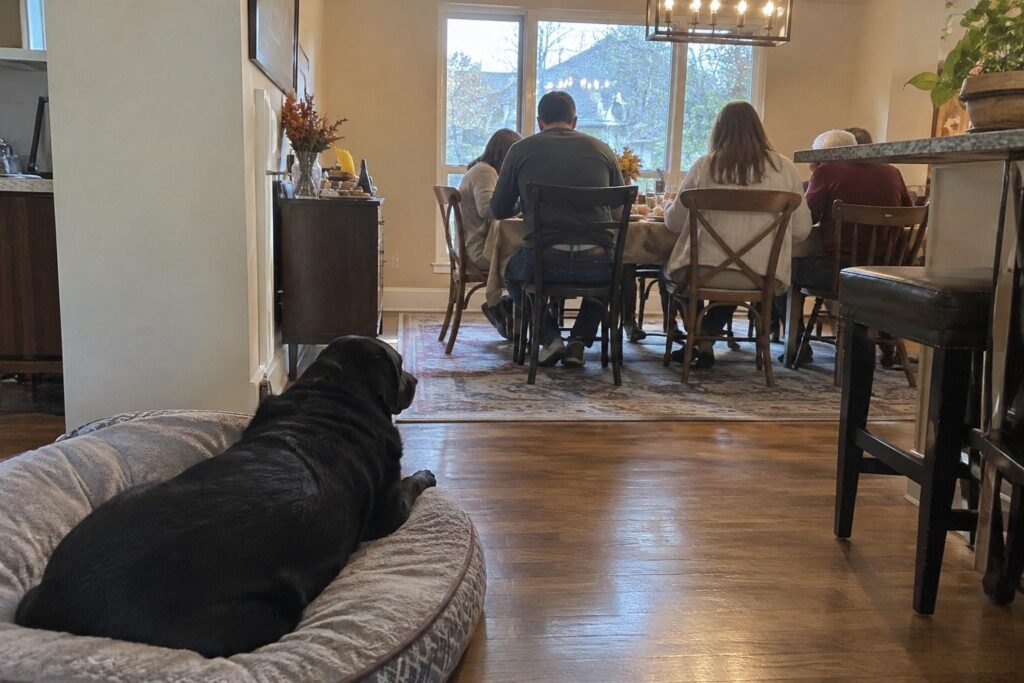
Asking relatives not to feed the dog helps, but it only goes so far. The most reliable protection is a dog who knows what to do when food is close by. These are the skills we see make the biggest difference during holiday meals.
“Leave It”
“Leave it” tells your dog to turn away from something they want. A solid “leave it” lets you stop your dog from scooping up a dropped spoonful of garlic mash before it ever reaches their mouth. Start with low-value items on the floor, reward your dog for looking away, and build up to more tempting food over many short sessions.
“Place”
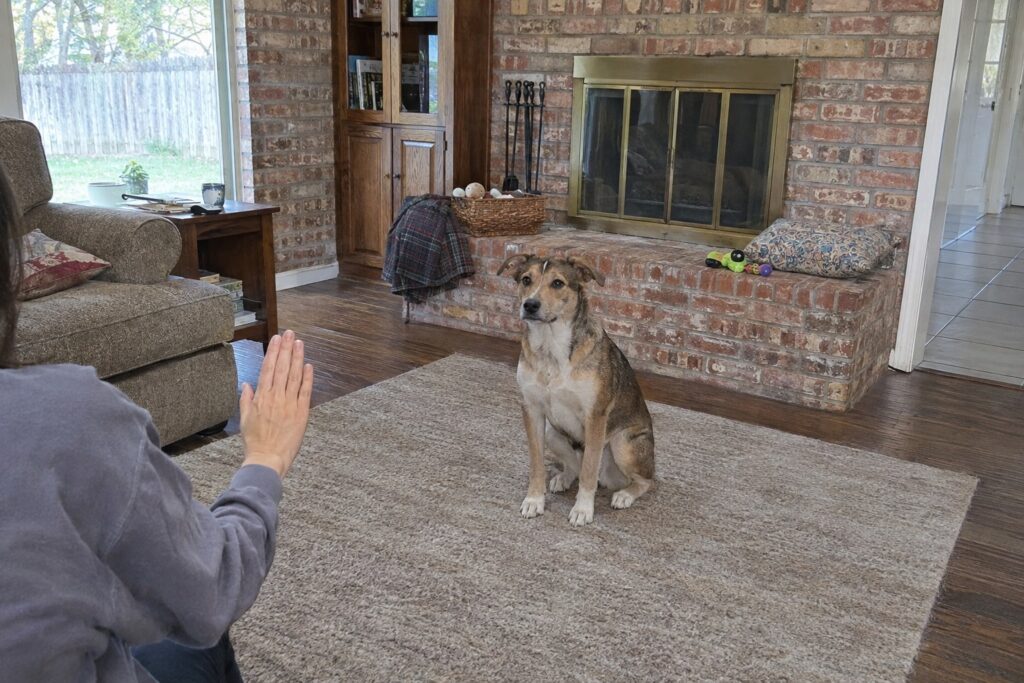
“Place” teaches your dog to go to a bed or mat and stay there until released. It gives your dog a clear job during dinner instead of circling chairs and resting a chin on laps. Set the bed where your dog can see the family but cannot reach the table, and practice short sessions in the weeks before Thanksgiving.
No Begging at the Table
Begging grows every time someone slips a bite under the table. Consistency from every person in the house is what ends it. Our article on eliminating begging behavior in dogs walks through why the habit forms and how to undo it step by step.
Calm Greetings When Guests Arrive
Holiday guests mean doorbells, coats, and people carrying covered dishes at dog height. An excited dog who jumps and follows every plate is far more likely to end up with a mouthful of something risky. A long walk before guests arrive helps take the edge off. On a cool November afternoon, a loop through Washington Park or City Park, or a stretch of the Cherry Creek Trail, can leave your dog ready to rest. If excitement is a regular struggle, our tips on how to curb overexcitement in your dog are a good place to start.
Setting Up a Dog-Safe Holiday Kitchen in Denver
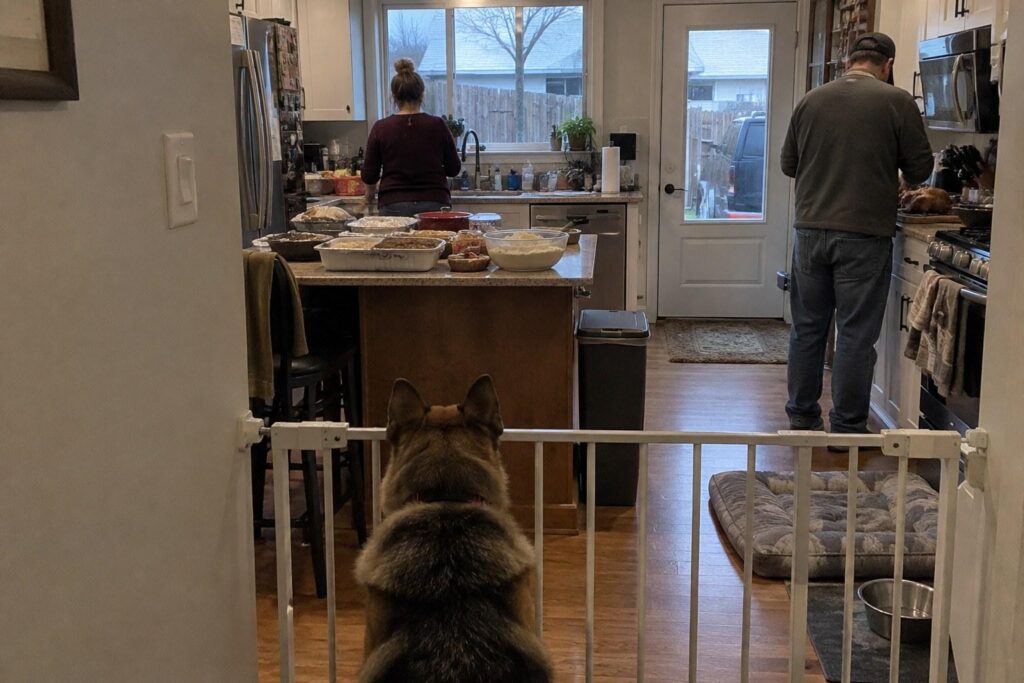
Training and management work best together. While your dog is still learning, a few setup choices can prevent most holiday food accidents.
Manage the Space
Use a baby gate, a closed door, or a crate to keep your dog out of the kitchen while you cook. A quiet room or crate away from foot traffic gives your dog somewhere to relax while side dishes come out of the oven.
Handle Leftovers and Trash
Many holiday food incidents happen after dinner. Cover leftovers right away, scrape plates into a trash can with a secure lid, and take food scraps outside promptly.
How Professional Training Helps During the Holidays
Some dogs learn “leave it” and “place” quickly with practice at home. Others have years of rewarded begging and counter surfing behind them, and those habits are much harder to change while the house is full of distractions. That is where professional training helps.
Our Two-Week Board & Train Program
Our Board & Train program is a fixed two-week program. Your dog stays at our facility and works with our experienced trainers every day to build reliable obedience and address behavior issues. Enrollment begins with an evaluation so we understand your dog’s habits and your goals. Commands like sit, stay, down, come, and heel are practiced throughout each day, along with the impulse control behind a solid “leave it” and a dependable “place.”
In the vast majority of cases, dogs complete the program within the two-week timeframe. Before your dog comes home, a transition session shows you the commands, techniques, and reinforcement strategies that keep the progress going. Every dog that completes Board & Train is backed by guaranteed results and lifetime support at no additional charge, and Affirm financing is available.
Private Lessons at Home or at Our Facility
If you would rather work on manners in your own kitchen and dining room, in-home dog training lets a trainer address begging and counter surfing right where they happen. All household members take part, which matters a lot for table manners, since one relative sneaking bites can undo weeks of work. Facility-based private lessons are also available if you prefer a more structured setting.
Boarding and Refresh Training
Traveling for Thanksgiving? Our dog boarding lets you bring your dog’s own food, which keeps their diet steady and holiday sides out of the picture. Dogs who have trained with us before can also come back for refresh training when habits slip. You can compare all of our dog training programs to see which fits your dog best.
For more everyday habits that make the holidays easier, read our dog training tips every Denver owner should know. When you are ready to talk about your dog, call us at (720) 310-7337.
About All Dogs Unleashed Dog Training Denver
All Dogs Unleashed Dog Training Denver helps local dogs build the manners that make busy seasons easier, from Thanksgiving dinner to everyday walks. Our two-week Board & Train program, private lessons, boarding, and refresh training are based at our facility at 2301 Blake St in Denver, which features outdoor turf and indoor and outdoor play areas. We focus on practical skills like “leave it,” “place,” and calm behavior around food, so your dog can stay safe and still be part of the celebration.
Frequently Asked Questions
Can dogs eat mashed potatoes with butter?
A small lick of lightly buttered potato is unlikely to harm most healthy dogs, but butter is not a good idea. The American Kennel Club quotes a veterinarian who warns that lots of butter can trigger pancreatitis, a painful condition that needs veterinary care. Plain potato without butter, milk, or salt is the safer choice. If your dog ate a large buttery serving, call your veterinarian for advice.
Are garlic mashed potatoes bad for dogs?
Yes. The American Society for the Prevention of Cruelty to Animals lists garlic, onion, and chives as foods to avoid because they can cause stomach irritation and damage red blood cells, which can lead to anemia. Garlic powder and onion powder count too, and they often hide in seasoning blends and gravy. If your dog ate garlic mashed potatoes or anything topped with chives, contact your veterinarian promptly for guidance.
Can dogs eat instant mashed potatoes?
Instant mashed potatoes are usually not a good choice for dogs. Many boxed and flavored mixes include added salt, dairy, butter flavoring, or seasonings such as garlic or onion powder. Ingredients vary by brand, so always read the label. If you want to share potato, a small amount of plain, fully cooked potato mashed at home with nothing added is the simpler option.
Are sweet potatoes better for dogs than mashed potatoes?
The American Kennel Club describes plain, well-cooked sweet potato as a nutritious option for dogs when it is soft and fully cooked. That does not include sweet potato casserole with marshmallows, brown sugar, butter, or nuts, which brings back the same concerns as rich mashed potatoes. Offer a small plain portion, introduce it gradually, and ask your vet if your dog has health issues.
How do I stop my dog from begging during Thanksgiving dinner?
Make sure nobody feeds the dog from the table, since every bite rewards begging. Teach a “place” command so your dog has a mat or bed to settle on during the meal, and reward calm behavior there with the dog’s own treats. Practice in the weeks before the holiday. If begging is deeply ingrained, professional training can build the consistency you need.
Does Board and Train teach dogs to leave food alone?
Our two-week Board & Train program works on obedience and impulse control every day, including “leave it,” “place,” and holding a position until released. Each dog starts with an evaluation, and a transition session before your dog comes home shows you how to keep those habits strong. Every graduate is backed by guaranteed results and lifetime support at no additional charge.
Keep Mashed Potatoes Off Your Dog’s Plate This Denver Thanksgiving
So, can dogs eat mashed potatoes? A small amount of plain, fully cooked potato is generally fine, but holiday mash loaded with butter, cream, salt, garlic, onion, or chives belongs on your plate, not your dog’s, and your veterinarian is the right call if your dog gets into some. To talk about training before the holidays, call (720) 310-7337 or reach out online. You are also welcome to visit our facility at 2301 Blake St in Denver.
Ready to Get Started with All Dogs Unleashed Dog Training Denver?
A calmer holiday table starts with a dog who knows what to do around food. Call All Dogs Unleashed Dog Training Denver at (720) 310-7337 to talk about the right program for your dog. All Dogs Unleashed Dog Training Denver is located at 2301 Blake St, Denver, CO 80205.