
Austin is an active city, and most dog owners here understand the importance of physical exercise. Morning runs along the Barton Creek Greenbelt, long weekend hikes, and evening laps around the neighborhood are all part of the Austin dog lifestyle. But there is a piece of the puzzle that many owners overlook: mental stimulation.
Physical exercise alone is rarely enough to keep a dog satisfied, especially for intelligent, high-drive breeds and working dogs. When a dog does not have enough cognitive challenges, it finds its own ways to stay occupied. Those ways are rarely things owners appreciate.
At All Dogs Unleashed, we help Austin dog owners understand and address the full picture of canine wellness, including mental enrichment. If your dog is showing one or more of the signs below, it may be time to add more mental stimulation to their routine.
1. Destructive Chewing Beyond the Puppy Stage
Puppies chew as a normal part of development, but destructive chewing in adult dogs is often a sign of boredom or anxiety. If your fully grown dog is regularly destroying furniture, shoes, baseboards, or household items, the behavior is communicating something.
Dogs that do not have enough cognitive outlets redirect their energy into their mouths. Chewing is self-soothing and stimulating at the same time. When a dog lacks structured mental engagement, destructive chewing fills the gap.
What to try:
- Rotate enrichment toys: Puzzle feeders, Kongs stuffed with frozen food, and snuffle mats give dogs a productive chewing and problem-solving outlet.
- Provide appropriate chews: Bully sticks, raw bones (under supervision), and long-lasting chews satisfy the chewing drive in an acceptable way.
- Add training sessions: Short, focused obedience or trick-training sessions require mental effort and tire dogs out cognitively.
2. Excessive Barking With No Clear Trigger
Some barking is normal and appropriate. Dogs alert-bark at strangers, respond to sounds, and communicate through vocalization. But when a dog barks continuously, repetitively, or at nothing in particular, boredom is often the root cause.
Bored dogs look for stimulation anywhere they can find it. Barking at passersby through the window, barking at ambient noises in the house, or barking seemingly at nothing are all ways a dog with excess cognitive energy tries to self-stimulate.
Before assuming a medical or anxiety-based cause, rule out boredom by increasing enrichment and structured activity. If barking persists despite enrichment efforts, professional help from our training programs in Austin can identify the underlying cause and build a behavior modification plan.
3. Hyperactivity and an Inability to Settle
If your dog seems unable to relax, constantly follows you from room to room, circles, paces, or buzzes with energy throughout the day even after physical exercise, mental understimulation may be the issue.
Physical exercise burns calories and tires muscles, but it does not necessarily exhaust the brain. A dog that runs for an hour can come home with its body tired but its mind still spinning. Mental work, problem-solving, and structured training sessions target the cognitive load that pure exercise cannot address.
Signs this is cognitive rather than physical:
- The dog calms briefly after exercise but returns to hyperactivity within an hour.
- The dog is fine during direct engagement with you but immediately restless when left alone.
- The dog cannot hold a sit or down-stay for more than a few seconds even in calm environments.
4. Obsessive or Repetitive Behaviors
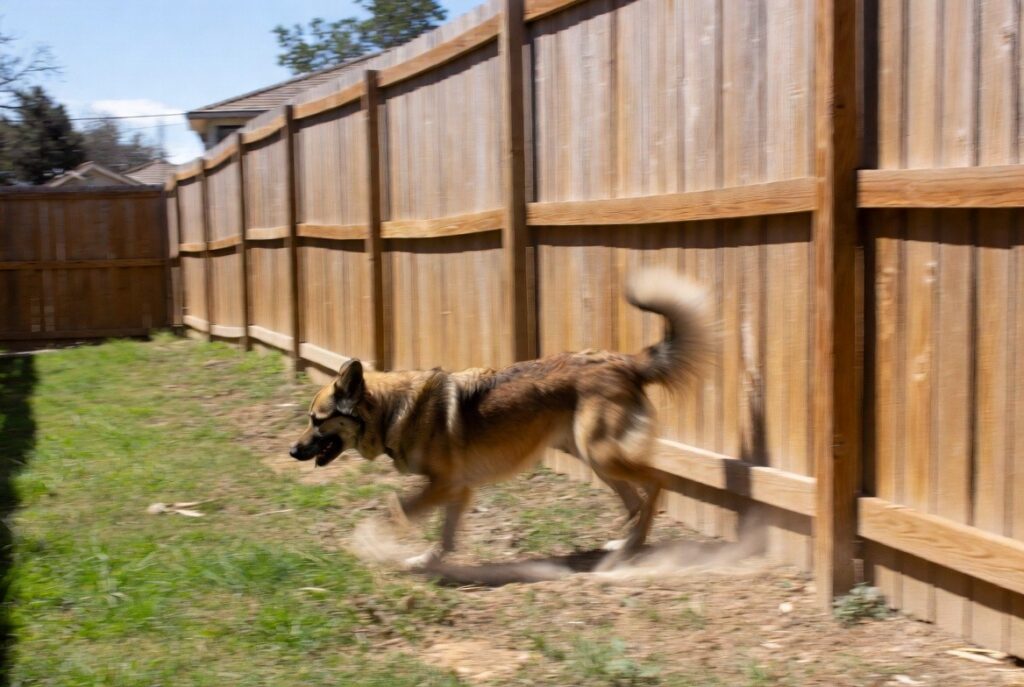
Repetitive behaviors like tail chasing, shadow chasing, obsessive licking, or pacing the same route in the yard are strong indicators that a dog is under-stimulated or redirecting anxious energy. These behaviors can become compulsive over time if not addressed early.
While some repetitive behaviors have a medical basis, boredom and lack of enrichment are common triggers. A dog with a full, structured day of mental and physical activity rarely has the bandwidth to develop compulsive routines.
If you are seeing repetitive behaviors, reach out to our team at All Dogs Unleashed to discuss a behavioral assessment and enrichment plan. For dogs whose repetitive behaviors are deeply ingrained, a structured board and train program can break the cycle in a controlled environment.
5. Getting Into Trouble While You Are Away
Coming home to a dog that has gotten into the trash, raided cabinets, pulled items off shelves, or torn up objects it has never touched before is a classic sign of boredom during alone time. Dogs left for long stretches without mental preparation often use the time to self-entertain in destructive ways.
Strategies to address this:
- Pre-departure enrichment: A frozen Kong, lick mat, or puzzle toy given just before you leave occupies your dog during the high-anxiety transition period.
- Rotate toys: Leaving the same toys out every day leads to habituation. Rotating toys in and out keeps things novel and engaging.
- Consider daycare: For dogs that struggle with long stretches alone, dog daycare in Austin provides structured interaction, play, and supervision throughout the day.
6. Attention-Seeking Behaviors That Escalate
Some attention-seeking behavior is normal. Dogs are social animals and they want engagement with their owners. But when a dog begins nudging, pawing, whining, barking at you, or becoming increasingly pushy in their demands for attention, the underlying message is often that their mental needs are not being met.
Dogs that receive mental stimulation through training, enrichment, and structured play tend to be calmer and more independent during downtime. Dogs that are cognitively under-stimulated often become clingy and demanding because interaction with their owner is the only cognitive engagement they get.
Building predictable training sessions and enrichment routines into your dog’s day can reduce attention-seeking significantly. The goal is to give your dog enough structured engagement that they are satisfied rather than perpetually searching for input.
7. Lack of Interest in Toys or Activities That Used to Engage Them

If your dog has lost interest in toys, games, or activities that used to engage them, cognitive under-stimulation or boredom with routine can be a factor. Dogs, like people, habituate to repetitive experiences. The same fetch game every day eventually loses its novelty.
Signs your dog’s engagement has dropped:
- They ignore toys they used to play with enthusiastically.
- They show no interest in food puzzles or treat-based activities.
- They seem generally flat or disengaged even during times that were previously energizing.
Introducing new types of mental challenges, varying enrichment activities, and adding novelty to training can reignite engagement. New tricks, scent work, agility foundations, and rotating puzzle feeders all provide fresh cognitive challenges.
Help Your Austin Dog Thrive With the Right Stimulation
Boredom is one of the most common and most overlooked drivers of problem behavior in dogs. The good news is that most of these behaviors are addressable with the right combination of physical exercise, mental enrichment, and professional training guidance.
All Dogs Unleashed is here to help Austin dog owners build the full-picture approach their dogs need. Call us at (512) 963-6017 to learn more about our training programs and enrichment strategies.
Frequently Asked Questions
How much mental stimulation does a dog need per day?
Most adult dogs benefit from 15 to 30 minutes of focused mental enrichment per day in addition to regular physical exercise. High-drive working breeds may need significantly more. Training sessions, food puzzles, scent work, and structured play all count toward this goal.
Can too much mental stimulation stress a dog out?
Yes. Mental stimulation should be engaging and positive, not overwhelming. If your dog becomes frustrated, shuts down, or shows stress signals during enrichment activities, dial back the difficulty and work at a pace that keeps them confident and eager.
What are the best mental enrichment activities for dogs in Austin?
Some highly effective options include nose work and scent games, food puzzle feeders, short daily training sessions, new route walks where the dog is allowed to sniff freely, and group training classes. Austin’s parks and outdoor environments also offer rich sensory experiences that count as mental enrichment.
When should I seek professional help for behavioral problems?
If your dog’s boredom-related behaviors are severe, have been present for a long time, or involve aggression or compulsive elements, professional training support is the right move. All Dogs Unleashed offers a range of training programs designed to address behavioral issues and build a stronger enrichment foundation.
About All Dogs Unleashed
All Dogs Unleashed is a professional dog training company located at 111 Congress Ave. #201, Austin, TX 78701 serving the Austin, TX area. We offer a full range of services including dog boarding, daycare, grooming, in-home training, and structured board and train programs.
Business Name: All Dogs Unleashed
Address: 111 Congress Ave. #201, Austin, TX 78701
Phone: (512) 963-6017
Website: https://www.alldogsunleashed.com/austin/