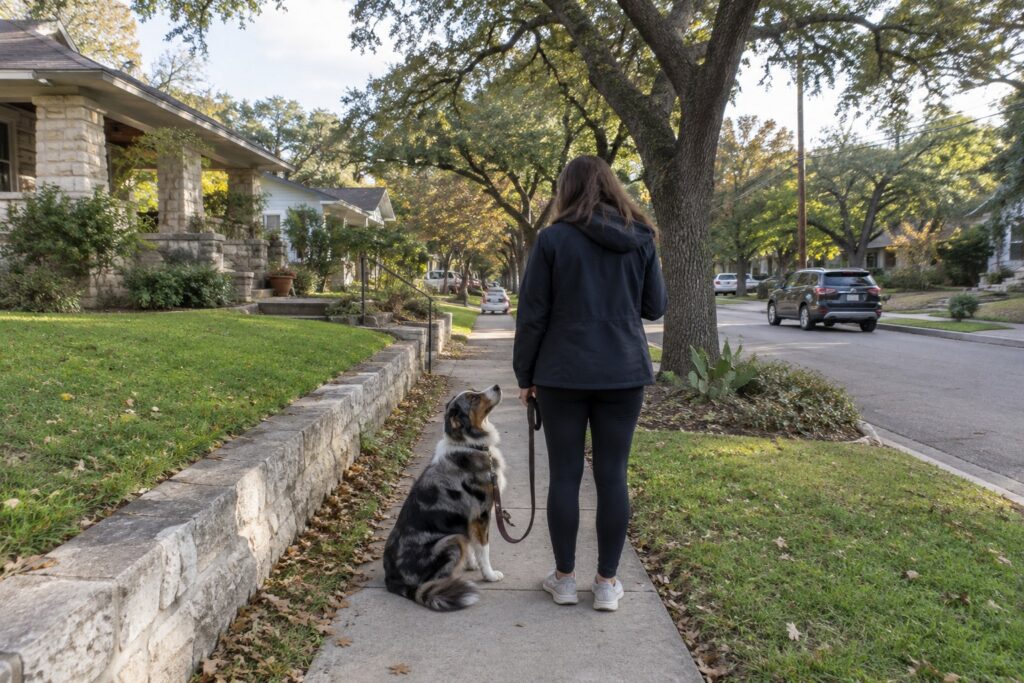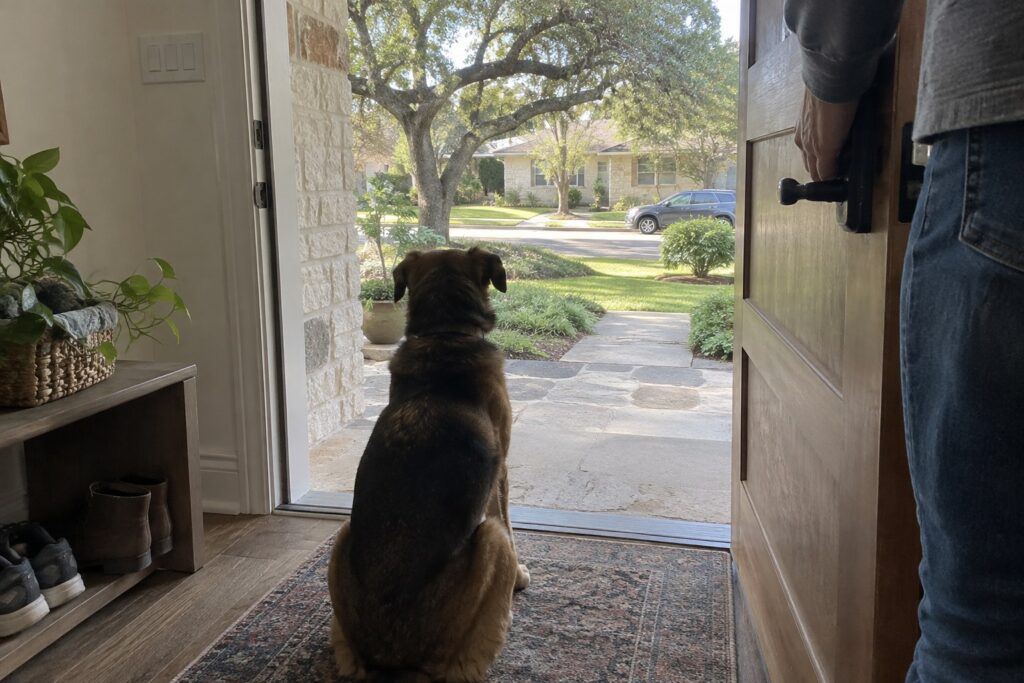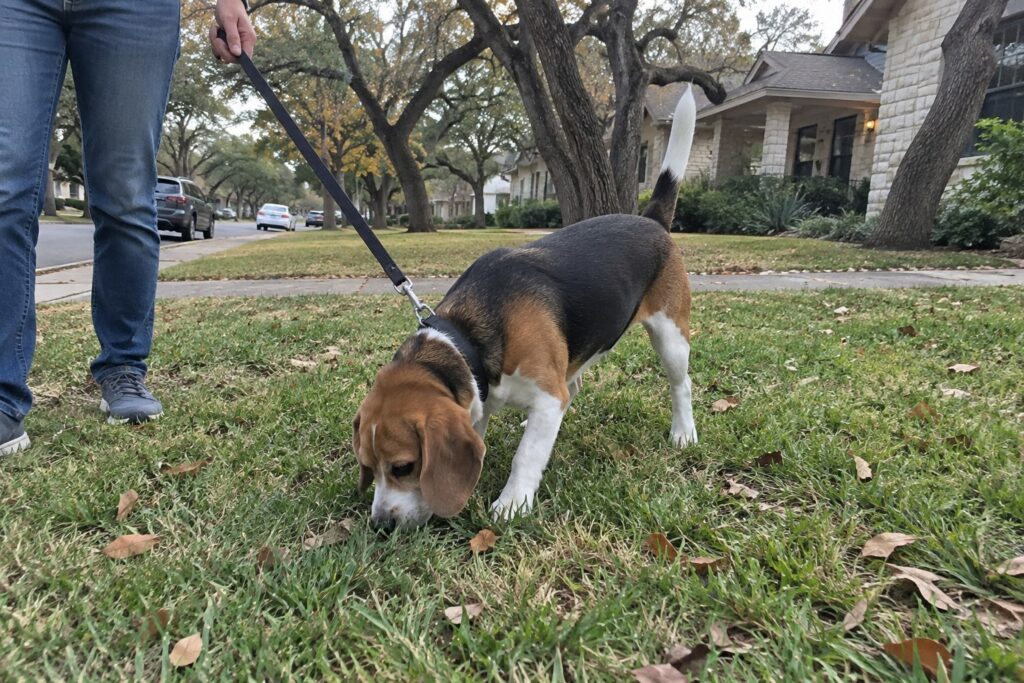

Home training is one of the most valuable things an Austin dog owner can do. Reinforcing commands in your own space, in your dog’s everyday environment, helps transfer training into real life. But training at home also creates plenty of opportunities for well-intentioned owners to accidentally undermine the progress their dog is making.
At All Dogs Unleashed, we work with dog owners across Austin to build effective, sustainable training habits. In our experience, most training struggles at home come down to a small set of recurring mistakes. Identifying and correcting these habits can make a significant difference in how quickly and reliably your dog responds.
Here are six of the most common training mistakes we see Austin dog owners make, and what to do instead.
1. Repeating Commands Multiple Times
This is one of the most widespread training mistakes and one of the most damaging to long-term reliability. When an owner says “sit… sit… sit… SIT” before the dog complies, the dog learns that the first command does not actually require a response. The real cue becomes the frustrated tone of voice on the fourth repetition.
Dogs are excellent pattern learners. If you consistently say a command two or three times before requiring compliance, your dog will learn that pattern and wait for the cue it has learned to respond to, which is the third or fourth repetition.
The fix:
- Say the command once, in a neutral tone.
- Wait a few seconds for compliance.
- If the dog does not respond, use a gentle prompt or lure to guide the behavior rather than repeating the verbal cue.
- Reward the moment compliance happens.
Consistency in asking once is foundational. Over time, your dog will learn that the first command is the real command.
2. Inconsistent Rules Across Family Members
Training a dog is a household-wide commitment. If one family member allows the dog on the couch and another does not, or one person enforces a “sit before meals” rule and another feeds the dog without asking for anything, the dog receives conflicting information about what is expected.
Dogs do not generalize rules the same way humans do. A rule that exists for one person but not another is not a rule as far as the dog is concerned. It is simply two different contexts with two different sets of expectations.
The fix:
- Hold a family meeting and align on the core rules: what furniture is allowed, what behaviors are required before meals and walks, how to respond to jumping, and what commands the dog is expected to know.
- Write the rules down and post them somewhere visible until all household members have internalized them.
- Ensure that any visiting family members or guests understand and follow the household rules during their stay.
3. Training Only in One Location
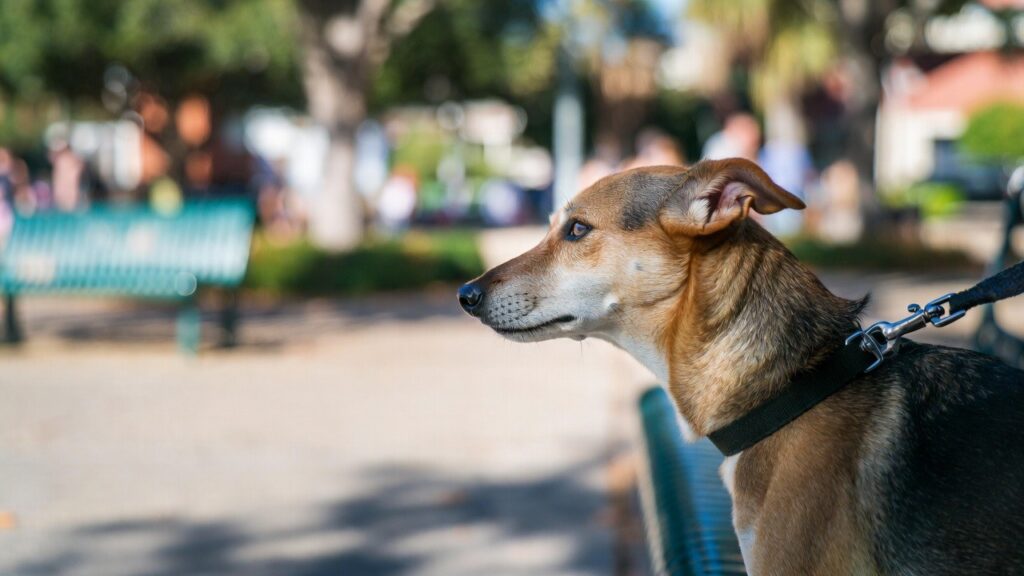
Many dogs that respond reliably in the living room fall apart in the backyard, at the park, or in front of guests. This is not disobedience. It is a predictable result of how dogs learn: behaviors are often context-specific until they are deliberately generalized.
When training happens exclusively in one room or environment, the dog associates the command with that specific setting rather than the command itself. The moment the context changes, the learned response weakens.
The fix:
- Once your dog reliably responds to a command in one environment, practice the same command in at least five to ten new settings before calling it solid.
- Start with low-distraction variations of new environments and gradually increase difficulty.
- Use every outing as a training opportunity. Asking for a sit before getting out of the car, before entering a doorway, or before greeting another dog are all real-world generalizations that strengthen reliability.
If your dog needs help developing solid responses across environments, our in-home dog training in Austin brings a professional trainer into your specific home and neighborhood to build exactly this kind of contextual fluency.
4. Rewarding at the Wrong Time
Timing is everything in dog training. A reward delivered two or three seconds after the desired behavior can unintentionally reinforce whatever the dog was doing in those two or three seconds, not the behavior you intended to reward.
This is particularly common with owners who are still reaching for a treat while the dog is already standing back up from a sit, or who praise after the dog has already broken a down-stay. From the dog’s perspective, the reward is associated with the most recent behavior.
The fix:
- Keep treats accessible before you ask for a behavior, not while you are scrambling to find them after.
- Use a marker word or clicker to capture the exact moment of correct behavior, then follow with the reward.
- Practice without food first so you can identify your timing gaps before adding the reward variable.
5. Skipping Reinforcement Too Quickly
A common progression error: a dog learns a command, the owner is satisfied, and reinforcement fades out almost entirely. The dog stops getting rewarded for the behavior, the behavior weakens, and the owner becomes frustrated when the dog suddenly “forgets” commands it learned weeks ago.
Reinforcement schedules need to be tapered strategically, not dropped abruptly. Moving from continuous reinforcement (every repetition) to variable reinforcement (some repetitions) actually makes behavior more durable over time. But skipping reinforcement too early or too completely leads to behavior extinction.
The fix:
- Continue reinforcing known commands intermittently even after they appear reliable.
- Use real-life rewards alongside food: a chance to sniff, a walk, a game of tug, or praise from a person the dog loves all count as reinforcement.
- Return to higher reinforcement rates any time you introduce a new environment, distraction level, or difficulty.
6. Getting Emotional During Training Sessions

Training sessions that become tense, frustrated, or emotional are counterproductive. When an owner raises their voice, shows frustration, or responds to failure with punishment, the dog begins to associate training with stress rather than engagement. Sessions become something to avoid rather than something to look forward to.
Dogs read emotional states extremely well. A frustrated trainer creates a stressed, shut-down learner. Calm, consistent, positive interactions produce dogs that are eager to engage and resilient in the face of difficulty.
The fix:
- End every session on a success, even if you have to drop back to something the dog knows well.
- Keep sessions short: 5 to 10 minutes of focused training is more productive than a 30-minute session where both parties lose focus and patience.
- If you feel yourself becoming frustrated, end the session, reset, and return when you are calm.
Build Better Training Habits With Professional Support
Home training is most effective when it is built on a strong foundation. All Dogs Unleashed helps Austin dog owners develop the skills and habits that translate into reliable, well-behaved dogs in every environment. Call us at (512) 963-6017 to learn more about our training programs.
Frequently Asked Questions
How often should I practice training at home?
Short daily sessions produce better results than longer, less frequent ones. Most dogs benefit from two to three focused five-to-ten-minute training sessions per day. Consistency matters more than duration.
My dog does great at home but ignores commands in public. What is the issue?
This is the generalization problem described in mistake number three. Your dog has learned the command in one context but has not yet learned that it applies everywhere. Gradually practicing in new environments, starting with low-distraction settings, will build the generalization your dog needs.
What is the best way to stop my dog from jumping on guests?
Ask guests to turn away and withhold attention when the dog jumps, and reward the dog with attention and treats when all four paws are on the floor. Consistency across everyone who interacts with the dog is critical. If jumping is a persistent problem, professional guidance from our training programs can accelerate the correction.
Should I train with treats or praise?
Most dogs respond best to a combination. Food is highly motivating for most dogs, especially early in training. As behaviors become more reliable, you can integrate praise, play, and real-life rewards as alternatives. The key is using whatever motivates your individual dog consistently.
About All Dogs Unleashed
All Dogs Unleashed is a professional dog training company located at 111 Congress Ave. #201, Austin, TX 78701 serving the Austin, TX area. We offer a full range of services including dog boarding, daycare, grooming, in-home training, and structured board and train programs.
Business Name: All Dogs Unleashed
Address: 111 Congress Ave. #201, Austin, TX 78701
Phone: (512) 963-6017
Website: https://www.alldogsunleashed.com/austin/