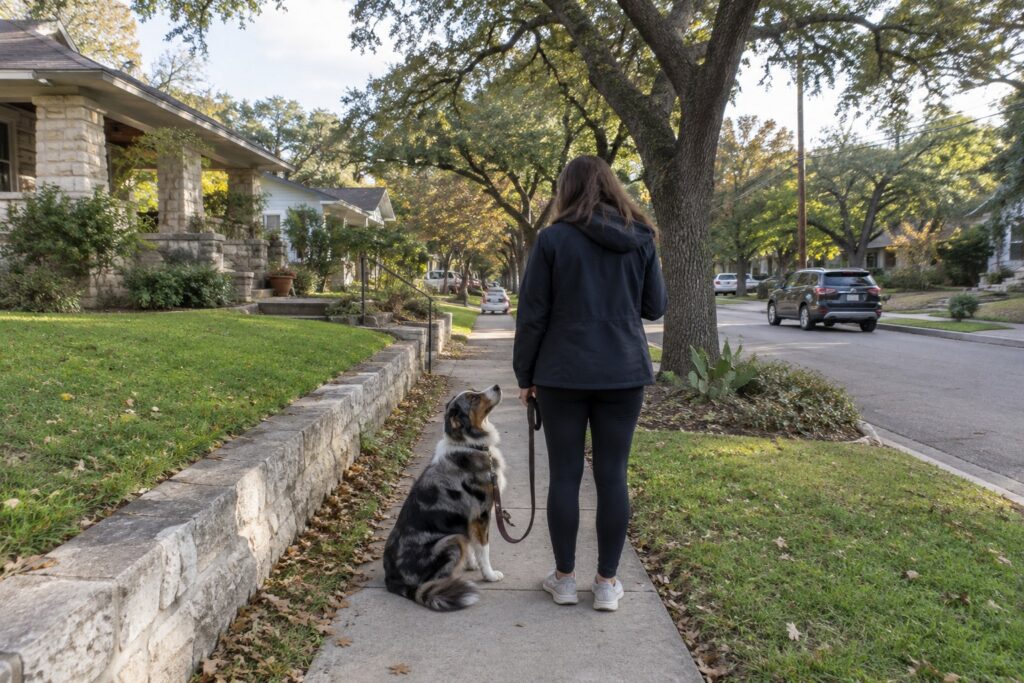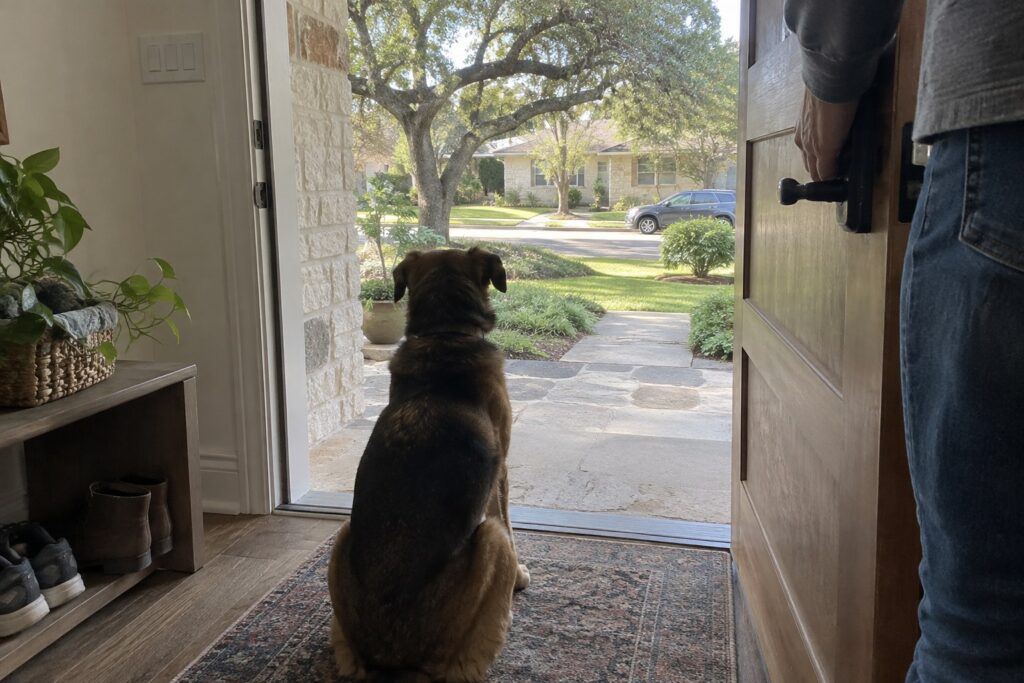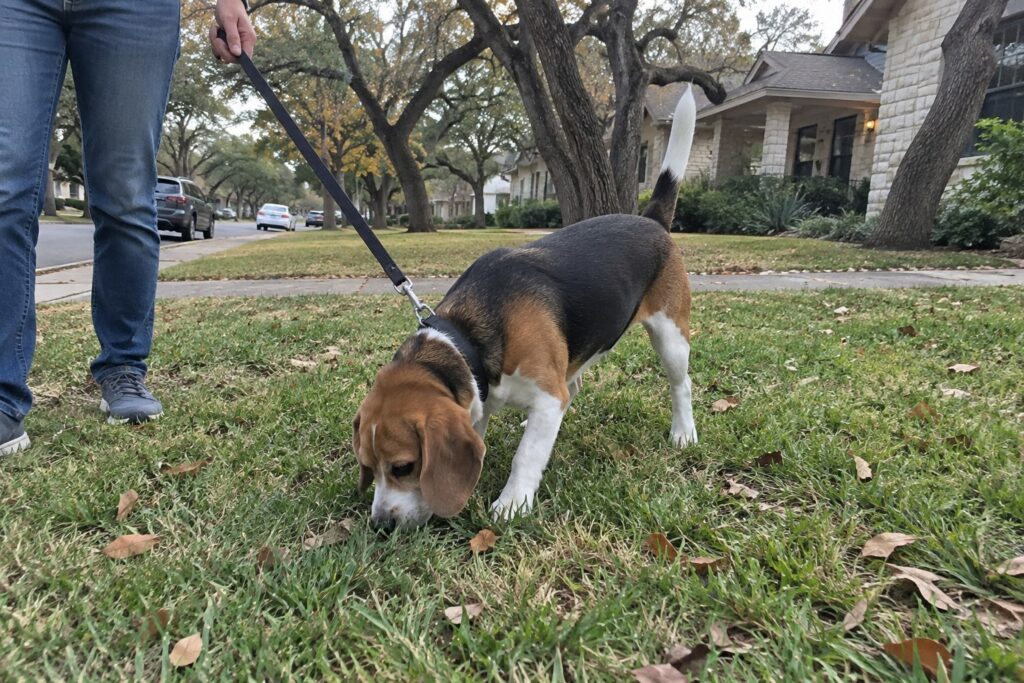

Labrador Retrievers are among the most trainable breeds in the world, yet their high energy, strong impulse drives, and distraction sensitivity make consistent, structured instruction essential from the start. Owners in Bossier City face real environmental challenges: aircraft noise from Barksdale Air Force Base, heavy traffic along Airline Drive, and summer heat that compresses outdoor training windows significantly. All Dogs Unleashed Dog Training Bossier City is based in Bossier City and serves Bossier City and surrounding Bossier Parish communities across the Red River.
We provide breed-specific behavioral guidance, giving Labrador owners a clear, step-by-step path to foundational obedience and real-world reliability. Ready to get your Labrador on the right track? Our trainers will assess your dog and build a breed-specific plan.
Key Takeaways
- Learning how to train a Labrador Retriever requires addressing impulse control before advancing to complex commands.
- Bossier City’s heat and environmental distractions demand strategic scheduling and distraction-proofing throughout the training process.
- Positive reinforcement paired with structured daily repetition produces the most reliable obedience results in Labs.
- Consistent recall training is critical for Labs near high-traffic areas like Barksdale Blvd and Airline Drive.
- Professional board-and-train programs accelerate behavioral results for Labs with significant obedience or reactivity challenges.
What Makes Labrador Retrievers Different to Train?
Labrador Retrievers differ from other breeds in three specific ways: elevated baseline arousal, strong retrieval drive, and high social impulse, all of which require targeted management during training. A trainer who suppresses retrieval drive, social energy, and oral fixation will produce resistance. A trainer who channels those instincts produces reliable, conditioned responses. Understanding the breed’s behavioral architecture is the first step toward effective labrador retriever training tips that actually hold up in real-world environments.
The Lab’s Energy Profile
Labs are working-breed dogs. Their baseline arousal level is significantly higher than companion breeds, and that arousal directly affects compliance during training sessions. Dogs in a state of physical overexcitation have reduced capacity for impulse inhibition. Structured physical activity of 45 to 60 minutes before a formal training session produces measurably better focus and response latency.
In this part of Northwest Louisiana, this creates a practical scheduling problem. Heat indices in the region regularly exceed 100°F from June through September, which eliminates midday outdoor exercise as a safe pre-session option. Early morning and evening windows are the functional training periods during summer months. November through February, with lows in the 40s, allows more flexible outdoor session timing.
Owners who ignore this seasonal variable often misread a heat-fatigued or overaroused dog as a training failure when the issue is physiological, not behavioral.
Breed Instincts That Shape the Training Approach
Two instincts define the Lab’s training profile: retrieval drive and oral fixation. Retrieval drive is genetic wiring, not a learned preference. Labs are highly food- and toy-motivated as a direct result of this drive, which makes them exceptionally responsive to positive reinforcement protocols. Oral fixation, the compulsion to carry and mouth objects, is the same instinct expressed differently. Mouthing behavior in young Labs is not aggression. It is an undirected retrieval impulse that must be redirected through early introduction of “leave it” and “drop it” as foundational commands.
Labrador impulse control training addresses the breed’s third defining trait: social drive. A Lab’s conditioned response to any approaching person or dog is forward movement and physical contact. Left unaddressed, this becomes the most disruptive behavior pattern for owners walking near Barksdale Blvd or in local neighborhood parks, where high pedestrian and dog traffic creates constant greeting triggers. “Sit before greeting” is the foundational compliance skill that converts that social drive from a liability into a controlled behavior.
Ambient noise from nearby commercial corridors and busy intersections adds environmental stimuli that must be factored into outdoor proofing sessions when training Labs in Bossier City. Our dog training programs in Bossier City are structured to address all three of these breed-specific behavioral patterns from the first session forward.
10 Key Tips for Training a Labrador Retriever
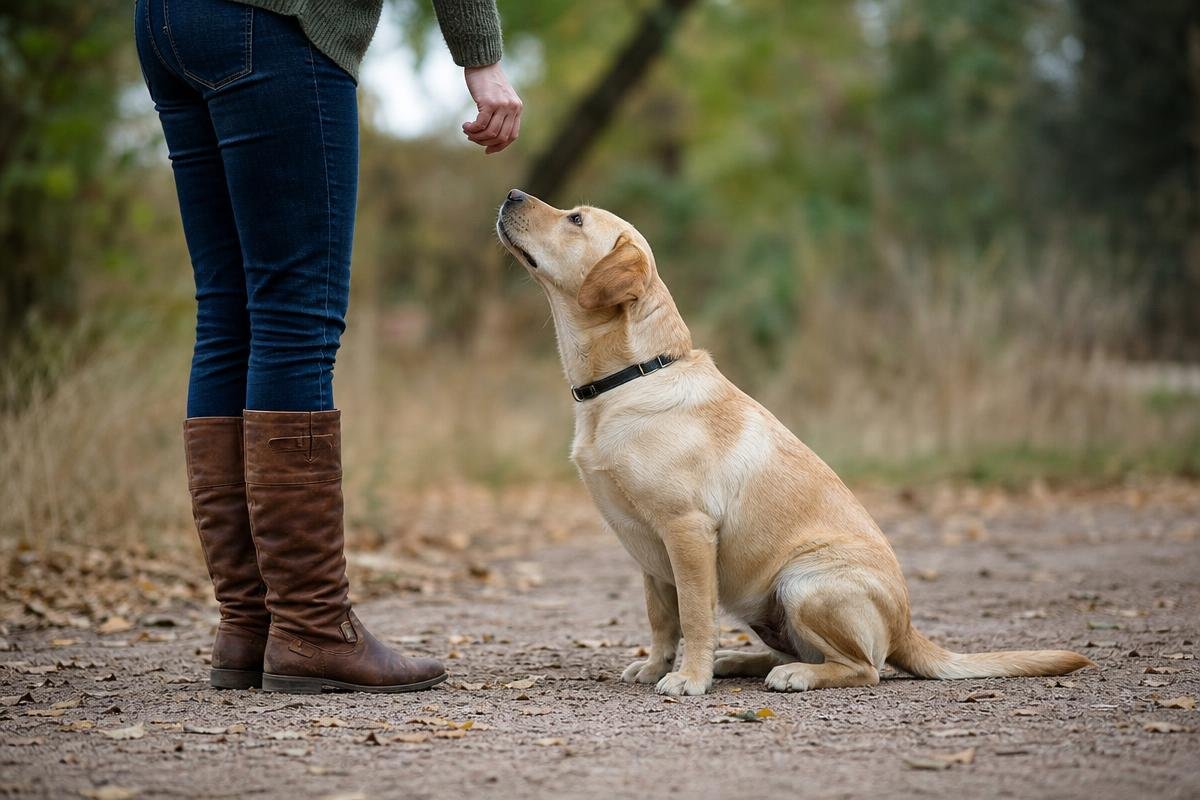
Labrador retriever training tips work best when applied in a deliberate sequence, not randomly. Each tip below addresses a specific behavioral pattern common to the breed. Follow this guide in order, and your dog will build on each skill before advancing to the next.
Tip 1: Establish the Five Foundational Commands First
Foundational compliance creates the behavioral framework every advanced skill depends on. Teach sit, down, stay, come, and heel in that sequence, confirming each command at a 90 percent success rate before introducing the next. Our dog training programs in Bossier City follow this exact progression under structured instruction.
Tip 2: Build Impulse Control from Day One
Labrador impulse control training addresses the breed’s primary behavioral liability: reacting before thinking. Teach three core exercises in sequence: “wait” at doorways before your dog exits, “leave it” for food dropped on the floor, and “sit before greeting” any person who approaches. Dogs living near Barksdale Air Force Base encounter low-altitude aircraft noise and high foot traffic daily, both of which are constant impulse triggers that make this skill non-negotiable.
Tip 3: Use Food Motivation Strategically
Treat-dependent compliance develops when food appears before every command rather than after reliable performance. Once your dog responds correctly eight out of ten attempts, shift to a variable reinforcement schedule, rewarding approximately every third correct response. This prevents your dog from scanning your hand for a treat before deciding whether to comply.
Tip 4: Keep Sessions Short and Frequent
Attention span, not intelligence, limits a Lab’s training capacity in any single session. Five to ten minute sessions repeated three to four times daily produce faster retention than one extended session. Given the region’s summer heat, schedule outdoor work before 8 a.m. or after 7 p.m. to protect focus and prevent overheating.
Tip 5: Establish Leash Manners Before Off-Leash Work
Leash manners form the behavioral bridge between basic obedience and off-leash reliability. Your dog must walk without pulling, stop on command, and hold position before any off-leash freedom is introduced. Skipping this step produces a dog that is uncontrollable the moment the leash is removed.
Tip 6: Socialize Deliberately, Not Casually
Deliberate socialization means controlled exposure to new stimuli at an intensity your dog can process without becoming reactive. Quiet residential streets and low-traffic settings like the green spaces along the Red River corridor provide appropriate early-stage environments. Each exposure session should end before your dog reaches threshold, not after.
Tip 7: Extinguish Jumping Through Non-Reinforcement
Jumping persists because it has been rewarded, even unintentionally, through eye contact, touch, or verbal correction. Remove every form of attention the instant your dog’s front paws leave the ground, then reward four-on-the-floor immediately. Consistency across every household member is required; one person reinforcing the jump undoes the work of everyone else.
Working through these tips and hitting a wall on one behavior? We can schedule a free evaluation, diagnose exactly where the breakdown is, and show you our Lab training results.
Tip 8: Build Recall as a Safety-Critical Skill
Reliable recall is not a convenience command for a dog living near high-traffic corridors like Airline Drive. Begin recall training on a long line of 15 to 30 feet, calling your dog only when you can enforce the response. Never call your dog for something aversive, a bath, nail trim, or crate confinement, during the recall-building phase; doing so poisons the command and degrades reliability precisely when it matters most.
Tip 9: Proof Commands Across Multiple Environments
Proofing means practicing known commands in new locations with progressively higher distraction levels. A dog that sits reliably in your kitchen may fail completely at a busy park. Our in-home dog training services in Bossier City address this gap directly by working inside the environments where your dog actually lives and must perform.
Tip 10: Enforce Household Consistency
Behavioral rules your dog encounters must be identical regardless of which person is present. If your dog is allowed on the sofa by one household member and corrected by another, the resulting confusion slows every other training objective. Establish written household rules before training begins, and hold every person in the home accountable to them.
Common Mistakes Bossier City Lab Owners Make
Most Labrador owners who contact us have already attempted training on their own. The breakdown is rarely about effort. It is almost always traceable to one of three structural errors that compound over time, particularly in a high-distraction environment where arterial traffic, dense residential activity, and constant competing stimuli undermine consistency. These errors are not character flaws. They are diagnostic patterns, and identifying them is the first step toward correction.
Inconsistent Command Language
Your dog does not process language the way you do. Your dog learns a specific sound pattern paired with a behavioral expectation. When one family member says “come,” another says “here,” and a third says “get over here,” no reliable conditioned response forms. This is the most common reason a Lab appears to obey one person and ignore everyone else in the household. The fix is simple but requires household-wide discipline: one word, one behavior, every time, from every person.
Skipping Foundational Commands
Attempting off-leash recall or complex behaviors before sit, down, and stay are proofed across multiple environments builds on an unstable behavioral foundation. Labs are capable learners, but capability does not substitute for sequence. Owners who skip foundational compliance often see early results collapse the moment real-world pressure is introduced. Our dog board and train program is the most efficient path to establishing that foundational compliance under structured daily instruction before distractions are introduced incrementally.
Punishment Without Redirection
Aversive correction alone suppresses behavior temporarily. It does not teach your dog what to do instead. Effective behavioral modification pairs an interruption with an immediate cue for a known command, then rewards compliance. Labs respond particularly well to this approach given their high food and social motivation. Owners who rely solely on punishment risk escalating resource-related behaviors. If your dog guards food or objects, consult a qualified trainer for guidance that fits the behavior and your home environment.
Recognizing these patterns in your own training is the first step. Our trainers will assess where the breakdown occurred and build a correction plan backed by our written results guarantee. Call (318) 562-6536 to schedule your evaluation.
When Professional Training Delivers Accelerated Results for Labs
Some Labrador behaviors respond well to consistent at-home practice. Others require a structured training environment and experienced handlers to produce reliable, lasting results. For Labs displaying persistent pulling, recall failures, or compulsive jumping that home-based efforts have not resolved, professional training programs produce accelerated behavioral results that self-guided methods rarely match.
Board and Train: Structured Immersion for Faster Behavioral Results
Our board and train program removes your dog from the familiar household environment where distracting variables, inconsistent commands, and competing stimuli reinforce unwanted behavior daily. Your Lab lives and trains at our structured training facility at 4500 Benton Rd Suite 200, Bossier City, LA 71111, which is directly accessible to clients across the Red River from Bossier Parish. The controlled setting allows our trainers to deliver structured daily instruction without the interruptions that slow progress at home.
Program details vary by your dog’s current behavior profile and training objectives. Call (318) 562-6536 to discuss the best fit for your dog.
In-Home Training: Behavioral Modification Where the Problems Occur
Counter-surfing, door-bolting, and furniture jumping are behaviors tied directly to the household environments where they developed. Our in-home training service addresses those behaviors in the exact rooms, doorways, and routines where they occur, targeting the environmental triggers that maintain them. For Bossier City owners whose Labs behave differently at home than anywhere else, this format delivers behavioral modification with direct real-world application.
Our experienced handlers work within your household structure, identifying what reinforces the problem behavior and replacing it with foundational compliance your dog carries into daily life.
Training Your Labrador Retriever in Bossier City: Local Conditions to Consider
Bossier City’s geography and climate create training conditions that differ meaningfully from other parts of the Ark-La-Tex region. Owners who understand these conditions can structure sessions that produce consistent behavioral results year-round, rather than losing ground during the hottest months or missing the advantages that Northwest Louisiana’s mild winters provide.
Climate and Session Timing
Bossier City’s subtropical climate produces heat indices that regularly exceed 100°F from June through September. Outdoor training during summer must be scheduled before 9 a.m. or after 6 p.m., with outdoor portions kept under 10 minutes. Despite their water-resistant double coats, Labrador Retrievers are susceptible to heat exhaustion, and your dog should transition to an indoor or shaded environment after any outdoor work during peak summer months.
The inverse of this challenge is a genuine advantage. The area’s mild winters, with average lows in the 40s°F, make November through February an ideal window for extended outdoor proofing sessions. Your dog can work longer, maintain focus more reliably, and build real-world command reliability across a wider range of environments during these months than at any other point in the year.
Local Environments as Proofing Tools
Effective labrador retriever training tips consistently emphasize proofing commands under genuine distraction. The high foot and vehicle traffic along Barksdale Blvd tests leash manners and recall reliability under conditions that closely replicate everyday life. The Red River corridor and nearby green spaces provide lower-distraction settings appropriate for early-stage command proofing, before your dog is ready for higher-stimulus environments. For owners looking to advance beyond basic trails, build distractions gradually and keep safety conditions in mind.
Low-altitude aircraft noise is a common and often underestimated environmental stimulus in this area. Labs not acclimated to that sound pattern may show distraction or anxiety responses that interrupt training progress. If your dog reacts to sudden loud noises during outdoor sessions, pause outdoor proofing and consult a qualified trainer or veterinarian before advancing to high-distraction environments.
Frequently Asked Questions
How long does it take to train a Labrador Retriever?
Basic foundational obedience can be reliably established in 4 to 8 weeks of consistent daily training for a young adult Lab. Our board and train program compresses that timeline to a 2 to 4 week residential period, which is particularly effective for owners in high-distraction environments where proofing commands quickly is a priority.
What is the best age to start training a Lab puppy?
Training should begin at 8 weeks, during the critical socialization window when behavioral patterns are most receptive to structured instruction. Energy and drive increase substantially between 6 and 18 months, making early intervention far more efficient. Adult Labs can be trained effectively, but early starts produce more durable results.
Are Labrador Retrievers easy to train?
Labs rank among the most trainable breeds due to strong food motivation and social drive. “Trainable,” however, does not mean “self-training.” Structured instruction is required to prevent inadvertent reinforcement of unwanted behaviors, which is a common issue our team addresses regularly.
What is the first command to teach a Lab?
“Sit” is the recommended starting point. It is physically intuitive, easy to lure with food, and immediately applicable as a behavioral anchor for impulse control exercises that every Labrador retriever training plan requires.
What professional training options are available?
Program options vary by format and duration. Call (318) 562-6536 to discuss the best fit for your dog.
What training programs are available for Labs?
Our dog training programs in Bossier City include board and train, in-home training, and structured obedience programs. Our team works with Labrador Retrievers at every stage of development, from 8-week-old puppies to adult dogs with established problem behaviors.
Owners across Northwest Louisiana can stop by our facility at 4500 Benton Rd Suite 200, Bossier City, LA 71111, or call (318) 562-6536 to discuss your dog’s specific needs and current program availability.
Ready to Get Started with All Dogs Unleashed Dog Training Bossier City?
Call (318) 562-6536 to speak with our team directly. We’re ready to answer your questions, walk you through your options, and help you find the right solution for your needs. Whether you’re just starting to plan or ready to move forward, we’ll make the process simple and stress-free. Reach out today and let’s build a training plan for your Labrador that fits your dog’s needs.