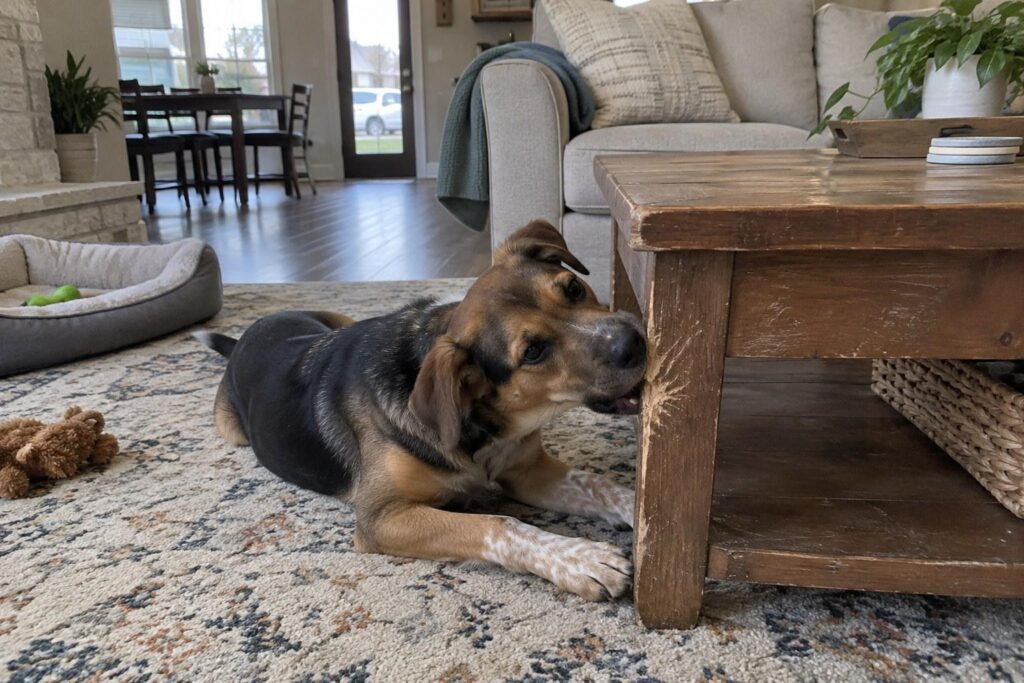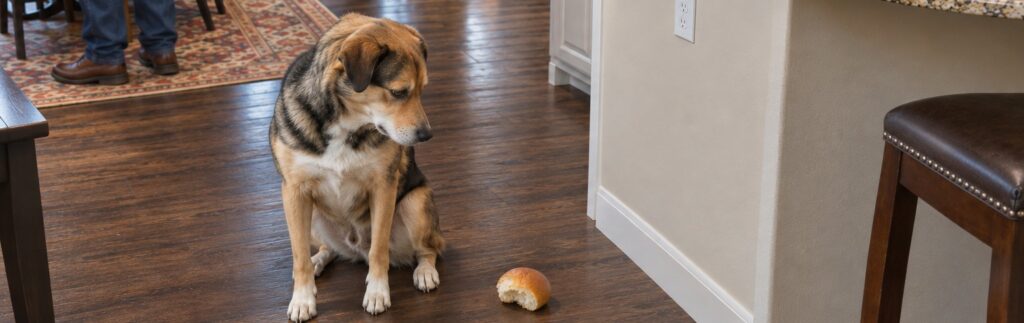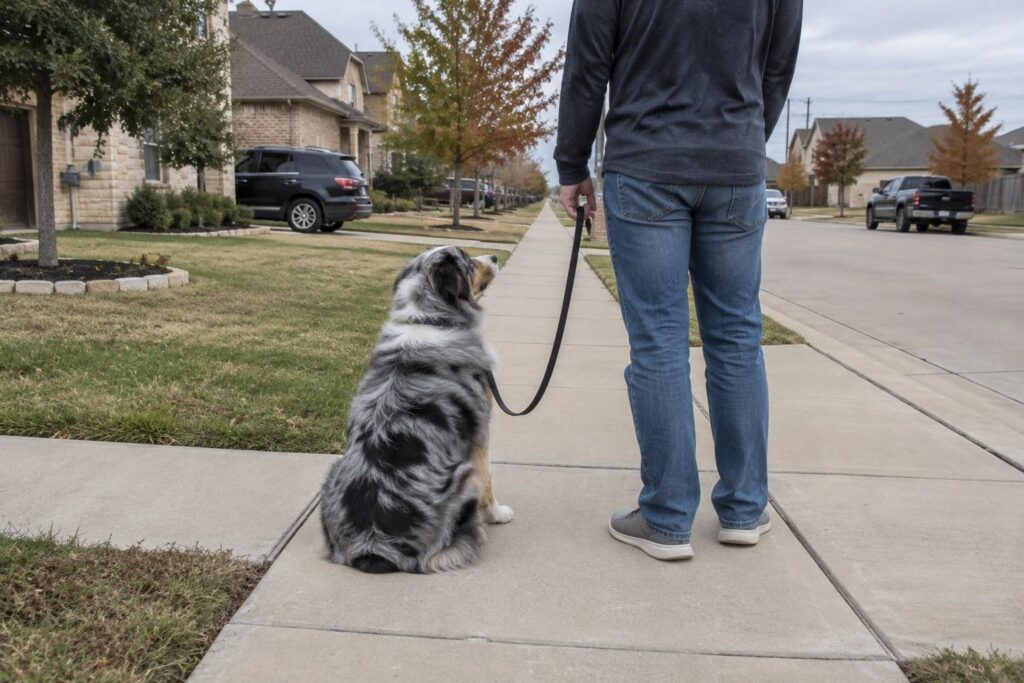

Dog chewing furniture is one of the most common and most expensive problems we hear about from Frisco owners. A chewed table leg or shredded couch cushion is frustrating, but it is rarely random. Most of the time, the dog is telling you something about boredom, energy, or a routine that leaves too much empty time.
At All Dogs Unleashed Dog Training Frisco, we help dogs replace destructive habits with calm, reliable behavior. Below, we explain why bored dogs target furniture, how to tell boredom from other causes, and the practical steps that redirect chewing to the right outlets.
Tired of coming home to new damage? Our team can help you build a plan that works.
Key Takeaways
- Chewing is a normal dog behavior, and the goal is to redirect it to approved items rather than stop it completely.
- Boredom chewing usually shows up when a dog has more energy than outlets, especially during long stretches alone.
- Daily exercise, mental work, and a predictable routine reduce the urge to chew furniture.
- Management tools like a crate, baby gates, and puppy-proofing protect your home while new habits form.
- Our two-week Board and Train program addresses destructive habits with daily structured training and hands-on owner transfer sessions.
Why Dogs Chew in the First Place
Chewing is hardwired. Dogs use their mouths to explore, relieve stress, clean their teeth, and pass the time. Puppies chew even more while teething. The problem is never chewing itself. It is chewing on the wrong things.
Chewing Feels Good to Dogs
Gnawing on something firm is calming and satisfying for many dogs. That is why a dog who chews your couch once is likely to come back to it. The behavior rewards itself, and every successful session makes the habit stronger.
Furniture Is Easy to Reach
Wooden chair legs, couch corners, and baseboards sit right at mouth height. They have an appealing texture, and they often smell like you. To a bored dog, a coffee table is simply the nearest chew toy in the room.
Boredom Is a Leading Cause
The ASPCA’s guidance on destructive chewing lists boredom and lack of stimulation among the common reasons dogs destroy household items, alongside teething, separation distress, and hunger. A dog without enough to do will invent a job, and that job often involves your furniture.
Signs Your Dog Is Chewing Out of Boredom
Before you fix dog chewing furniture, it helps to figure out what is driving it. Boredom chewing looks different from chewing caused by anxiety or teething, and the right fix depends on the cause.
Common Boredom Patterns
Bored dogs tend to chew when the house is quiet, on long workdays, or in the evening after a slow day. You may also notice restless pacing, nuisance barking, digging, or pestering you for attention. Damage often happens in bursts rather than in a frantic, panicked way.
Boredom vs Other Causes
Use the table below as a rough starting point. Some dogs show more than one pattern at once.
| Likely Cause | Typical Signs | Where to Start |
|---|---|---|
| Boredom | Chewing during quiet stretches, restlessness, attention seeking | More exercise, mental work, structured routine |
| Teething | Puppy under about six months, chewing everything in reach | Puppy-safe chews, supervision, management |
| Separation distress | Damage near doors or windows, pacing, drooling, howling when alone | Professional assessment and gradual alone-time training |
| Habit | Same item chewed repeatedly over months | Block access and reward an approved alternative |
| Medical issue | Sudden new chewing in an adult dog, mouth pain, unusual appetite | Visit your veterinarian first |
When It Might Be More Than Boredom
If your dog only destroys things when you leave, focuses on exits, or shows panic signs, separation distress may be part of the picture. Our post on dog separation anxiety for Frisco owners covers that side in more depth. If chewing starts suddenly in an adult dog, check with your veterinarian to rule out pain or other health concerns.
How Frisco Routines Can Feed Boredom
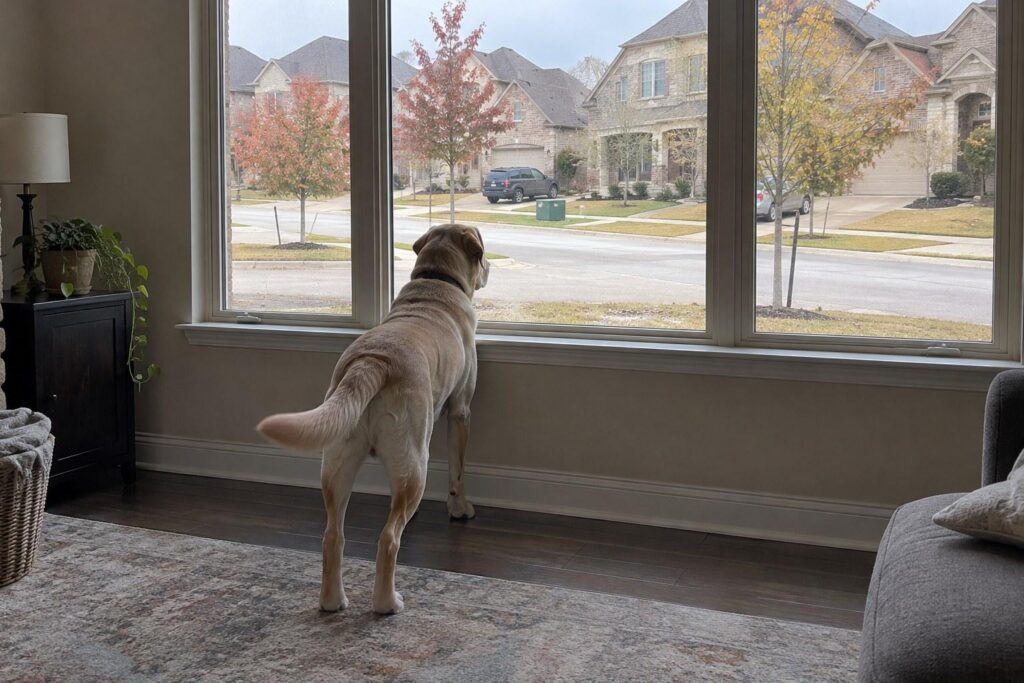
Busy households are a big part of the story. Long commutes, school schedules, and weekend activities can leave a dog alone for much of the day with a lot of energy and nothing to do with it.
Long Days Alone
Many Frisco families leave early and get home late. A young, active dog that gets one short walk before an eight-hour stretch alone is a prime candidate for destructive habits. The furniture becomes the outlet.
Weather Shifts in North Texas
North Texas heat often cuts walks short in late summer and early fall, and cold snaps or rainy days can do the same in winter. When outdoor time drops, indoor energy rises. Plan indoor games and puzzle feeding for those days so your dog is not left to entertain itself.
Holiday Disruption
The holiday season brings guests, travel, and broken routines. During Thanksgiving, many homes have extra food, new smells, and less attention for the dog. Keep chews handy and protect valuable furniture during busy gatherings.
Want trainers to work on your dog’s habits every day? Our residential program is built for that kind of consistency.
How to Stop Dog Chewing Furniture Step by Step
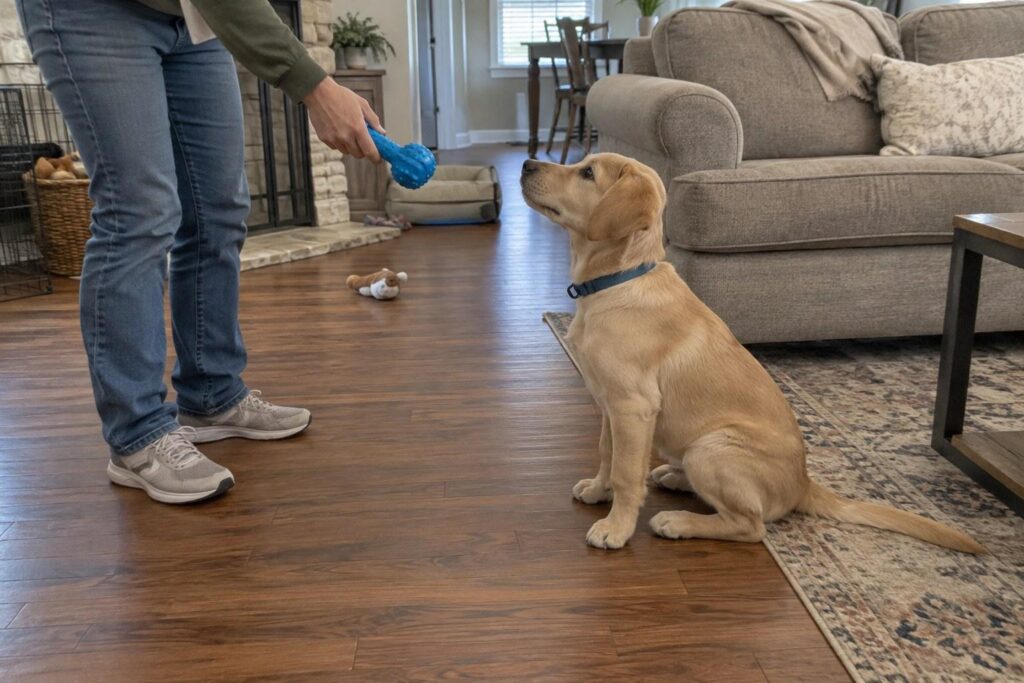
Redirecting chewing works best when you combine management, outlets, and training. Skipping any one of these usually leads to slow progress or relapses.
Step 1: Manage the Environment
Prevent rehearsal first. Every time your dog chews the couch, the habit gets stronger. Use a crate, an exercise pen, or baby gates to keep your dog in a safe area when you cannot supervise. Pick up shoes, remote controls, and cords. If crating is new for your dog, introduce it gradually so it becomes a calm resting spot.
Step 2: Provide Approved Chew Outlets
Offer a few appropriate chew options and rotate them so they stay interesting. Choose items sized for your dog that they cannot break into small pieces and swallow. Watch your dog with any new chew until you know how they handle it, and ask your veterinarian if you are unsure what is safe for your dog.
Step 3: Burn Physical and Mental Energy
A tired dog chews less. Aim for daily walks, play sessions, and short training drills. Mental work matters as much as physical exercise. Puzzle feeders, scent games, and practicing “sit,” “down,” and “place” can tire a dog out faster than a long walk. For ideas on where to get outside, see our roundup of the best dog parks and trails in Frisco.
Step 4: Interrupt and Redirect
If you catch your dog chewing furniture, calmly interrupt with a cue such as “leave it,” then hand over an approved chew and praise them when they take it. Avoid yelling or punishing after the fact. Dogs connect consequences with what they are doing in that moment, not with damage from an hour ago.
Step 5: Build a Predictable Routine
Dogs settle better when they know what comes next. Feed, walk, train, and rest at roughly the same times each day. A dog that expects a walk after work is more likely to rest while you are gone.
| Tool | What It Does | Tip |
|---|---|---|
| Crate or pen | Prevents chewing when you are away | Pair it with a chew and calm departures |
| Rotated chews | Gives an approved outlet | Swap items every few days to keep interest |
| Puzzle feeders | Adds mental work to meals | Start easy so your dog does not give up |
| Short training drills | Builds focus and burns energy | Five to ten minutes, a few times a day |
| Supervision | Lets you interrupt and redirect | Keep a chew within reach at all times |
Common Mistakes That Keep Chewing Going
Most owners mean well, but a few habits can quietly keep the problem alive.
Giving Old Shoes or Household Items as Toys
A dog cannot tell an old shoe from a new one. Handing over household items teaches your dog that those objects are fair game. Stick to clearly separate dog items.
Too Much Freedom Too Soon
Giving a young dog full run of the house before they have earned it invites trouble. Expand access slowly, one room at a time, as your dog shows they can handle it.
Inconsistent Rules Across the Household
If one person allows chewing on a blanket and another corrects it, your dog gets mixed messages. Agree on the rules and the cues as a family.
Ignoring Related Behaviors
Chewing often travels with other issues like jumping, barking, or stealing items. Our post on dog behaviors Frisco owners should fix with private lessons covers several of these, and puppy owners can start with our puppy training guide for Frisco.
When Professional Training Makes Sense
Some dogs respond quickly to more exercise and better management. Others have practiced chewing for months or years, or combine it with anxiety, and need a more structured approach than a busy household can provide.
Two-Week Board and Train
Our Frisco Board and Train program runs two weeks, and each placement begins with an individual evaluation. Trainers work with your dog daily on obedience and behavior, including habits like anxiety-driven destruction. We accept every breed. Before your dog returns home, hands-on owner transfer sessions show you how to keep the structure going.
Guaranteed Results and Lifetime Support
Board and Train graduates receive guaranteed results and lifetime support at no additional cost. If old habits creep back, you can reach out for guidance. Affirm financing is also available. To see how a stay works from start to finish, read what to expect from Board and Train in Frisco.
Private Lessons in Your Home
If you want hands-on coaching in the exact rooms where chewing happens, in-home private lessons let a trainer evaluate your routine and environment and build a plan around them.
| Option | Where Training Happens | Best For |
|---|---|---|
| Two-week Board and Train | Our Frisco facility, with daily trainer sessions | Long-standing chewing, busy households, multiple problem behaviors |
| Private Lessons | Your home | Owners who want coaching in their own space |
| Refresh Training | Scheduled with our team | Graduates whose habits have slipped |
Ready to protect your furniture and give your dog better habits? Call (972) 573-1715 to talk with our team.
About All Dogs Unleashed Dog Training Frisco
All Dogs Unleashed Dog Training Frisco helps owners across Frisco and Collin County turn destructive habits into calm, dependable behavior. Our two-week Board and Train program leads our training, starting with an individual evaluation, continuing with daily sessions, and finishing with hands-on owner transfer sessions before your dog heads home. We also offer in-home private lessons, boarding, and refresh training. Every Board and Train graduate receives guaranteed results and lifetime support at no additional cost.
Frequently Asked Questions
Why does my dog chew furniture when I leave the house?
The most common reasons are boredom, extra energy, and stress about being alone. A dog with nothing to do will often find the nearest chewable object. If the damage centers on doors or windows, or comes with pacing, drooling, or howling, separation distress may be involved. A professional assessment can help sort out which cause is driving the behavior.
Will my puppy grow out of chewing furniture?
Puppies chew more while teething, and that phase does pass. However, a puppy that practices chewing furniture can carry the habit into adulthood. Manage the environment, supervise closely, and give plenty of approved chews so the puppy learns what is acceptable. Teaching good habits early is much easier than undoing an ingrained one later.
Should I punish my dog for chewing furniture?
Punishing after the fact does not work, because dogs connect consequences with what they are doing in that moment. Yelling at a dog over damage from an hour ago only creates confusion and stress. Instead, prevent access when you cannot supervise, and when you catch chewing, calmly interrupt and redirect to an approved chew, then praise.
How much exercise does a dog need to stop boredom chewing?
It depends on breed, age, and energy level. High-energy breeds and young dogs usually need more than a quick walk around the block. Combine physical exercise with mental work such as puzzle feeders, scent games, and short training drills. If your dog still seems restless after a full day, talk with a trainer or veterinarian about adjusting the routine.
Are bitter sprays enough to stop furniture chewing?
Taste deterrent sprays can help discourage some dogs from specific items, but they rarely solve the problem alone. Some dogs ignore the taste, and the underlying boredom remains. Use sprays as one part of a plan that includes management, approved chews, exercise, and training. Test any product on a hidden spot first to avoid damaging your furniture.
Can Board and Train help with destructive chewing?
Yes. Our two-week Board and Train program addresses behavior issues alongside obedience, starting with an individual evaluation of your dog. Trainers work with your dog daily, and owner transfer sessions before your dog returns home show you how to maintain the new habits. Graduates also receive guaranteed results and lifetime support at no additional cost.
Give Your Frisco Dog Better Outlets Than Your Furniture
Dog chewing furniture is a solvable problem once you understand the cause and give your dog better outlets. Manage the environment, add exercise and mental work, and redirect consistently. If you want trainers to help, call (972) 573-1715 or reach out online, or visit our location at 6136 Frisco Square Blvd, Suite 400, Frisco, TX 75034.
Ready to Get Started with All Dogs Unleashed Dog Training Frisco?
A calmer home with intact furniture is within reach. Call (972) 573-1715 to ask about our two-week Board and Train program and find the right fit for your dog. You can also find All Dogs Unleashed Dog Training Frisco at 6136 Frisco Square Blvd, Suite 400, Frisco, TX 75034.