
Denver’s trail system is one of the best reasons to own a dog in
Colorado. But hiking with dogs on the state’s mountain trails requires
more than a leash and good intentions. Dogs that pull, ignore recall, or
react to wildlife create real safety problems above treeline and on
narrow singletrack. At All Dogs Unleashed Dog
Training Denver, our trainers have spent years helping local
owners resolve exactly these behavioral challenges, using structured,
proven methods that translate directly from the training floor to the
trail. Every program we run backs its results with guaranteed outcomes
and lifetime support, which matters when the stakes are a reliable
recall on an exposed ridge.
Key Takeaways
- Hiking with dogs in the Denver area requires reliable leash
manners, recall, and wildlife distraction-proofing before hitting the
trail. - Leash requirements, dog access, and potential penalties vary by
trail and managing agency. Review current rules before you go. - Denver’s elevation and changing terrain can make a hike more
demanding than a neighborhood walk, so build activity gradually and
choose a route that suits your dog. - Behavioral problems on trails, including pulling and reactivity,
can be resolved through structured obedience training before you
go. - Starting on low-traffic urban corridors builds confidence in
beginner trail dogs before advancing to more demanding terrain.
Is Your Dog
Actually Ready for Denver’s Trails?
Your dog is ready for Denver’s trails when it can reliably
demonstrate seven specific behaviors under distraction, and most dogs
require structured training before they meet that bar. Household manners
do not automatically transfer to an environment with deer crossing the
path, narrow singletrack, elevation gain, and other dogs approaching
from both directions. Before you load up the car and head west into the
foothills, run your dog through an honest assessment.
Trail-Readiness Checklist
Your dog should demonstrate all seven of the following behaviors
reliably before attempting a foothills trail. Reliable means consistent
under distraction, not just in your living room.
- Reliable recall. Your dog returns to you
immediately when called, even with wildlife or other dogs in
view. - Loose-leash walking on varied terrain. No
pulling on gravel, roots, or uneven footing. - Neutral dog-to-dog response on narrow trails.
Your dog can pass another dog without lunging, barking, or
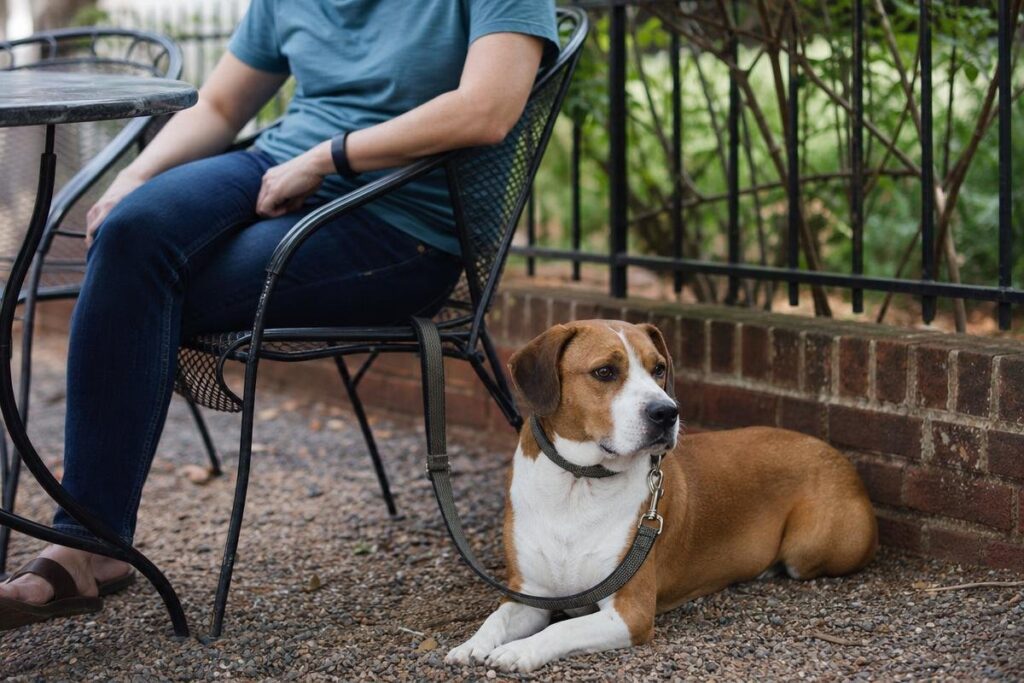
fixating. - Sit-stay and down-stay under distraction. Your
dog holds position while you manage gear, consult a map, or yield the
trail. - Leave-it for wildlife and scent trails. Your dog
disengages from deer tracks, scat, and animal scent on command. - Comfort with uneven footing and water crossings.
Your dog moves confidently over rocks, roots, and creek crossings
without panic or refusal. - No resource guarding at rest stops. Your dog
accepts water and food from you without guarding behavior around other
hikers or dogs.
Dogs completing our board-and-train
program come home with these seven behaviors already proofed
against real distraction, which puts them significantly closer to
trail-ready than a dog trained only in quiet, low-distraction settings.
Not sure your dog checks all seven boxes? Have our team evaluate where
your dog stands before your next hike.
Physical
Conditioning for Colorado Elevation
Obedience training is necessary. It is not sufficient on its own.
Physical conditioning is a separate variable. Denver’s elevation and
changing terrain can make a hike more demanding than a neighborhood
walk. Build distance and elevation gradually, choose a route that
matches your dog’s current fitness and training level, and talk with
your veterinarian before taking a dog with health concerns on a
demanding hike.
The Four
Obedience Skills Every Trail Dog Needs
 Dog
Dog
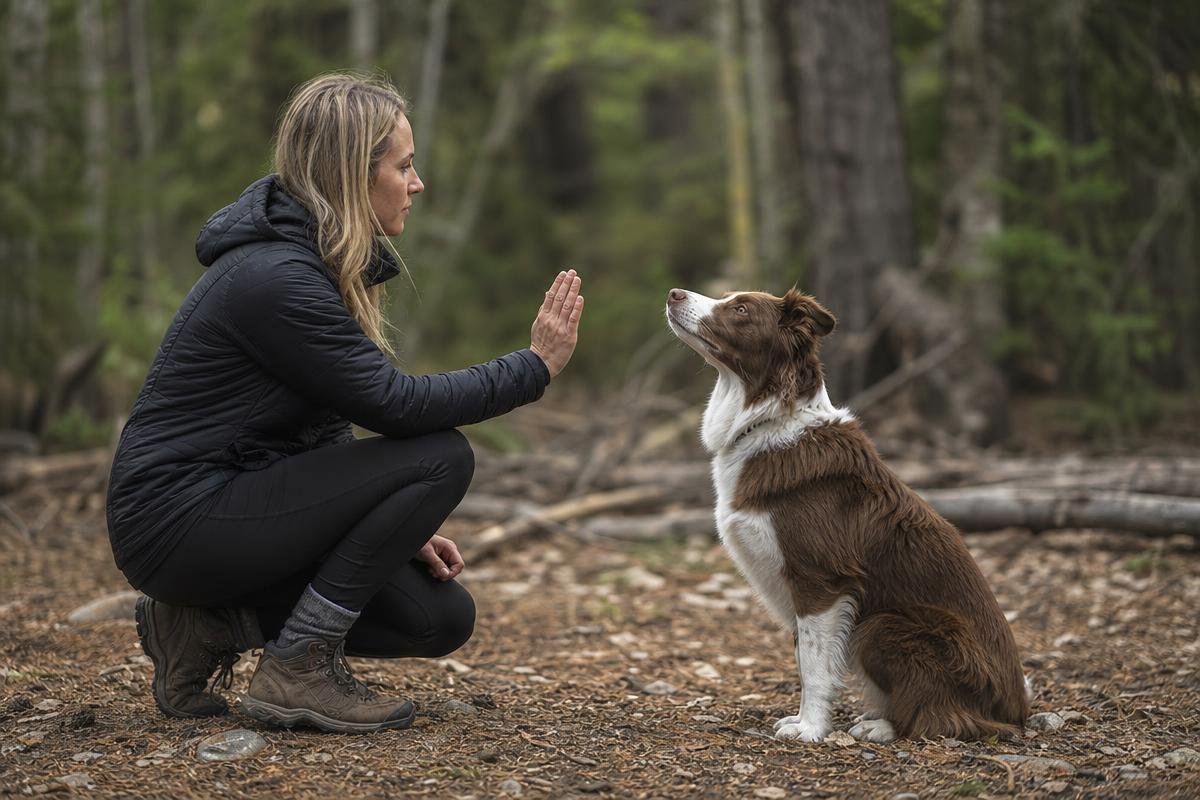
obedience training for hiking is not the same as basic manners training
for the backyard. Trails introduce variables that a dog has never
encountered in a controlled environment: narrow switchbacks, sudden
wildlife, and strangers appearing around blind corners. These four
skills are the foundation. Without them, hiking with dogs in the
Colorado foothills creates real risk for your dog, other hikers, and
you.
Recall
Recall is the single most critical command your dog needs before
stepping onto any trail. On any trail or in a designated off-leash area,
a dog that does not return on command can create safety concerns for
people, pets, and wildlife.
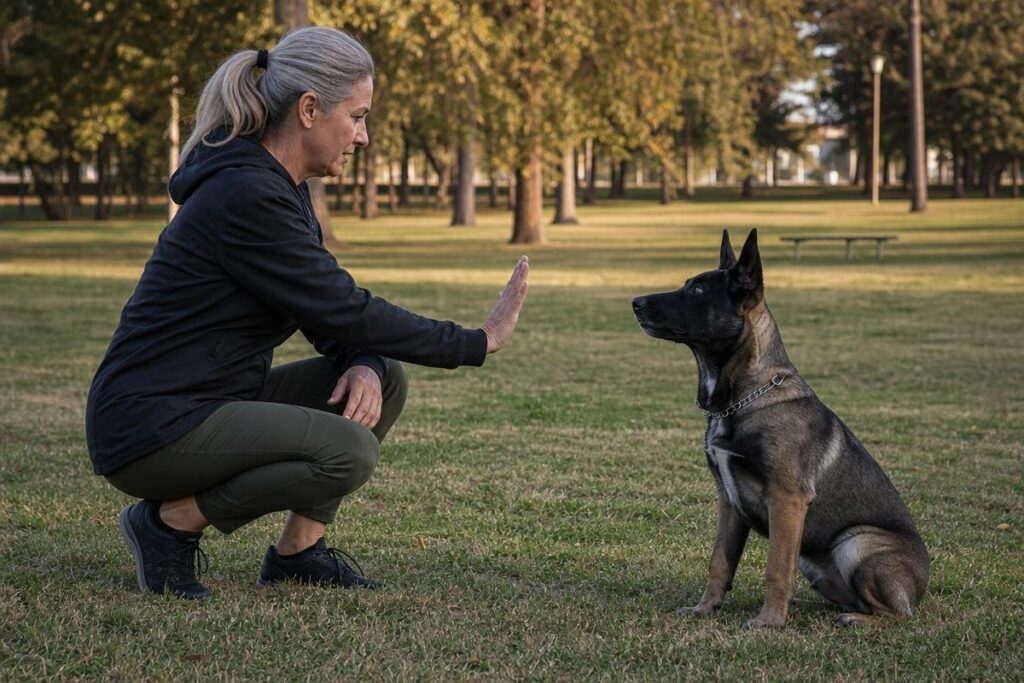
Build recall in stages. Start in a low-distraction yard. Move to a
city park with moderate foot traffic. Then proof the behavior on a trail
with other dogs present. During the proofing phase, a 20 to 30 foot long
line gives your dog freedom while keeping you in control. Do not remove
that long line until recall is reliable under real distraction
pressure.
Loose-Leash Walking on
Technical Terrain
Sidewalk heel work does not prepare your dog for rocky singletrack.
Roots, loose gravel, steep drop-offs, and narrow sections in the
foothills demand a dog that stays close and moves predictably. A pulling
dog on a steep switchback is a genuine fall risk for the handler.
Practice on uneven surfaces before you hit the trail. Teach your dog
to match your pace when the footing changes. If your dog still pulls
consistently, our dog
training programs address leash pressure and body awareness as
specific skills, not afterthoughts.
Distraction-Proofing
for Foothills Conditions
Open space trails present a specific distraction profile: mule deer,
fox squirrels, mountain bikers on shared-use trails, and trail runners
appearing without warning. Your dog needs systematic exposure to each
category before encountering them at full intensity on trail.
Distraction-proofing means your dog can hold focus even when a cyclist
passes at close range or a deer crosses 20 yards ahead.
If your dog lunges at bikers or wildlife, that is a leash reactivity
issue that needs structured work before your next hike. Dogs that finish
our board-and-train come home able to break focus from a passing biker
on the first pass instead of the tenth, because that specific scenario
is rehearsed daily under supervision.
Leave It and Station
Leave it protects your dog from coyote scat, wild mushrooms, and
discarded food on trail. All three are common on lower-elevation
Colorado trails and all three carry real health risk. A reliable
leave-it means your dog ignores ground-level hazards on command, without
hesitation.
Station is a portable place command. It keeps your dog calm and
stationary when other hikers squeeze past on a narrow section or when
you need your dog to hold position on uneven ground. Train station at
home first, then transfer it to progressively busier outdoor
environments before you need it on trail.
Ready to turn these four skills into reliable trail behavior? Let’s
build a plan around your dog’s starting point.
Denver
Trail Leash Rules and Regulations You Must Know
Dog leash rules on Denver hiking trails vary by managing agency, and
the differences matter. Leash rules can differ from one trail system to
another. Check the current requirements before you go.
Jefferson County Open Space
Rules
Jefferson County Open Space rules can vary by park and trail. Before
visiting, review the county’s current dog-access and leash requirements
for your specific destination, then follow posted trailhead rules.
Denver Mountain Parks
Regulations
Denver Mountain Parks dog-access rules and event restrictions can
change. Check Denver Parks and Recreation guidance and any posted rules
for the property you plan to visit before bringing your dog.
Denver City Trail Rules
Within Denver, dog-access and leash requirements depend on the park,
trail, and any designated off-leash area. Check current City and County
of Denver guidance before your visit. On busy shared-use routes,
reliable leash manners help keep the experience safer and more
comfortable for everyone.
Off-Leash Areas Near Denver
Denver-area off-leash access is limited to designated areas and may
have location-specific requirements. Use the managing agency’s current
rules to confirm whether dogs are permitted and whether off-leash access
is available. If your dog does not have dependable recall, keep them
leashed. Our dog training programs in Denver build that reliability in a
structured, controlled environment before you need it on the trail.
Gear, Food,
and Water Planning for Dog-Friendly Hikes
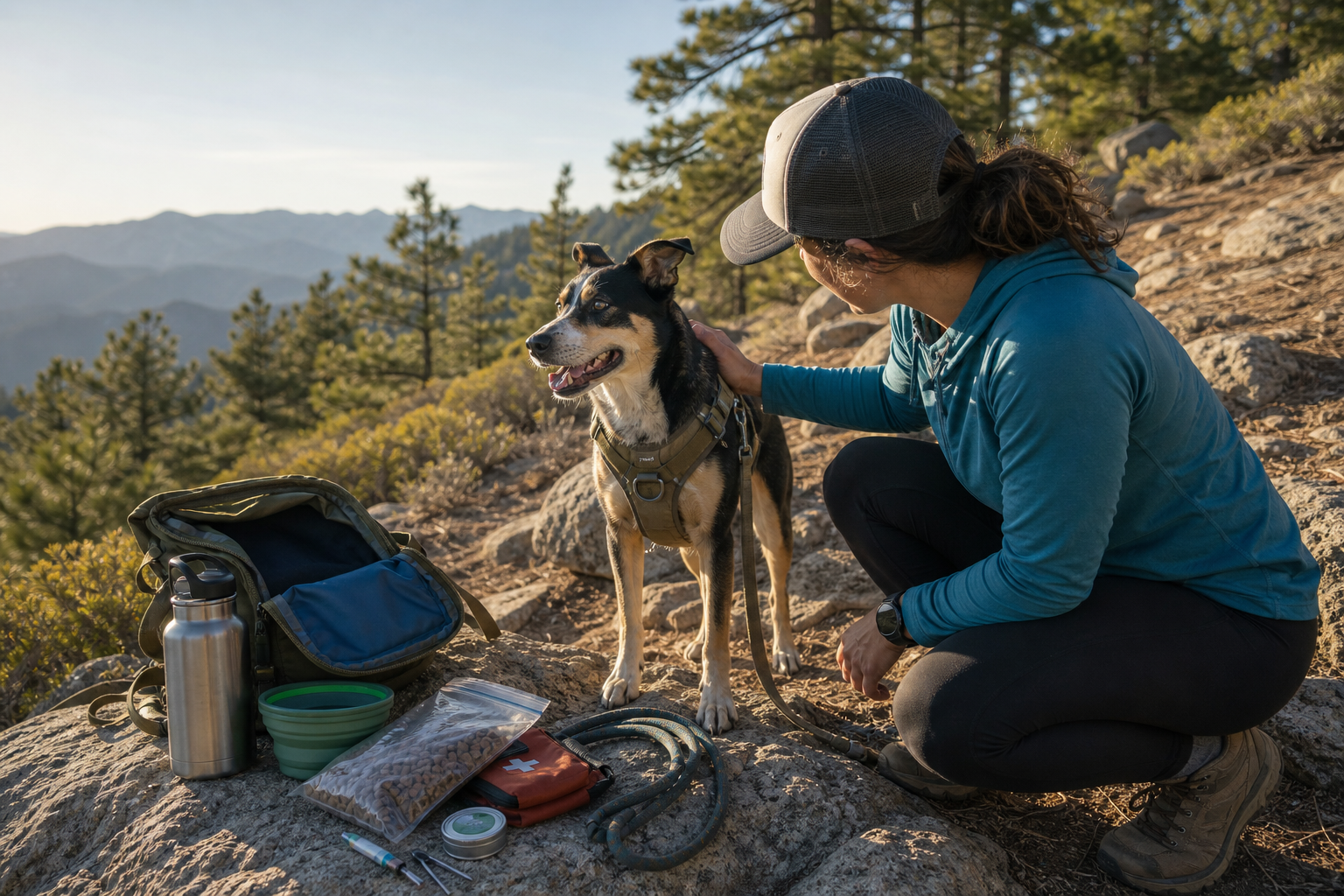
Essential Gear for Your Dog
Choose well-fitted gear that gives you reliable control, and follow
the leash requirements for the trail you plan to use. If you are
considering a dog pack or have questions about gear for your dog’s size,
age, or health, ask your veterinarian for guidance.
Your dog’s first aid kit should include:
- Styptic powder for paw pad cuts on rocky terrain
- Tweezers for foxtail seed removal
- A tick removal tool
- Paw balm for abrasive trail surfaces
Hydration and Nutrition at
Altitude
Bring enough fresh water for both you and your dog, take breaks, and
monitor your dog for signs that they need to rest. Avoid letting your
dog drink from water sources you cannot assess, and contact your
veterinarian if you have questions about hydration or your dog’s
activity level.
Pack treats your dog responds to and offer breaks as needed. Choose a
route and pace that fit your dog’s current activity level.
Colorado-Specific Trail
Hazards
National hiking guides miss the hazards that matter most for hiking
with dogs on Denver-area trails. Know these before you go:
- Plant material can become lodged in paws, fur, ears, or
eyes. Check your dog after a hike and contact a veterinarian if you are
concerned. - Uneven terrain and sharp plants can injure paws, so keep
your dog close and watch where they step. - Wildlife may be present on Colorado trails. Keep your dog
close, stay on the trail, and check current local guidance before your
hike.
Dogs with unresolved reactivity to wildlife are at higher risk around
every one of these hazards. A dog that bolts toward a scent or movement
is harder to redirect before contact happens. If your dog struggles with
impulse control on trail, our dog
training programs in Denver address exactly that, and our board-and-train
program builds reliable trail-ready obedience through daily,
hands-on repetition with our trainers.
Your dog’s safety on trail starts with training, not gear. Call (720) 310-7337 to talk through the
right program for your dog before your next hike.
When Trail Problems
Signal a Training Gap
Common Behavioral
Challenges on Denver Trails
Your dog behaves well at home and does fine in the backyard. Then you
hit a narrow singletrack in the foothills and a mule deer crosses the
trail. Suddenly your dog is lunging, the leash is taut, and you are
fighting for footing on a steep switchback. That moment is not a
personality flaw. It is a training gap exposed by a high-distraction
environment your dog was never systematically prepared for.
The mountain trail environment stacks distractions in ways a
neighborhood walk never does. Novel terrain, wildlife scent, mountain
bikers appearing without warning on shared-use corridors, other dogs
rounding blind corners. Dogs with incomplete obedience training hit a
threshold and fall apart. Specific behaviors that signal a gap include
hard leash pulling on uneven ground, ignoring recall on a long line,
barking and reactivity toward trail runners, and resource guarding food
or water at rest stops.
These challenges respond to structured training. For owners dealing
with reactivity specifically, our leash reactivity fixes are a practical
starting point.
How Structured
Training Builds a Trail-Ready Dog
Trail-specific behavioral challenges require systematic work in
controlled, progressively distracting environments, not more trail
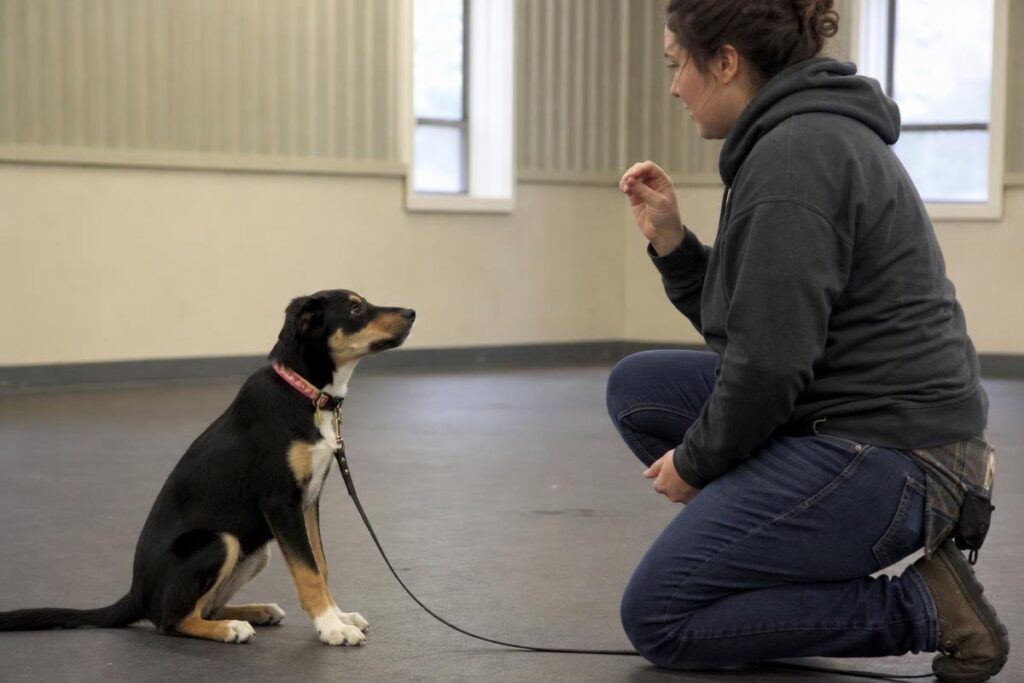
exposure and hope. Our board-and-train program places your dog with
experienced handlers who build reliable recall, loose-leash walking, and
distraction tolerance from the ground up. Those skills transfer directly
to real-world trail conditions. Dogs come back able to hold a heel on a
switchback, break focus from a deer, and respond to recall under
pressure.
If your schedule does not fit a board-and-train format, in-home
dog training lets our trainers work with your dog in familiar
surroundings and build toward outdoor distraction-proofing at a
structured pace. Either path produces lasting behavioral modification.
The goal is a dog you can trust on trail, not just in your living room.
Turn a trail training gap into reliable off-leash trust. Talk to our
team about which program fits your dog.
Denver’s Best
Dog-Friendly Trails: What to Expect
Not every trail is the right starting point for every dog. The metro
Denver area offers a wide range of environments, from flat urban
corridors to narrow singletrack with active wildlife. Matching your
dog’s current skill level to the right trail makes the difference
between a successful outing and a behavioral setback. Our training
programs are built around exactly that kind of structured
progression.
Trails for Dogs Building
Confidence
The South Platte River Trail runs through the urban core and sees
consistent foot traffic, cyclists, and other dogs. That predictable
distraction load makes it one of the best places to desensitize a dog to
trail environments before moving into the mountains. The Bear Creek
Trail corridor near Lakewood offers flat, wide terrain with moderate
traffic. Your dog gets real trail exposure without the added pressure of
elevation gain or narrow singletrack.
Chatfield State Park in Littleton is another strong early-stage
option. Choose a route that fits your dog’s current skill level and
confirm the current dog-access rules before you go. If your dog cannot
hold a recall under distraction, keep them leashed.
Intermediate and
Advanced Trail Environments
Wildlife can be present on Denver-area trails. Choose a route that
fits your dog’s current training level, keep your dog close, and follow
current guidance from the managing agency.
For hiking with dogs on Denver trails at an advanced level, Lair o’
the Bear Park raises the stakes further. Stream crossings and off-leash
dogs despite posted rules mean your dog needs reliable dog-to-dog
neutrality before you attempt it. If your dog is not there yet,
structured, supervised training builds that distraction-proofing before
you take on terrain this demanding.
Frequently Asked Questions
What
obedience commands does my dog need before hiking in Denver?
Five commands are non-negotiable: recall, loose-leash walking,
sit-stay, down-stay, and leave-it. Your dog must perform all five
reliably in high-distraction environments, not just in your backyard.
Foothills trails bring wildlife, other dogs, and unpredictable terrain.
If any of these commands breaks down under pressure, your dog is not
trail-ready.
Are dogs allowed on
all Denver-area trails?
No. Jefferson County Open Space, Denver Mountain Parks, and Rocky
Mountain National Park each have specific rules. Some trails prohibit
dogs entirely for wildlife protection. Always verify dog leash rules and
access before you arrive. Violations may carry fines.
How
do I stop my dog from pulling on the leash on the trail?
Leash pulling combines trail excitement with inadequate loose-leash
training. The stop-and-wait technique, paired with consistent
distraction-proofing, produces lasting improvement. Your dog needs to
learn to defer to you in novel environments, not just familiar ones.
What
trail hazards should I watch for on Colorado hikes?
Trail hazards can include wildlife, plant material, uneven terrain,
and unsafe water sources. Conditions vary by location and season, so
review current local guidance before you go and keep your dog close on
the trail.
How long
does it take to train a dog for trail hiking?
Training timelines vary based on your dog’s starting behavior,
temperament, health, and the consistency of practice. A consultation can
help determine the right training approach and a realistic plan for your
dog.
How
can All Dogs Unleashed Dog Training Denver help me prepare my dog for
the trails?
We build the recall, loose-leash walking, and distraction-proofing
your dog needs before the next trailhead. Our dog training programs in
Denver are designed around your dog’s specific behavioral starting
point, with guaranteed results and lifetime support. Call us at (720) 310-7337 or visit us at 2301
Blake St, Denver, CO 80205 to talk through a plan today.
Ready
to Get Started with All Dogs Unleashed Dog Training Denver?
Call (720) 310-7337 to speak with
our team directly. We’re ready to answer your questions, walk you
through your options, and help you find the right solution for your
needs. Whether you’re just starting to plan or ready to move forward,
we’ll make the process simple and stress-free. Reach out today and let’s
talk about how we can help.