
Bringing home a new puppy in Austin is exciting. It can also be painful. Most new puppy owners quickly discover that their adorable new companion has very sharp teeth and very little restraint when it comes to using them. Puppy biting and nipping are completely normal developmental behaviors, but that does not mean they should go unaddressed. Getting ahead of this habit early makes a significant difference in how the dog behaves as an adult.
Why Puppies Bite and Nip
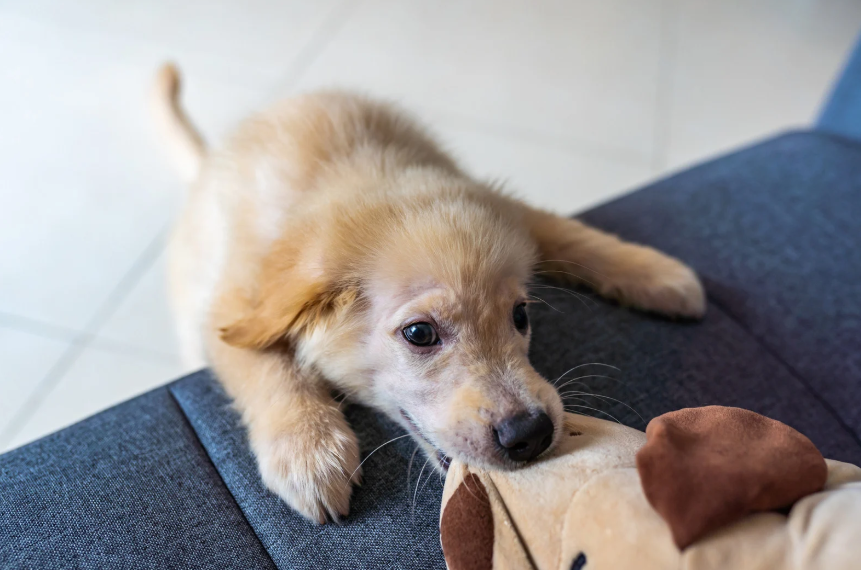
Understanding the reason behind the behavior helps owners respond more effectively. Puppies bite for several reasons, and most of them have nothing to do with aggression:
- Exploration: Puppies experience the world through their mouths. Mouthing objects and people is how they gather information about their environment.
- Play: Littermates play by wrestling and biting each other. Puppies have not yet learned that human skin does not tolerate the same pressure that fur and hide does.
- Teething: Puppies begin teething around three to four months of age. Chewing and mouthing help relieve the discomfort of new teeth coming in.
- Overstimulation: When puppies get tired, excited, or overwhelmed, they often mouth and nip as an outlet. An overtired puppy is frequently a bitey puppy.
- Attention-seeking: Some puppies learn quickly that biting gets a reaction, even if the reaction is negative. Any attention can reinforce the behavior if it is given consistently.
Knowing the trigger helps owners choose the right response. A teething puppy needs appropriate chew objects. An overstimulated puppy needs a rest. An attention-seeking puppy needs to learn that biting produces the opposite of what they want.
How Dogs Learn Bite Inhibition Naturally
Bite inhibition is a dog’s ability to control the pressure of its mouth. In healthy litter environments, puppies learn this from their siblings and mother. When a puppy bites too hard during play, the other puppy yelps and stops playing. The mother may also correct overly rough behavior. Over time, the biting puppy learns to soften its mouth to keep the interaction going.
Puppies taken home before 8 weeks of age often miss critical socialization time that teaches this lesson. Even puppies who stayed with their litter the appropriate amount of time need continued guidance from their new human family.
Practical Techniques for Redirecting Biting
There is no single method that works for every puppy, but several consistent approaches produce results over time:
- Redirect to appropriate toys: When a puppy starts mouthing your hand, redirect their attention to a chew toy or tug toy. Keep one nearby during play sessions so the swap is easy and immediate.
- Time-outs: If biting continues despite redirection, calmly end the play session and step away or leave the room for 30 to 60 seconds. This removes the audience and teaches the puppy that biting ends the interaction.
- Avoid rough play with hands: Wrestling with puppies using bare hands teaches them that hands are toys. Use toys as the interface for play so that the puppy targets the object, not the person.
- Consistent response from all household members: One person tolerating biting while another corrects it sends mixed signals. Everyone in the home needs to respond the same way, every time.
- Manage the environment: When puppies hit their bite threshold, structured rest in a crate or pen prevents the behavior from escalating. Prevention is always easier than correction in the moment.
Avoid shouting, tapping the puppy’s nose, or physically punishing biting. These responses often escalate the behavior, create fear, or teach the puppy to bite harder. They also erode trust at a critical developmental window.
What Not to Do
Some common responses to puppy biting actually make the problem worse:
- Reacting loudly: Squealing or yelling may excite the puppy rather than discourage biting, especially in high-energy play states.
- Letting it “phase out” on its own: Puppy biting that is not addressed can become a habit that follows the dog into adulthood, where the same behavior with an adult dog carries very different consequences.
- Inconsistency: Allowing biting sometimes while correcting it other times teaches the puppy that persistence pays off. Consistency is the most important factor in changing behavior.
When to Involve a Professional Trainer
Most puppy biting is normal and manageable with consistent handling. However, some situations call for professional support:
- The puppy is growling, stiffening, or showing other warning signs during biting episodes
- The intensity or frequency of biting is escalating despite consistent responses
- Children in the home are being targeted and are unable to apply the techniques consistently
- The puppy is showing resource guarding alongside biting behavior
Austin’s training programs for puppies include instruction on bite inhibition alongside foundational obedience skills. Having a trainer observe the behavior directly allows for a more targeted approach than general advice.
Dog daycare can also play a role during this stage. Regular interaction with other vaccinated, well-supervised dogs helps puppies continue developing bite inhibition in a controlled environment, while also burning off the energy that often fuels mouthing and nipping at home.
A Note on Timing
Early intervention matters. The window between 8 and 16 weeks is one of the most influential periods in a puppy’s development. Habits formed during this time, good and bad, tend to stick. Redirecting biting consistently during this period sets a much stronger foundation than trying to undo a well-established habit at six months or older.
That said, adult dogs can also be taught better bite manners. It simply requires more time and consistent effort.
Frequently Asked Questions
Is puppy biting normal or a sign of aggression?
In most cases, puppy biting is completely normal and not a sign of aggression. It is how puppies explore their environment and engage in play. True aggression involves other warning signals like sustained growling, stiffening, or snapping in response to specific triggers like food or handling. If you are unsure, a professional trainer can help evaluate the behavior in context.
At what age should puppy biting stop?
Most puppies naturally begin to reduce mouthing between 4 and 6 months as teething subsides and bite inhibition develops. However, this depends heavily on consistent guidance from owners. Puppies whose biting is reinforced or ignored may continue the behavior well past this stage.
Why does my puppy bite more in the evening?
Puppies often become overtired and overstimulated in the evening, which is commonly called the “witching hour.” Fatigue lowers impulse control, and the result is often increased nipping and biting. A structured rest period, such as crate time, in the late afternoon can help reduce this pattern.
Should I use a spray bottle or loud noise to stop biting?
These techniques are generally not recommended. They can startle and stress the puppy without teaching an alternative behavior. More effective approaches involve removing attention, redirecting to appropriate outlets, and building consistent routines that reduce the triggers for biting.
Does socialization help with puppy biting?
Yes. Puppies that interact regularly with other vaccinated dogs, particularly during the 8 to 16 week period, continue developing bite inhibition through natural feedback from other animals. Supervised dog daycare provides this kind of social exposure in a safe environment.
When should I start obedience training if my puppy is biting?
As early as possible. Basic obedience training can begin at 8 weeks and gives the puppy a framework for engagement that channels their energy productively. Teaching “sit,” “leave it,” and “place” alongside bite inhibition builds a well-rounded foundation. Waiting until biting is a serious problem makes the process longer and harder.
Get Help From a Local Austin Team
Puppy biting is one of the most common concerns that new dog owners bring to trainers. It is also one of the most addressable, especially when caught early. If you are struggling with a nippy puppy or want to build the right habits from the start, the team at All Dogs Unleashed is here to help.
Call (512) 253-8819 or stop by at 3704 Mountain View Ave, Austin, TX 78734.