
The sharp little teeth of a 10-week-old puppy can pierce skin, ruin furniture, and leave new owners wondering if they made a terrible mistake. Puppy biting is by far the most common complaint among Dallas dog owners during the first few months, and almost every household with a new pup goes through some version of it. The relief is that biting is normal, predictable, and very fixable when you handle it correctly.
What separates puppies who outgrow biting quickly from those who continue mouthing well into adolescence isn’t temperament. It’s the response from the humans around them. Knowing how to stop puppy biting effectively means understanding why it happens, redirecting it consistently, and avoiding the well-meaning responses that accidentally make the behavior worse.
Why Puppies Bite in the First Place
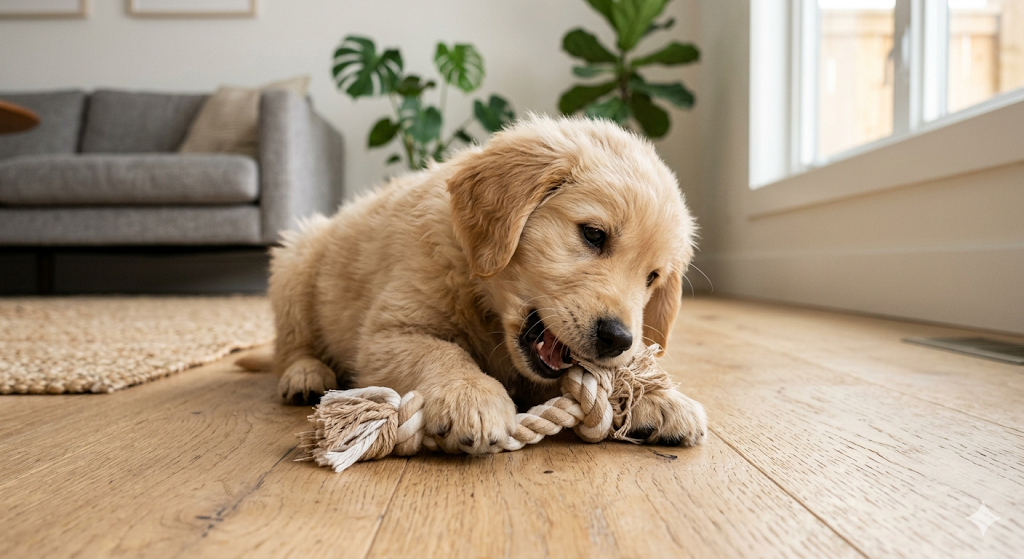
Puppies bite because their entire world is sensory exploration through their mouth. They have no hands. They check out new objects, textures, and creatures by mouthing them. Add in needle-sharp teeth, no impulse control, and an enormous amount of pent-up energy, and you have the perfect recipe for nipped fingers and shredded shoelaces.
Several drivers stack up at once. Teething is the most physical cause, hitting hardest between 12 and 20 weeks when adult teeth push through. The pressure and itching in their gums makes chewing genuinely satisfying. Play is another big one. In a litter, puppies learn to play almost entirely through mouth wrestling, and they bring that same play style home. Attention-seeking is a quieter driver but a common one. If biting reliably gets you to interact, even negatively, your puppy will repeat it.
Overstimulation and overtiredness are often missed. A puppy who has been awake too long, played too hard, or absorbed too much new information starts biting more, harder, and with less control. This pattern often looks like sudden aggression but is almost always exhaustion.
Our guide on understanding canine nipping and jumping behavior covers more on the developmental side of why dogs use their mouths in these ways.
When Do Puppies Stop Biting on Their Own?
Most puppies show significant reduction in biting between 16 and 20 weeks, once adult teeth are mostly in and the worst of teething eases. Full elimination of mouthy play behavior usually happens between 6 and 7 months for most dogs, though some breeds, especially retrievers and herding breeds, may keep mouthing into adolescence.
The trajectory matters more than the timeline. A puppy whose biting gradually softens, becomes less frequent, and shifts from skin to toys is on track. A puppy whose biting stays the same or gets worse between 4 and 6 months needs more structured intervention. Adolescent biting can persist or even resurface during the teenage phase, which we cover in our overview of the teenage phase of puppyhood.
If your puppy is over 6 months old and still biting hard or drawing blood, it’s time to bring in a trainer. Patience alone won’t resolve it.
The First Rule: Don’t Yelp, Pull Away, or Punish
Most popular advice for puppy biting comes with one or more of these instructions: yelp like a hurt littermate, pull your hand away dramatically, or use physical correction to “show them who’s boss.” All three commonly backfire.
The yelp method works for some puppies, but for many, a high-pitched yelp actually increases excitement and biting. Pulling away triggers chase and prey drive, turning your hand into a moving target. Physical corrections like swatting, holding the muzzle shut, or alpha rolls teach fear rather than self-control, and they often produce more anxious biting down the line.
What works instead is calm, consistent, predictable consequences. When your puppy bites you, freeze. Don’t move your hand. Don’t yelp. Don’t make eye contact. Wait three seconds, then redirect to an appropriate chew toy. If the biting continues, calmly stand up and walk away for 30 to 60 seconds. The complete loss of attention is the most powerful message a puppy can receive. Our guide on puppy training mistakes to avoid goes deeper on the responses that derail training.
The Redirect Method: Your Most Powerful Tool
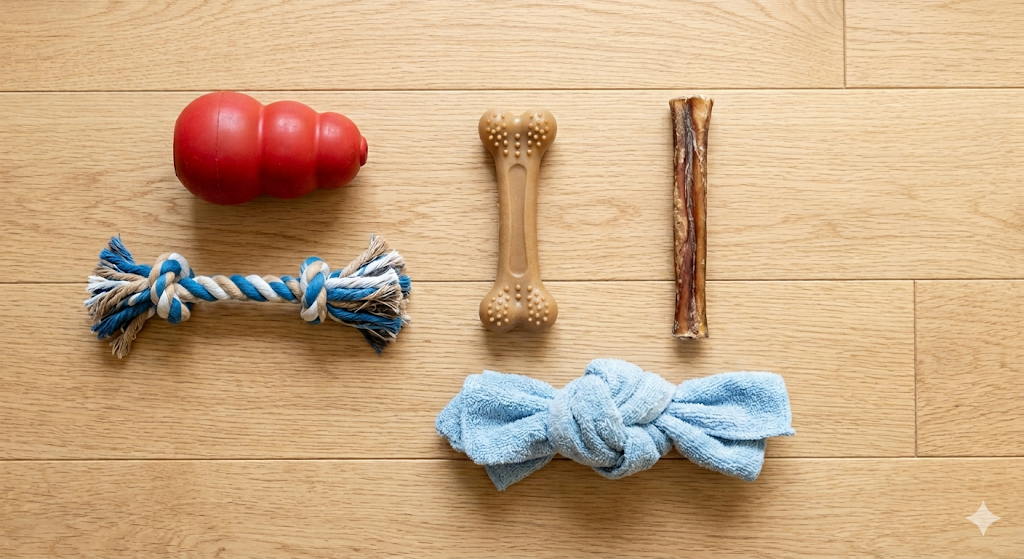
Redirection is the workhorse of puppy biting management. The goal is simple: every time your puppy puts teeth on skin, redirect them onto something they’re allowed to bite. Done consistently for two to three weeks, this teaches the brain that human skin equals nothing interesting, and the chew toy equals fun.
The key is having appropriate chew items within arm’s reach at all times. Keep a few in every room of the house. The moment teeth touch skin, calmly say “no” or stay quiet, then place a chew toy in front of your puppy. When they take the toy, praise warmly.
Not every chew works. The best redirect items are durable enough to survive sharp teeth, large enough not to be swallowed, and interesting enough to compete with the texture of human skin.
| Good Redirect Options | Items to Avoid |
|---|---|
| Frozen wet washcloth (teething relief) | Old shoes (teaches all shoes are fair game) |
| Rubber chew toys like Kong puppy line | Rawhide (choking hazard, hard to digest) |
| Bully sticks (supervised) | Cooked bones (splinter risk) |
| Nylabones for puppies | Tennis balls (abrasive on developing teeth) |
| Frozen Kongs stuffed with wet food | Hard antlers (can crack puppy teeth) |
| Rope toys (supervised) | Stuffed toys without supervision |
Rotate chew toys every few days to keep them interesting. A toy that’s been buried in the toy bin for a week feels new again when it reappears.
Teaching Bite Inhibition
Bite inhibition is the skill of using a soft mouth. A dog with good bite inhibition can take a treat gently, hold a toy without crushing it, and even in moments of pain or fear, will only deliver a controlled bite rather than a damaging one. This is one of the most important skills a puppy can learn, and the window for teaching it closes around 18 weeks.
Build it through gradual feedback. When your puppy mouths you gently, allow it briefly while saying “easy” or “gentle.” When they bite harder, immediately end the interaction with a calm “ouch” and a short break. Over time, your puppy learns that hard pressure ends fun and gentle pressure is acceptable.
This is also where puppy socialization classes shine. Playing with other well-socialized puppies teaches bite inhibition faster than any human-led training. Littermates and play partners deliver instant feedback in a language puppies already understand. Group puppy classes in Dallas are a worthwhile investment during this window. Read more on what to expect in Dallas puppy training classes.
Time-Outs Done Right
When redirection isn’t working and biting escalates, a brief time-out is the next step. The principle is simple: biting causes all fun to stop immediately.
Set up a time-out area in advance. A puppy-proofed bathroom, a kitchen with a baby gate, or an exercise pen works well. The area shouldn’t be the crate, since you don’t want your puppy associating their safe sleep space with consequences.
When biting crosses the threshold, calmly pick up your puppy and place them in the time-out area without scolding. Wait 60 to 90 seconds. If they’re quiet, let them out and resume normal activity. If they’re still escalated, wait until you have three to five seconds of quiet before opening the gate. Longer than two minutes loses its effect, since puppies don’t connect long absences to the original behavior.
For a deeper look at this technique, see our guide on using time-outs as a calming consequence.
Managing Overtired and Overstimulated Puppies
The single most overlooked cause of puppy biting is exhaustion. Young puppies need 18 to 20 hours of sleep per day, and most owners don’t realize how much of that sleep needs to happen during daytime hours.
The pattern looks like this: your puppy plays nicely for 30 minutes, then suddenly the biting gets sharper, the zoomies start, and they seem to lose all manners. Most owners interpret this as a behavior problem. It’s almost always a sleep problem.
Build scheduled nap times into your puppy’s day. Every 60 to 90 minutes of awake time should be followed by 1 to 2 hours of crate rest. A puppy who’s been awake for 3 hours straight isn’t going to behave well no matter how good your training is. Match this rhythm to your puppy’s natural cycles. Our guide on puppy sleep schedule breaks down what healthy puppy rest looks like.
The early evening “witching hour,” usually between 5:00 PM and 8:00 PM, is when overtired biting peaks. If your puppy reliably loses their mind at 6:30 PM, the answer isn’t more training. It’s a longer afternoon nap.
What to Do When Kids Get Bitten
Puppies and children together can be wonderful or chaotic, often both. The challenge is that kids react in ways that escalate biting: they squeal, run away, flail their arms, and use high-pitched voices, all of which trigger more biting.
Teach children to “be a tree” when a puppy starts biting. Stand still, look up, cross arms, and stay silent. Movement triggers chase. Stillness ends the game. Practice this with your kids before situations arise.
For households with kids under 6, supervise every interaction. Use baby gates and exercise pens to give the puppy a safe zone and the kids a safe zone. Never leave young children alone with a puppy, even one you trust.
If your puppy is consistently biting children harder than adults, or if the biting feels different in intensity, get professional help quickly. Most puppy biting toward children is normal play, but a clear pattern of harder biting toward kids warrants intervention.
Common Mistakes That Make Biting Worse
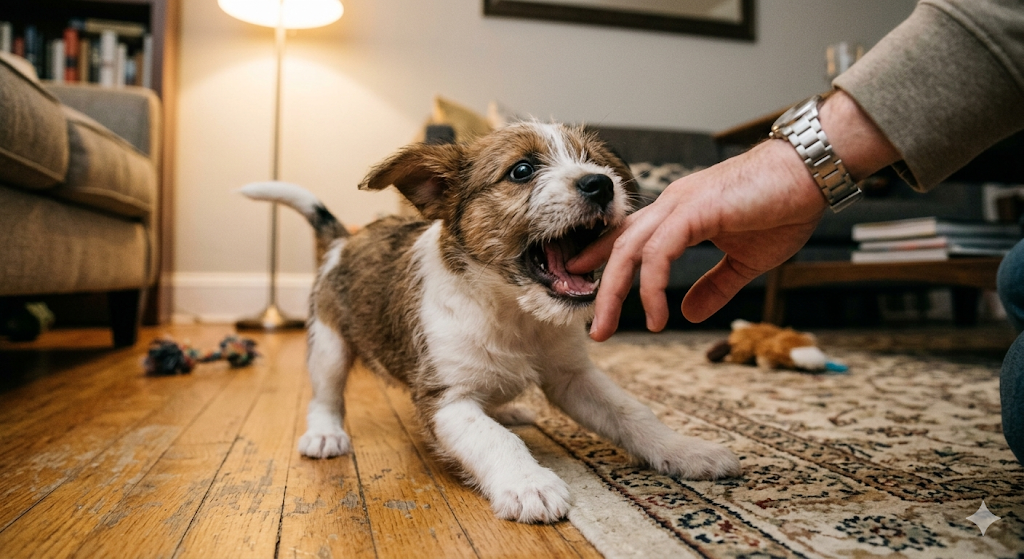
A few common habits work directly against your training.
Roughhousing with hands teaches your puppy that hands are toys. Wrestling, finger-wagging in their face, and “play biting” you encourage today becomes the biting you regret tomorrow. Use toys for play, not your body.
Inconsistent responses confuse puppies. If one family member redirects, another roughhouses, and a third yells, your puppy can’t learn a clear rule. Everyone in the house needs to follow the same protocol.
Reacting only when biting hurts teaches your puppy that mild biting is fine and only hard biting matters. Treat all teeth-on-skin contact the same way.
Skipping exercise and mental stimulation guarantees more biting. A bored puppy bites more. A puppy who’s had a sniff walk, a training session, and a chew session bites less.
When to Call a Professional Trainer
Most puppy biting resolves with consistent management at home. Some situations call for professional support.
Reach out to a trainer if your puppy is over 5 months and biting hasn’t shown clear improvement, if biting is breaking skin regularly, if your puppy growls or shows stiff body language alongside biting, if there’s a fearful component (cowering, then biting), or if children in your home are at real risk of injury.
Most behavior trainers in Dallas can assess and address these patterns in a few sessions, but earlier intervention is always better than waiting for the behavior to harden.
Frequently Asked Questions
Why does my puppy bite me so hard?
Sharp puppy teeth combined with no understanding of pressure means even friendly mouthing can hurt. Bite inhibition training and redirection address it within a few weeks of consistent practice.
When will my puppy stop biting?
Most puppies show significant improvement between 16 and 20 weeks, with full reduction usually complete by 6 to 7 months. Consistent training shortens this timeline.
Is it okay to let my puppy bite during play?
No. Allowing mouthing during play teaches your puppy that human skin is an acceptable target. Redirect every instance to a toy instead.
What if my puppy bites only one family member?
This usually means that person’s responses are inadvertently reinforcing the biting. Have everyone in the house follow the same protocol of freeze, redirect, and walk away.
My puppy lunges and bites at my legs during walks. What do I do?
Leg biting on walks is overstimulation. Carry a tug toy on walks and redirect the biting onto the toy. If it’s persistent, shorten the walk and add scheduled rest before trying again.
Will my puppy grow out of biting if I just ignore it?
Some will, many won’t. Ignoring the behavior without redirection often allows it to escalate. Active redirection and bite inhibition work produce much faster and more reliable results.
Should I crate my puppy when they won’t stop biting?
The crate shouldn’t be a punishment, but a brief crate rest can absolutely help an overtired puppy reset. Most owners are surprised how often “uncontrollable” biting resolves with 90 minutes of crate sleep.
About All Dogs Unleashed Dog Training Dallas
All Dogs Unleashed has trained thousands of puppies through the most challenging developmental stages, including the biting and mouthing phase that wears on so many new owners. Our trainers know how to read what’s driving the behavior and build the right combination of redirection, structure, and bite inhibition for each puppy. Our team has seen every variation of puppy biting Dallas families face, and we can help you through yours.
Get Help Stopping Puppy Biting in Dallas
Puppy biting is exhausting, but it doesn’t have to define the first six months of life with your dog. If you’re struggling with persistent biting, kids getting hurt, or behavior that feels beyond normal puppy play, our team can help. Reach out to our team to learn more about our puppy training programs in Dallas. Call our Dallas N Ervay location at (214) 807-1462 or our Carrollton location at (972) 484-3647 to schedule a consultation today.