
The holiday season brings festive decorations, family gatherings, and plenty of activity to Austin homes. While these moments are joyful for people, they can be overwhelming, disorienting, or even dangerous for dogs. From the doorbell ringing every few minutes to the smell of unfamiliar foods and the presence of out-of-town guests, the December holiday stretch introduces more change in a short period than many dogs are equipped to handle calmly without support.
Understanding why the holidays stress dogs out and knowing how to prepare ahead of time makes a significant difference. Whether your dog is anxious by nature or simply out of practice with big social situations, there are proven steps you can take to help them get through the season feeling safe and secure.
Why the Holiday Season Is Hard on Dogs
Dogs are creatures of routine. They rely on predictability in their environment to feel secure, and the holiday season disrupts almost everything they count on. Schedules shift. Unfamiliar people arrive and depart. Decorations change the look and smell of rooms they know well. Travel plans uproot familiar surroundings entirely. And noise from parties, fireworks during New Year’s celebrations, and the general buzz of household activity can push an anxious dog well past its comfort zone.
In Austin specifically, the holiday season often includes:
- Large family gatherings in homes along the Hill Country and throughout central Austin neighborhoods
- New Year’s fireworks that trigger noise anxiety in many dogs
- Travel between Austin and out-of-state family homes, requiring boarding or road trips
- Holiday parties with guests who may not know how to interact respectfully with pets
Any one of these situations can cause a dog to feel threatened, overstimulated, or anxious. Together, they compound into a prolonged period of stress that, without management, can result in behavioral problems that linger well into the new year.
Preparing Your Dog Before the Holidays Arrive
The most effective way to manage holiday anxiety is to start before the chaos begins. If you know guests are coming or you will be hosting a gathering, take deliberate steps to prepare your dog in the weeks ahead.
Reinforce basic commands. Dogs that reliably respond to “sit,” “stay,” “place,” and “leave it” are significantly easier to manage in busy household situations. Practice these commands in low-distraction settings first, then gradually increase distractions to build reliability.
Introduce new people gradually. If your dog is uncomfortable around strangers, work on controlled introductions before the holiday rush. Invite one or two new people over, let the dog approach on its own terms, and reward calm behavior.
Create a safe retreat. Designate a quiet room or crate space where your dog can decompress away from the activity. Make it comfortable with bedding, a chew, or a food puzzle, and teach guests not to bother the dog when it retreats there.
Maintain the routine as much as possible. Feed, walk, and play with your dog at consistent times even when the household schedule is hectic. Predictability in the basics anchors anxious dogs.
Managing Guests and Gatherings

Holiday gatherings present specific challenges. The combination of multiple strangers, excited children, unfamiliar food smells, and constant door activity is a significant source of stress for many dogs.
A few strategies that help during holiday gatherings include:
- Putting your dog in its safe space before guests arrive rather than letting it manage the chaos of people entering all at once
- Asking guests in advance not to feed the dog table scraps, as several common holiday foods including onions, garlic, grapes, raisins, chocolate, and xylitol-containing items are toxic to dogs
- Using a baby gate or exercise pen to give the dog access to the room while creating a physical boundary it can retreat behind
- Providing a long-lasting chew or food puzzle during the gathering to keep the dog occupied and lower its arousal level
- Watching for stress signals such as yawning, lip licking, turning away, or cowering, and intervening calmly before the dog reaches a threshold
If your dog has a history of jumping on guests, rushing the door, or resource guarding around food and children, now is the time to address those behaviors proactively. A board and train program in Austin can be especially effective for dogs that need concentrated, structured work on these issues before the holidays arrive.
Dog Holiday Anxiety in Austin TX: Recognizing the Signs
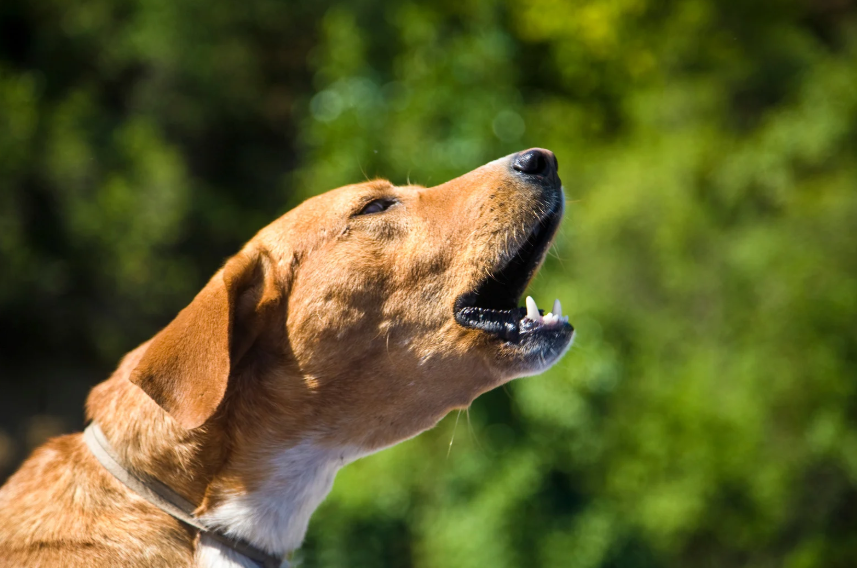
Dog holiday anxiety in Austin TX looks different from dog to dog. Some dogs become hyperactive and vocal, while others shut down and withdraw. Common signs that your dog is struggling include:
- Excessive barking or whining, especially around guests or loud noises
- Panting, pacing, or inability to settle
- Hiding or refusing to come out of a confined space
- Destructive chewing or accidents inside the house
- Snapping or growling at family members or guests
- Loss of appetite during peak activity periods
- Clinginess or following owners from room to room
None of these behaviors mean your dog is “bad.” They are communication signals. A dog showing these signs is telling you it is over threshold and needs either a break from stimulation, a calmer environment, or longer-term training support to build the coping skills it currently lacks.
Travel and Boarding During the Holidays
Austin residents travel frequently during December and into January, and that means many dogs spend time away from home at boarding facilities or with pet sitters. The transition from a familiar home environment to a new one can intensify holiday anxiety if a dog has not been properly prepared.
If you plan to travel, consider enrolling your dog in dog daycare in Austin before your departure so it becomes comfortable in a structured, staffed environment. Dogs that attend daycare regularly before a boarding stay are far less likely to struggle with the transition. They know the staff, understand the routines, and have positive associations with the facility.
When preparing for travel with your dog by car, build in regular stops, avoid feeding immediately before long drives, and bring familiar items like a blanket or toy to provide comfort in unfamiliar surroundings.
Managing Noise Anxiety Around New Year’s
New Year’s Eve is one of the highest-anxiety nights of the year for dogs across the Austin area. Fireworks are unpredictable, loud, and impossible to prepare dogs for the way you can prepare them for a known social gathering.
For dogs with moderate to severe noise anxiety, options to discuss with your veterinarian include anti-anxiety supplements, pressure wraps, pheromone diffusers, and in some cases short-term medication for especially high-noise nights. These tools work best in combination with training and environmental management rather than as standalone solutions.
On the night itself, keep your dog indoors, draw curtains to muffle light, use a white noise machine or television to mask the sound of fireworks, and stay calm yourself. Dogs read their owners closely, and an anxious owner makes an anxious dog more anxious.
Frequently Asked Questions
Why does my dog get anxious during holiday gatherings?
Holiday gatherings disrupt your dog’s routine and introduce multiple simultaneous stressors: unfamiliar people, new smells, elevated noise levels, and irregular schedules. Dogs rely heavily on routine and predictability to feel secure. When many things change at once, dogs that lack strong coping skills can quickly become overwhelmed.
What foods at holiday gatherings are dangerous for dogs?
Several common holiday foods are toxic to dogs. These include chocolate, grapes and raisins, onions, garlic, leeks, chives, xylitol (found in sugar-free products), macadamia nuts, and alcohol. Rich or fatty foods like turkey skin and gravy can also cause digestive upset or pancreatitis even if they are not technically toxic. Keep all food on counters or tables and ask guests not to feed the dog anything.
How do I prepare my dog for out-of-town guests staying in my home?
Prepare your dog by creating a designated safe space it can retreat to and training it to go there on cue. Practice having one or two new people visit before the larger group arrives. Keep your dog’s feeding and walking routine consistent even when the household schedule is disrupted. Reward calm behavior around new people rather than forcing interactions.
Should I board my dog during the holidays or bring it along on travel?
The right answer depends on your dog’s temperament and travel history. Dogs that are anxious in new environments may actually do better staying at a familiar boarding facility with people they know than traveling to multiple unfamiliar locations. Dogs that travel well and have been acclimated to car trips may handle travel fine. Consult your trainer or vet if you are unsure which option is better for your specific dog.
How can I tell if my dog’s anxiety is serious enough to need professional help?
If your dog’s anxiety is causing it to snap, bite, destroy property, have accidents in the house, or refuse to eat during the holiday period, those are signs worth discussing with a professional trainer. Anxiety that escalates into aggression or self-harm is particularly important to address. Early intervention produces better outcomes than waiting until behaviors become deeply ingrained.
Can daycare help reduce holiday anxiety for my dog?
Yes. Dogs that regularly attend daycare build confidence in social settings, learn to remain calm around new people and other dogs, and develop a routine outside the home. That foundation makes holiday disruptions easier to manage. Enrolling before the holidays, rather than during them, gives your dog time to adjust to the environment and benefit from it before the stressful period begins.
Get Your Dog Ready for the Holidays with All Dogs Unleashed
The holiday season does not have to mean weeks of stress for your dog. With the right preparation, management strategies, and training foundation, most dogs can navigate Austin’s holiday season without significant anxiety or behavioral problems.
All Dogs Unleashed in Austin works with dogs and owners year-round to build the skills that make moments like holiday gatherings manageable. Whether your dog needs a structured board and train experience, regular daycare to build social confidence, or guidance on managing anxiety, the team is here to help.
Call (512) 253-8819 or stop by at 3704 Mountain View Ave, Austin, TX 78734 to talk about your dog’s needs and get started before the holiday season arrives.