Bringing a baby home changes nearly everything about daily life, and your dog notices every shift before the bassinet ever arrives. New smells, unfamiliar sounds, rearranged furniture, and a different schedule can leave even a well-mannered dog feeling unsettled. The good news is that knowing how to introduce a dog to a baby starts long before the hospital pickup, and the families who plan ahead almost always have smoother first weeks.
Key Takeaways
- Begin preparing your dog at least three to four months before your due date so behavior changes feel gradual, not abrupt.
- Foundation cues like place, settle, leave it, and a reliable recall are more useful than fancy tricks once a baby is in the home.
- Desensitize your dog to baby sounds, smells, and equipment slowly, pairing each new exposure with something positive.
- Adjust walk times, feeding routines, and sleeping arrangements before baby arrives so your dog does not associate the changes with the new family member.
- The first introduction should be calm, leashed, and never forced; let your dog set the pace within safe limits.
- Watch body language closely, and bring in a professional Fort Worth trainer at the first sign of fear, guarding, or reactivity.
Why Preparation Matters Before Your Baby Arrives
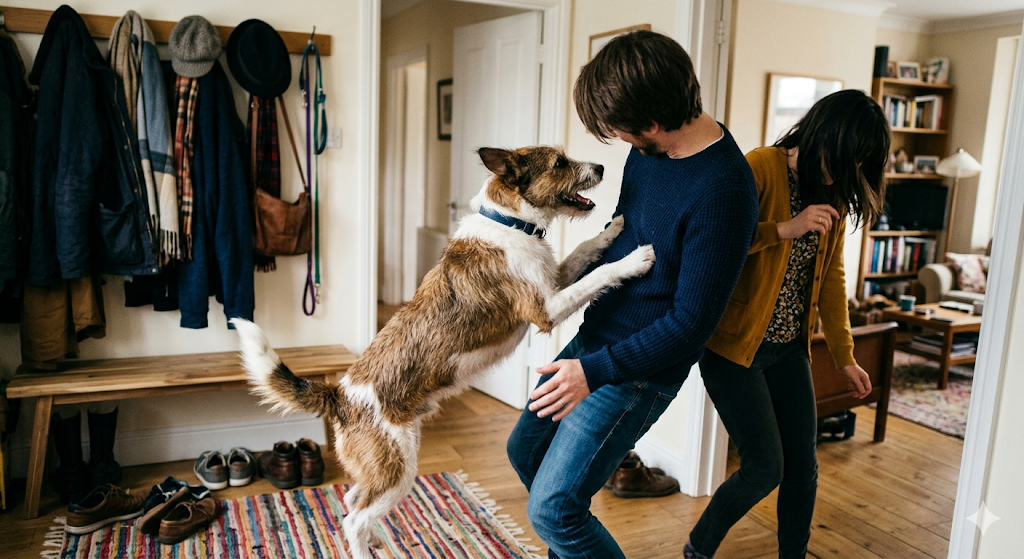
Most dogs are not naturally afraid of babies, but they are pattern animals. When the household routine shifts overnight, when furniture moves, when a parent suddenly has less time for play, and when a small, loud, unpredictable new person enters their territory, even a confident dog can struggle. Without preparation, dogs often respond with the behaviors that frustrate parents most: jumping, barking, restlessness, accidents in the house, or guarding rooms and items.
Preparing your dog for a new baby is really about making the transition predictable. When the routine your dog follows in month nine of pregnancy is close to the routine they will follow in month one of newborn life, the baby becomes one of several normal things rather than the cause of every disruption. Fort Worth families who put in the work ahead of time tend to see calmer dogs, safer interactions, and a faster bond between pet and child.
There is also a safety dimension that gets overlooked. Even friendly dogs can knock over a parent holding an infant, react to a sudden cry, or guard a soft blanket that smells interesting. Training reduces these risks before they ever come up.
Start Months Before, Not Days Before: Building a Realistic Timeline
A common mistake is waiting until the third trimester to think about the dog. By then, the parent doing most of the training is often exhausted, and the dog has weeks instead of months to absorb new expectations. A better approach is to begin three to four months out, working backward from your due date.
In the first phase, focus on baseline obedience. If your dog cannot reliably sit, stay, or come when called in a quiet room, those gaps will only widen with a crying newborn in the picture. The middle phase is for adding new cues and routines specific to baby life: place commands, calm settling on a mat, walking nicely beside a stroller, and tolerating gates that block off certain rooms. The final phase, in the last month or so, is for desensitization work with sounds, smells, and equipment, plus practice with the actual schedule you plan to keep after birth.
This timeline is not rigid. Older dogs with long-established habits may need more runway. Younger or more anxious dogs may need a slower pace through each stage. The principle stays the same: gradual change beats sudden change every time.
Foundation Commands Every Dog Needs Before Baby Comes Home
A handful of cues do more work than any other piece of training when a baby is in the house. These are the ones worth investing in:
- Place or mat: Your dog should be able to go to a designated bed or mat and stay there until released, even with distractions in the room. This is invaluable during feedings, diaper changes, and visits from family.
- Settle: Different from place, settle teaches your dog to lie calmly wherever they are, even if they would rather be active. Useful on the couch, in the nursery, or on a long stroller walk.
- Leave it: Pacifiers, bottle nipples, baby socks, teething toys, and burp cloths are all dog magnets. A reliable leave it cue protects the baby’s belongings and your dog’s stomach.
- Wait: Holding a baby through a doorway is much safer when your dog waits at thresholds instead of charging through.
- Recall: A dog that comes when called the first time, every time, gives you control in moments when seconds matter.
- Quiet or enough: Helpful for dogs who tend to alert-bark at deliveries, neighbors, or unfamiliar sounds during nap time.
If any of these feel shaky, working through the foundation commands every dog should know is the right starting point before layering in baby-specific work.
Desensitizing Your Dog to Baby Sounds, Smells, and Equipment
A newborn brings a wave of unfamiliar sensory input. Crying, cooing, hiccups, swing motors, white noise machines, bottle warmers, breast pumps, and ringing baby monitors are all foreign to a dog. So are the smells of formula, baby lotion, diaper cream, and a million other small things. Equipment like strollers, bouncers, swings, car seats, and play mats appear, often suddenly, in spaces your dog used to roam freely.
The right approach is gradual, paired exposure. Play recordings of baby cries at very low volume during a meal or a treat puzzle. Once your dog stays relaxed, raise the volume by a small amount and repeat. The goal is for your dog to associate each new sound with something good, never with sudden startle.
Smells work the same way. A dab of the lotion you plan to use on the baby, applied to a cloth and left on a shelf, lets your dog investigate at their own pace. When it comes to equipment, set up the bouncer, swing, and stroller weeks early. Push the empty stroller around the neighborhood with your dog at heel so the routine is normal long before there is a passenger inside.
Avoid the common shortcut of bringing home a hospital blanket and shoving it in your dog’s face. A calm, optional sniff is fine; a forced introduction can create exactly the tension you want to avoid.
Adjusting Routines and Setting House Rules in Advance
If your dog will no longer be allowed on the couch, in the nursery, or in the bed, the time to change those rules is now, not the week the baby comes home. Dogs read meaning into changes, and a rule that arrives at the same time as a newborn often gets blamed on the newborn.
Map out what daily life will actually look like. If walks will move from 6 a.m. to 9 a.m. because of feeding schedules, start shifting now. If a second adult will start handling the dog more often, begin that handoff. If your dog has been your shadow during work-from-home hours, build short stretches of independent time so your dog does not panic the first day they are alone with a swing humming and a parent unavailable.
Gates, pens, and crates are some of the most useful tools in baby-prep training, but only if your dog already loves them. Feed meals near the gated area, leave high-value chews inside the crate, and reward calm behavior in those spaces well before they become required. Done right, these become safe retreat spots your dog actually chooses, which is exactly what you want during long feedings or when guests are passing the baby around.
The First Introduction: How to Bring Baby Home the Right Way
The day of homecoming is exciting, and that excitement is the biggest variable to manage. A dog who has not seen their person for two or three days is going to be wound up, and asking that dog to also calmly meet a fragile new family member is asking too much.
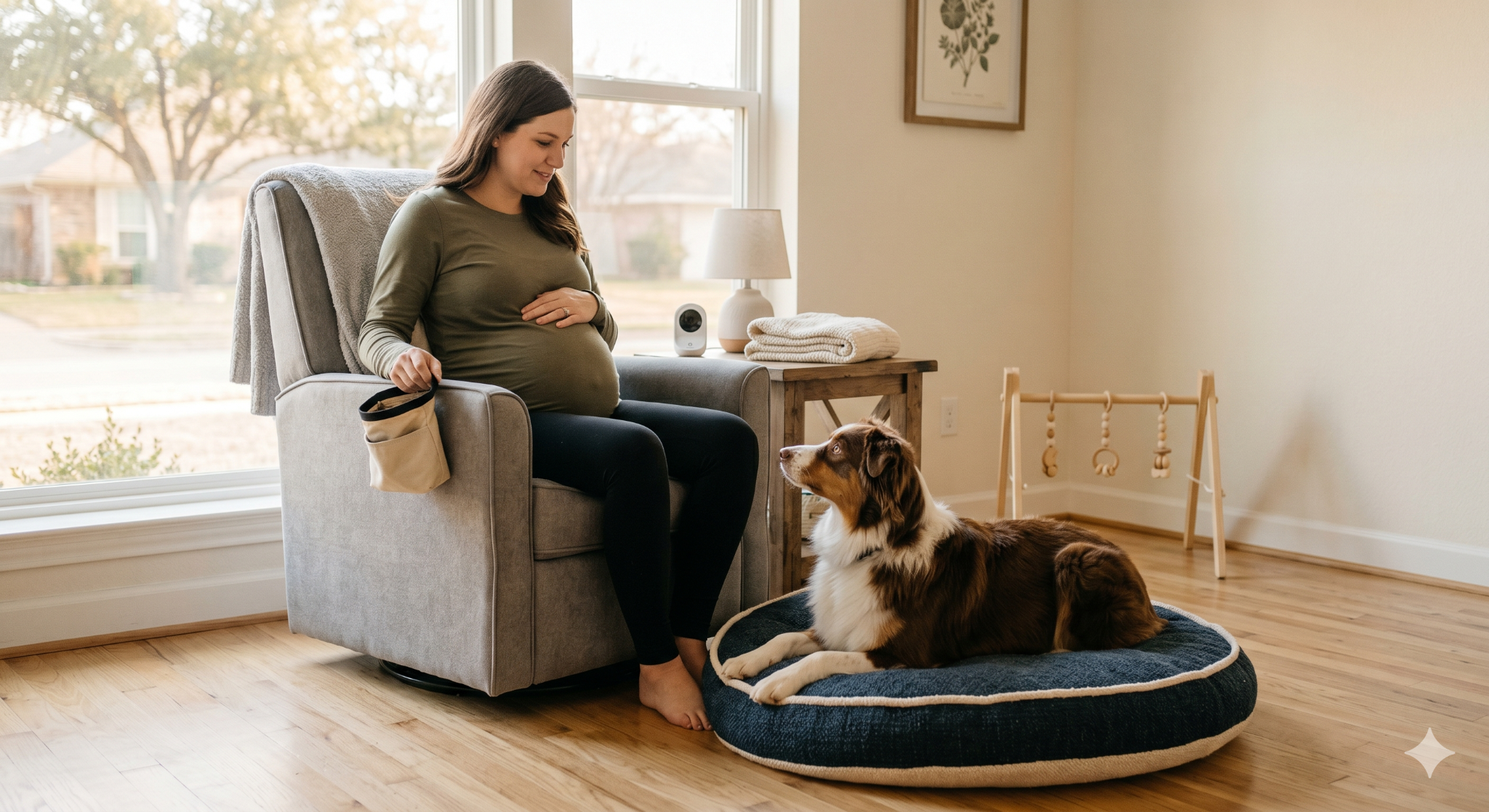
A better sequence looks like this. Have one parent or family member walk the dog before homecoming so they have already burned off some energy. When the parent returning from the hospital walks in, they should greet the dog first, alone, without the baby present. A few minutes of calm reunion takes the edge off.
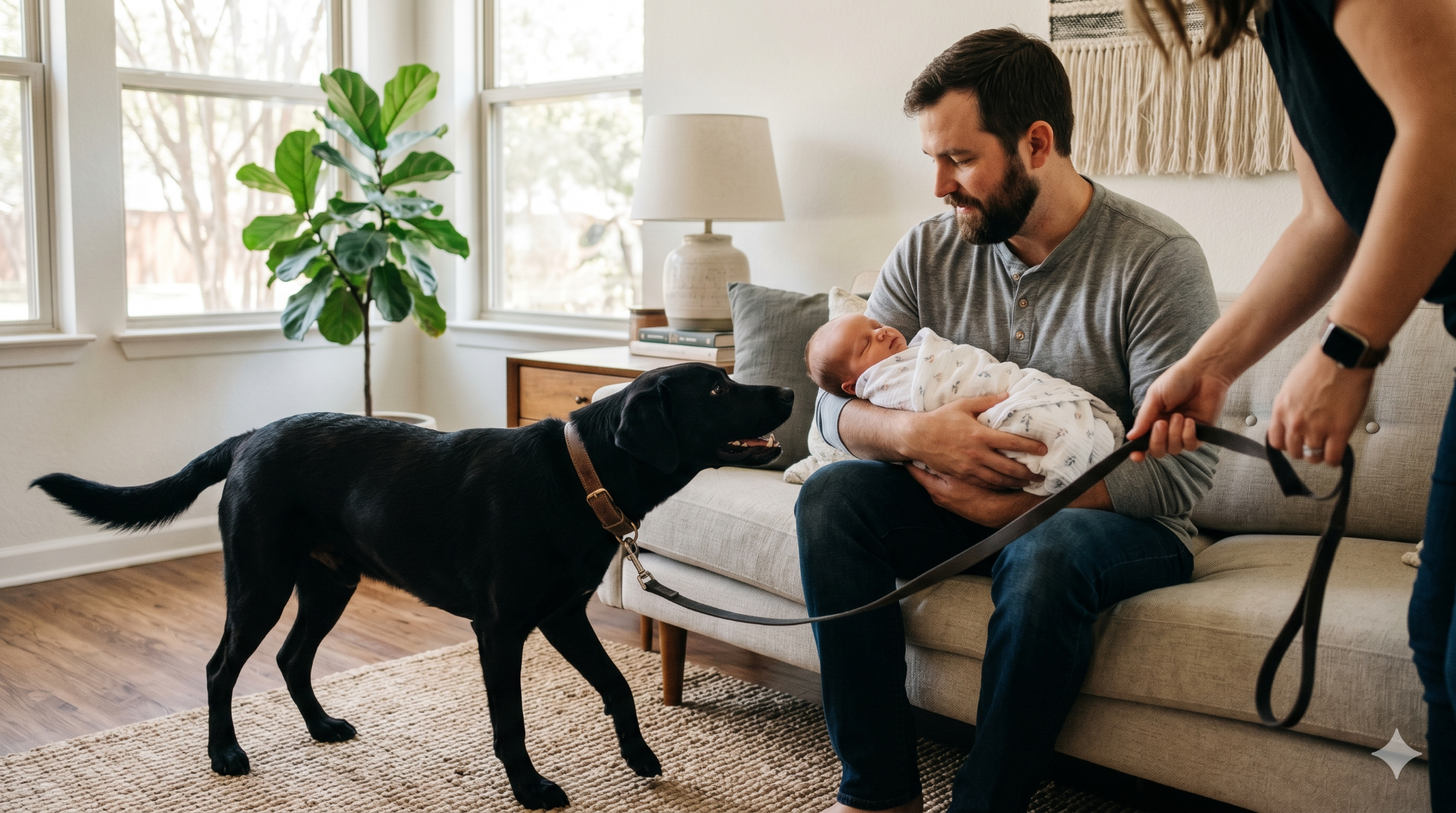
Bring the baby in next, ideally with the dog on a loose leash held by a second adult. Sit down with the baby in your arms and let the dog approach at their own pace. Reward calm sniffing, soft body language, and any glance at the baby that is not followed by jumping or fixation. Keep the first session short. Five quiet minutes is a win.
Resist the urge to make the dog and baby touch right away. There is no rush. The relationship will build over hundreds of small, positive moments, not one dramatic introduction.
Reading Your Dog’s Body Language Around the Baby
Dogs almost always tell you how they feel before anything goes wrong. Learning to read those signals is one of the most protective skills a new parent can have.
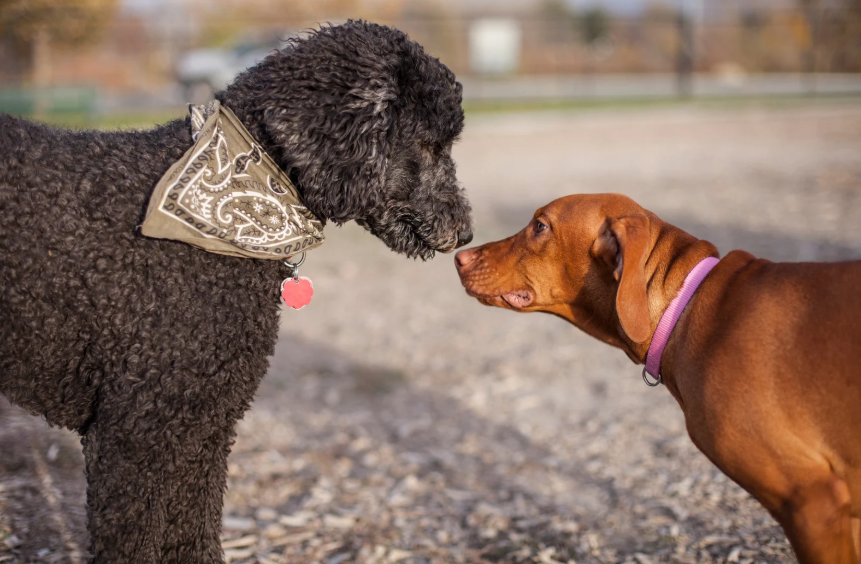
Comfortable body language includes a relaxed mouth, soft eyes, neutral or gently wagging tail, loose posture, and easy breathing. A dog who chooses to lie down near the baby and exhale is telling you they feel safe.
Warning signs are subtler than most people expect. A closed mouth, stiff posture, a tail held high and still, a hard stare, lip-licking when no food is around, a sudden yawn, the whites of the eyes showing, or a slow, deliberate movement away from the baby all signal stress. Growling is the loudest of these signals, and it should never be punished. A growl is information; suppress it and you lose your warning system.
If you see warning signs, calmly create space between your dog and the baby, end the interaction, and give your dog a few minutes in their safe area to reset. Then think about what triggered the response so you can adjust before the next attempt. Reviewing canine body language and behavior helps a lot here.
When to Bring in a Professional Fort Worth Dog Trainer
Some preparation work is simple enough to handle on your own, but certain situations call for hands-on help from a professional, and the earlier you ask, the better the outcome. Reach out to a trainer if your dog has any history of resource guarding food, toys, beds, or people, if they are reactive on leash, if they have ever growled or snapped at a child, if they have severe separation anxiety, or if they are simply too excitable to control around guests. None of these traits make a dog a bad family member, but each one needs structured work, not wishful thinking.
Even dogs without red flags benefit from professional guidance during this season. A trainer can build a customized prep plan, watch your dog’s body language with experienced eyes, and identify gaps you would not notice. At our Fort Worth location, families preparing for a baby often choose between two formats. Our board and train program gives your dog two focused weeks of daily work on obedience, impulse control, and calm behavior, and is a strong fit for owners who want the heaviest lifting handled before baby arrives. Our in-home dog training option works in the actual environment your dog and baby will share, which lets us address exactly the rooms, doorways, and routines that matter most. To explore which approach makes sense for your situation, take a look at our Fort Worth dog training programs.
The best time to start is the moment you know a baby is coming. Even a few weeks of structured work makes a meaningful difference, and giving your dog a head start is one of the kindest things you can do for both of them.
Frequently Asked Questions
How early should I start training my dog before the baby arrives?
Three to four months out is ideal. That window gives you time to strengthen baseline obedience, layer in baby-specific cues, and run desensitization work without rushing. If your due date is closer, start now anyway. Even six weeks of focused training is far better than none.
Should I let my dog sniff the baby right away?
Allow calm, optional sniffing from a comfortable distance during a controlled introduction, but do not force face-to-face contact. Let your dog approach at their own pace, and reward calm behavior. The relationship grows over weeks, not in one moment.
What if my dog has never been around babies or small children?
That is more common than people realize. Focus on desensitization to baby sounds, smells, and movements, and arrange controlled, positive exposures to friends’ babies if possible. A dog who has never met a newborn can absolutely learn to live happily with one, but a professional trainer is a smart resource if you have any concerns.
Is it safe to leave my dog alone with the baby once they get along?
No dog should ever be left unsupervised with an infant or young child, regardless of breed, history, or training. Even gentle dogs can react unpredictably to sudden movements or sounds, and infants cannot move themselves out of harm’s way. Always supervise actively, and use gates or crates when you cannot.
How do I keep my dog from feeling jealous or ignored after the baby comes home?
Protect a daily one-on-one routine with your dog, even if it is shorter than before. A ten-minute walk, a brief training session, or a calm cuddle on the couch maintains the bond. Pair the baby’s presence with good things for your dog, like a stuffed chew toy during feedings, so the baby becomes a predictor of positive moments.
Should my dog be in the room when the baby is crying?
Yes, as long as your dog is comfortable. Keeping your dog in the same space teaches them that crying is normal and not something to react to. If your dog seems anxious, give them the option of moving to a quiet area, and work on sound desensitization separately.
Contact Us
Welcoming a baby into your Fort Worth home should feel exciting, not stressful, and a calm, well-prepared dog makes a real difference. Whether you need help with foundation obedience, baby-specific behavior work, or a full prep program before your due date, our team is ready to help. Call (817) 393-6224 or contact our Fort Worth team to talk through your dog’s needs and timeline.
About All Dogs Unleashed Fort Worth
All Dogs Unleashed Fort Worth is a full-service dog training facility located at 4011 Benbrook State Route, Fort Worth, TX 76116, serving families across Fort Worth, Benbrook, Burleson, and the surrounding Tarrant County communities. Our trainers work with dogs of every age, breed, and behavior profile, with programs built around real-world results in real-world environments, including the everyday demands of growing families.