Most Fort Worth dog owners want a calm, well-mannered companion, and most are putting in real effort to get there. So why does training stall, regress, or feel like a constant uphill climb? Almost always, the answer is not the dog. Small habits in how owners communicate, when they train, and how they respond to bad days can quietly undo weeks of progress. The encouraging news is that the most common dog training mistakes are also the easiest to fix once you spot them.
Key Takeaways
- Inconsistent rules between family members confuse your dog faster than any other single mistake.
- Repeating commands teaches your dog that the first cue is optional and the third one might matter.
- Daily short training reps build behavior; waiting until something goes wrong rarely fixes it.
- Socialization does not stop at sixteen weeks; adult dogs need ongoing exposure to stay confident.
- Mental work tires a dog in ways that a long walk cannot, and most behavior problems trace back to under-stimulation.
- Punishing fear, growling, or anxiety usually makes the underlying behavior worse, not better.
- Dogs do not automatically apply living-room training to the real world; you have to practice in real environments.
- Bringing in a professional sooner shortens the road; waiting until you are at your limit makes everything harder.
Mistake 1: Inconsistent Rules Across the Household
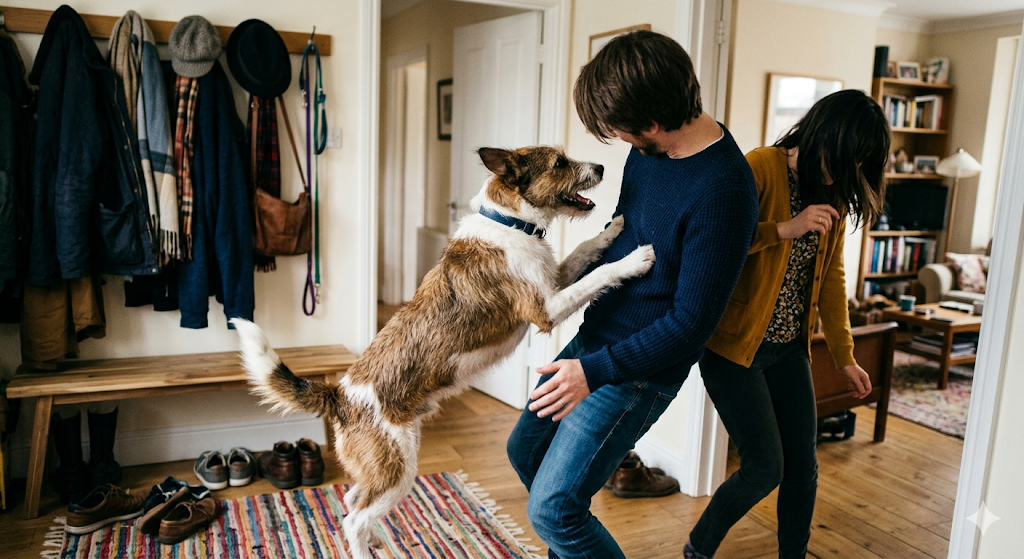
Dogs do not understand exceptions. If one person lets the dog up on the couch and another scolds them for it, the dog does not learn the nuance of who allows what. They learn that the rule itself is unreliable, which means every rule becomes negotiable.
The same issue shows up with commands. One family member says “down,” another says “lay down,” another says “off” when they really mean “down.” Each variation is a different word to the dog. Multiply that by five or six basic cues and a household can accidentally teach a dog that words mean nothing in particular.
The fix is a short family meeting before training begins. Agree on the exact words you will use for each behavior, decide which furniture and rooms are off-limits, and commit to enforcing the rules the same way every time. Write the cues down on the fridge if you have to. Consistency is not glamorous, but no other single change produces faster results.
Mistake 2: Repeating Commands Until the Dog Listens
“Sit. Sit. Sit. SIT.” Almost every owner has done this. The problem is that you are not teaching your dog to sit. You are teaching your dog that the word “sit” is a four-syllable cue ending in a raised voice. The first three “sits” become background noise.
Say the cue once. Wait. If your dog responds, reward immediately. If they do not respond within a few seconds, that means one of two things: the cue is not strong enough yet, or the environment is too distracting. Either way, repeating the word will not solve it. Go back to an easier setting, shorten the duration, or use a higher-value reward, and rebuild from there.
This is also a good moment to audit which cues your dog actually understands cleanly versus which ones have gotten muddy. Working through the best training commands every dog should know is a good way to reset the foundation.
Mistake 3: Training Only When There’s a Problem
A lot of Fort Worth owners think of training as something you do when something is wrong. The dog pulls on leash, so you spend a frustrating week working on heel. The dog jumps on a guest, so you panic-train sit. Once the immediate problem cools off, training stops, and the cycle starts over a few weeks later.
Behavior is built through repetition, not through crisis response. Five minutes of training, twice a day, almost every day, will produce a dramatically better-mannered dog than one intense hour-long session each weekend. Short reps fit easily into normal life: a sit before meals, a place command during dinner, a wait at the door before walks, a recall during backyard time.
The dogs who do best are the ones whose owners stop thinking of training as an event and start treating it as a small daily habit. The behavior you reinforce every day is the behavior you will get every day.
Mistake 4: Skipping Socialization Beyond the Puppy Stage
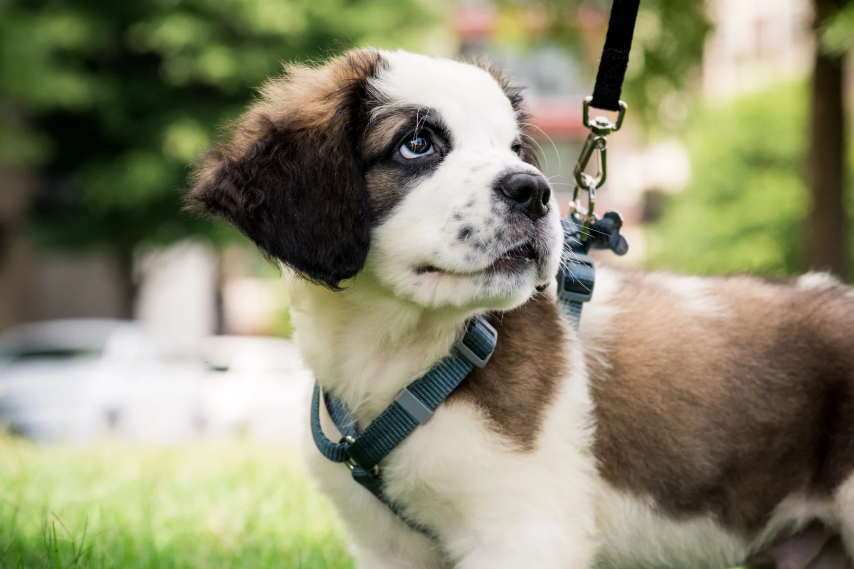
The critical socialization window for puppies closes around sixteen weeks, and that early period absolutely matters. But many owners treat socialization as a checklist they completed in puppyhood, then never revisit. The result is a one-year-old or two-year-old dog who used to be friendly and confident but has slowly become reactive, anxious, or fearful.
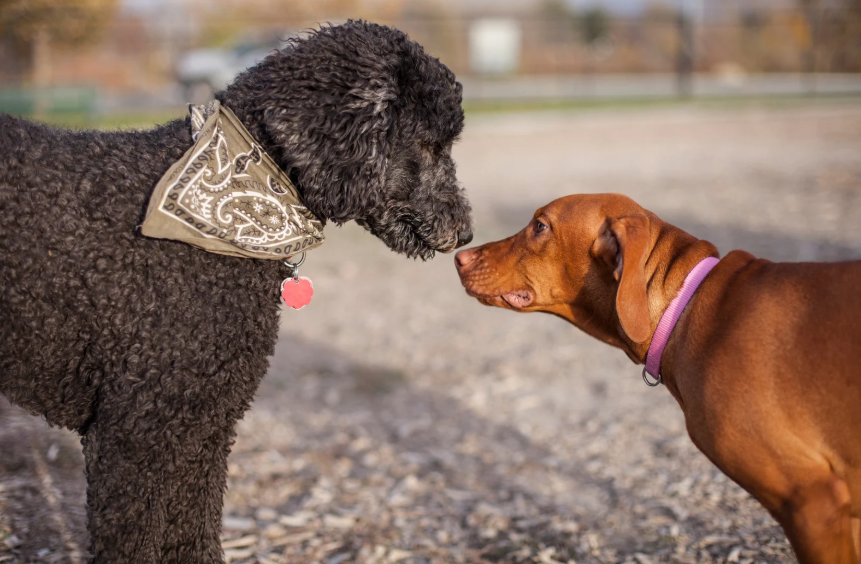
Socialization is a lifelong maintenance job. Adult dogs need continued positive exposure to new people, new dogs, new environments, new surfaces, new sounds, and new situations. Without it, their world shrinks, and anything outside that small bubble starts to feel threatening.
For Fort Worth dogs, this can be as simple as varying your walk routes, taking your dog to a different park each weekend, sitting on a patio at a dog-friendly restaurant, or letting them watch the world go by at a busy outdoor shopping area. The goal is not constant high-stimulation outings. It is steady, low-pressure exposure that keeps your dog comfortable in the larger world they live in.
Mistake 5: Confusing Exercise With Mental Stimulation
A tired dog is a good dog, the saying goes. The trouble is that owners often interpret this as “physically exhausted dog,” and they are surprised when a sixty-minute run produces a dog who is somehow more wound up at home, not less.
Physical exercise burns energy, but it does not satisfy a dog’s brain. Dogs are problem-solvers by nature, and without something to think about, that mental energy comes out as chewing, barking, digging, counter-surfing, or general restlessness. A dog who has been physically tired but mentally bored every day for a year is a dog with behavior problems waiting to surface.
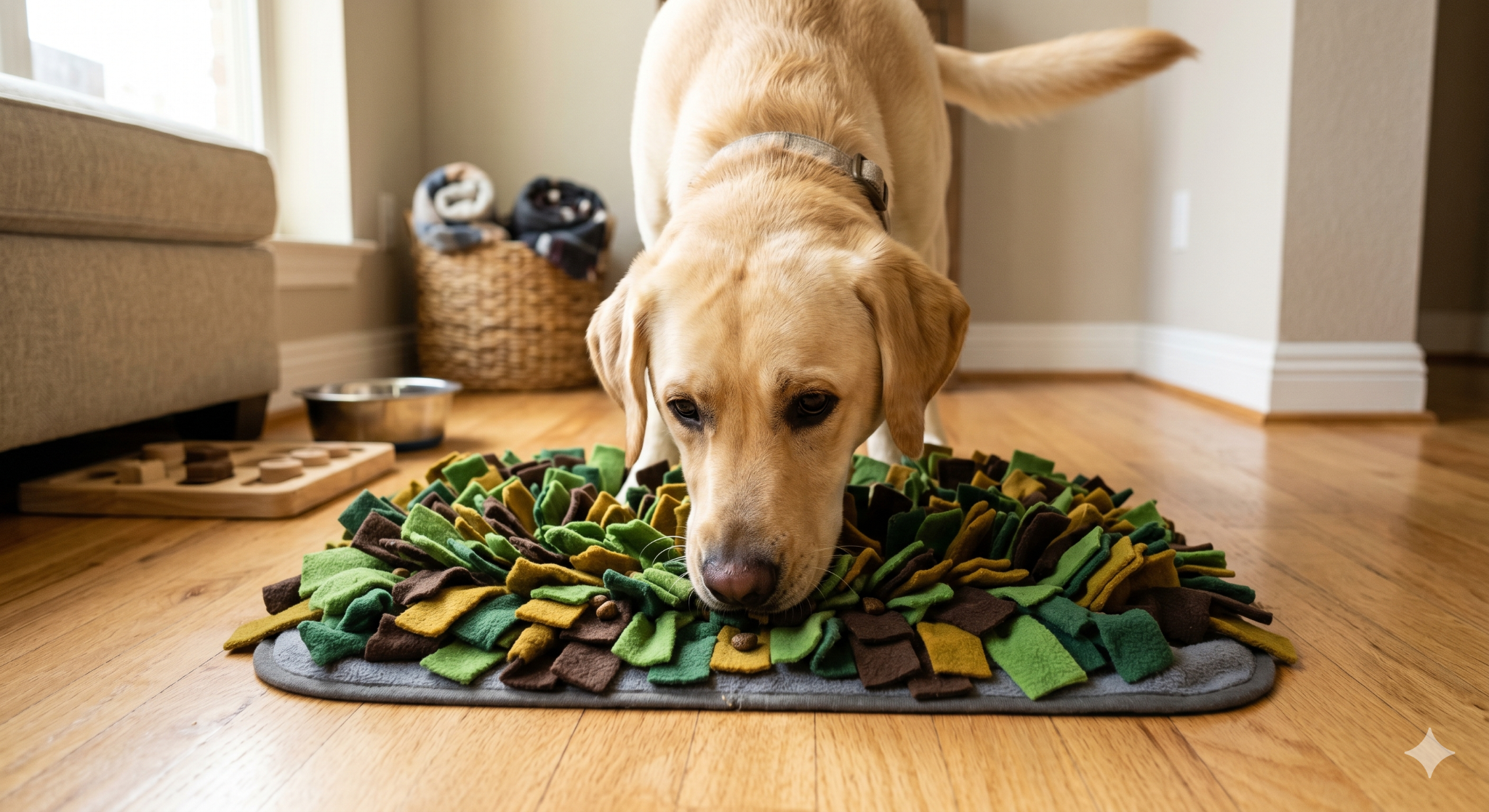
Mental stimulation looks like sniff walks where you let your dog set the pace and investigate, food puzzles and snuffle mats at meal times, short training sessions that ask your dog to think, scatter-feeding kibble in the grass, or teaching new tricks just for fun. Twenty minutes of mental work often calms a dog more than an hour of fetch. The best routines combine both, and most under-trained Fort Worth dogs need more of the mental side, not less of the physical.
Mistake 6: Punishing Behavior You Don’t Understand
When a dog growls, snaps, hides, or shuts down, the instinct for many owners is to correct it. Yell at the growl. Scold the dog who hides. Pull harder on the leash when they freeze. The logic feels right in the moment, but it consistently makes the underlying problem worse.
Growling is not aggression. It is information. A dog who growls is telling you they are uncomfortable and asking for space. If you punish the growl, you do not change how the dog feels; you only teach them not to warn you next time. The next signal up the ladder is a snap or a bite, with no warning bark or growl in between.
The same applies to fear and anxiety. Scolding a dog for being afraid of fireworks, the vacuum, a stranger, or another dog adds your displeasure to an already stressful experience. The dog learns that fear is followed by punishment, which makes the fear bigger.
The right approach is to figure out what triggered the behavior and reduce that trigger while you build positive associations over time. This is also why fear-based training does more harm than good is one of the most important reads for any owner who feels stuck.
Mistake 7: Practicing Only in the Living Room
Your dog sits perfectly in the kitchen. They lie down on cue in the living room. They come when called in the backyard. Then you take them to a Fort Worth park, ask for a sit, and they look at you like they have never heard the word before. This is one of the most frustrating dog training mistakes, and it is also the most misunderstood.
Dogs do not generalize the way humans do. A behavior trained in one location, with one set of distractions, does not automatically transfer to a new location with new distractions. To your dog, “sit in the kitchen” and “sit at LaGrave Field” are two completely different commands until you have practiced both.
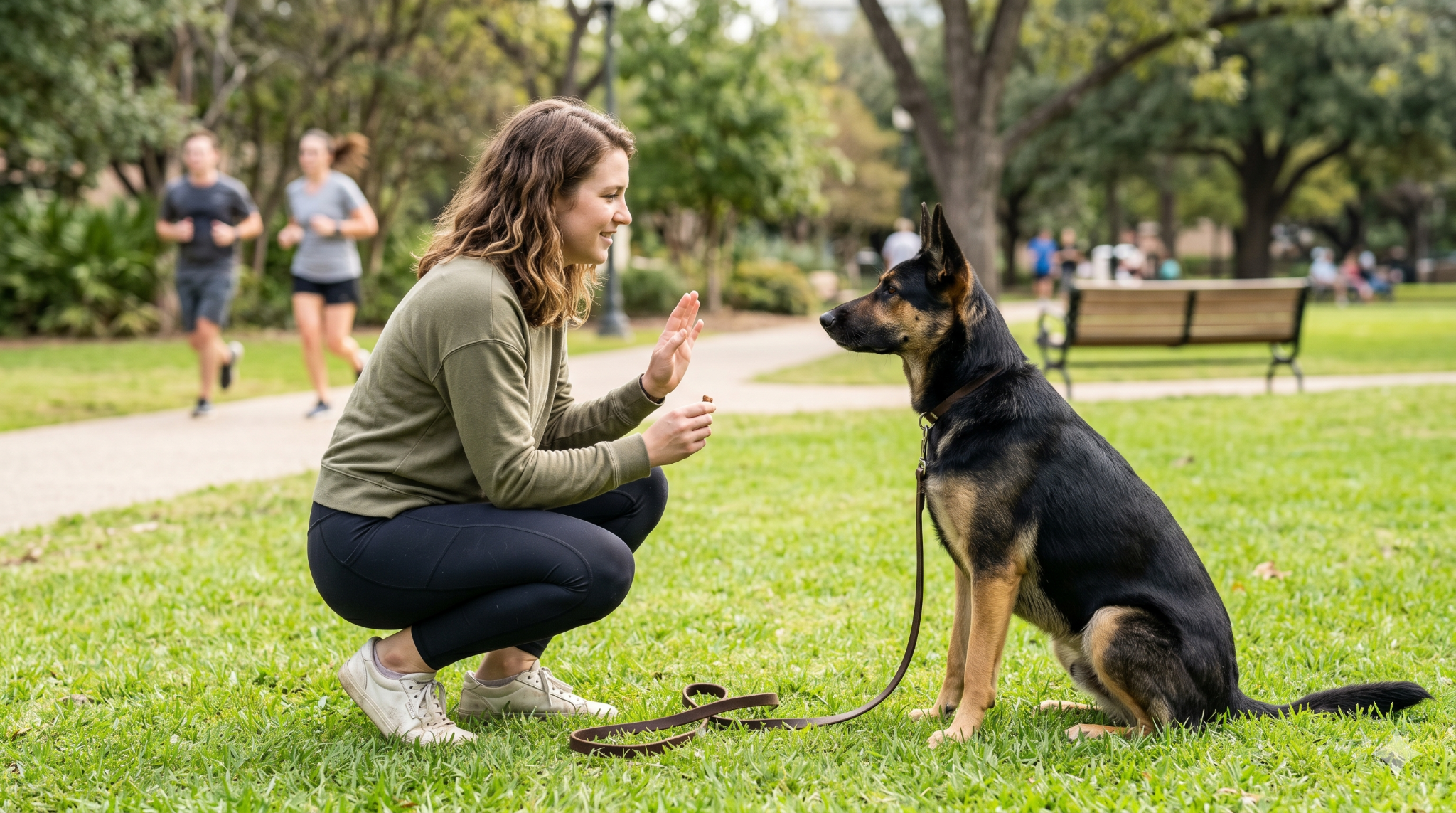
The fix is to deliberately rehearse cues in many environments, starting easy and adding difficulty gradually. Train in your driveway. Then on a quiet sidewalk. Then at a calm park during off-hours. Then at a busier park. Then near other dogs. Each step strengthens the behavior in the real conditions you actually need it to hold up in. If practicing in your home environment is the gap, in-home dog training is built around exactly this kind of real-world reinforcement.
Mistake 8: Waiting Too Long to Bring in a Professional
There is a moment in many training journeys where progress stalls, frustration builds, and the dog and owner both start to dread training sessions. The natural reaction is to push harder, watch more videos, try a new method, or simply hope the dog grows out of it. Most of the time, these strategies extend the problem instead of solving it.
The dogs who get the best results are usually the ones whose owners reach out for help earlier rather than later. A trainer can spot timing issues you cannot see, identify which behaviors need to be addressed first, and build a plan tailored to your specific dog rather than a generic protocol. Waiting until a dog has been pulling on leash for two years, jumping on guests for eighteen months, or growling at strangers for several weeks turns a fixable issue into a habit that is much harder to undo.
Common signs it is time to bring in a professional include leash reactivity that is getting worse instead of better, growling or snapping at people or other dogs, severe separation anxiety, resource guarding around food or toys, or the simple feeling that you have hit a wall and nothing is working. None of these mean your dog is bad. They mean the training approach needs to change, and an experienced set of eyes shortens that process dramatically. Our board and train program gives your dog two focused weeks of daily structure with our trainers, which is often the fastest way to reset behavior that has been drifting for a long time.
Frequently Asked Questions
How long does it take to fix a bad training habit?
It depends on how long the habit has been in place and how consistently the new approach is followed. A few weeks is realistic for newer issues caught early. Behaviors that have been reinforced for a year or more usually take longer because the dog has to unlearn the old pattern while learning the new one. Consistency from every person in the household speeds the process up significantly.
Is it ever too late to train an older dog?
No. Older dogs absolutely learn new behaviors, and many of them learn faster than puppies because they have longer attention spans and are calmer overall. The “old dog, new tricks” myth is exactly that: a myth. The training approach may need to account for any physical limitations, but age itself is not a barrier.
Why does my dog listen at home but ignore me outside?
Because dogs do not generalize behaviors across environments without specific practice. A cue trained only at home is a cue your dog only knows at home. Practicing the same cues in progressively more distracting environments is what makes them reliable everywhere.
Should I use treats forever, or will my dog only listen for food?
Treats are a tool to teach and strengthen behavior, not a permanent bribe. Once a behavior is reliable, you can shift to intermittent rewards (sometimes a treat, sometimes praise, sometimes a chance to play or sniff). Many well-trained adult dogs respond reliably with mostly verbal praise and occasional food rewards.
My dog used to be friendly and is now reactive on leash. What happened?
Most often, this comes from a combination of stopped socialization, a negative experience that was not addressed, and the natural changes that happen as dogs mature out of adolescence. The behavior is fixable, but it usually requires structured work to rebuild positive associations. This is one of the clearest signals to bring in a trainer.
How often should I train my dog?
Short and frequent beats long and occasional every time. Two to three sessions of five to ten minutes per day, plus small reinforcement moments built into normal life (sit before meals, wait at doors, place during dinner), produce the best results. Hour-long sessions usually exhaust the dog without improving retention.
Contact Us
Even small changes in how you train can produce big changes in how your dog behaves, and you do not have to figure it out alone. Whether you have hit a wall with a specific behavior or you simply want a stronger foundation, our Fort Worth team is ready to help. Call (817) 393-6224 or contact our Fort Worth team to talk through your dog’s current situation and find the right next step. Take a look at our full range of Fort Worth dog training programs when you’re ready to dig in.
About All Dogs Unleashed Fort Worth
All Dogs Unleashed Fort Worth is a full-service dog training facility located at 4011 Benbrook State Route, Fort Worth, TX 76116, serving families across Fort Worth, Benbrook, Burleson, and the surrounding Tarrant County communities. Our trainers work with dogs of every age, breed, and behavior profile, helping owners replace frustrating habits with reliable, real-world results that hold up in the environments your dog actually lives in.