Fort Worth has some of the best off-leash dog parks in North Texas, from the 10-acre ZBonz Dog Park on the city’s west side to Fort Woof at Gateway Park, the city’s first off-leash facility. They’re free, well-maintained, and a fantastic outlet for dogs that need to burn energy. They’re also high-stimulation environments where one rude dog or one distracted owner can turn a great afternoon into a vet visit.
Most dog park problems are not about bad dogs. They’re about adults who don’t know the unwritten rules. Here are the seven pieces of dog park etiquette that every Fort Worth owner should have down before they unclip the leash.
Key Takeaways
- Fort Worth dog parks require a current rabies vaccination and a city dog license for every dog that enters.
- Leash on at the gate, off inside the play area, leash back on at the gate. Never reverse the order.
- Active supervision means eyes on your dog, not your phone. Most fights are visible 10 to 20 seconds before they happen.
- Skip the dog park if your dog is in heat, sick, under 4 months old, or known to be reactive.
- A dog with reliable obedience around distractions is a dog who is welcome at every dog park in Fort Worth.
1. Confirm Your Dog Is Healthy, Vaccinated, and Licensed Before You Go
Every fenced dog park in Fort Worth, including Fort Woof and ZBonz, requires every dog inside to have a current rabies vaccination and a City of Fort Worth dog license. Per city ordinance, all dogs four months or older must be vaccinated against rabies by a licensed veterinarian, and proof must be on the collar tag. Licenses from other Tarrant County cities are honored, but if your home city does not require one, you’ll need to get a Fort Worth license through Animal Care and Control or a participating Fort Worth veterinarian.
Beyond the legal minimum, your dog should also be current on distemper, parvo, and bordetella, since dog parks are one of the easiest places to pick up a respiratory infection. Skip the park entirely if your dog is recovering from illness, has any kind of open wound, or is a female in heat. None of these are negotiable, and longtime regulars at Fort Woof and ZBonz will notice fast.
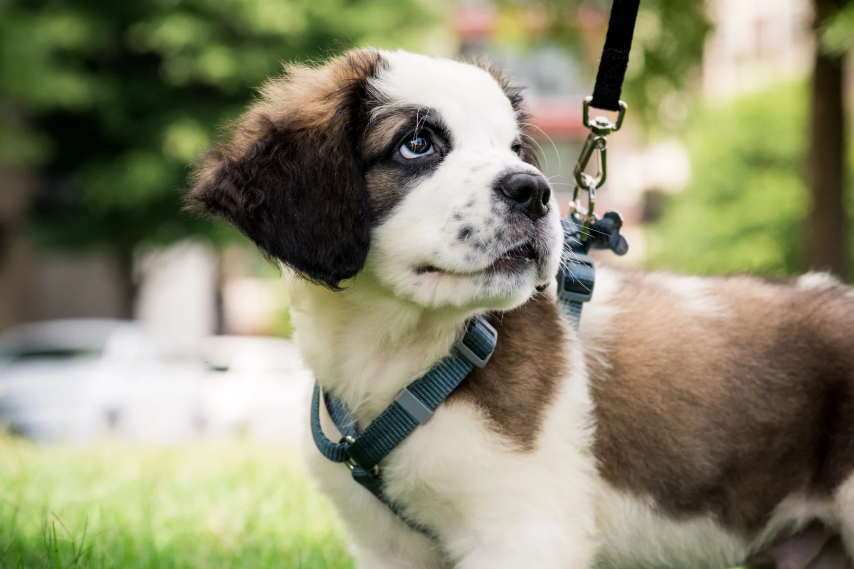
Puppies under four months of age should not be at off-leash dog parks at all. Their immune systems are still developing, and a single bad encounter at this age can produce reactivity that takes years to resolve.
2. Use the Double Gate Correctly Every Single Time
Both ZBonz and Fort Woof use a double-gate entry system, with a small holding pen between the outer and inner gates. The system only works if everyone uses it the way it was designed.
Step into the holding pen, close the outer gate completely behind you, then unclip your dog. Wait until the dogs already inside the play area have moved away from the inner gate before opening it. Your dog walks in, you walk in, and you close the inner gate. Reverse the process to leave.
The most common mistake is unclipping the leash before the outer gate is closed, which leads to dogs slipping out into the parking lot. The second most common is letting a pack of dogs crowd the inner gate while you try to enter, which is the single most likely flashpoint for a fight at any dog park. If a crowd is already at the gate, wait. The pack will disperse within a minute. Forcing your dog into a stationary group of strangers in a tight space is a setup for a bad first impression.
3. Leash On at the Gate, Off Inside the Play Area
Inside the fenced off-leash area, your dog must be unleashed. A dog dragging a leash inside a play area is a tripping hazard, an entanglement risk, and tends to feel restrained when other dogs approach, which often triggers leash reactivity in a space where there should be none.
Outside the fence, the same Fort Worth city ordinance that applies to every other public space applies here too. Your dog must be on a leash no longer than 6 feet anywhere in Gateway Park, North Z Boaz Park, or any other Fort Worth public area outside the fenced off-leash zone. That includes the parking lot, the path from your car, and the holding pen between gates.
For more on what the leash law actually requires across the metro area, read our breakdown of leash laws and off-leash etiquette in DFW.
4. Watch Your Dog, Not Your Phone
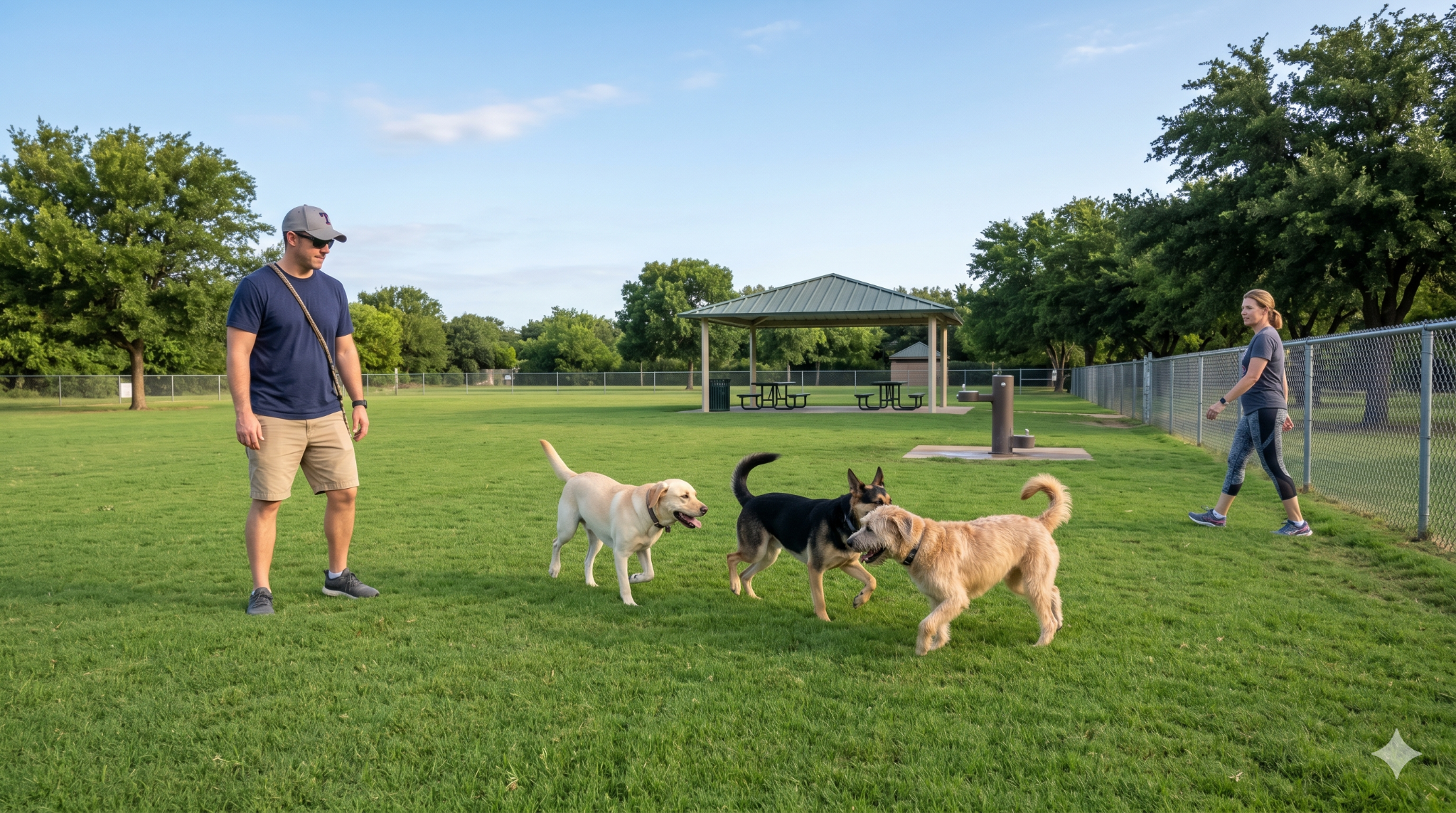
Active supervision is the single biggest piece of dog park etiquette, and it’s the one most owners get wrong. Standing in a circle chatting with other owners while your dogs roam unmonitored is how fights happen.
Dog fights almost never come out of nowhere. There is usually a 10 to 20 second window of escalating tension that a watching owner can interrupt. The Fort Woof park managers teach a “4P” framework for spotting trouble early: posture (stiff, tall, frozen body language), packing (more than two or three dogs grouping up around one dog), play that has tipped from mutual to one-sided, and predatory chasing where one dog can’t get away.
If you see any of these signs, calmly call your dog out of the situation and lead them at least 30 feet away to neutral ground. Don’t yell across the park, don’t run toward the dogs, and don’t grab collars from above unless you absolutely have to. For a refresher on the obedience cues that make this kind of management possible, our list of essential training commands every dog should know covers what to drill before your next dog park visit.
5. Pick Up Waste Immediately, Every Time, Without Exception
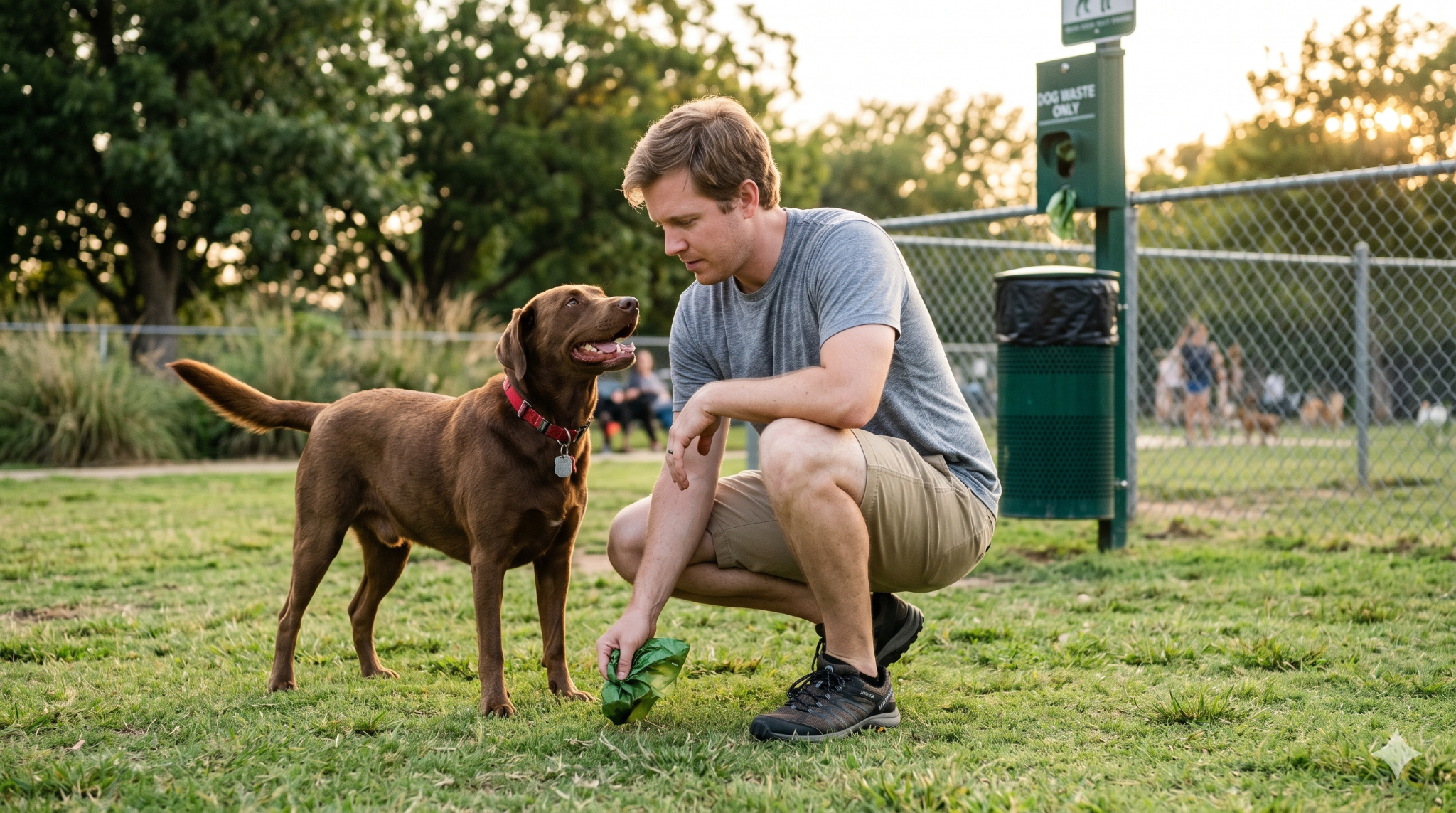
This is the rule that creates the most resentment between regulars at Fort Worth dog parks, and it is the rule there is no excuse for breaking. ZBonz and Fort Woof both stock waste bags at multiple stations and provide trash receptacles. There is no scenario in which leaving waste behind is acceptable.
Pick up immediately, while you can still see exactly which deposit was your dog’s. Walking back later to find it almost never works. If you run out of bags before the park does, ask another owner. Carrying a small roll of bags clipped to your leash means you’ll never be the person making excuses.
This isn’t only about courtesy. Dog parks are one of the highest-risk environments for parasites like giardia, hookworm, and roundworm, all of which spread through fecal contamination. Owners who pick up are protecting every dog at the park, including their own.
6. Read Your Dog’s Body Language and Know When to Leave
Just because your dog tolerated 20 minutes at the park doesn’t mean they want 60. Dogs get socially exhausted the same way people do, and a dog who’s had enough often starts making bad decisions: snapping at puppies, body-slamming smaller dogs, ignoring recall, or shadowing one specific dog with an intensity that crosses into harassment.
Signs your dog is ready to go include hiding under benches or by the fence, panting heavily and not engaging, lip licking and yawning while standing near you, or turning their body away when other dogs approach. The “tail up and tongue out” picture of a happy dog park dog can flip to overstimulation in 15 minutes, especially in summer heat.
Leave before your dog’s behavior gets worse. The goal is to end on a good note so the next visit goes well. If you find that your dog regularly escalates at the park, becomes possessive of toys, or fixates on certain dogs, those patterns are worth addressing with structured training before they become harder to fix. Our guide on common types of aggression in dogs walks through what’s normal arousal versus what needs intervention.
7. Respect the Size Divisions and the People Around You
ZBonz Dog Park has a 7-acre section for large dogs and a separate 3-acre section for small dogs under 40 pounds. Fort Woof has the same split, with the threshold also at 40 pounds. These divisions exist for safety. A friendly Lab playing normally with a toy poodle can cause a serious injury without any aggressive intent, simply because of the weight and force differential.
Use the side that matches your dog’s size, not the side you think your dog “would prefer.” A small dog in the large section is at real physical risk, and a large dog in the small section is unfair to the smaller dogs who use that space precisely so they don’t have to deal with bigger pups.
The same respect extends to the people there. Don’t let your dog jump on other owners. Don’t bring food or treats into the play area, since both can trigger resource guarding among dogs that otherwise get along. Ask before petting someone else’s dog. And if another owner asks you to call your dog away, do it without arguing. Fort Woof’s founders built the park on the principle that dog owners would police themselves and each other politely. That culture only works if you participate in it.
Frequently Asked Questions
What dogs should not go to a Fort Worth dog park?
Skip the dog park if your dog is under four months old, in heat, sick, recently injured, or has a history of fighting with other dogs. Reactive dogs, fearful dogs, and dogs with no off-leash training also benefit far more from structured walks or one-on-one socialization than from a busy off-leash park.
Are food and treats allowed at Fort Woof or ZBonz?
No. Food and drinks are prohibited inside both parks. Bringing treats into a group of strange dogs can quickly trigger resource guarding and fights, even between dogs that are normally easygoing. Reward your dog before you arrive or after you leave.
What hours are Fort Worth dog parks open?
Fort Woof at Gateway Park is open from 5:00 a.m. to 11:30 p.m. daily and is lit at night. ZBonz Dog Park follows similar Fort Worth Parks hours and closes Mondays from 6:00 a.m. to 12:00 p.m. for scheduled maintenance. Always check current hours on the City of Fort Worth Parks website before driving over.
My dog is friendly but a little pushy. Is the dog park a good fit?
A pushy dog can quickly become “that dog” at the park, the one regulars groan about and other dogs avoid. If your dog mounts, body-slams, or won’t take social cues from other dogs to back off, work on impulse control and recall in lower-distraction settings first. The dog park is a place to test trained behavior, not to teach it from scratch.
What should I do if a fight breaks out?
Stay calm. Don’t reach between the dogs or grab collars from above, since that’s how owners get bitten. The “wheelbarrow” method, where two adults each grab the back legs of one dog and pull straight back and apart, is the safest way to separate fighting dogs. Once separated, leash up, leave the park, and check both dogs for injuries.
Is Fort Woof or ZBonz better for a first dog park visit?
Both are excellent, but ZBonz tends to be less crowded outside of weekends and has more open space, which can make it a calmer first experience for a dog new to off-leash play. Fort Woof has the longer history and a tighter community of regulars but also tends to be busier, especially in cooler weather.
Get Your Dog Park-Ready
If your dog struggles with recall, gets overstimulated quickly, or has had a bad experience at a dog park before, you don’t have to give up on off-leash play. The All Dogs Unleashed Fort Worth team builds the foundation of obedience and impulse control that makes dog parks safe and enjoyable. We offer in-home dog training, a board and train program, and full dog boarding services for owners across Fort Worth.
Call us at (817) 393-6224 or contact us to talk through your dog’s specific behavior at the park.
About All Dogs Unleashed Fort Worth
All Dogs Unleashed Fort Worth is a professional dog training and boarding facility based at 4011 Benbrook State Route, Fort Worth, TX 76116. Our trainers specialize in off-leash control, behavior correction, and personalized obedience through customized dog training programs in Fort Worth, and every client receives unlimited follow-up support for the life of their dog.