
Des Moines has over 800 miles of connected trail systems, and on any given evening you’ll find hundreds of dogs out walking along Gray’s Lake, the Clive Greenbelt, and the Neal Smith Trail. For most owners, it’s the best part of the day. For owners with reactive dogs, it can be the most stressful.
Reactive dog walking doesn’t have to mean white-knuckling the leash and hoping you don’t run into another dog. With the right understanding of what drives reactivity, the right techniques for managing it in the moment, and the right long-term training plan, your walks can shift from survival mode to something you both actually enjoy. Here’s how to make that happen on the trails you already use.
Key Takeaways
- Reactivity is an emotional response to a trigger, not a sign that your dog is aggressive or dangerous
- Most trail reactions are driven by either fear or frustration, and the approach for each is different
- Distance from the trigger is the single most important variable you can control during a walk
- In-the-moment techniques like the emergency U-turn, engage/disengage, and scatter games interrupt reactions before they escalate
- Choosing trails with better sightlines and lower traffic gives your dog space to succeed
- Long-term improvement comes from structured training that builds impulse control and desensitization, not from avoidance
What Reactivity Actually Looks Like (and What It Doesn’t)
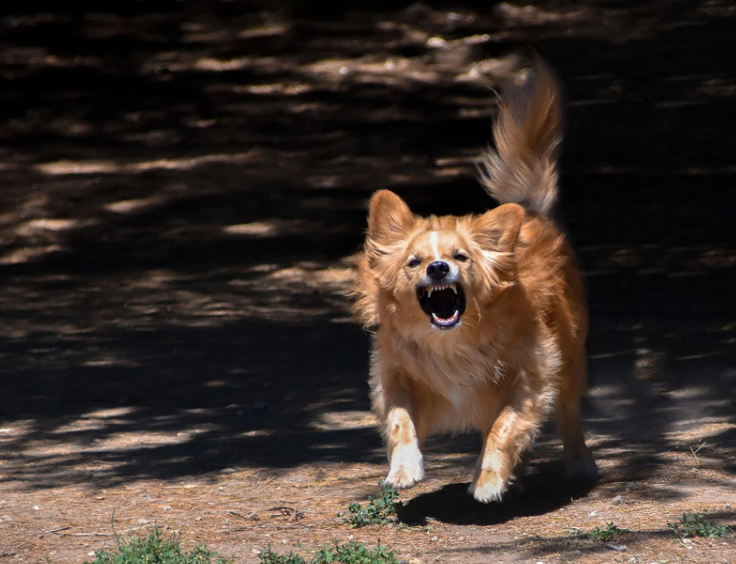
Reactivity is not aggression, though it often gets mistaken for it. A reactive dog is a dog that overreacts to a specific stimulus, usually another dog, a person, a cyclist, or an animal, with behaviors that are bigger and louder than the situation calls for. Barking, lunging, hackles raised, spinning on the leash, and vocalizing are all common. But the dog isn’t trying to start a fight. It’s trying to manage an emotional response it doesn’t know how to control.
Most reactivity falls into two categories:
- Fear-based reactivity: The dog perceives a trigger as a threat and reacts to create distance. The message is “stay away from me.” These dogs often show stress signals before the outburst, like lip licking, whale eye, tucked ears, and body tension. They may try to retreat before they escalate.
- Frustration-based reactivity: The dog wants to get to the trigger but can’t because the leash prevents it. The message is “let me go say hi.” These dogs often look excited rather than scared. They pull hard, whine, and may redirect their frustration onto the leash or the owner’s hands.
The distinction matters because the handling approach is different. A fear-reactive dog needs more distance and slower desensitization. A frustration-reactive dog needs impulse control training and structured engagement. If you’re unsure what’s driving your dog’s behavior, our breakdown of leash reactive signs and solutions covers the diagnostic details.
Common Trail Triggers for Reactive Dogs in Des Moines
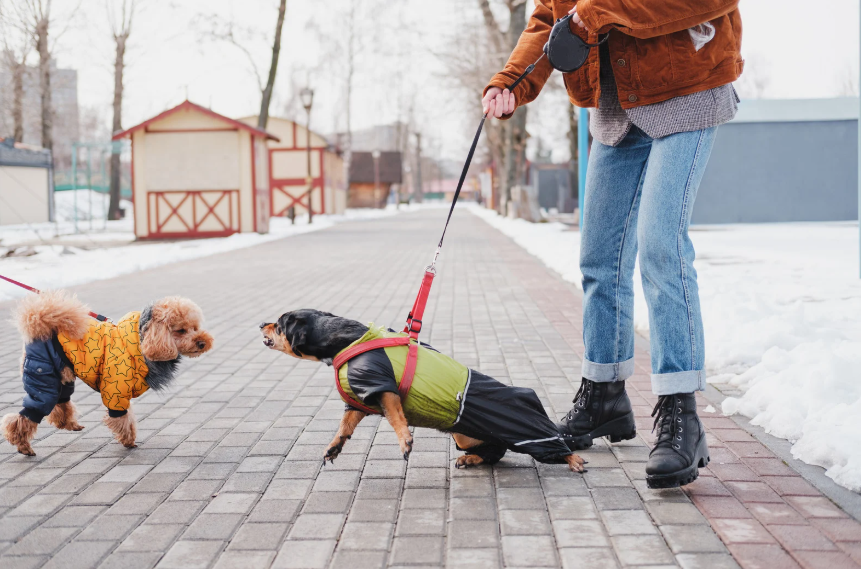
Des Moines trails are popular, multi-use, and shared across walkers, runners, cyclists, and other dog owners. That mix creates a high-trigger environment for reactive dogs, especially during peak hours.
| Trigger | Why It’s Activating | Where It’s Most Common |
|---|---|---|
| Other dogs on leash | Direct approach on narrow trails forces close proximity with no escape route | Gray’s Lake loop, Walnut Creek Trail |
| Off-leash dogs | Unpredictable movement and forced social interaction overwhelm a reactive dog’s coping ability | Ewing Dog Park perimeter, Big Creek State Park |
| Cyclists and joggers | Fast-moving, silent approach triggers prey drive or startle responses | Clive Greenbelt Trail, Neal Smith Trail, Gay Lea Wilson Trail |
| Wildlife (squirrels, rabbits, geese) | Movement activates chase instinct and breaks focus | Walnut Creek Trail, Brown’s Woods, Big Creek |
| Narrow pinch points | Bridges, underpasses, and trail bends reduce sightlines and eliminate buffer space | Gray’s Lake bridge crossings, Clive Greenbelt underpasses |
Understanding which triggers affect your dog most helps you choose better routes and plan for the situations that are most likely to arise. Our guide to reading your dog’s body language will sharpen your ability to spot rising tension before it becomes a full reaction.
The Threshold Concept: Why Distance Is Your Best Tool
Every reactive dog has a threshold distance, the point at which a trigger is visible but hasn’t yet caused a reaction. Inside that distance, your dog is over threshold and can’t learn, listen, or respond to cues. Outside that distance, your dog can notice the trigger and still make choices.
Your entire walking strategy should revolve around keeping your dog outside that threshold as often as possible. For some dogs, threshold is fifty feet. For others, it’s the length of a football field. It varies by trigger, by environment, and even by how much rest your dog got the night before.
Here’s how to identify it: walk toward a known trigger at a steady pace and watch your dog’s body. The moment you see the first physical change, whether that’s a stiffened posture, locked eyes, forward ears, or a closed mouth, you’ve found the edge. That’s where you stop, redirect, or increase distance. If you wait until the barking starts, you’ve already gone too far.
On Des Moines trails, managing threshold means making smart choices about where and when you walk. The 1.9-mile loop at Gray’s Lake is beautiful but narrow and heavily trafficked, especially on weekends, which makes it harder to maintain distance. The Neal Smith Trail, which runs along the Des Moines River through the Ding Darling Greenway, offers more width and longer sightlines that give you time to spot triggers early and adjust.
Four In-the-Moment Techniques to Calm a Reactive Dog
Even with good planning, you will encounter triggers on the trail. When that happens, you need reliable tools to interrupt the reaction and redirect your dog’s attention before the behavior escalates.
Emergency U-Turn. The simplest and most effective option when distance is closing fast. Say your marker word (“let’s go” or “this way”), turn 180 degrees, and walk briskly in the opposite direction. Don’t wait for your dog to comply perfectly. Just move. The physical act of turning and walking away increases distance immediately and gives your dog’s nervous system a chance to downshift. Practice this at home first so your dog already knows what the cue means before you need it on the trail.
Engage/Disengage Protocol. This is a structured desensitization exercise you can run during walks. When your dog notices a trigger but hasn’t reacted yet (below threshold), mark the moment they look at the trigger with a “yes” and reward. Over time, your dog learns that seeing the trigger predicts a reward, which shifts the emotional response from “that’s a threat” to “that’s an opportunity.” Once your dog starts looking at the trigger and then voluntarily looking back at you, you’ve reached the disengage phase, and that’s when real progress starts.
Scatter Game (Find It). Toss a handful of small treats on the ground and say “find it.” This activates your dog’s nose, which engages the seeking system in the brain and naturally lowers arousal. Sniffing is inherently calming for dogs. Use this when you see a trigger approaching but still have enough distance to redirect before a reaction starts. It’s especially useful on wider trails where you can step off the path and let a trigger pass.
Structured Heel Redirect. If your dog has a trained heel command, calling them into position and walking with focused attention through a trigger zone can prevent the reaction entirely. This requires a dog that already has a solid heel with distractions, which means training this skill before you need it on the trail. Our tips on building your dog’s attention span lay the groundwork for this kind of focused engagement.
For a deeper look at how to apply these techniques across different walking scenarios, our post on walking a reactive dog covers additional strategies and common mistakes to avoid.
How to Choose the Right Trail for a Reactive Dog
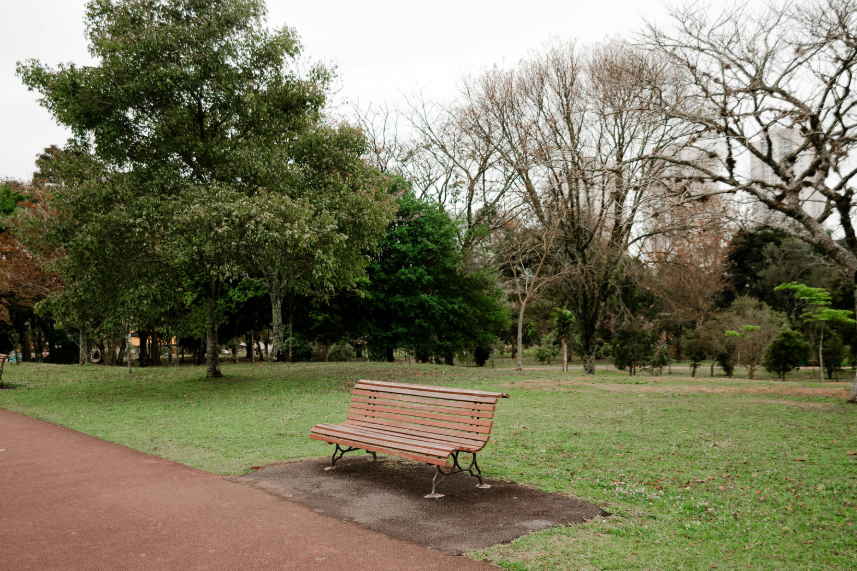
Not every trail is created equal for reactive dog walking. The trails that are most enjoyable for well-socialized dogs are often the hardest for reactive ones. Choosing the right route means thinking about width, sightlines, traffic patterns, and time of day.
What to look for in a reactive-friendly trail:
- Wide paths that allow you to step off and create distance when another dog approaches
- Long, straight sightlines so you can spot triggers early and plan your response
- Multiple exit points or side paths that give you an escape route if needed
- Lower foot traffic, especially fewer off-leash dogs
Des Moines trail recommendations by difficulty level:
- Best starting trails: Walnut Creek Trail offers shade, moderate width, and lower weekday traffic. The Jordan Creek Trail in West Des Moines provides open sightlines and multiple access points. Brown’s Woods has a quieter, more secluded feel.
- Moderate challenge: The Neal Smith Trail along the Des Moines River gives you good width and long visibility, but weekend traffic picks up, especially near trailheads. The Gay Lea Wilson Trail in Altoona tends to be less crowded than the more central routes.
- Higher difficulty: The Gray’s Lake loop is narrow, heavily used, and has limited options for creating distance. Save this trail for after your dog has built some tolerance through structured training on quieter routes.
Time of day matters. Early mornings (before 7 a.m.) and weekday midday windows see the lowest trail traffic across Des Moines. Avoid weekends between 9 a.m. and noon on popular trails. Evening walks between 5 and 7 p.m. are the highest-traffic period at Gray’s Lake and the Clive Greenbelt.
Building Long-Term Calm Through Structured Training
In-the-moment management keeps walks functional, but it doesn’t fix the underlying reactivity. Long-term improvement requires structured training that rewires your dog’s emotional response to triggers, builds impulse control, and gives your dog the skills to make better choices under pressure.
That work starts with a foundation of obedience. A dog that reliably responds to sit, down, stay, heel, and place has a toolkit for navigating high-stimulation environments. These commands give you a way to interrupt rising arousal and redirect your dog’s focus before it tips into a reaction. Without that foundation, every walk is management. With it, every walk becomes a training opportunity.
For dogs whose reactivity is rooted in fear or poor socialization, working with a professional trainer is the fastest path forward. In-home dog training lets a trainer observe your dog’s specific triggers in the environment where they’re most comfortable, build a desensitization plan tailored to your dog, and coach you on handling techniques that carry over to trail walks. Our guide on socializing an overprotective dog covers additional strategies for dogs whose reactivity stems from guarding behavior.
For dogs with more entrenched reactivity, a board and train program provides daily, structured exposure to triggers in a controlled environment with professional handling. Your dog practices staying calm around other dogs, people, and distractions every day, which accelerates the desensitization process far beyond what weekly sessions or solo practice can achieve.
Explore the full range of dog training programs at All Dogs Unleashed in Des Moines to find the right fit for your dog’s reactivity level and your training goals.
Frequently Asked Questions
Can a reactive dog ever be fully “cured”?
Reactivity can be managed to the point where your dog walks calmly past former triggers without reacting, but it requires ongoing reinforcement. Most reactive dogs improve dramatically with consistent training and desensitization. The goal isn’t to eliminate the dog’s awareness of triggers. It’s to give them the skills and emotional regulation to handle those triggers without an outburst.
Is my reactive dog safe to walk on public trails?
Yes, as long as you’re managing distance, using appropriate equipment (a well-fitted harness and a standard four- to six-foot leash), and paying attention to your surroundings. Avoid retractable leashes, which give you less control in close-quarters situations. Walk during lower-traffic times while you’re building your dog’s tolerance.
Should I avoid other dogs entirely while training?
No. Avoidance prevents your dog from ever learning to cope. The goal is controlled exposure at a distance where your dog can notice the trigger without reacting. Over time, you gradually decrease that distance as your dog’s tolerance grows. Complete avoidance often makes reactivity worse because the dog never has an opportunity to practice calm behavior around triggers.
How long does it take to see improvement in a reactive dog?
Most owners see noticeable changes within four to six weeks of consistent daily practice. Significant behavior shifts, like walking past other dogs without reacting, typically take two to four months depending on the severity of the reactivity, the dog’s history, and how consistently the training plan is followed.
Does the type of leash or harness matter for reactive dogs?
It does. A front-clip harness gives you more steering control and naturally redirects your dog toward you when they pull. Avoid choke chains, prong collars, and retractable leashes for reactive dogs. Aversive tools can increase anxiety and make reactivity worse by creating a negative association with the trigger. A six-foot fixed-length leash gives you enough slack for comfortable walking while keeping your dog close enough to redirect.
What should I do if an off-leash dog approaches my reactive dog on the trail?
Put your body between the dogs if you can do so safely, use a firm “no” or “go home” directed at the approaching dog, and move your dog away as quickly as possible using your emergency U-turn. Don’t wait to see if the interaction goes well. If this happens frequently on a particular trail, switch to a less popular route until your dog’s reactivity is better managed.
Contact All Dogs Unleashed in Des Moines
If reactive dog walking has turned your daily trails into a source of stress, you don’t have to figure it out alone. The team at All Dogs Unleashed in Des Moines works with reactive dogs every day, building the obedience foundation and desensitization skills that turn chaotic walks into calm ones. Contact us today to talk about what your dog needs.
About All Dogs Unleashed
All Dogs Unleashed has spent decades helping dog owners work through real behavioral challenges, from leash reactivity and fear-based aggression to foundational obedience and off-leash reliability. With locations across the country, including Des Moines, ADU’s trainers bring hands-on experience with every breed and temperament, building results that hold up on the trail, at the park, and everywhere in between.