
The first three weeks with a new puppy are usually a blur. The house smells different, the sleep schedule has collapsed, the carpet has a new stain, and a small set of needle teeth has found every ankle within reach. Somewhere between the second night of 3 a.m. potty breaks and the fourth pair of chewed shoes, a question lands hard: when does this puppy actually start learning?
For most Oklahoma City families, the answer is sooner than they think. Puppy classes are not a luxury you sign up for after the puppy has settled in. They are the foundation that determines how the next ten or twelve years with your dog will go. The behavior your puppy builds in the first few months of life sticks. The socialization window closes faster than most owners realize. And the difference between a calm, confident adult dog and a reactive, anxious one is often shaped before that puppy ever hits six months old.
What follows is the orientation every new OKC dog owner deserves before signing up for a puppy class, including when to start, what your puppy will actually learn, what to look for in a class, and the most common mistakes that quietly undercut all the good work.
Key Takeaways
- Puppy classes are best started between eight and sixteen weeks, the window when socialization shapes adult behavior most deeply
- A good puppy class teaches the foundations: name recognition, basic obedience, polite greetings, handling tolerance, and confident exposure to new people, dogs, and environments
- Vaccination status matters but should not be used as a reason to skip socialization entirely; reputable classes have clear vaccine policies that balance health and exposure
- The work between classes matters as much as the class itself; ten minutes of focused practice a day beats one weekly class session every time
- The most common new-owner mistakes include waiting too long to start, inconsistent rules across family members, and confusing socialization with letting the puppy meet every dog in sight
What Puppy Classes Actually Are
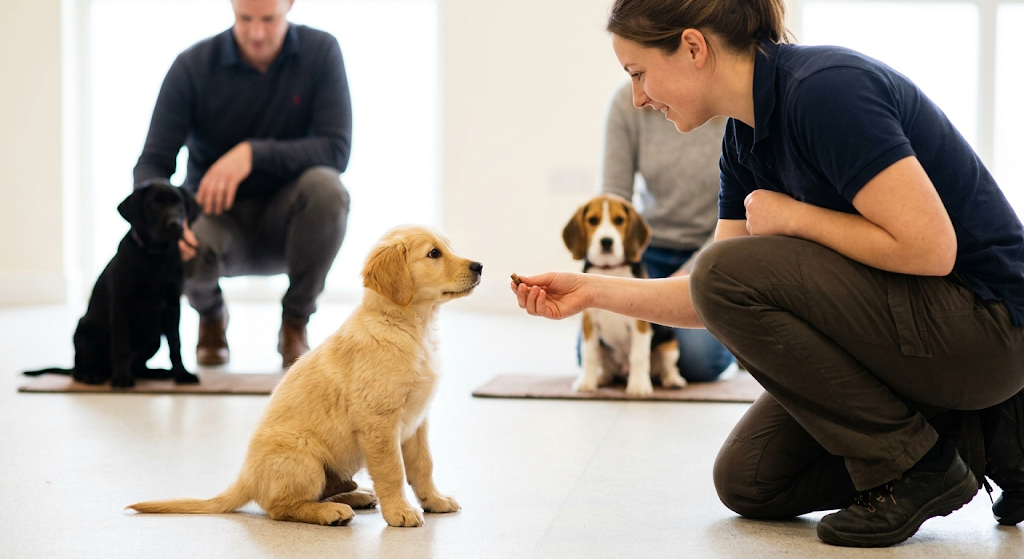
A puppy class is a structured weekly session, usually lasting four to eight weeks, where puppies between eight and twenty weeks old learn foundational behaviors alongside other puppies and their owners. Classes typically run forty-five minutes to an hour, meet in a controlled environment, and follow a deliberate curriculum led by a professional trainer.
The point is not to produce a perfectly obedient five-month-old dog. The point is to build the foundation: a puppy who responds to their name, sits when asked, walks somewhat politely on a leash, accepts being handled all over their body, comes when called in a low-distraction setting, and feels comfortable around new people, new dogs, and new environments.
Just as important, the class teaches the human end of the leash. Most new owners have never trained a dog before, and learning how to mark a behavior, deliver a reward at the right moment, hold a leash correctly, and read a puppy's body language is just as much a part of the class as anything the dog learns. The trainer is teaching a team, not a dog.
For families exploring the broader picture, the full menu of dog training programs at our Oklahoma City location includes puppy work, adolescent training, and more advanced obedience work as the dog matures.
When Your Puppy Should Start Classes
The honest answer is earlier than most new owners assume.
Puppies experience a critical socialization window roughly between three and sixteen weeks of age. During this window, their brains are biologically primed to form associations about what is safe, what is novel, and what is normal in their world. Experiences during these weeks become baseline. Experiences missed during these weeks are much harder to introduce later without fear or hesitation taking hold.
Most puppies come home around eight weeks, which means the family has roughly eight weeks of prime socialization runway before that window starts closing. Waiting until six months to start training, a common instinct because the puppy seems too young or because owners want to wait for full vaccinations, costs the puppy four critical months of foundation work.
Reputable puppy classes balance vaccination status carefully. Puppies typically need at least one round of core vaccines and a recent veterinarian visit to participate. Classes are usually held in clean, controlled spaces with vaccinated puppies of similar age, which keeps health risks low while preserving the irreplaceable socialization window.
If your puppy is already past the sixteen-week mark when you read this, do not panic. Training and socialization still work, they just require more patience and a slightly different approach. Older puppies and adolescent dogs often benefit from a combination of group classes and in-home dog training to catch up on missed foundations and address any habits that have started to form.
What Your Puppy Will Learn in a Good Class
The curriculum varies between trainers, but a strong puppy class generally covers a consistent set of foundations.
Name response and attention. Your puppy learns that turning toward you when their name is called produces something good. This is the foundation of every other cue you will ever teach.
Sit, down, and stay. Basic position cues taught through reward-based methods that make the puppy want to offer the behavior because it pays off reliably.
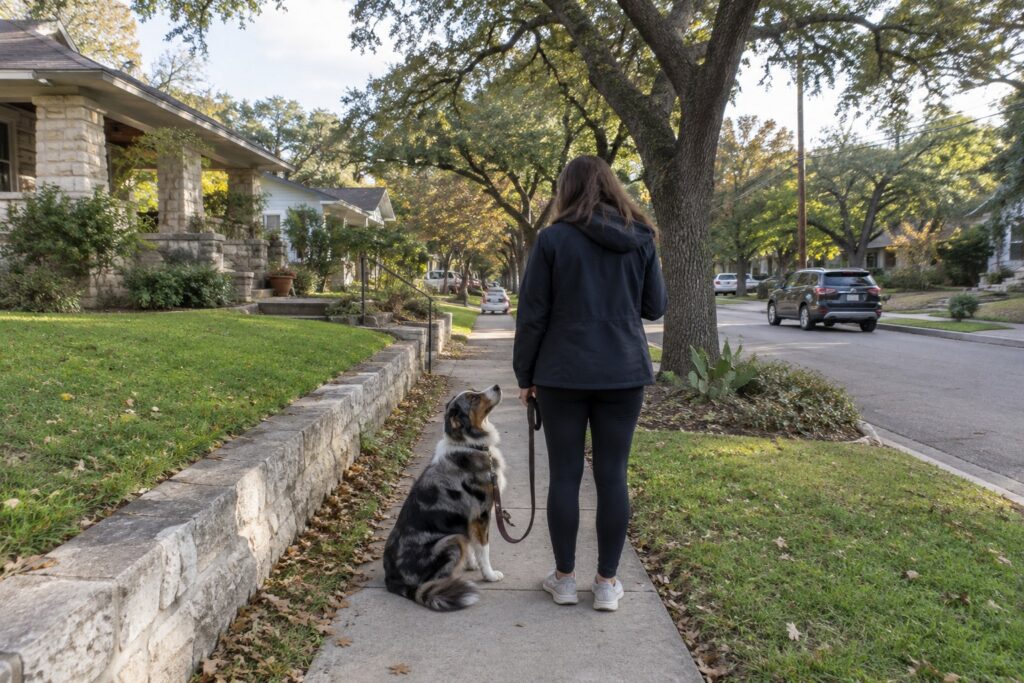
Leash manners. Not a perfect heel at twelve weeks, but an introduction to walking without pulling, paying attention to the person on the other end of the leash, and reversing direction without dragging.
Polite greetings. A puppy who learns to sit for petting instead of jumping up becomes an adult dog that greets people calmly rather than launching at every new face at full speed.
Recall. Coming when called, started in low-distraction settings and built into a reflex that holds up when it actually matters.
Handling tolerance. Being touched on paws, ears, mouth, belly, and tail without objection. This is what makes veterinarian visits, nail trims, and grooming manageable for the rest of the dog's life.
Exposure to novelty. New surfaces, sounds, objects, and situations in a controlled, positive setting. Every puppy who graduates from a good class has a broader baseline of what counts as normal in the world.
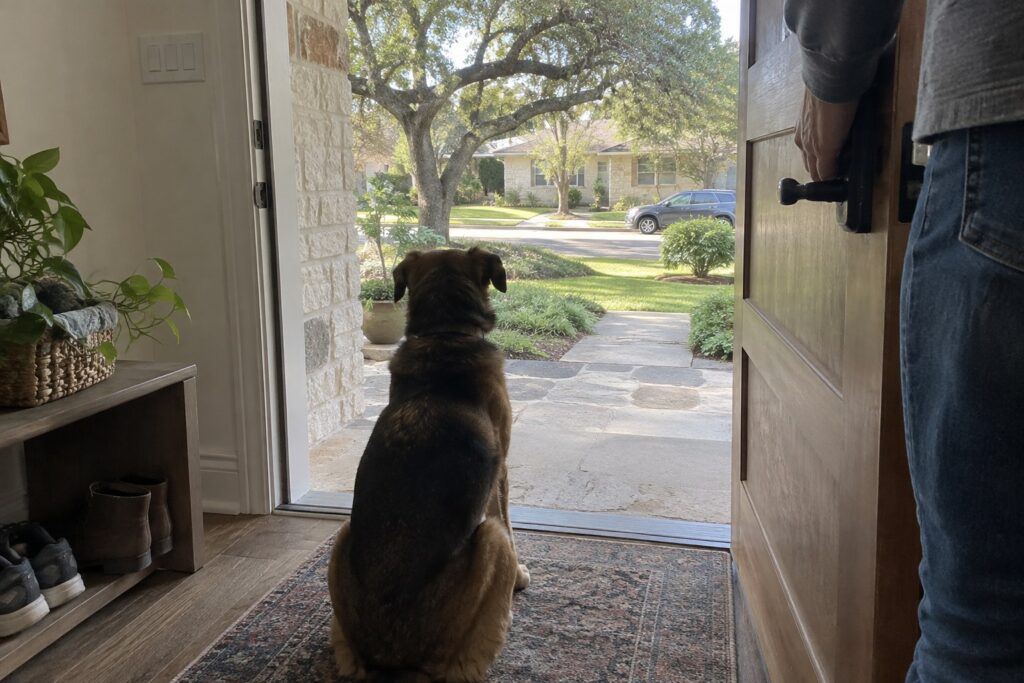
Basic impulse control. Waiting before meals, pausing at doors, offering a sit instead of jumping or barking to get what they want. These are the foundations of a dog who can live calmly inside a household.
For a breakdown of what a structured program looks like as the puppy grows older, our overview of OKC dog training programs walks through the progression from puppy work through advanced obedience.
What to Look for in a Puppy Class
Not all puppy classes are created equal. A few markers separate the programs that produce lasting results from the ones that feel like supervised playdates with occasional treat throwing.
A clear curriculum. The trainer should be able to tell you exactly what will be covered each week, what skills puppies are expected to learn, and how progress will be measured. Vague answers are a warning sign.
Controlled socialization, not free-for-all play. Puppy playtime has a place in a good class, but it should be structured. Puppies who learn that class means unstructured chaos with other dogs become difficult to manage in group settings as adults.
A reward-based foundation. Foundational obedience for young puppies should rely on positive reinforcement. Aversive tools used on very young dogs damage confidence and trust at the worst possible developmental moment.
Small class sizes. A trainer who is trying to manage twelve puppies and twelve owners simultaneously cannot give meaningful feedback to any of them. Smaller is better.
Vaccination requirements. A class that does not require vaccinations is not protecting your puppy. A class that requires full vaccination completion before entry is keeping puppies out of the socialization window unnecessarily. Look for a policy that requires at least one round of core vaccines and a recent vet clearance.
Owner education. The trainer should be teaching you as much as the puppy. If you leave every session without understanding why something was done or how to replicate it at home, the class is not doing its full job.
Our trainers at the Oklahoma City location offer puppy training programs designed around exactly these standards.
What Happens in the First Class
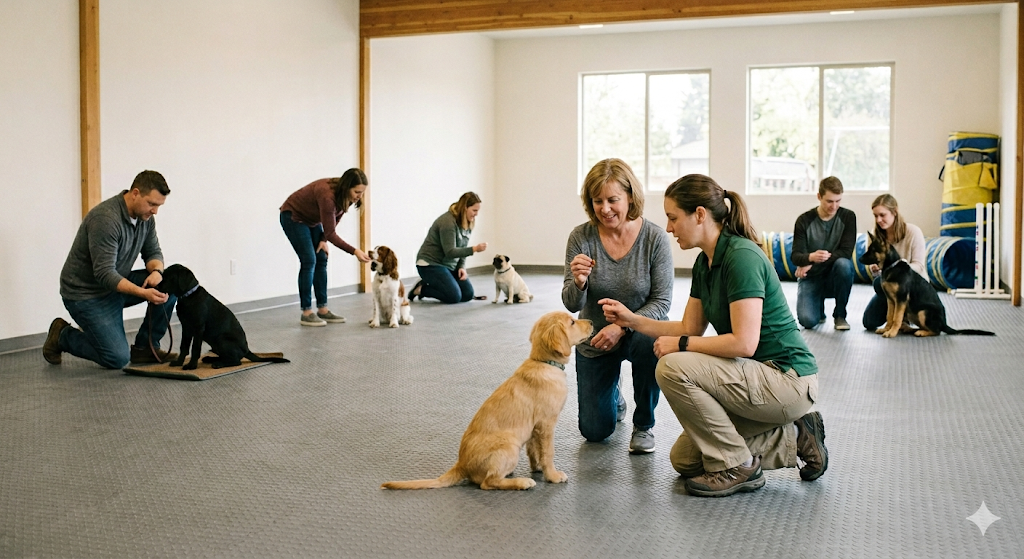
Most new owners arrive at the first puppy class with high expectations and leave slightly surprised by how little their puppy seems to retain in that initial session.
This is completely normal.
The first class is not about teaching sit and down. It is about the puppy learning that this new environment, with its strange smells, other dogs, unfamiliar people, and unusual sounds, is actually a fine place to be. Most puppies spend the first session in a low-grade state of overstimulation. Their names will not reliably orient them toward their owners. Most of them will not sit on cue. Most owners will leave feeling like the class did not accomplish much.
This is normal and expected.
The first class is largely about acclimating the puppy to the environment, introducing the curriculum to the owners, and building a baseline of comfort. Real learning begins in weeks two and three, once the puppy has settled and the new patterns start to feel familiar.
By the third or fourth class, most puppies are responding to their names reliably in the room, holding short sits and downs, and starting to grasp the leash work. By the end of the program, most puppies have a foundation strong enough to build on for the next several years.
The owners who get the most out of class are the ones who treat each session as a starting point rather than a finish line. The trainer demonstrates a skill. The puppy gets a basic introduction. The owner takes the skill home and practices it daily until the next class. That is the loop that produces results.
What to Practice at Home Between Sessions
The class itself is roughly one hour a week. The puppy's entire life is the rest of the time. Owners who lock in the class material at home build skills exponentially faster than owners who only practice during class time.
A few short practice habits make an outsized difference.
Three to five short training sessions a day, lasting two to five minutes each. Puppy attention spans are tiny. A two-minute session before dinner where you practice sit and name response will produce far more progress than a fifteen-minute session that loses the puppy's focus halfway through.
Reinforce calm behavior all day long. Most owners only acknowledge their puppy when the puppy is doing something problematic. Flip the pattern. When the puppy is lying calmly on a mat, walk over and offer a quiet treat or a gentle scratch. You are rewarding the behavior you want more of.
Practice handling exercises. Every day, briefly touch your puppy's paws, ears, mouth, belly, and tail, pairing each touch with a small treat. The future veterinarian visits, nail trims, and grooming sessions will go far smoother for it.
Use real-life rewards. Make your puppy sit before meals, before going through doors, and before getting attached to the leash for a walk. Everyday access becomes the reward for offered behavior, and the cues become reflexive over time.
Establish consistent house rules. If one family member lets the puppy on the couch and another does not, the puppy gets confused, not the family. Consistency across people matters more than any specific rule choice.
The early routines of crate use, sleep schedules, and structured downtime also matter. Our overview of crate training basics walks through how to use the crate as a calm, safe space rather than a punishment tool, which becomes the backbone of housebreaking and rest routines.
Common Mistakes New OKC Dog Owners Make
A handful of patterns show up repeatedly in households whose puppies struggle by adolescence. Spotting them early saves significant trouble down the road.
Waiting too long to start training. The instinct to “let the puppy be a puppy” until six months delays foundation work past the most important learning window. Training should start the day the puppy comes home.
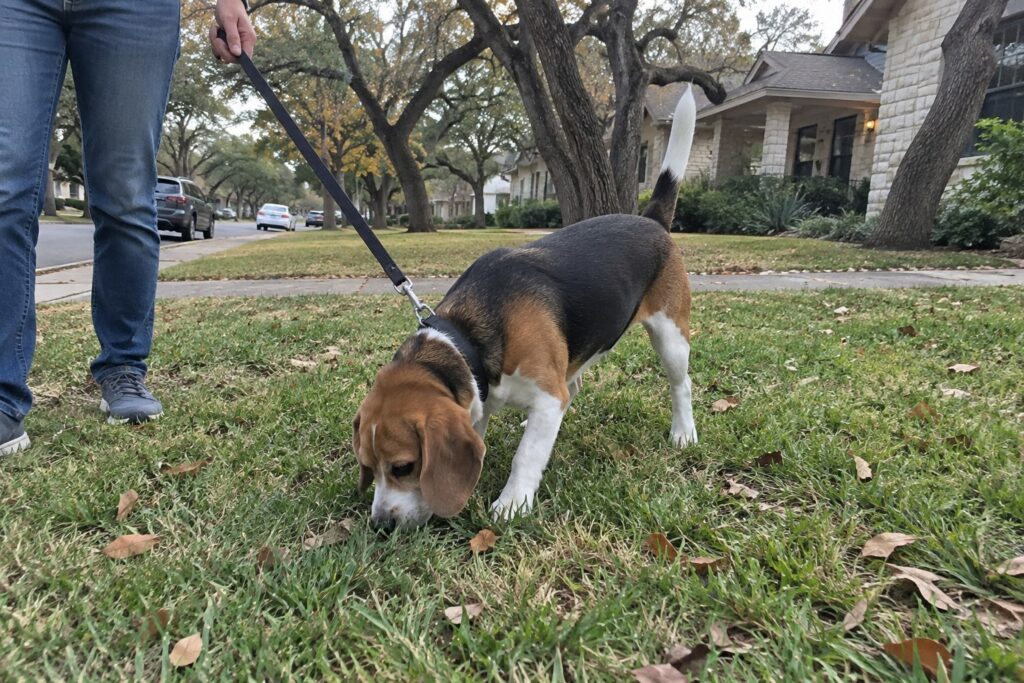
Confusing socialization with the dog park. A crowded, unstructured dog park with adult dogs of unknown temperament is one of the worst places to bring a young puppy. Real socialization happens in controlled environments with vetted dogs of appropriate size and energy.
Letting the puppy jump on everyone. A jumping ten-pound puppy is cute. A jumping eighty-pound adult dog is not. The behavior is the same; only the size has changed. Train against jumping from day one.
Inconsistent rules between family members. The kids let the puppy lick faces, the spouse pushes them off the bed, the grandparents feed scraps from the table. The puppy ends up confused and the household ends up frustrated.
Treating biting as cute. Mouthing during the puppy phase is normal, but it needs gentle redirection from the start. A puppy who learns it is acceptable to use teeth on hands at twelve weeks will use teeth on hands at twelve months too.
Skipping daily practice. Showing up to class without practicing in between produces almost no progress, and trainers will quietly tell you which households are doing the work and which are not based on how the puppy shows up in week three.
For more on what to avoid early, our piece on puppy training mistakes to avoid covers the most common errors and how to course-correct.
Frequently Asked Questions
At what age should I sign my puppy up for classes?
Most puppy classes accept dogs between eight and sixteen weeks, with eight to twelve weeks being the ideal start point. Earlier is better because the critical socialization window closes around sixteen weeks. If your puppy is already older, look for adolescent or basic obedience classes instead.
My puppy hasn't finished all their vaccines. Is it safe to take a class?
Most reputable puppy classes require at least one round of core vaccines and a recent vet visit. Classes are typically held in clean, controlled environments with other vaccinated puppies. Skipping all socialization until full vaccinations are complete around sixteen weeks usually causes more long-term behavioral problems than the small disease risk being avoided.
Why does my puppy bite so much, and will class fix it?
Puppy biting is developmentally normal between eight and twenty weeks. Puppies use their mouths to explore everything and to learn bite inhibition from littermates and people. Class will teach redirection techniques, but the work happens daily at home. Most puppies grow out of intense biting between four and six months with consistent guidance.
What should I bring to the first class?
Bring a flat collar or harness, a four-to-six-foot leash (not retractable), a small treat pouch full of high-value soft treats your puppy loves, a clean towel or mat, your vaccination records, and a slightly hungry puppy (skip the meal an hour before class so treats stay motivating).
Do certain breeds need different training approaches?
Foundation training works for every breed, but breed tendencies do matter as your puppy grows. Herding breeds tend to be sensitive and quick learners. Bully breeds and retrievers tend to be food-motivated and energetic. Working breeds need clear structure. A good trainer will adjust pacing and techniques based on what they see, but the core curriculum is universal.
What should I do after puppy class ends?
Puppy class is the first step, not the last. Most owners benefit from continuing into a basic obedience or adolescent training program around five to seven months of age, when the puppy hits adolescence and starts testing boundaries. Ongoing practice at home matters more than any single class, but structured follow-up training keeps the foundation strong through the harder stages.
Contact Our Oklahoma City Team
The best time to start your puppy in class is right now. Whether you brought home an eight-week-old puppy yesterday or you have a four-month-old who is already testing boundaries, our Oklahoma City location team can help you find the right starting point and build a plan that fits your family. Call (405) 299-3386 or contact our Oklahoma City team to get started.
About All Dogs Unleashed Oklahoma City
All Dogs Unleashed brings a balanced, results-driven approach to puppy training and adult dog work across Oklahoma City and the surrounding metro, including Edmond, Moore, Norman, Yukon, and Bethany. Our trainers specialize in setting young puppies up with the foundation they need for a calm, confident adulthood, and in helping adolescent and adult dogs catch up on the skills they may have missed early on. The goal at every age is the same: dogs and families who can navigate everyday Oklahoma life together with confidence.