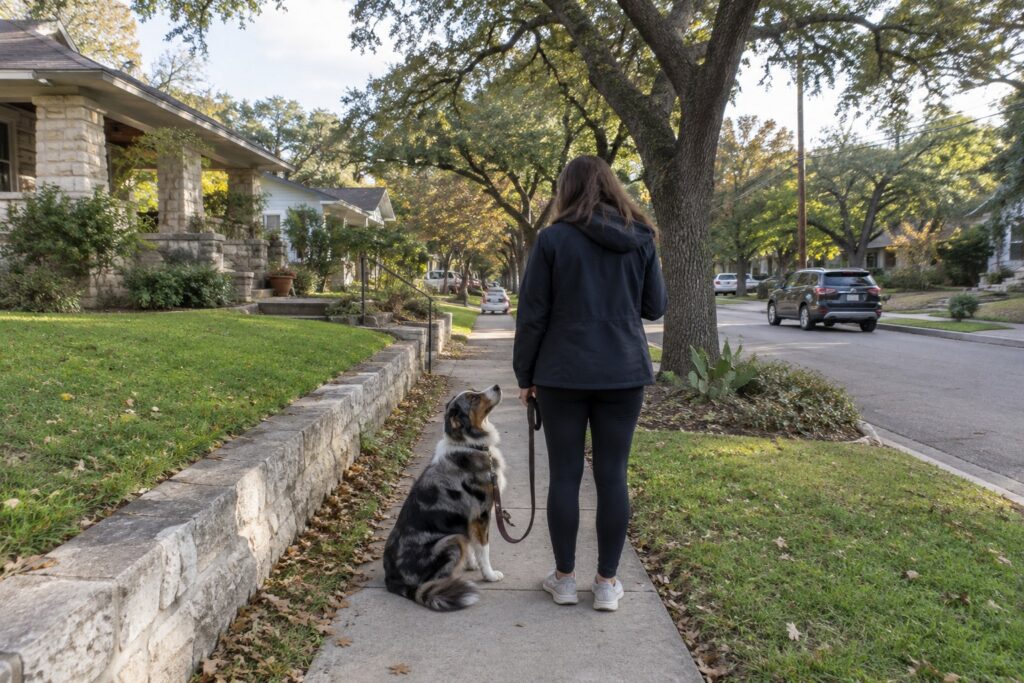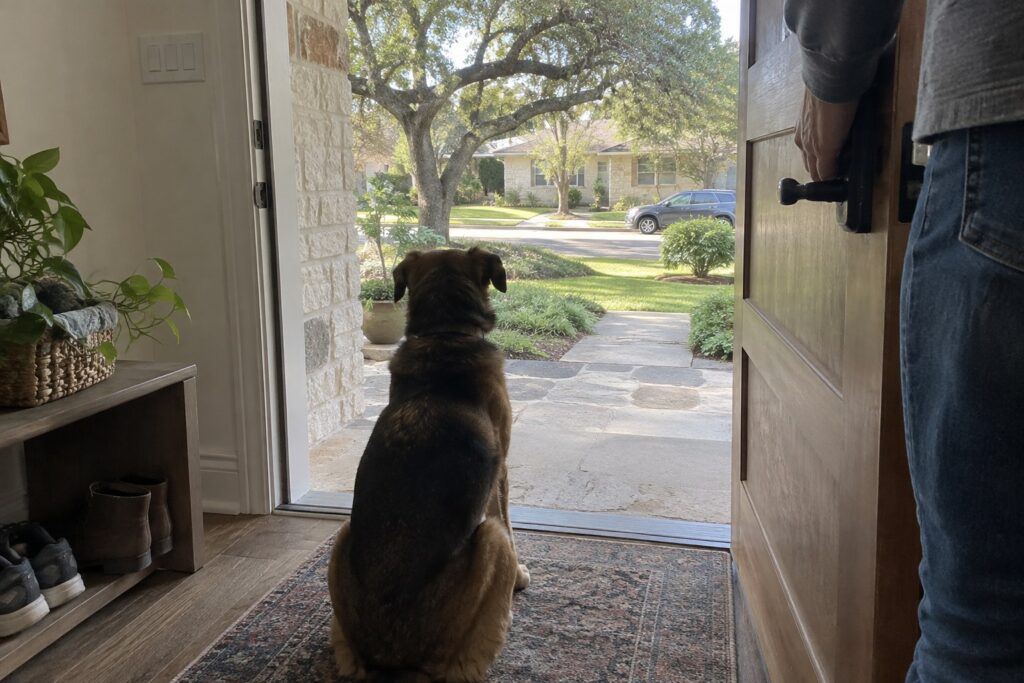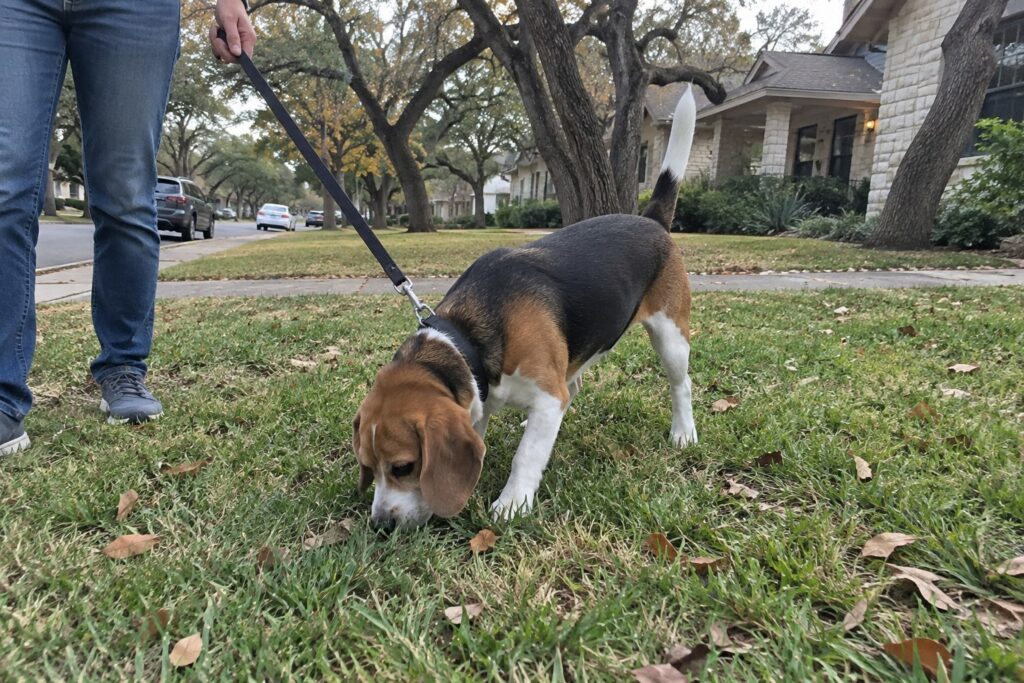

There comes a moment in almost every Oklahoma City dog owner's journey when the same thought lands at the same time. The leash work has stopped improving. The dog still bolts out the door. The barking at the window has gone from occasional to constant. You have watched the YouTube videos, you have tried the classes, you have done your best between work and kids and life, and somehow the problem keeps growing instead of shrinking.
That moment is usually when board and train enters the conversation.
The idea is straightforward. Your dog goes to live with a professional trainer for two to four weeks, gets immersive, full-time work on obedience and behavior, and comes home with a foundation you can actually maintain. For the right dog, the format produces transformations that group classes and weekly private sessions cannot match. For the wrong dog, it is the wrong tool.
The honest question is not whether board and train works. It works. The question is whether it works for your dog. What follows breaks down exactly how to make that call.
Key Takeaways
- Board and train sends your dog to live with a professional trainer for an immersive period, typically two to four weeks
- Strong candidates are dogs with significant obedience or behavior challenges that have not responded to lighter approaches
- Some dogs do better starting with in-home or private work before considering an immersive program
- Board and train handles foundational obedience, leash manners, and many behavioral issues exceptionally well
- The owner's follow-through after the program is the single biggest factor in whether results last
What Board and Train Actually Is
Board and train is an immersive residential training program. Your dog leaves your home and lives with a professional trainer or at a training facility for a defined period, during which training is the primary activity of the dog's day.
A typical program runs two to four weeks. During that time, the trainer works with the dog multiple times daily, addresses specific behavior issues, builds foundational obedience, and conditions the dog to perform skills reliably under distraction. The intensive repetition available in a residential format simply cannot be replicated in once-a-week group classes or one-hour private sessions, no matter how good those programs are.
At the end of the program, the trainer does not just hand the dog back. A solid handoff session transfers everything the dog learned to the owner, hands-on, so the skills do not disappear the first week home.
For more detail on what a board and train program includes at our facility, see our overview of dog training programs in Oklahoma City.
Signs Your Dog Is a Strong Candidate
Board and train works best when certain conditions are true. If several of these apply to your dog, the format is likely a strong fit.
Your dog has a specific behavior problem that has not responded to other training. Persistent leash reactivity, bolting out doors, jumping on every person who enters the house, counter surfing that has become a safety issue, or aggression that has not improved with standard classes are all situations where the immersive intensity of board and train tends to produce results that lighter formats cannot.
Your schedule makes consistent daily training difficult. Training works through repetition. Owners who cannot realistically commit to three or four short training sessions per day will see slower progress in any format. Board and train removes that constraint for the foundation phase. The trainer handles the repetition. The owner learns the finished skills at handoff.
You are starting fresh with a new dog who needs a solid foundation fast. A newly adopted adult dog with an unknown history, or a rescue with entrenched habits, often benefits from the clean-slate structure of residential work before entering a home with kids, other pets, and all the complexity of family life.
Your dog does not have severe fear or anxiety that would make separation traumatic. Dogs who are already significantly anxious may not be the right fit for a program that removes them from their attachment figures entirely. For those dogs, in-home work is often the better starting point. A consultation with a trainer will clarify where your dog falls.
You are committed to maintaining the work after the dog comes home. Board and train builds the foundation. The owner maintains it. A dog who goes through a strong program and returns to a household that ignores all the trained cues will begin reverting within weeks. The program is only as durable as the consistency that follows it.
Signs Your Dog Might Not Be the Right Fit Right Now
Board and train is a tool. Like any tool, it is better suited to some situations than others. These are the signals that a different approach may serve better as a starting point.
Severe separation anxiety. A dog who already struggles significantly with being left alone, especially one who has a strong single-person attachment, may find the residential format acutely distressing. For these dogs, the anxiety itself needs to be addressed before or alongside any board and train program. In-home dog training is often the more appropriate starting point.
A very young puppy, under twelve weeks. Puppies that young are still in the peak socialization window and are best served by a program that keeps them in the family environment, learning through normal household exposure and structured puppy classes. The immersive separation of board and train is generally too much disruption for a puppy still forming primary attachments.
Active health issues or recent surgery. Physical limitations affect a dog's ability to train and their stress tolerance. A dog recovering from surgery or managing a chronic pain condition is not a good training candidate until their veterinarian clears them.
A dog who has never been away from home. Not a disqualifier, but worth noting. Some dogs who have never boarded need a trial night or two at a boarding facility before a multi-week stay is appropriate. A good trainer will walk you through this during the consultation.
What Board and Train Handles Well
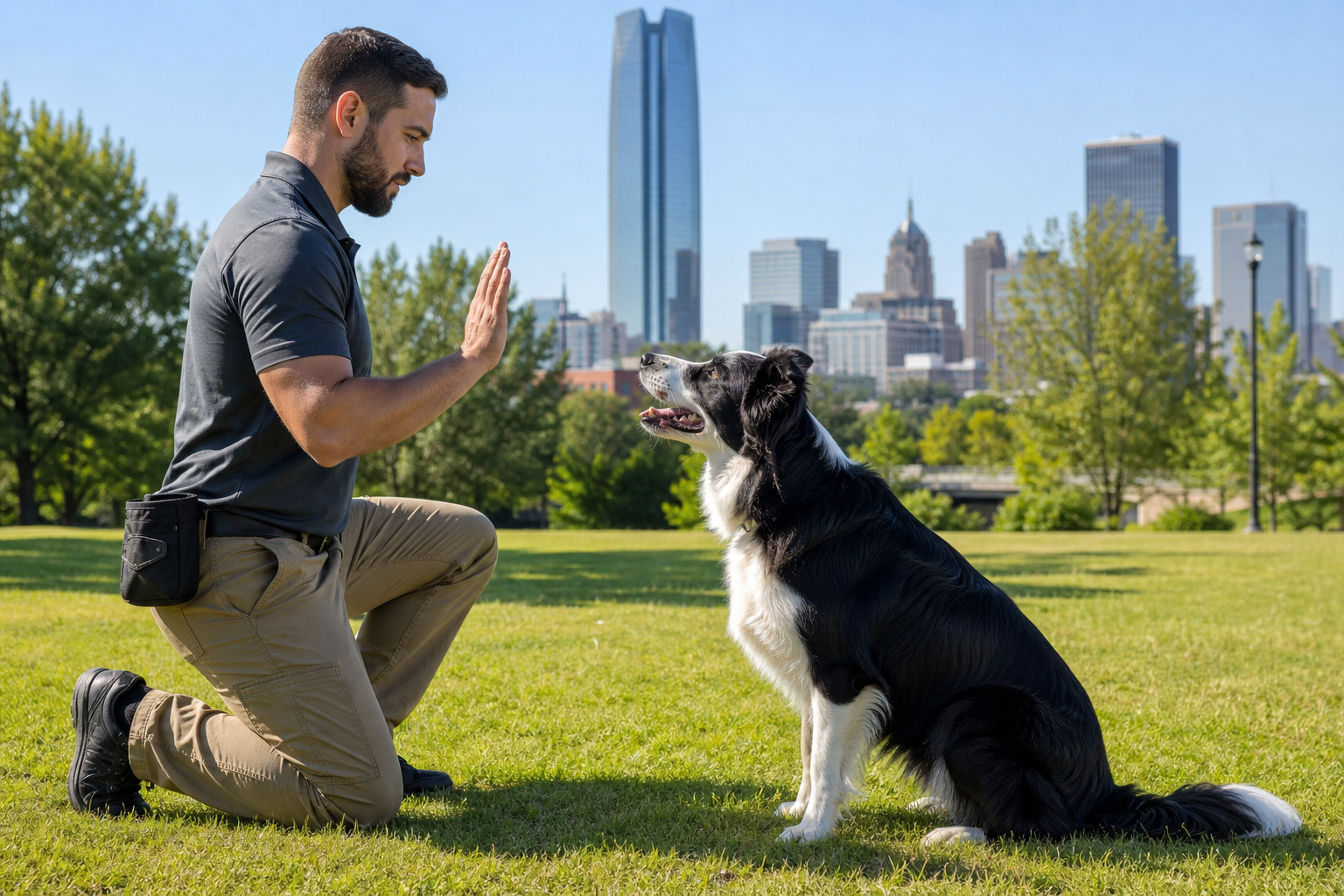
The residential format excels at specific categories of work.
Foundational obedience. Sit, down, stay, place, recall, and leash manners are the core of most programs, and the intensive repetition available in residential training cements these cues at a level that takes months of weekly classes to approximate.
Leash reactivity. Dogs who lunge, bark, or spin at other dogs on leash require carefully structured exposures at precise thresholds, repeated many times daily, to change the pattern. That work is extremely difficult to do in a household. It is the daily job of a residential trainer.
Door manners and bolting prevention. The daily repetition available in board and train makes door and threshold work one of the most reliable outcomes of a good program.
Polite greetings. Dogs who launch at every person who enters the house can be conditioned to a default sit greeting through the volume of repetitions possible in residential training.
Jumping and counter surfing. Consistent consequence and redirection, applied hundreds of times over a few weeks, produces far more reliable results than the occasional correction available in a normal household.
Building focus and engagement in distraction. Off-leash reliability in outdoor environments, reliable recall under distraction, and engagement in high-stimulation settings all benefit from the structured exposure available in a program.
What Board and Train Is Not Designed to Fix
Managing expectations is part of a good consultation. A few situations fall outside what board and train can reliably address.
Severe dog-to-dog aggression, especially aggression with a bite history, requires very specialized handling that not every facility offers. The evaluation process for these dogs is different and more thorough. If aggression is your primary concern, be explicit about the history during consultation so the trainer can assess whether their program is appropriately equipped.
Resource guarding that is limited to a specific person or item in the home environment can be hard to address in a facility where the trigger is not present. The trainer can build foundation skills and management strategies, but transferring that work back to the specific trigger environment requires owner follow-through in the home setting.
Owner relationship issues, meaning situations where the dog's behavior is directly tied to a specific person's handling patterns, need to be addressed at the human end. The dog can learn different responses with the trainer, but if the owner's handling does not change, the underlying pattern will re-emerge. The handoff session is where this work has to happen.
The Board and Train Process, Step by Step
Understanding the sequence helps set expectations correctly before you commit.
Consultation. A qualified trainer will want to meet your dog and understand the full behavior history before accepting them into a program. This conversation matters. A good trainer turns away dogs who are not appropriate fits, not because they are being difficult, but because placing the wrong dog in the wrong format produces poor outcomes for everyone.
Intake. The dog arrives at the facility or the trainer's home setup. Most trainers spend the first day or two letting the dog decompress and acclimate before beginning intensive work. The acclimation period is part of the program, not wasted time.
Daily training. The trainer works with the dog multiple times each day, following the program structure and adapting to what the dog is showing them. Most programs include regular updates, photos, or short videos so the family knows how the dog is doing.
Proofing and generalization. As the dog builds skills, the trainer introduces them in progressively more challenging environments, with more distractions, at greater distances, and in situations that approximate real-life conditions the dog will face at home.
The handoff. This is the most important session of the entire program. The trainer demonstrates everything the dog has learned and then teaches the owner to handle the dog through every cue, every correction, and every management protocol. Owners who treat the handoff as a passive observation are leaving the most important part of the program on the table.
Follow-up support. Most reputable programs offer some form of follow-up support after the dog returns home. Ask about it during consultation and use it. The first two to four weeks home are the highest-risk period for regression, and a quick call or follow-up session can prevent a small slip from becoming a significant reversal.
Age and Board and Train
Board and train works across a wide age range, but the details differ by stage.
Puppies between twelve and twenty weeks old can benefit from a focused puppy program, particularly if the household schedule cannot support consistent daily training during the critical window. Programs for this age group look different from adult programs. They emphasize socialization, handling, and foundational cues rather than formal obedience.
Adolescent dogs between five months and two years are often the most common board and train candidates. This is the phase where training gaps become visible, energy is high, and the behaviors that seemed manageable as puppies start causing real problems. The intensity of a residential program is often exactly what an adolescent dog needs to break through a plateau.
Adult dogs over two years old are strong board and train candidates. Contrary to common belief, adult dogs learn efficiently and often settle into training faster than adolescents because their attention span and impulse control are more developed. Entrenched habits take longer to replace than behaviors that formed recently, but the residential repetition available in board and train handles this well. The myth that older dogs cannot learn is exactly that, a myth. Adult dogs come into board and train with established habits, but those habits can be replaced with new ones in a focused environment.
Senior dogs over eight to ten years old need more individualized assessment. Many seniors do well in modified programs, but health, mobility, and stress tolerance all factor in. For older dogs with stable health, board and train can still produce meaningful results, especially for newly developed issues like late-onset reactivity or stiffness-related behavior changes.
What to Expect When Your Dog Comes Home
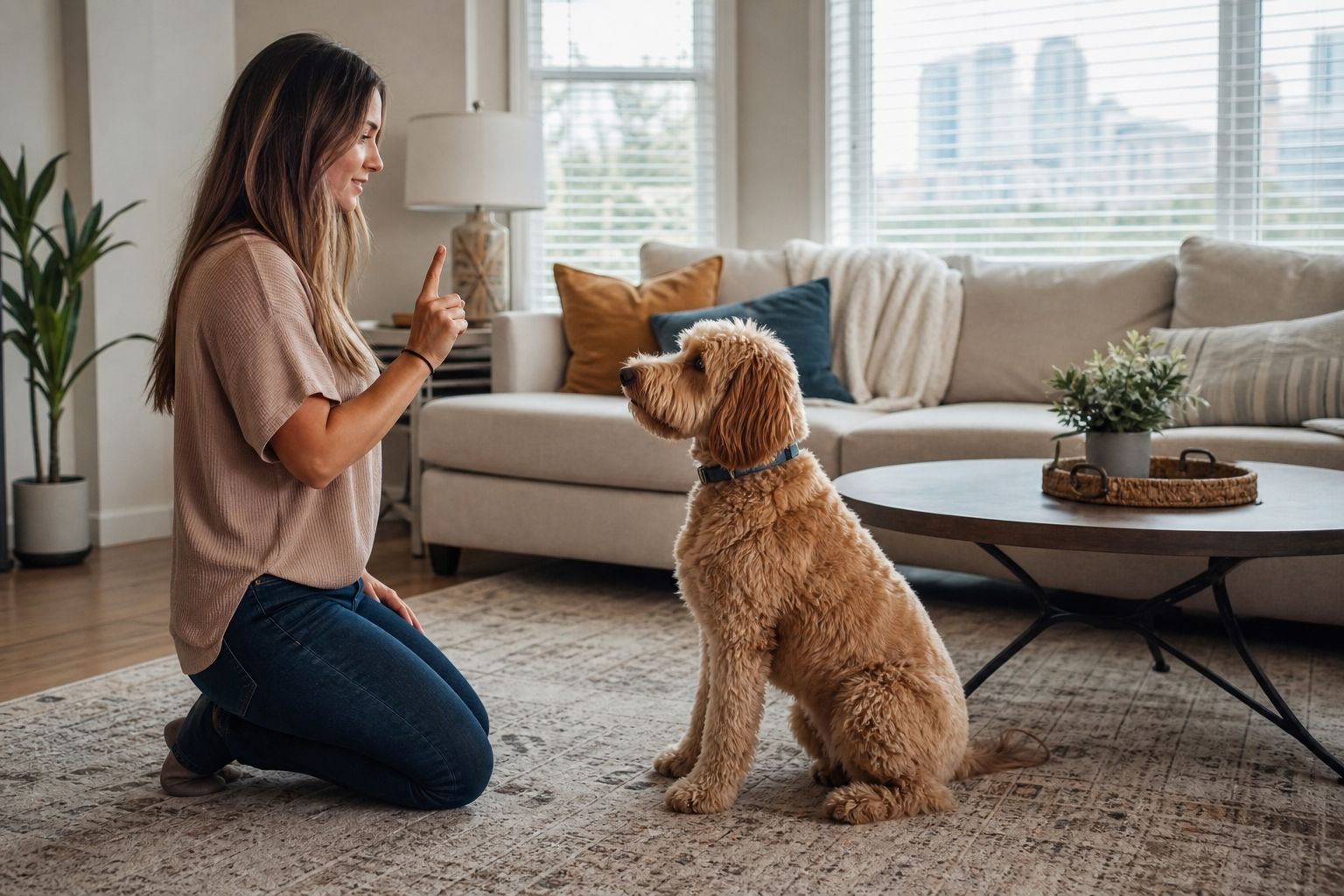
The handoff is the moment the program either becomes durable or starts to slip away. A few realities are worth understanding before you commit.
Your dog will come home with new skills, but those skills will only stay strong if you use them. The first two weeks at home are the most important. If you immediately let the dog back onto the couch, skip the structured walks, and stop reinforcing the cues, the dog will rapidly revert to old patterns. If you maintain the structure for those first two weeks, the new habits begin to feel normal to the dog and the family alike.
Expect some adjustment. Your dog will test the boundaries at home the same way they tested them at the trainer's facility on day one. This is not a sign the training failed. It is a sign the dog is figuring out whether the rules at home match the rules at the program. When the answer is yes, the testing stops within days.
Plan to do the work. The handoff session is where the trainer transfers the entire program to you, hands-on. Show up ready to take notes, ask questions, and practice the cues yourself. The most successful board and train outcomes happen when the owner treats the handoff as the start of their own training, not the end of the dog's.
For households that want broader support after the program ends, ongoing dog training programs and refresher sessions help keep the foundation strong as the dog moves through different life stages.
Frequently Asked Questions
How long is a typical board and train program?
Most programs run between two and four weeks, with three weeks being the most common length for foundational obedience and behavior work. Longer programs exist for dogs with more complex needs like serious reactivity, deeply entrenched anxiety, or off-leash reliability training.
What will my dog actually learn during the program?
Standard programs cover foundational obedience (sit, down, stay, recall, place), leash manners, door and threshold behavior, polite greetings with people, and crate calm. Custom work targeting specific issues like reactivity, jumping, counter surfing, or bolting is built around the dog's individual needs.
What is my role during the program?
During the program itself, your role is mostly to stay out of the way and let the trainer work. Most programs include scheduled check-ins, photo or video updates, and a major handoff session at the end where you learn to handle and reinforce everything the dog has learned. After the program, your role becomes central.
Will my dog forget me while they are away?
No. Dogs do not forget the people who love them after two or three weeks. Most dogs are visibly thrilled to see their families at pickup. Some dogs settle so well into the program that the trainer becomes a calm and trusted presence, but that does not displace the family bond at all.
How long until I see real results at home?
The training results show up immediately at pickup. The handoff session demonstrates exactly what the dog can do. The question is how well those results hold at home, which depends entirely on the consistency of the family for the first few weeks. Most owners feel solidly settled into the new normal within four to six weeks of having the dog back.
What if my dog needs a refresher later?
Most trainers offer refresher options, whether that means a few private sessions, a short return stay, or an integrated boarding-and-tune-up visit when the family is traveling. Many OKC families combine periodic refreshers with regular dog boarding stays so the dog stays sharp while the family is away.
Contact Our Oklahoma City Team
The honest answer to whether board and train is right for your dog usually requires a conversation. Every dog, every household, and every behavior history is different, and a quick phone call can save weeks of guessing. Our Oklahoma City location team is ready to walk through your situation and help you decide whether board and train is the right path or whether a different format makes more sense as a starting point. Call (405) 299-3386 or contact our Oklahoma City team to get the conversation started.
About All Dogs Unleashed Oklahoma City
All Dogs Unleashed takes a balanced, results-oriented approach to dog training across Oklahoma City and the surrounding metro, including Edmond, Moore, Norman, Yukon, and Bethany. Our trainers specialize in transforming difficult behaviors into reliable obedience through immersive board and train programs, in-home work, and tailored ongoing support. Whether your dog needs foundational obedience, behavior modification, or refinement of advanced skills, our goal is the same: dogs and families who navigate everyday life together with confidence.