
A dog that comes when called, walks without pulling, and settles on command is not just easier to live with. It is safer, less stressed, and more confident in the world. Dog obedience training in Shreveport gives owners the communication tools to build exactly that, and it starts well before a dog is doing anything wrong.
Whether you have a new puppy, a rescue with gaps in its history, or an adult dog that has developed habits you want to correct, obedience training is the foundation every dog needs.
Key Takeaways
- Obedience training is about communication and structure, not just commands. A trained dog is calmer, safer, and more confident in everyday situations.
- The seven core commands, heel, recall, sit/stay, down/stay, place, boundary training, and door manners, cover the vast majority of real-life situations a Shreveport dog and owner will face.
- Start training as early as possible, but adult dogs of any age can learn and improve significantly with the right approach.
- Common problem behaviors like jumping, pulling, and ignoring recall are not stubbornness. They signal a missing foundation that professional training can address at the root.
- Board and Train is ideal for intensive foundational work or busy owners. In-home training is best when problem behaviors are tied to the home environment and full household involvement is needed.
- Owner consistency after training is what determines whether results last. Daily reinforcement and whole-household engagement are non-negotiable.
Why Obedience Training Is More Than Just Commands
Most people think of obedience training as teaching a dog to sit or stay on cue. Those commands matter, but they are the output of something more fundamental: a dog that understands how to communicate with its owner and trusts that structure means safety.
Dogs are not naturally wired for the human world. Crowds and music at Festival Plaza, joggers and cyclists along the Clyde Fant Parkway riverfront trails, off-leash dogs at the Shreveport Dog Park near the Stoner Boat Launch, vendors and food trucks at the Bossier City Farmers Market, these are all situations a dog has to learn to navigate calmly.
The result is a dog that is easier to manage in daily life and one that is measurably less anxious. Structure reduces stress for dogs. A dog that knows what is expected of it does not have to make its own decisions about every situation it encounters, and that predictability is calming in a way that an unstructured environment simply cannot be.
The Core Commands Every Dog in Shreveport Needs to Know
Obedience training is built on a small set of commands that, when reliable, cover the vast majority of situations a dog and owner will face. Understanding what each one does, and why it matters in real life, helps owners appreciate the practical value of each one.
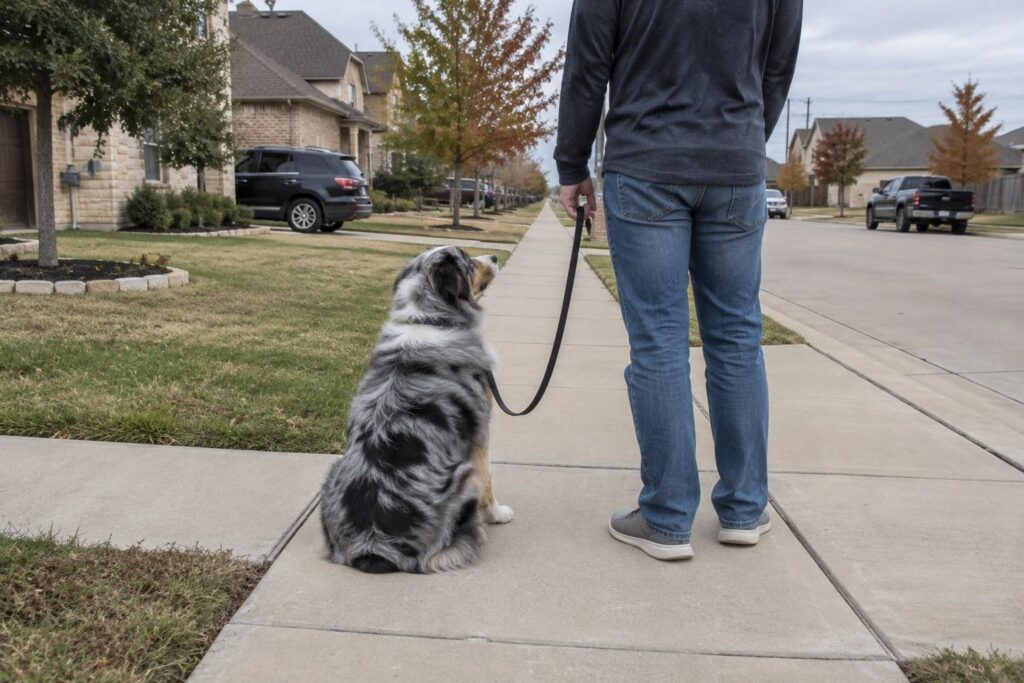
- Heel. Loose leash walking makes every walk more enjoyable and safer. Whether you are heading down the paved trails along the Red River, walking the gardens at the American Rose Center, or hiking through Red River National Wildlife Refuge in Bossier City, a dog pulling toward another dog or a child on a bike creates real risk. Heel teaches a dog to walk calmly beside its owner regardless of what is happening around them.
- Recall. Reliable recall is the single most important safety command a dog can learn. A dog that comes every time it is called can be off leash safely in appropriate settings, like the fenced areas of the Shreveport Dog Park along the Red River, and can be called away from danger quickly anywhere else. It is also one of the hardest commands to make truly reliable without professional help.
- Sit/Stay. The combination of sit and stay covers an enormous range of daily situations. A dog holding a sit/stay cannot jump on a guest, dart out a door, or lunge at a passing cyclist, and it can hold that position while you cross a parking lot, answer the door, or manage a situation that requires your full attention.
- Down/Stay. The down/stay extends the same principle into a more relaxed, sustainable position. It is the right choice when a dog needs to settle for a longer stretch, such as during an outdoor meal at the Louisiana Boardwalk in Bossier City, an afternoon at Riverview Park, or while guests visit the home.
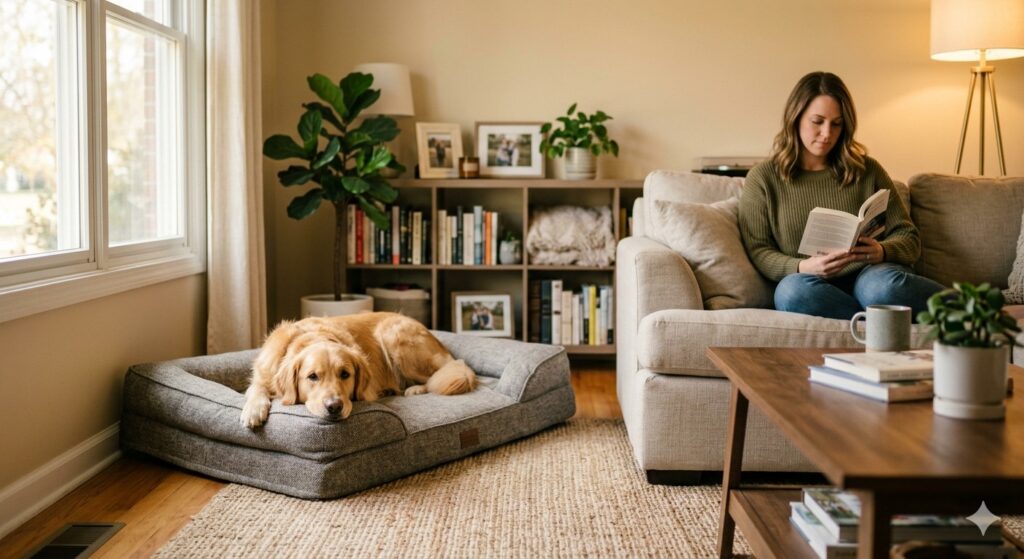
- Place. The place command sends a dog to a designated spot and keeps it there until released. It is invaluable for managing greetings at the front door, keeping a dog calm during family meals, and giving a dog a settled default behavior in any room of the house.
- Boundary Training. Boundary training teaches a dog to recognize and respect specific limits, whether that is staying out of a particular room, off the furniture, or within the edges of an unfenced yard. A dog that holds boundaries reliably gives owners confidence that the dog will make good decisions even without direct supervision.
- Door Manners. The front door is one of the most chaotic transition points in any home. Door manners teach a dog to wait calmly when the door opens rather than bolting outside or rushing a guest. This single skill prevents some of the most common safety incidents owners face in Shreveport’s South Highlands and Broadmoor neighborhoods alike, from escaped dogs running into traffic to overwhelmed visitors at the door.
For a closer look at how these commands work together, see our post on the commands every dog should know.
When Should You Start Obedience Training?
The short answer is as early as possible. Puppies as young as eight weeks old are capable of learning basic commands and beginning socialization. The habits and responses a puppy builds in its first few months carry forward powerfully into adulthood, which is why early training produces dogs that feel more natural and less effortful to manage.
That said, the idea that adult dogs cannot be trained is simply not true. Dogs of any age can learn new behaviors and unlearn old ones. The process may take more patience with an older dog that has years of practiced habits, but the neurological capacity to learn does not disappear with age. Many of the most dramatic training transformations happen with adult dogs whose owners finally decided to address longstanding issues.
The best time to start is now, regardless of your dog’s age. Waiting for a behavior problem to get worse before seeking training never makes the process easier. It just means the unwanted behavior becomes more practiced and more automatic.
Common Obedience Problems and What They Signal
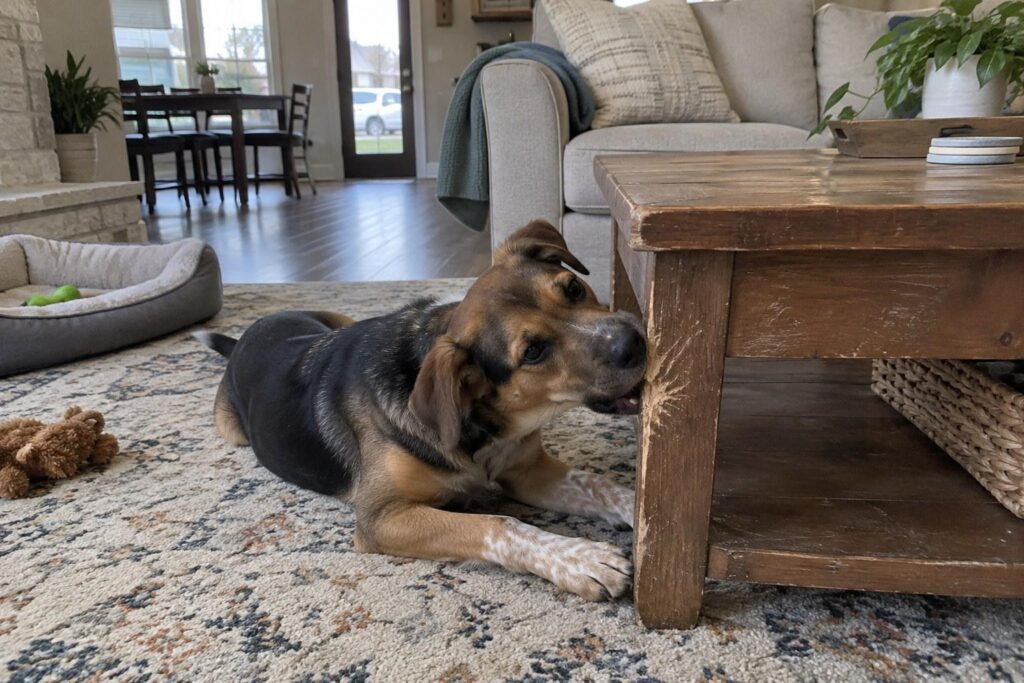
When a dog jumps on guests, pulls on the leash, ignores its name, or barks at everything outside the window, owners often describe it as stubbornness or a personality trait. In most cases, it is neither. These behaviors signal a missing foundation, not a defiant dog.
Jumping to greet. Dogs jump because it has worked. At some point, jumping got them attention, affection, or engagement. Until a dog learns that all four paws on the floor is the behavior that gets rewarded with a greeting, jumping will continue.
Leash pulling. Pulling works too. If a dog pulls and still gets to move forward, it has learned that pulling is the correct strategy for going where it wants to go. Teaching heel requires systematically breaking that pattern in a way most owners cannot do consistently on their own.
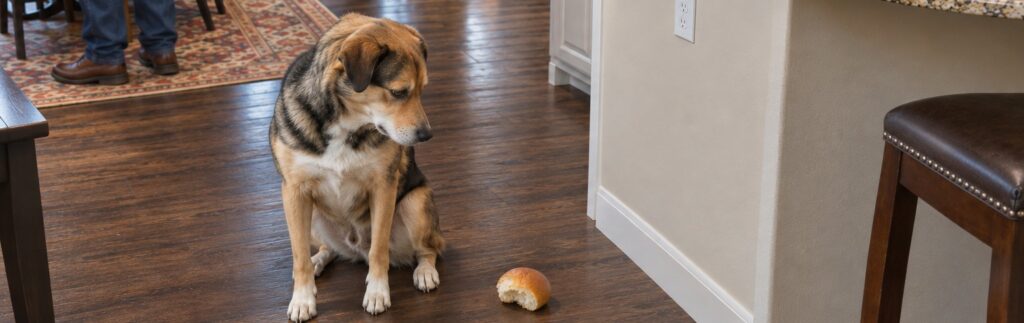
Ignoring recall. A dog that does not come when called has usually learned that coming ends the fun. If recall always leads to being put on leash or taken inside, the dog has good reason to avoid it. Building a reliable recall means making coming back to the owner the most rewarding thing a dog does.
Nuisance barking. Barking at the window, at sounds, or at visitors is often a sign of under-stimulation, anxiety, or a dog that has never been taught an incompatible behavior. A dog in a solid place command cannot simultaneously be barking at the window.
Many of these patterns are related to the same underlying gaps that also contribute to common behavior problems. A solid obedience foundation addresses most of them at the root.
How Professional Obedience Training Works at All Dogs Unleashed
Our dog training programs are built around one central principle: training has to work in real life, not just in a controlled environment. Dogs are trained in actual situations they will encounter, not artificial scenarios that disappear the moment they leave the facility.
Every program begins with understanding your specific dog. Temperament, history, current behaviors, and household dynamics all shape the approach. Two dogs can have the same problem and need very different solutions. That individualization is what separates professional training from generic methods.
Board and Train
The Board and Train program is a two-week immersive program where your dog stays with our trainers and works with professional trainers every day. This format is particularly effective for dogs that need intensive foundational work or for owners with demanding schedules who cannot commit to the frequency that private lessons require.
Dogs in Board and Train receive monitored indoor and outdoor time, structured training sessions, proper socialization, and consistent handling throughout the day. At the conclusion of the program, every owner receives a full follow-up lesson so they can take over confidently at home. The training does not stop when your dog walks back through your door.
In-Home Dog Training
With in-home dog training, a trainer comes directly to your home and works with your dog in the environment where the behaviors actually occur. This is often the most practical choice for owners who want to be hands-on throughout the process and for dogs whose problem behaviors are tied to specific locations or routines within the home.
In-home sessions also include every member of the household, which is critical. A dog learns to respond to the people it lives with. If one person uses commands differently than another, the dog learns inconsistency. Having the whole family involved from the start produces faster and more durable results.
Not sure which format is the right fit? Our post on which program fits your dog walks through the key differences in detail.
What Owners Must Do to Make Training Stick
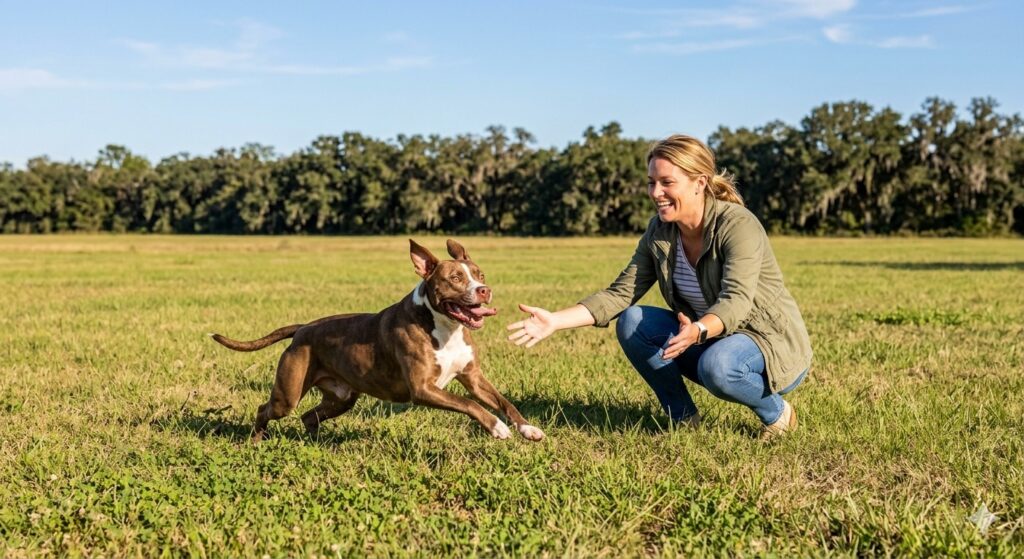
Professional training sets the direction, but owners determine the destination. The habits a dog builds between sessions, and after formal training ends, are what make obedience permanent or temporary.
Practice daily, not occasionally. Even ten minutes of consistent reinforcement each day produces dramatically better results than longer but infrequent sessions. Commands stay sharp when they are used in real situations, not just reserved for formal practice time.
Use commands in everyday life. Ask for a sit before putting down a food bowl. Use place during dinner. Ask for heel every time you leave the house. Obedience woven into daily routines becomes automatic for both dog and owner.
Be consistent across the whole household. Every person who interacts with the dog needs to use the same commands, the same expectations, and the same responses. A dog that gets away with jumping when one family member comes home will keep jumping, because it has learned the behavior still works sometimes.
Use the follow-up support available to you. All Dogs Unleashed Shreveport provides unlimited follow-up for the life of your dog. If a behavior slips or a new challenge comes up, you are not on your own. Hear directly from other Shreveport owners on our client testimonials page.
Start Building a Better Bond Today
A well-behaved dog is not a matter of luck or breed. It is the result of consistent, professional training and an owner who follows through at home. If you are ready to build that foundation with your dog, our team in Shreveport is ready to help.
Contact us today to schedule your consultation. Call us at (318) 562-6536 or reach out online to get started.
Frequently Asked Questions
How long does dog obedience training take?
It depends on the dog’s starting point, the behaviors being addressed, and how consistently the owner practices at home. Our Board and Train program runs two weeks and produces a strong obedience foundation for most dogs. In-home training timelines vary based on the program selected and the complexity of the behaviors involved. All formal training is followed by ongoing reinforcement at home, which is what makes results permanent.
Can any dog learn obedience, regardless of breed or age?
Yes. Every dog is capable of learning obedience regardless of breed, size, or age. Some breeds have stronger working instincts that make certain commands easier to establish quickly, and puppies tend to absorb new patterns faster than adult dogs with established habits. But there is no breed that cannot be trained and no dog too old to improve significantly with the right approach and consistent follow-through.
What is the difference between obedience training and behavior modification?
Obedience training teaches a dog specific commands and how to respond to them reliably. Behavior modification addresses the emotional or psychological root of a problematic behavior, such as fear, anxiety, or resource guarding. In practice, the two often overlap. A dog with a strong obedience foundation is much easier to work with during behavior modification, and many behavior problems resolve naturally once clear structure and communication are established.
Do I need to be involved in the training process?
Yes, and that involvement is essential to lasting results. Even in a Board and Train program, where your dog is trained by professionals for two weeks, the owner follow-up session at the end is a required part of the process. A trained dog in an untrained household will regress. The goal of every program is to give both the dog and the owner the tools to maintain the results long after formal training ends.
Will obedience training change my dog’s personality?
No. Obedience training does not suppress a dog’s personality; it gives the dog a better way to express it. A high-energy dog that learns to channel that energy through structured commands is still a high-energy dog. It is just one that can be managed safely and that gets more freedom as a result, because its owner can trust its responses. Most owners report that their dog seems happier and more relaxed after training, not flatter or more subdued.
What happens if my dog slips back into old habits after training?
Some regression is normal, especially during the transition from a structured training environment back to home. The most common cause is inconsistency in the household. All Dogs Unleashed Shreveport offers unlimited follow-up for the life of your dog, so if you notice a behavior slipping or a new challenge emerging, you have direct access to professional support to get back on track quickly.
About All Dogs Unleashed Shreveport
All Dogs Unleashed is Shreveport’s trusted dog training and care center, offering fully customized obedience programs for dogs of every age, breed, and background. Our balanced, real-world training approach produces dogs that are obedient and confident at home and out in the community.