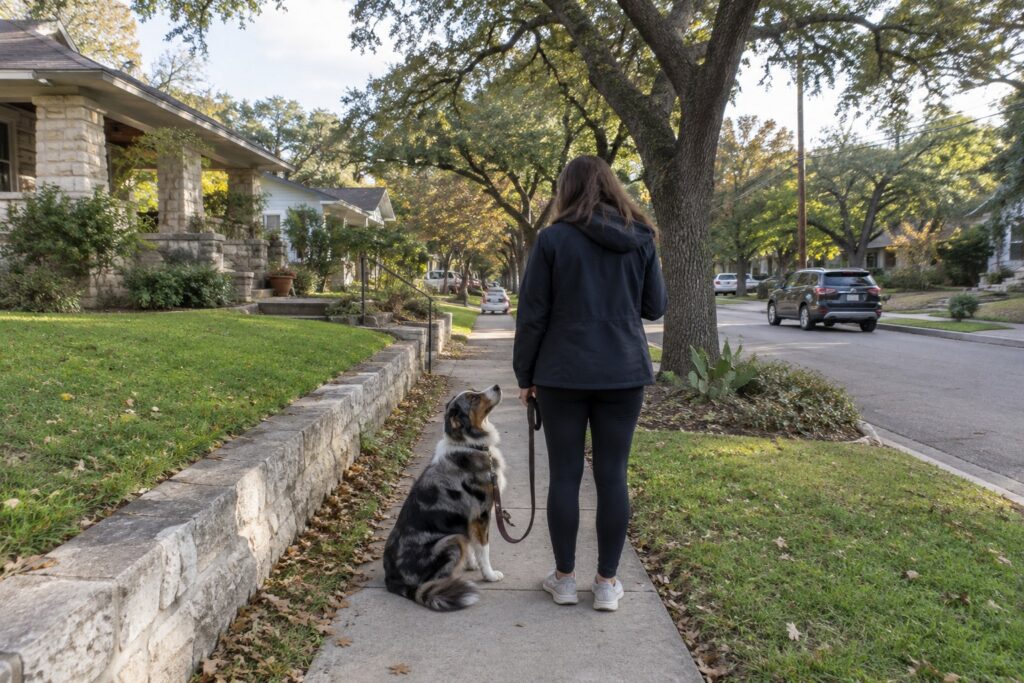

Dehydration can sneak up on your dog fast, especially during a hot Dallas summer. At All Dogs Unleashed, we work with dogs every day at our Carrollton facility, and we coach owners on the dog dehydration signs that matter most. Catching the early warning signs, like dry gums, sunken eyes, or excessive panting, can save your pup a trip to the emergency vet. This guide walks you through what to watch for, how to check at home, and when to call your vet right away.
Worried your dog isn’t drinking enough? Call our Carrollton team at (972) 484-3647 or our Dallas team at (214) 807-1462.
Key Takeaways
- The most common dog dehydration signs include dry gums, sunken eyes, excessive panting, and slow skin elasticity.
- The skin pinch test on the scruff is a fast, reliable home check every Dallas dog owner should know.
- Puppies, senior dogs, and small breeds dehydrate faster than healthy adult dogs in Texas heat.
- Severe dehydration is a medical emergency, call your vet immediately if your dog seems weak or unresponsive.
The Heat Here Is Brutal On Dogs

If you live in North Texas, you already know the summer drill. Heat indexes climb past 100 from late May through September, and that pavement off Belt Line or near our Carrollton training facility at 2401 Luna Rd can scorch paws by 10 a.m. Your dog feels it faster than you do.
Here is the part most owners miss. Dogs do not sweat like we do. They cool down by panting, which means they lose fluid through every breath. A 20-minute walk on hot concrete can drain a healthy dog quickly. Brachycephalic breeds like bulldogs and pugs struggle even more, and high-drive working dogs push past their limits without telling you.
This guide covers the dog dehydration signs every Texas owner should spot early. You will learn two at-home tests, the full list of dehydrated dog symptoms, local risk factors, and a simple prevention plan.
How to Tell If Your Dog Is Dehydrated: The Two Fastest At-Home Tests
You can check your dog at home in under 30 seconds. Two quick tests tell you almost everything: the skin turgor test and the gum check. Run both after summer walks, hikes around White Rock Lake, or daycare pickup in Carrollton when your pup has been panting hard.
The Skin Turgor Test
Find the loose skin at the back of your dog’s neck or right between the shoulder blades. Pull lightly, about an inch up, then let go. A hydrated dog’s skin snaps back in 1 to 2 seconds. If it falls slowly or stays tented, that’s one of the clearest dehydrated dog symptoms you’ll see at home. One catch: this test is less reliable on senior dogs or overweight pups. Skin elasticity naturally drops with age, so a slow snap-back doesn’t always mean dehydration. Use it alongside the gum check, not on its own. Building this into your daily routine, the same way you’d stick to a consistent feeding schedule, makes it second nature.
The Gum Color and Moisture Check
Lift your dog’s lip and look at the gums. Healthy gums are pink and slick wet, like the inside of your cheek. Dehydrated gums look pale, dry, or tacky to the touch. Now press your finger firmly against the gum for 2 seconds and release. The spot turns white, then refills with pink color. Under 2 seconds is normal. Slower than that means poor circulation, often tied to severe dehydration. Back up these checks with a quick look at the eyes and nose. Sunken eyes and a persistently dry nose are supporting cues that your dog needs water and possibly a vet, fast.
The Full List of Dog Dehydration Signs: Early, Moderate, and Severe
Dehydration moves in stages. Catch it early and you fix it at home. Miss the early signs and you end up at the emergency vet. Here is the severity ladder our trainers in Carrollton and Plano watch for, especially in summer.
Early Warning Signs
Early dog dehydration signs can show up within 30 to 60 minutes of hard play in the Texas heat. Your pup is not in danger yet, but the clock has started.
- Sluggish movement or slower recall
- Less interest in food or favorite treats
- Slightly dry nose that stays dry
- Fewer trips outside to urinate
- Minor delay when you pull lightly on the skin between the shoulder blades
Get your dog to shade, offer cool water in small amounts, and stop the activity. Diet matters here too, so choosing the right food for your Dallas dog and keeping a steady feeding schedule helps regulate hydration.
Moderate Dehydration Symptoms
This is the danger zone. We see moderate symptoms most often during late afternoon walks in Frisco, Plano, and Carrollton between 3 and 6 pm, when pavement is still cooking.
- Nonstop, excessive panting that does not slow down with rest
- Tacky or sticky gums instead of wet and slick
- Sunken eyes that look dull or tired
- Skin tents for 3 to 5 seconds before snapping back
- Restlessness, pacing, or mild disorientation
You still have a short window for home help. Offer water, cool the paws and belly with a damp towel, and call your vet for guidance. If symptoms do not improve within 20 to 30 minutes, go in.
Signs of Severe Dehydration
Signs of severe dehydration in dogs are a true emergency. A bowl of water will not fix this. Your dog needs IV fluids.
- Very sunken eyes
- Pale, white, or leathery dry gums
- Skin that tents for 5 seconds or longer
- Vomiting or refusing all water
- Collapse, weakness, or trouble standing
- No urination for 12 hours or more
Drive to the nearest emergency vet now. Do not wait to see if it passes.
Why Dallas Dogs Face Higher Dehydration Risk Than Dogs in Other Cities
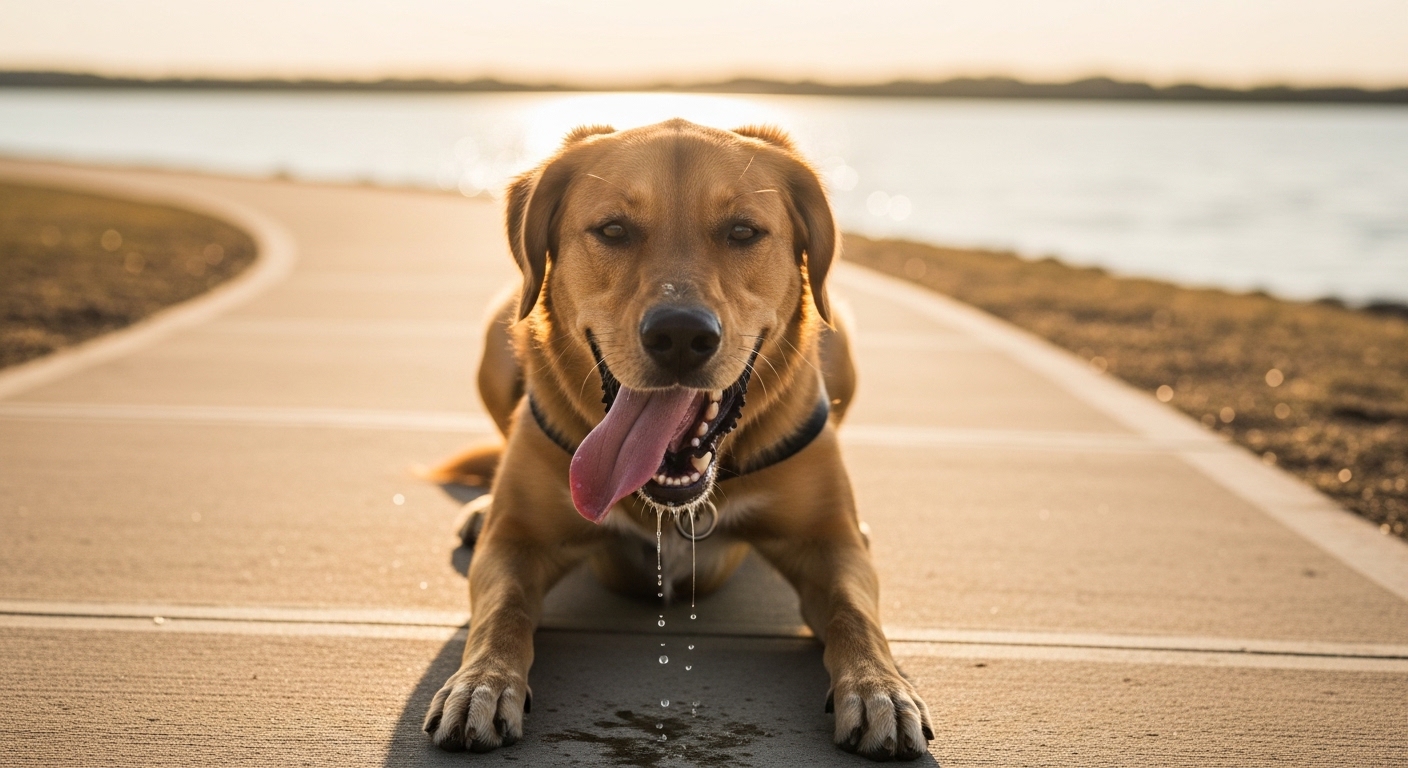
North Texas summers are brutal on dogs. The combination of long heat waves, humid air, and miles of pavement makes dehydration a year-round concern, not just an August problem. If you walk your pup around Oak Cliff, Lake Highlands, or White Rock Lake, you need to plan around the heat.
Dallas Heat and Humidity
Our city averages 60+ days per year above 100°F. From late June through August, the heat index regularly climbs to 105-115°F. Humid mornings trap moisture in your dog’s coat and slow down panting, which is how dogs cool themselves. That makes keeping dogs hydrated in summer heat a daily job, not a weekend thought. Walk before 8 a.m. or after 7 p.m. in July and August. Midday walks in direct sun are a hard no.
Concrete, Turf, and Pavement
Pavement surface temps hit 150-160°F on summer afternoons around the lake loop and Oak Cliff sidewalks. Artificial turf gets even hotter. Use the five-second palm rule: press your hand to the pavement for five seconds. If you can’t hold it, your dog can’t walk on it. Hot surfaces burn paw pads AND raise core body temperature fast. Stick to grass, shaded trails, or dirt paths when possible.
High-Risk Breeds and Dogs Prone to Overheating
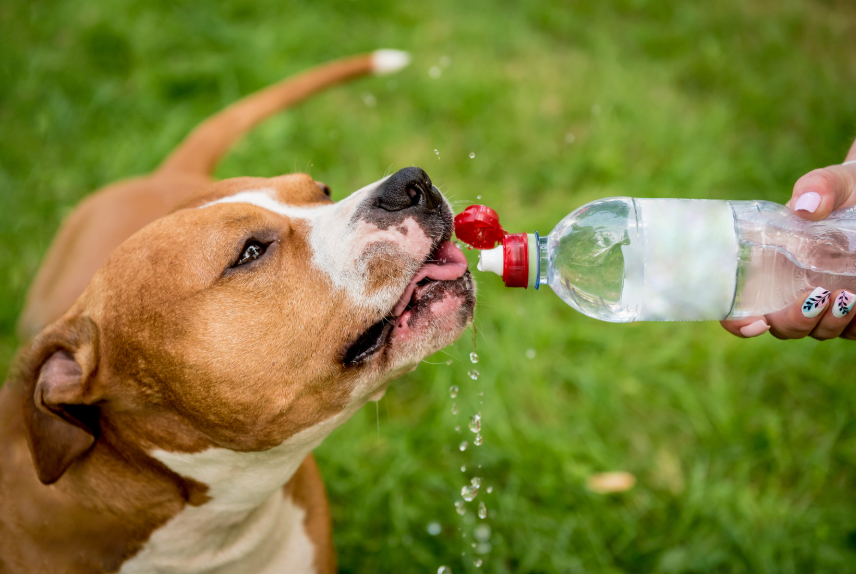
Some dogs dehydrate faster than others. Watch these groups closely:
- Brachycephalic breeds (French bulldogs, pugs, bulldogs, boxers) can’t pant efficiently
- Double-coated breeds (huskies, Bernese mountain dogs, golden retrievers) retain heat
- Puppies regulate temperature poorly
- Seniors, since senior dogs in Dallas have unique health considerations including reduced thirst response
- Dogs with heart, kidney, or respiratory conditions
If your dog falls into one of these groups, cut walk times in half during peak summer and bring water on every outing.
Worried your dog isn’t handling the heat well? Call our team in Carrollton at (972) 484-3647 or our Ervay location at (214) 807-1462 for training and behavior support.
How to Prevent Dehydration in Your Dog: A Practical Daily Plan
Prevention is simple once you know the numbers. A healthy dog needs roughly 1 ounce of water per pound of body weight each day. In Texas summer heat, active dogs need 1.5 to 2 times that amount. Track what your dog normally drinks so any sudden change stands out fast.
How Much Water Does Your Dog Need
A 50 pound dog needs about 50 ounces on a normal day. On a 95 degree afternoon in Carrollton or Plano after a long walk, that same dog may need 75 to 100 ounces. Measure with a marked pitcher for a week to set a baseline. Once you know the normal, you spot the problem early.
Water Bowl Placement, Portable Water, and Smart Habits
Put bowls in at least two rooms, refill them twice a day, and wash them daily. Many dogs drink more when the water is cold, so toss in a few ice cubes during the afternoon. For any walk over 20 minutes, carry a collapsible bowl and a 16 to 24 ounce bottle. Offer water every 15 minutes in summer heat. Dogs in our Carrollton daycare have fresh water access all day in a climate-controlled facility, which is the same standard you want at home.
Foods That Help With Hydration
Food is a hidden water source. Wet food contains up to 78% moisture. Dry kibble sits around 10%. Mixing a spoonful of wet food into kibble adds real hydration without changing the diet much. See our guide to choosing the right food for your Dallas dog for more on pairing meals with hydration. Good hydrating treats:
- Seedless watermelon chunks
- Cucumber slices
- Blueberries (frozen works great)
- Plain ice cubes
Skip salty human snacks like chips, deli meat, or cheese. Salt pulls water out of the body and makes dog dehydration treatment at home much harder.
What to Do If Your Dog Shows Dehydration Signs Right Now
If your dog is showing dehydration signs, act calmly and quickly. Most mild cases turn around in 30 to 45 minutes with the right steps at home. Severe cases need a vet, not a wait-and-see approach.
Mild to Moderate Dehydration at Home
Follow these dog dehydration treatment at home steps in order:
- Move your dog to a cool space. AC, shade, or a tile floor works. Get them out of the Texas heat first.
- Offer small amounts of cool, fresh water. Not ice-cold. Never force water down their throat, it can cause choking or vomiting.
- If they won’t drink, try a soaked cloth. Let them lick water from a wet washcloth. Many dogs accept this when a bowl feels overwhelming.
- Place a cool damp towel on their neck, armpits, and groin. These are the fastest cooling zones on a dog’s body.
- Recheck gums and skin turgor every 15 minutes. Pull lightly on the skin between the shoulder blades. You want to see snap-back and pink, moist gums within 30 minutes.
Unflavored Pedialyte can help mild cases in small amounts, but call your vet first to confirm the dose for your dog’s weight. Plain water is usually enough.
When to Call the Vet
Some signs of severe dehydration in dogs are emergencies. Call the vet immediately if you see pale, white, or blue gums, collapse, repeated vomiting or diarrhea, or skin that tents for 5 seconds or longer. Puppies, seniors, and dogs with health conditions need a vet sooner, not later. No improvement after 30 to 45 minutes? Go in. When your dog stays with our boarding and daycare team, fresh water is available all day in a climate-controlled space, and our staff watches for early heat stress the same way we’d watch our own dogs. Call our Carrollton location at (972) 484-3647 or our Ervay location at (214) 807-1462 to set up a visit, or stop by 2401 Luna Rd in Carrollton and see how we keep dogs cool through the summer.
Frequently Asked Questions
How Long Does It Take for a Dog to Recover From Dehydration?
Mild dehydration typically resolves within a few hours once your dog has steady access to water and a cool environment. Moderate cases treated at a veterinary clinic with IV or subcutaneous fluids often show significant improvement within 24 hours. Severe dehydration can require hospitalization for one to three days depending on underlying complications, so early action always leads to faster recovery.
Can a Dog Be Dehydrated Even If They Are Still Drinking Water?
Yes, a dog can remain dehydrated even while drinking if fluid loss from heat, exercise, vomiting, or diarrhea outpaces their intake. Some dogs also drink less than they need out of habit or preference, especially when water is warm or the bowl is in an inconvenient location. If you notice persistent dehydration signs despite normal drinking behavior, a vet visit is warranted to rule out an underlying health issue.
Is Giving a Dehydrated Dog Sports Drinks or Pedialyte Safe?
Plain, unflavored Pedialyte is sometimes recommended by vets in small amounts for mild dehydration, but you should always call your veterinarian before giving it to your dog. Sports drinks like Gatorade contain high sugar levels and artificial ingredients that can upset a dog’s stomach and should generally be avoided. Plain water remains the safest first option, and your vet can advise on electrolyte solutions designed specifically for dogs if needed.
Does Training or Exercise Increase My Dog’s Dehydration Risk?
Physical activity significantly raises a dog’s fluid requirements, especially during outdoor training sessions in Dallas heat. All Dogs Unleashed recommends scheduling training during cooler morning or evening hours and bringing fresh water to every session, even short ones. Dogs working on new commands or skills also experience mental exertion, which can compound physical fatigue and increase the overall stress on their system.
At What Age Are Dogs Most Vulnerable to Dehydration?
Puppies and senior dogs are at the highest risk because their bodies are less efficient at regulating temperature and fluid balance. Puppies have smaller fluid reserves, so even brief exposure to heat can lead to rapid dehydration. Senior dogs may have reduced kidney function or underlying conditions that make fluid loss harder to compensate for, so owners of older dogs should monitor water intake and dehydration signs more closely.
Will My Dog Drink Enough Water on Their Own Without Me Monitoring Them?
Many dogs self-regulate water intake reasonably well under normal conditions, but heat, illness, or stress can suppress their thirst response at exactly the wrong moment. Some dogs are simply not instinctively good drinkers and rely on their owners to encourage regular water breaks. Tracking how much water your dog typically consumes daily gives you a reliable baseline so you can quickly notice when intake drops.
Can Dehydration Cause Long-Term Health Problems in Dogs?
Repeated or severe dehydration episodes can stress the kidneys over time, potentially contributing to chronic kidney disease, especially in older dogs. Dehydration also thickens the blood, which can strain the heart and reduce oxygen delivery to muscles and organs. Addressing dehydration promptly and building consistent hydration habits helps protect your dog’s long-term health well beyond just avoiding a single heat-related emergency.
Ready to Get Started with All Dogs Unleashed?
Call (972) 484-3647 (Carrollton); (214) 807-1462 (Dallas/Ervay) to speak with our team directly.
Reach out today and let’s talk about how we can help.