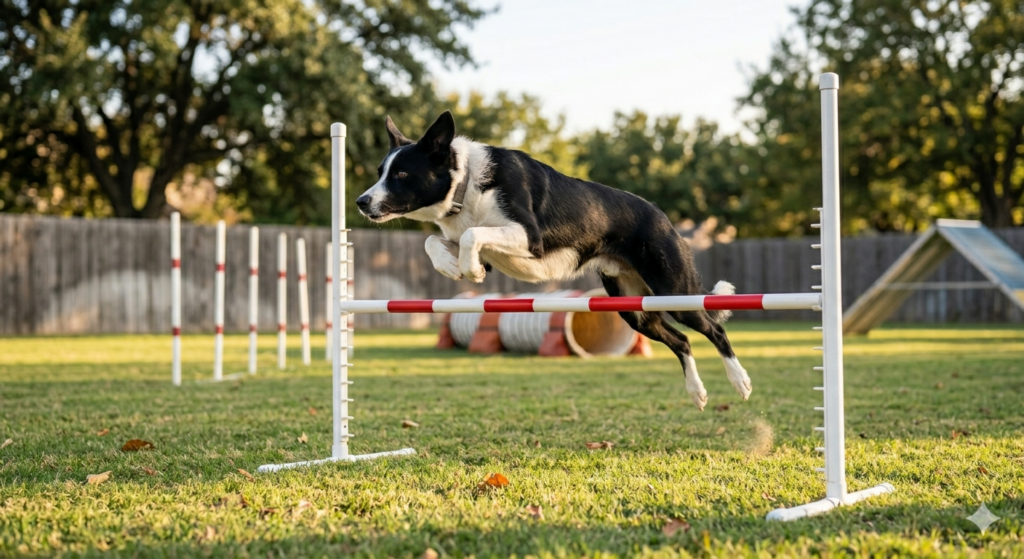

Watching a dog weave through poles at full speed, clear a jump line, and stick a perfect pause table hit is what draws most people to agility in the first place. The sport looks effortless from the sidelines, but the polish on display at a trial is the product of months of foundation work, careful obstacle introduction, and steady team communication. If you have been thinking about signing up for dog agility classes in Dallas, the first session rarely looks anything like what most new handlers picture.
Agility is one of the fastest-growing dog sports in the country because it combines physical exercise, mental stimulation, and handler-dog teamwork in a format that almost every breed can enjoy. The Dallas area has a strong agility scene, with indoor and outdoor facilities running year-round classes at every level. Knowing what a first class actually covers, what your dog needs to bring to the starting line, and how progression works over the following weeks helps you show up prepared and avoid the common frustrations that cause handlers to drop out before they ever experience what makes the sport addictive.
Key Takeaways
- Dog agility is a timed obstacle sport that pairs physical exercise with structured handler-dog teamwork, and Dallas has a strong network of indoor and outdoor programs running year-round at every level. Most reputable classes expect a basic obedience foundation before enrollment, and dogs typically need to be at least six months old for foundation work, with full-impact obstacles like weaves and full-height jumps held off until growth plates close.
- A typical beginner class runs once a week for six to eight weeks, introduces foundational movements like over, under, around, through, and on, and uses heavy positive reinforcement to build confidence. Most agility programs follow a progression from foundation to beginner continuation, intermediate, and advanced or competition classes, with dogs advancing based on instructor recommendation rather than fixed timelines.
- Dallas weather influences how and when classes run, with summer sessions typically moving indoors or to early morning and evening outdoor slots. Handlers who invest in obedience work before starting agility consistently progress faster than those who try to build basic skills and sport skills at the same time.
What Dog Agility Actually Is
At its core, agility is a timed obstacle course that a handler and dog navigate as a team. A typical course includes 14 to 20 obstacles, a mix of jumps, tunnels, tire jumps, weave poles, A-frames, dog-walks, seesaws, and pause tables where the dog holds position for a set count. At competition, the dog runs the entire course off-leash, and the handler directs using body language, footwork, and voice cues without ever touching the dog.
The sport started in England in 1978 as a halftime demonstration at Crufts. It has since grown into a full competitive circuit with several sanctioning bodies, including the AKC, USDAA, NADAC, UKI, and CPE, each with slightly different rules and obstacle specifications.
For most handlers in Dallas, the appeal is not competition. It is the chance to do something structured and active with a dog who has energy to burn, confidence to build, or a mind that needs more engagement than a standard walk can provide.
Is Your Dog Ready for Agility Training
Agility classes have prerequisites for a reason. Dogs who cannot hold a sit, respond to recall, or focus on their handler around distractions struggle in an environment full of moving equipment, loose toys, and other excited dogs. Most Dallas programs require basic obedience before enrollment, either completed through their own facility or verified through an evaluation.
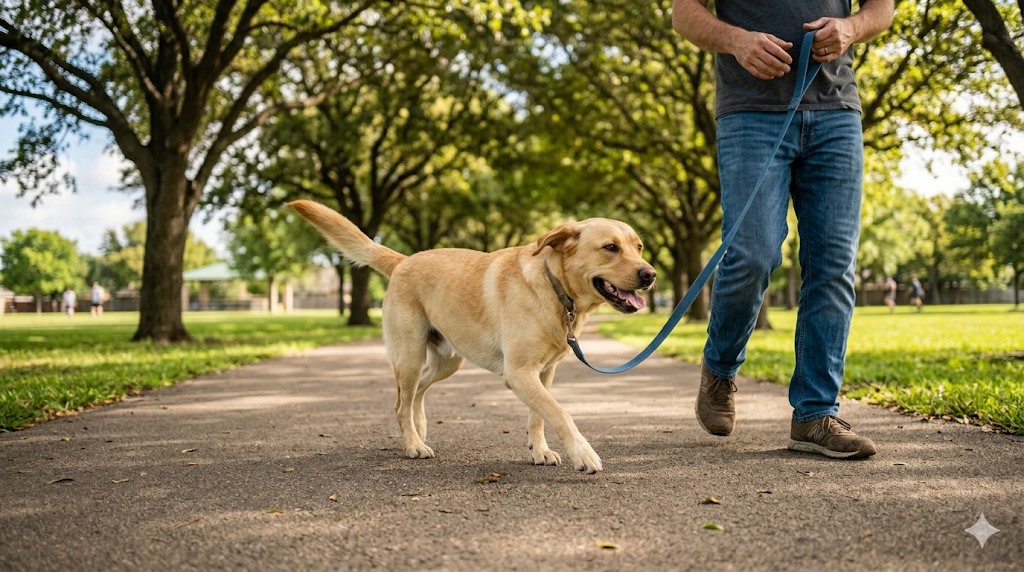
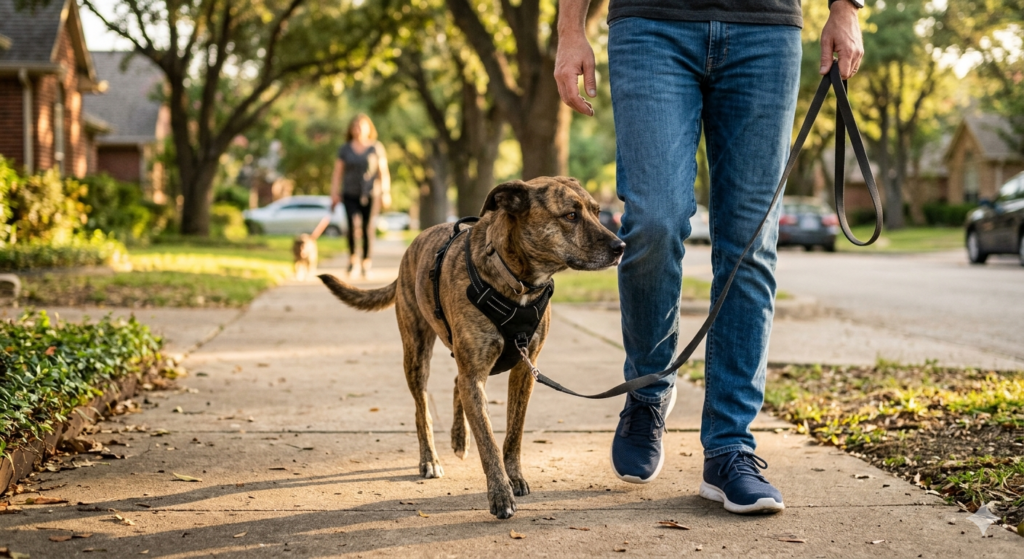
The obedience baseline should include a reliable sit, down, and stay; a recall that works at least twenty feet of distance with mild distractions; the ability to walk on a loose leash past other dogs; and sustained handler focus for short periods. If your dog does not yet have these skills locked in, a structured obedience program is the right starting point. Our post on the best training commands every dog should know covers the specific behaviors to prioritize before enrollment.
Age matters as well. Puppies can begin foundation-level agility around six months of age, but most reputable programs keep dogs under a year old away from full-height jumps and weave poles because of the impact on growth plates that have not yet closed. Depending on breed, full adult-level obstacle work typically starts between nine and sixteen months.
Health is the third gate. Dogs should be current on vaccinations, clear of orthopedic concerns, in a healthy weight range, and free of any chronic joint or spinal issues. A quick conversation with your veterinarian before enrolling is worth the five minutes.
What a Typical Dallas Agility Class Looks Like
Most beginner agility classes run for an hour once a week across a six to eight week session. The first class is usually the quietest of the entire series. Instructors spend the opening minutes explaining safety expectations, walking handlers through the layout of the training space, and evaluating each dog’s temperament and starting skill level.
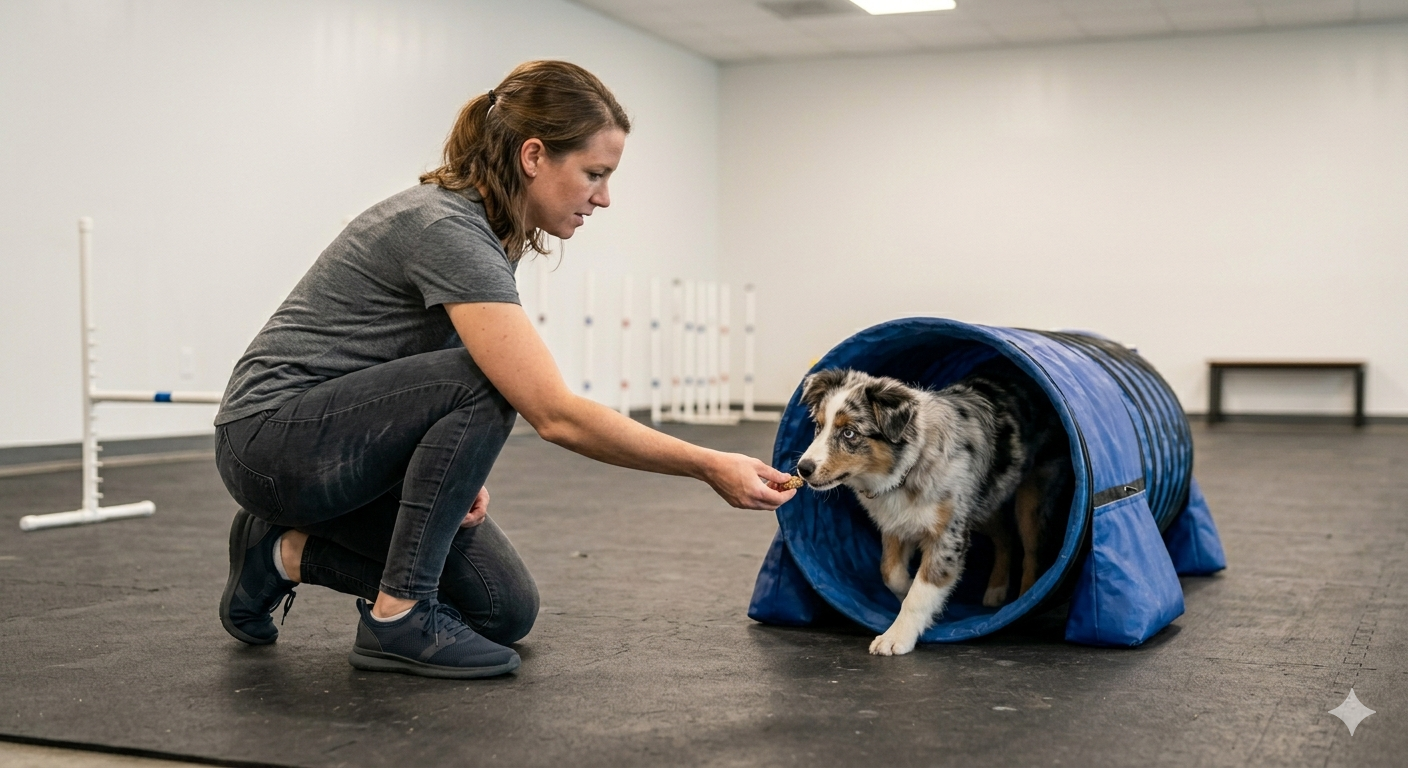
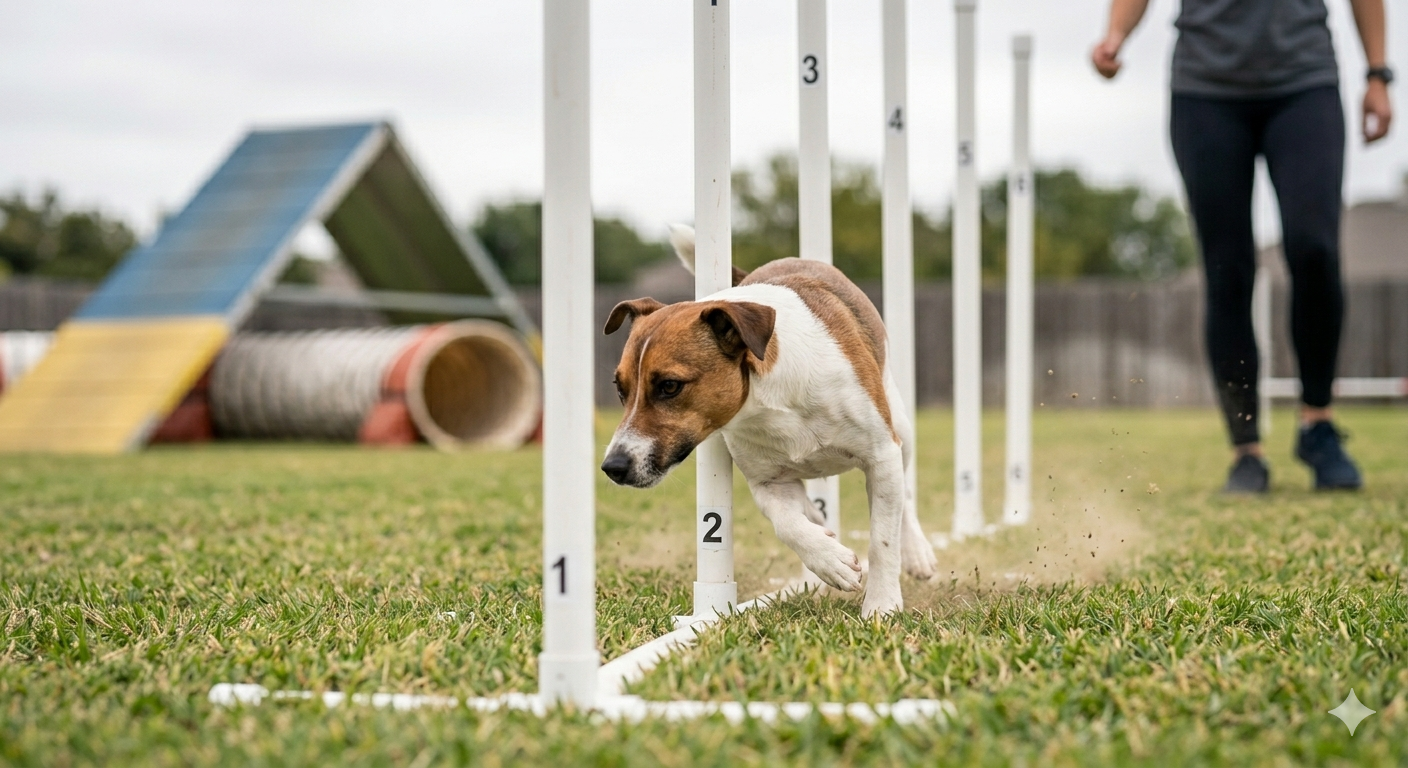
From there, the session introduces the foundational movement concepts, often summarized as over, under, around, through, and on. Your dog will likely encounter low jumps set at a beginner height, a short collapsible tunnel, target work, and simple direction changes. No dog is asked to perform a full sequence on day one.
You can expect high-energy bursts, short rest intervals, and a lot of reward-based repetition. Good agility instruction uses positive reinforcement almost exclusively, because a stressed dog learns obstacles more slowly and develops equipment avoidance that can take months to undo.
The Obstacles You Will Encounter
Agility obstacles fall into several categories, each with its own introduction timeline. Knowing what is coming helps you understand the order most classes follow.
| Obstacle Category | Examples | Typical Introduction |
|---|---|---|
| Jumps | Bar jumps, tire jumps, panel jumps | Early weeks at low heights |
| Tunnels | Straight tunnels, curved tunnels | First or second week |
| Contacts | A-frame, dog-walk, seesaw | Intermediate level, lower heights initially |
| Weave Poles | Channel weaves, guide wire weaves | Intermediate level once engagement is reliable |
| Pause Obstacles | Pause table, pause box | Introduced early as duration builder |
Jumps and tunnels come first because they are the most forgiving for new dogs and do not require extensive conditioning. Contacts such as the A-frame and dog-walk are introduced later because they involve height and a safe-zone stop at the end of each piece. Weave poles are often the last major obstacle taught because they require a specific head-down, body-bending movement that takes time to develop.
Class Levels and Progression
Most agility programs in the Dallas area follow a four-tier progression.
Foundation or introduction classes focus on handler engagement, basic obstacle introduction at low heights, body awareness exercises, and targeting. The goal at this level is confidence, not speed.
Beginner continuation classes build on the foundation work and introduce short sequences of two to four obstacles, along with obstacles like the seesaw and early weave work.
Intermediate classes add full sequences, contact obstacle refinement, weave pole performance, and handler footwork strategies like front crosses, rear crosses, and blind crosses. By this point, dogs are typically running short courses off-leash in a fenced training area.
Advanced and competition classes prepare the team for trials, with course map study, timing work, international-style handling patterns, and jump heights that match the dog’s competition category. Dogs advance at their own pace based on instructor recommendation, not a fixed calendar.
What to Bring to Your First Class
The packing list for a first agility class is simple but worth getting right.
High-value treats are the most important item. Cut up hot dogs, cheese, chicken, or any commercial soft training treat your dog goes wild for. Bring far more than you think you need. A two-minute obstacle introduction can easily burn through thirty small rewards.
A toy your dog loves, especially a tug or a squeaker, gives you a second reinforcement option. Some dogs respond faster to play than to food, particularly as energy builds during class.
Bring a flat buckle collar or a well-fitted harness and a standard six-foot leash. Retractable leashes are not permitted in any reputable agility class because they tangle in equipment and create safety issues.
Wear athletic shoes with good grip. Agility handling involves sudden direction changes, and you will be moving around equipment as much as your dog is.
One last tip: feed a lighter meal several hours before class, not immediately beforehand. A full stomach is a real issue for dogs running obstacles.
Why Dallas Weather Shapes the Agility Experience
Dallas summers are no joke, and agility training is one of the sports most affected by heat. Outdoor classes during June through September often move to early morning or evening sessions, and many handlers switch to indoor facilities from May onward. Grass surfaces get hot enough to burn paw pads well before the air temperature feels dangerous to humans.
For handlers training outside, our post on beating the heat with summer dog training tips covers the specific adjustments that keep Dallas-area dogs safe during warm months. Hydration breaks, shorter session length, rubber-matted staging areas, and paw pad awareness all matter in ways that northern climates rarely demand.
Winter training in Dallas is generally comfortable year-round, with only a handful of truly cold weeks. That mild off-season is one reason the DFW agility community stays so active.
Common First-Class Surprises
Handlers walk into their first agility class expecting to learn obstacles, and they are often surprised by how much of the class is actually about them. Handler footwork, arm position, body angle, and timing of cues carry more weight in agility than almost any other dog sport. The dog reads your body, not your voice, for direction.
Many first-time handlers are also surprised by how little their dog actually works during class. Watching instruction, waiting for turns, and resting between reps is a big part of the hour, especially in a group format. Dogs who cannot settle between working turns struggle here, which is why building your dog’s attention span is worth working on before class starts.
The last common surprise is the reinforcement rate. Good agility trainers reward generously at the foundation level, sometimes five or six times per short sequence. That level of payoff feels unusual to handlers who trained obedience on a leaner schedule, but it is what builds the drive and confidence the sport requires.
How Foundation Obedience Sets Up Agility Success
Every experienced agility instructor will tell you the same thing: the dogs who thrive in agility are the dogs who came in with a solid obedience base. Recall, focus, and impulse control all show up in every agility session, and weak foundations become bottlenecks that stall progress for weeks.
Recall work is especially important because agility is an off-leash sport at every level beyond the introductory weeks. A dog who does not come back reliably cannot run sequences safely. Impulse control matters because tunnels and weaves are self-rewarding obstacles, and a dog who bolts ahead without handler direction creates course-running habits that are hard to reverse later.
Handlers who want a structured way to build that foundation before starting agility have several options at All Dogs Unleashed. In-home dog training works well for owners who want to address obedience in the environment where their dog actually lives. Board and train programs produce faster reliability on core commands for handlers who want to compress the timeline. Our overview of how to choose the right dog training program in Dallas covers what to look for when comparing local options.
Frequently Asked Questions
What age can my dog start agility classes in Dallas?
Foundation-level agility work can begin as early as six months, but full-height jumps, weave poles, and the A-frame are typically held off until growth plates close, which happens somewhere between nine and sixteen months depending on breed size. Larger breeds mature later and need more time before impact work begins.
Do I need to own my own agility equipment to get started?
No. Every reputable agility class provides the full course setup during training sessions. Once you progress past the foundation level, most handlers invest in a few low-cost home items like a tunnel and two or three jumps to practice between classes, but equipment ownership is not a prerequisite for signing up.
What breeds do best in agility?
Border Collies, Australian Shepherds, Shelties, Papillons, and Jack Russell Terriers are common at the top of competition rankings, but mixed-breed dogs and most working and sporting breeds do very well. The sport favors drive, body awareness, and handler focus over any specific breed trait.
How long does it take to compete after starting agility classes?
Most teams who train consistently for one hour per week, plus home practice, reach their first trial within twelve to eighteen months. Teams who only train in class and skip home practice often take significantly longer, sometimes two years or more.
Is agility safe for older dogs?
Agility can be adapted for senior dogs, but the intensity and jump heights need to come down significantly. Many older dogs enjoy a modified version of the sport, sometimes called “fun agility” or “seniors agility,” with low-impact obstacles and shorter sequences. A veterinary checkup before starting is important for any dog over seven years old.
What does a typical Dallas agility class cost?
Pricing varies by facility, instructor experience, and whether sessions are held indoors or outdoors. Contact your local provider for current session rates. Private instruction and competition-level coaching are typically priced separately from group sessions.
Ready to Build the Foundation for Dallas Agility Classes?
Dogs who come into agility with strong obedience, reliable focus, and confident handling catch on faster, avoid early frustration, and advance through class levels at a natural pace. All Dogs Unleashed helps Dallas-area handlers build that foundation through training programs tailored to real-world reliability, not just classroom behavior. Call our Dallas team at (214) 807-1462 or reach out through our contact page to discuss your dog’s starting point and the right training path before agility class begins.
About All Dogs Unleashed
All Dogs Unleashed is a Dallas-based dog training company serving families across DFW with programs built around real-world reliability. Our trainers work with dogs of every breed, age, and starting point to develop the obedience foundation, focus, and handler engagement that make sports like agility, therapy work, and everyday family life dramatically easier. Learn more about our approach and program options.