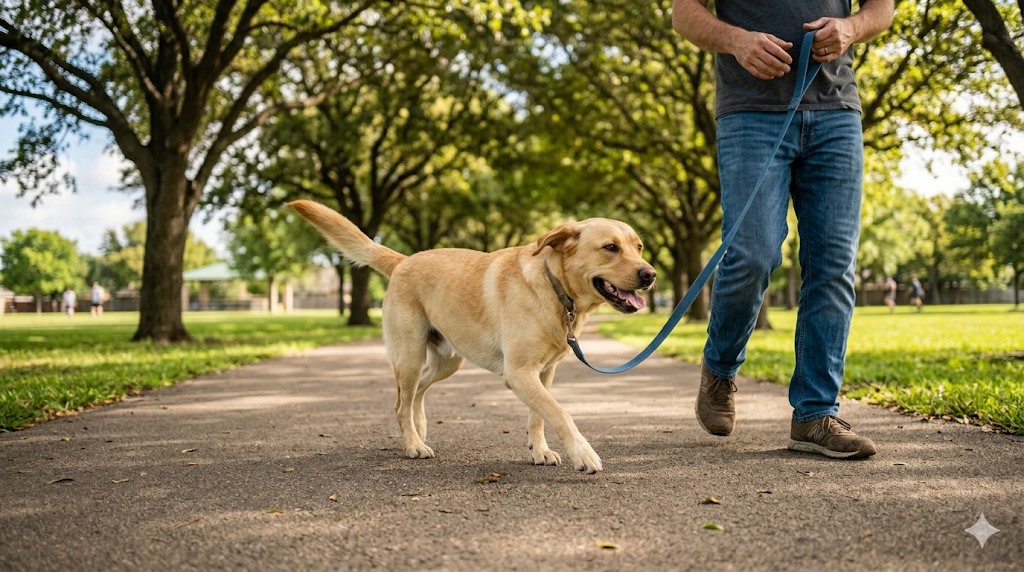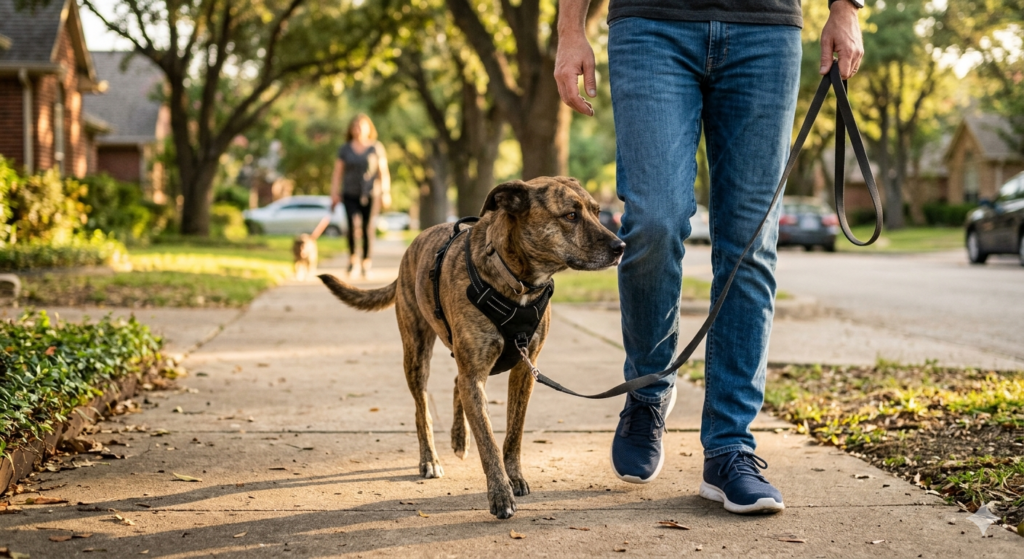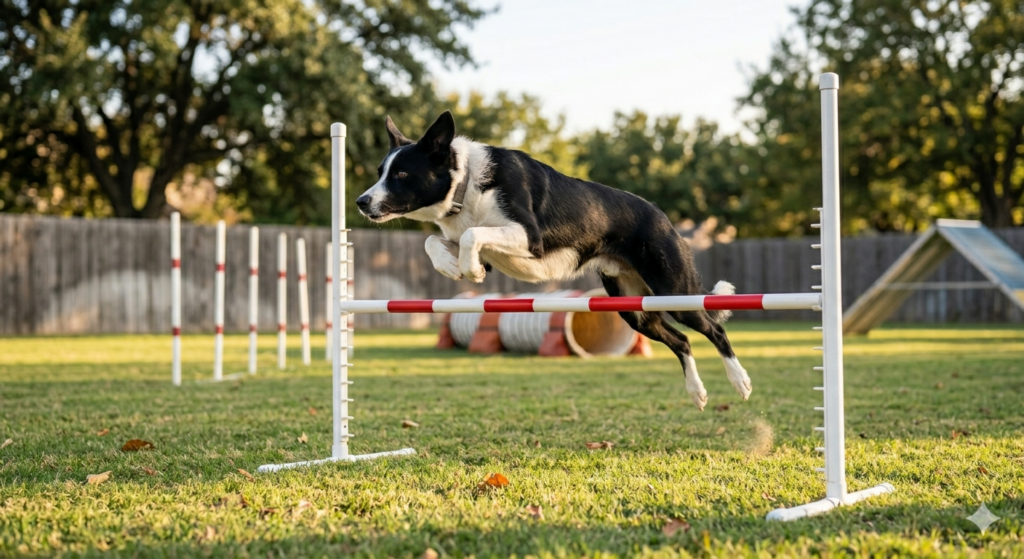

A well-trained dog is easier to live with, safer in public, and noticeably happier at home. Obedience training is the foundation that makes everything else possible, whether your goal is a calm guest in your living room, a reliable companion on the Katy Trail, or simply a dog who comes when called the first time. Dog obedience training in Dallas gives dogs that foundation through structured practice, consistent handling, and expert guidance built around how dogs actually live in this city.
Dallas owners face a specific set of training demands. Patio dining along Greenville Avenue, off-leash encounters at White Rock Lake, apartment hallways in Uptown, joggers and cyclists along the Katy Trail, weekend crowds in Deep Ellum, and dog-friendly events across the DFW metroplex all push dogs to perform in environments most household training never prepares them for. Knowing how obedience training actually works, and what separates a quality program from a marketing pitch, saves Dallas owners time, money, and the frustration of starting over.
Key Takeaways
- Obedience training is the foundation for every well-behaved dog and prevents most common behavior problems before they form into habits.
- A complete obedience program covers more than commands. Leash manners, impulse control, distraction-proofing, and reliable real-world responses all matter equally.
- The seven core commands, heel, recall, sit/stay, down/stay, place, boundary training, and door manners, cover the situations Dallas owners actually face on a daily basis.
- The right program format depends on your dog, your household, and your goals. Board and Train, private lessons, and in-home training each solve different problems.
- Quality obedience training shares specific traits: experienced trainers, clear methodology, defined milestones, real owner involvement, and follow-up support.
- Realistic expectations matter. Basic obedience takes weeks, full reliability across distractions takes longer, and ongoing reinforcement is what keeps dogs trained for life.
Why Obedience Training Is the Foundation Every Dallas Dog Needs
Every dog benefits from obedience training. That includes puppies meeting the world for the first time, adult rescues with unknown histories, senior dogs adapting to new households, and every breed and mix in between. Obedience is not about teaching tricks. It is about building clear communication, predictable responses, and a baseline of self-control that travels with your dog everywhere they go.
Dogs thrive on structure. A dog who understands what their commands mean has a framework for navigating ordinary life. When the doorbell rings, when a delivery driver walks by, when another dog rounds the corner on the sidewalk, a trained dog has a mental playbook to fall back on. An untrained dog is making it up every time, and the results are unpredictable.
Obedience also prevents behavior problems before they form. Pulling on the leash, jumping on visitors, counter-surfing, excessive barking, and bolting through open doors are all dramatically easier to solve before they become practiced habits. The earlier a dog learns what is expected, the less remedial work is required later. Our post on the best training commands every dog should know breaks down the core vocabulary every well-trained dog should have.
What Quality Dog Obedience Training Actually Covers
A solid obedience program builds skills in a deliberate progression. The specifics vary by trainer, but a complete curriculum should cover all of the following:
- The seven core commands. Heel, recall, sit/stay, down/stay, place, boundary training, and door manners. These cover the vast majority of real-life situations a Dallas dog and owner will face, from a busy patio at Klyde Warren Park to a crowded Saturday afternoon along the Katy Trail.
- Leash manners. Walking on a loose leash, responding to changes in direction, stopping on cue, and ignoring distractions while moving. Good leash work is what transforms a daily walk from a struggle into something both dog and owner actually enjoy.
- Impulse control. Waiting at doors, holding a place command while the family eats, not taking food until released, and maintaining a stay while the owner walks away. These skills teach a dog to pause and think before acting, which is the difference between a controlled household and a chaotic one.
- Distraction-proofing. Running commands in increasingly difficult environments. Quiet rooms first, then yards, then sidewalks, then the actual environments your dog will encounter, like the off-leash area at White Rock Lake or a busy patio in Deep Ellum. A command that only works at home is not really trained.
- Recall reliability. Coming when called is the single most important safety command a dog can learn, and the hardest to make truly bulletproof. A dog with reliable recall is safer everywhere, on every street, and in every situation. Our piece on recall training foundation covers why this skill deserves extra focus.
A good program builds these skills in order, reinforces them through repetition, and tests them under real conditions before considering any of them complete. For a deeper look at how commands are actually taught, teaching your dog obedience commands walks through the mechanics.
The Three Obedience Training Formats Available in Dallas
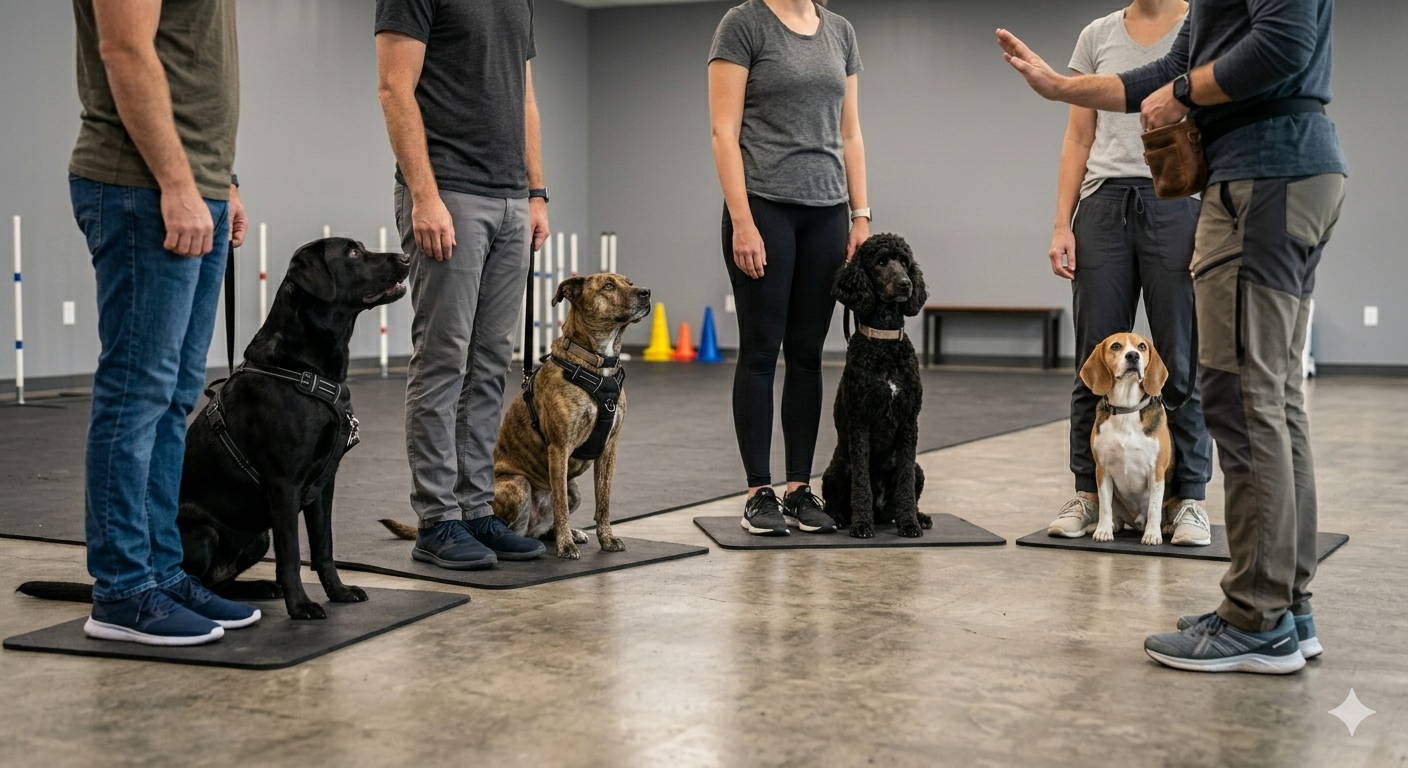
Different dogs and different households need different approaches. The three formats below each solve specific problems, and the right choice depends on the dog, the household, and the goals.
- Board and Train. Your dog spends two weeks in a structured, immersive training program with daily sessions in real-world conditions. This format produces the fastest progress for dogs who need significant work and for owners with demanding schedules who cannot commit to daily handling. Dogs return home with a strong foundation, and the program closes with thorough transfer sessions that teach the owner exactly how to maintain everything the dog has learned. Owners weighing this option specifically may want to read our article on whether Dallas Board and Train programs are the right fit.
- Private Lessons. One-on-one work between a trainer, a handler, and the dog. Private lessons offer full customization and work well for dogs with specific issues, for households that want to be hands-on throughout, and for owners who want detailed guidance on their own handling.
- In-Home Training. The trainer comes to your home and works with both you and your dog in the environment where the behaviors actually occur. This format is especially effective for dogs whose problem behaviors are tied to specific spaces or routines. It is also where whole-family involvement becomes easiest, since every household member can participate from the start.
Comparing Dallas Obedience Training Formats
The right format depends on what your dog needs, how much time you can put into daily handling, and where the behaviors you want to address actually happen.
| Format | Best Fit | Structure | Typical Timeline | Owner Commitment |
|---|---|---|---|---|
| Board and Train | Dogs needing intensive work, owners with limited daily time | Two-week immersive program with daily sessions | 2 weeks plus owner transfer | Lower during board, higher during transfer and after |
| Private Lessons | Dogs with specific issues, owners wanting flexibility | One-on-one sessions scheduled around availability | 4 to 8 sessions over several weeks | Consistent practice between sessions |
| In-Home Training | Dogs with household-specific issues, hands-on owners | Customized sessions in the dog’s actual environment | Several weeks of weekly sessions | High, with daily handling between sessions |
Most Dallas dogs benefit from one of these three formats, often with elements of more than one. A dog might start with Board and Train for an intensive foundation and then transition into in-home sessions to address specific household triggers. Our article on how to choose the right dog training program in Dallas walks through the evaluation process in more detail.
What Separates a Quality Obedience Program From the Rest
Not every Dallas trainer offers the same quality of work. The price, the marketing, and the website matter less than what actually happens during training sessions. Quality programs share several specific traits.
Experienced, credentialed trainers. Look for trainers with years of hands-on experience, not just a weekend certification. Ask how many dogs they have personally trained and whether they have worked with your dog’s specific breed or behavioral issues.
A clear, explainable methodology. A good trainer can describe exactly what they do and why. Vague answers like “we use a balanced approach” without specifics are a sign the methods may not hold up under scrutiny.
Defined milestones and measurable progress. The program should have a structured progression and a way to measure whether your dog is actually learning. Graduation should mean something specific, not just attendance.
Real owner involvement. The owner is part of the training, not a bystander. Quality programs teach you how to handle your dog, not just how to receive a trained one. DFW dog training and the owner-pet bond covers why this piece matters so much.
Follow-up support. Training does not end at graduation. Programs that offer unlimited follow-up, refresher sessions, or ongoing support produce dogs who stay trained for life.
Transparent pricing. The total cost, what is included, and what costs extra should all be clear from the first conversation.
Red Flags Dallas Owners Should Watch For
Some warning signs show up early. Be cautious of trainers who:
Refuse to explain their methods or hide behind jargon. If you cannot understand what will happen during a session, you cannot consent to it on behalf of your dog.
Guarantee specific results in a specific timeframe without first evaluating your dog. Every dog is different, and no responsible trainer makes promises before meeting the animal.
Rely heavily on fear, intimidation, or physical corrections as a primary method. Punishment-based training can produce short-term obedience, but it often creates long-term behavioral problems and damages the relationship between dog and owner. Our guide to Dallas aggressive dog training covers what happens when these methods backfire.
Use a one-size-fits-all curriculum regardless of the dog’s history, breed, age, or specific issues.
Offer no follow-up after the program ends. Behavior change requires ongoing reinforcement. Trainers who disappear after payment have no skin in your long-term outcome.
Lack verifiable reviews, testimonials, or references.
Pressure you into expensive packages before you have seen any results. A good trainer lets the work speak for itself.
Our article on choosing the right dog training program in Dallas covers the full vetting process in detail.
Questions to Ask Before Enrolling
The answers to these questions tell you most of what you need to know about whether a program is the right fit:
- What methods do you use, and why?
- How many years have you been training professionally?
- What results can I realistically expect, and how do you measure them?
- What happens if my dog does not respond to the program?
- Do you offer follow-up sessions, and are they included in the price?
- Can I see a training session in progress before enrolling?
- Do you have experience with dogs similar to mine, in breed, age, or behavioral history?
- What is the total cost, and what is included?
- What equipment will we use, and will I be trained on how to use it correctly?
- How involved will I be in the training process?
A trainer who answers these questions clearly and confidently is usually worth a closer look. Hesitation, defensiveness, or vague answers should send you elsewhere.
What Realistic Progress Actually Looks Like
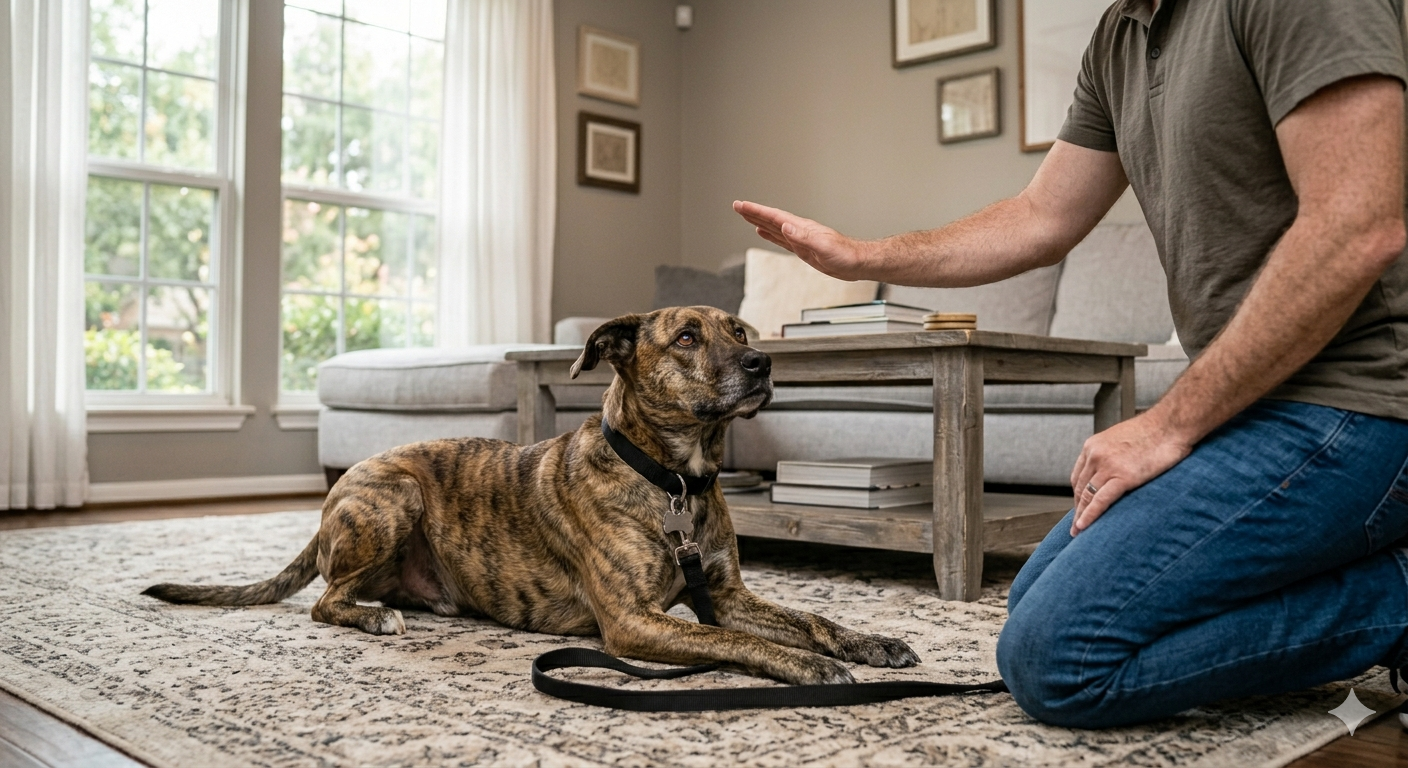
Obedience training works, but it is not instant. Most dogs need several weeks of consistent work to develop reliable basic commands, and longer for those commands to hold up under distraction.
Early progress often looks like partial responses. Your dog sits when asked, but only at home. They come when called, but only in the backyard. That is normal. Commands become reliable through repetition in increasingly challenging environments, a process called proofing.
Your involvement is the biggest variable in outcomes. Dogs who go through training with owners who practice daily, stay consistent with rules, and reinforce what the trainer taught make lasting progress. Dogs whose owners abandon the practice after graduation tend to slide back toward old habits.
Maintenance is ongoing. Well-trained dogs stay well-trained because their owners keep practicing the basics, occasionally tune up problem areas, and return for refreshers when needed. Training is a process, not a one-time event.
Owners of older dogs sometimes worry it is too late to start. It is not. Our post is my dog too old for obedience school addresses this directly.
Frequently Asked Questions
What age should my dog start obedience training?
Puppies can begin basic obedience work as early as eight to ten weeks old. Adult dogs can start anytime. There is no upper age limit for obedience training. Older dogs often respond well because they are calmer, more focused, and have longer attention spans than puppies.
How long does obedience training take?
Most dogs develop reliable basic responses within six to twelve weeks of consistent work. Fully proofing those responses across the full range of Dallas environments takes longer, often several months. The exact timeline depends on the dog, the format, and how consistently practice happens between sessions.
Are private lessons or Board and Train better?
Neither is universally better. They solve different problems. Board and Train is the right choice for dogs that need an intensive foundation and for owners with limited daily time. Private lessons are the right choice for hands-on owners and for dogs with specific issues that need targeted, customized work. Many dogs benefit from elements of both.
Does obedience training work for older dogs?
Yes. Older dogs respond well to obedience training, and in some respects even better than puppies. Adult and senior dogs typically have longer attention spans, more self-control, and more established routines that support consistent practice.
What equipment do I need for obedience training?
Most programs recommend a standard six-foot leash (not retractable), a well-fitted collar or harness, high-value treats, and a treat pouch. Some trainers use additional tools like long lines, e-collars, or head halters depending on the dog and the goals. Your trainer should provide a specific equipment list before training begins.
Will my dog stay trained after the program ends?
With consistent reinforcement, yes. Training fades without practice, so owners who continue using commands, maintaining household rules, and occasionally reviewing the material keep their dogs reliable long-term. Quality programs build maintenance into their follow-up structure so owners are not on their own after graduation.
Find the Right Obedience Training Program in Dallas
The right obedience training makes a measurable difference for both you and your dog. Our Dallas trainers evaluate each dog individually, match them to the most effective program format for their specific situation, and provide unlimited follow-up for the life of the dog. Call (214) 807-1462 or contact our team to discuss your dog’s training goals and schedule an evaluation.
About All Dogs Unleashed
All Dogs Unleashed has trained thousands of dogs across the Dallas-Fort Worth area with a results-driven method focused on real-world obedience and lasting behavior change. Programs include Board and Train, private lessons, and in-home training, all designed to produce dogs that respond reliably in the environments their owners actually live in. Every program includes unlimited follow-up for the life of the dog, because training is a lifelong process, not a one-time event.