
A well-trained dog walking into a hospital room or a memory care unit can shift the mood instantly. Patients sit up a little straighter, conversations start, and the tension in the room softens. That calming presence is not accidental. Behind every working therapy dog is a handler who invested months of preparation, temperament work, and structured obedience training to get there.
Dallas and the broader DFW metroplex offer some of the best opportunities in Texas for therapy dog volunteering, with active programs at hospitals, libraries, schools, and senior care facilities throughout the region. If you have a naturally calm, social dog and you want to share that temperament with your community, therapy dog training in Dallas is one of the most rewarding paths you can take. The process is demanding, but every step has a clear purpose, and a strong training foundation makes the difference between a dog who tolerates therapy work and a dog who thrives in it.
Key Takeaways
- Therapy dogs are personal pets trained to provide comfort to others in facilities like hospitals and schools, and they do not have the ADA public access rights that service dogs do.
- Temperament is the single most important factor, with the ideal candidate welcoming strangers, staying calm around medical equipment and unpredictable movement, and accepting handling from many different people.
- Most dogs need to be at least one year old and have a clean veterinary health record before an evaluation.
- The full certification process usually takes three to six months, and costs vary depending on training program, testing, organizational registration, and veterinary screening.
- Major certifying organizations include AKC, Pet Partners, Alliance of Therapy Dogs, Therapy Dogs International, and Canine Companions, each offering liability insurance during sanctioned visits.
- Structured training programs in the Dallas area, including in-home lessons and board and train options, accelerate therapy readiness by building reliability under real-world distractions.
What Separates a Therapy Dog From a Service Dog
The first piece of confusion most new handlers run into is the difference between therapy dogs, service dogs, and emotional support animals. These three categories are often used interchangeably in casual conversation, but they carry very different legal standings and training requirements.
A service dog is individually trained to perform specific tasks for a person with a disability, such as guiding a handler with vision impairment or alerting to a medical event. Service dogs have public access rights under the Americans with Disabilities Act and stay with their handler at all times.
A therapy dog, by contrast, is a personal pet trained to provide comfort to other people in structured settings like hospitals, schools, and nursing homes. Therapy dogs do not have ADA public access rights, and a handler should never present a therapy dog as a service animal to gain entry into restaurants, stores, or flights.
Emotional support animals fall into a third category altogether. They provide companionship to a specific owner with an emotional or mental health condition and do not require specialized task training or third-party certification.
Is Your Dog Temperamentally Suited for Therapy Work?
Before investing in formal training, take an honest look at your dog’s natural disposition. Therapy dogs need to welcome strangers, not just tolerate them. They need to stay calm around wheelchairs, medical equipment, crying children, and sudden loud noises. A dog who flinches at handling, startles at movement, or shows any history of reactivity is not a candidate for therapy work, regardless of how affectionate the dog is at home.
The typical temperament profile includes stable nerves in new environments, patience with slow or clumsy handling, comfort being touched on the head, ears, and paws, and a steady neutral response to other dogs.
Age and health requirements also matter. Most certifying organizations require a minimum age of one year, current vaccinations, a recent fecal test, and a clean bill of health from a licensed veterinarian. Dogs fed raw diets are typically not permitted in therapy programs because of infection control concerns at medical facilities.
If you are unsure how your dog will respond to the demands of therapy work, start by reading your dog’s body language during new experiences. Dogs who show persistent stress signals in novel environments may not be good candidates, even with extensive training.
Foundational Skills Every Therapy Dog Needs
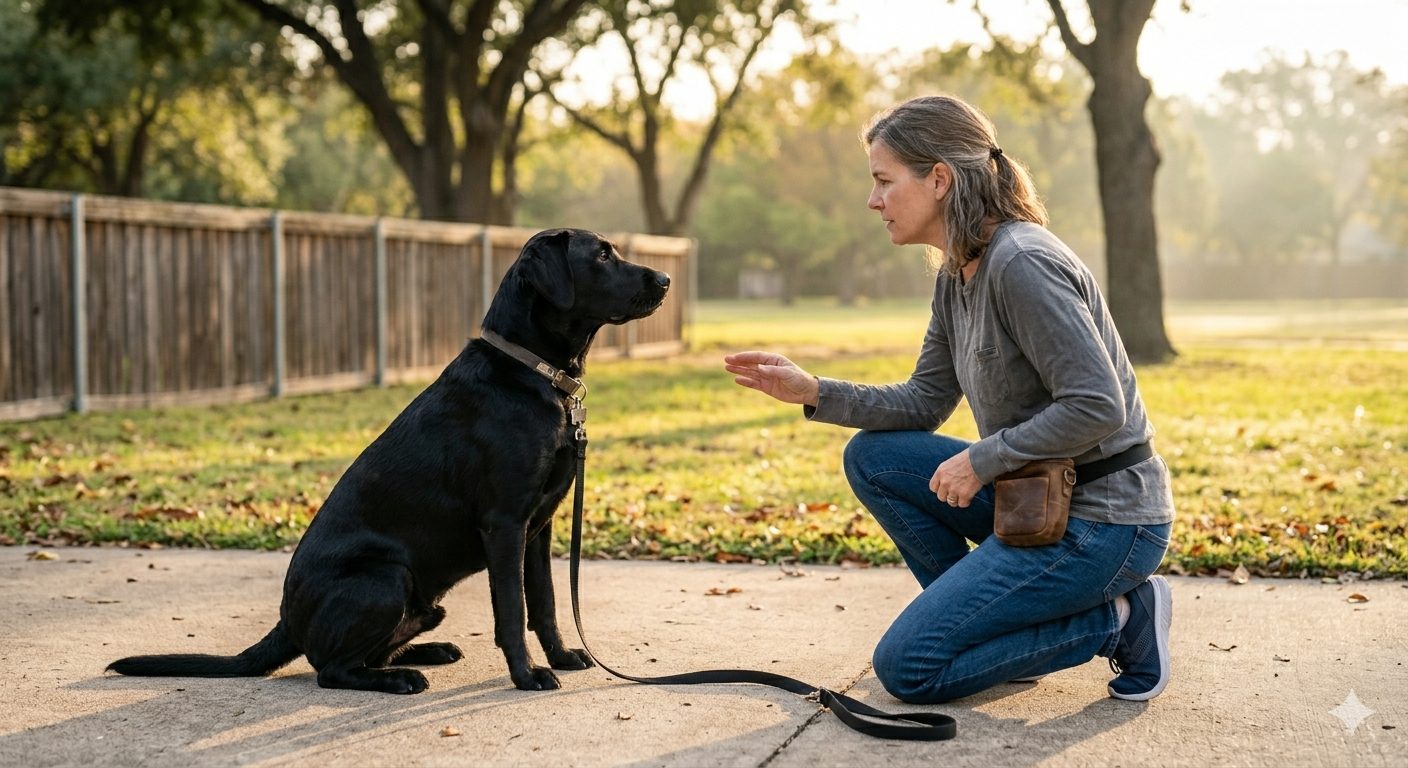
Every therapy dog program builds on the same core set of obedience skills. Before an evaluation is ever scheduled, your dog needs solid, reliable responses to the basics.
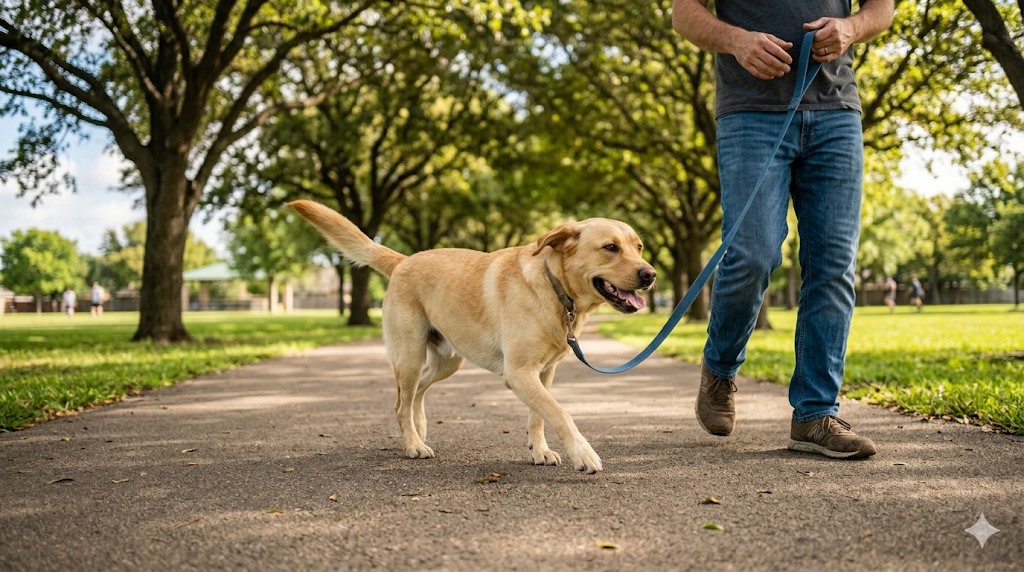
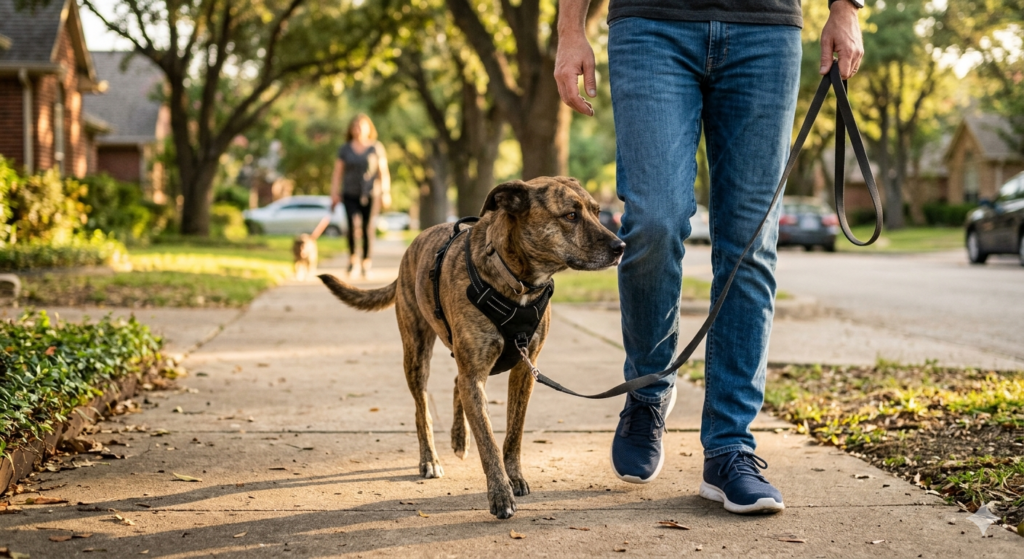
A therapy candidate should sit and down on a single cue, hold a stay for at least thirty seconds with distractions, come when called, walk on a loose leash past people and other dogs, and leave dropped items on command. That last one matters more than most handlers realize. In a hospital or assisted living setting, medications, food, and small objects are routinely dropped, and a dog who vacuums the floor can create a serious safety problem.
These are not show-ring obedience skills. They need to hold up in chaotic, unpredictable real-world environments. Training a dog to sit in a quiet kitchen is a starting point. Training a dog to sit reliably while a walker rolls past, a beeping machine sounds off, and a stranger reaches toward the dog’s face is the actual goal. Our guide on the best training commands every dog should know covers the foundation behaviors in more detail.
The Path to Therapy Dog Certification in Dallas
Most handlers follow a progression that starts with structured puppy work and ends with a therapy evaluation administered by a recognized national organization. The stages look like this.
Stage one is basic obedience. Private lessons, in-home training, or a Board and Train program build the sit, down, stay, recall, and leash manners your dog will need for every later step.
Stage two is the AKC Canine Good Citizen. The CGC test is the single most widely recognized benchmark for a well-mannered pet, and nearly every therapy dog organization treats it as either a prerequisite or a strong recommendation. The test covers ten skills, including accepting a friendly stranger, sitting politely for petting, walking through a crowd, reacting calmly to another dog, and supervised separation from the handler.
Stage three is the therapy dog evaluation itself. Once the CGC is in place, your dog can be evaluated by an organization like AKC, Pet Partners, Alliance of Therapy Dogs, Therapy Dogs International, or Canine Companions. Each group has its own specific test, but the shared emphasis is on how the dog handles realistic therapy scenarios: being petted by multiple people, ignoring food and equipment on the floor, staying calm around medical props, and working on a loose leash through simulated facility settings.
Expect the full process to take anywhere from three to six months from the start of formal training through evaluation, depending on your dog’s starting skill level and how much practice time you can commit each week.
Choosing a National Therapy Dog Organization
Dallas handlers have multiple reputable certifying bodies to choose from. The right one depends on where you plan to volunteer, what kind of liability coverage you want, and how much structure you prefer.
| Organization | Minimum Age | Key Requirements | Cost Snapshot |
|---|---|---|---|
| AKC Therapy Dog Program | 1 year | Outside certification required; title awarded by visit count | No separate fee |
| Pet Partners | 1 year | Handler course, team evaluation, vet screening, background check | Handler course fee plus registration (see petpartners.org for current rates) |
| Alliance of Therapy Dogs | 1 year | Hands-on evaluation plus three supervised visits | Initial and annual membership fees (see therapydogs.com for current rates) |
| Therapy Dogs International | 1 year | Temperament evaluation by certified TDI evaluator | Testing fee plus membership (see tdi-dog.org for current rates) |
| Canine Companions | Varies | Application, interview, coursework, examinations | Program-specific fees |
Liability insurance is one of the biggest practical reasons to register with a national group rather than working independently. Most hospitals, schools, and nursing homes will not allow a therapy dog team to visit without proof of insurance, and organizational registration typically includes coverage during sanctioned visits.
Where Therapy Dogs Work in the Dallas Area
DFW has a deep network of facilities that welcome qualified therapy dog teams. Hospitals across the region, including major pediatric centers, oncology units, and rehabilitation facilities, run active volunteer programs. Senior living communities throughout North Dallas, Plano, Frisco, and Fort Worth regularly schedule therapy visits, especially in memory care units where the calming effect of a dog can be particularly noticeable.
Schools and universities bring in therapy dogs during finals week, after crisis events, and as part of reading programs where children practice out loud with a non-judgmental canine audience. The Dallas Public Library system has hosted reading-to-dogs programs for years. Courthouses and victim advocacy centers use therapy dogs during difficult testimony, particularly for children and vulnerable witnesses.
For handlers starting out, most facilities prefer to bring on teams through established therapy dog organizations rather than individual outreach, so registration with a national group opens doors that would otherwise stay closed.
How Dallas Training Programs Support Therapy Dog Prep
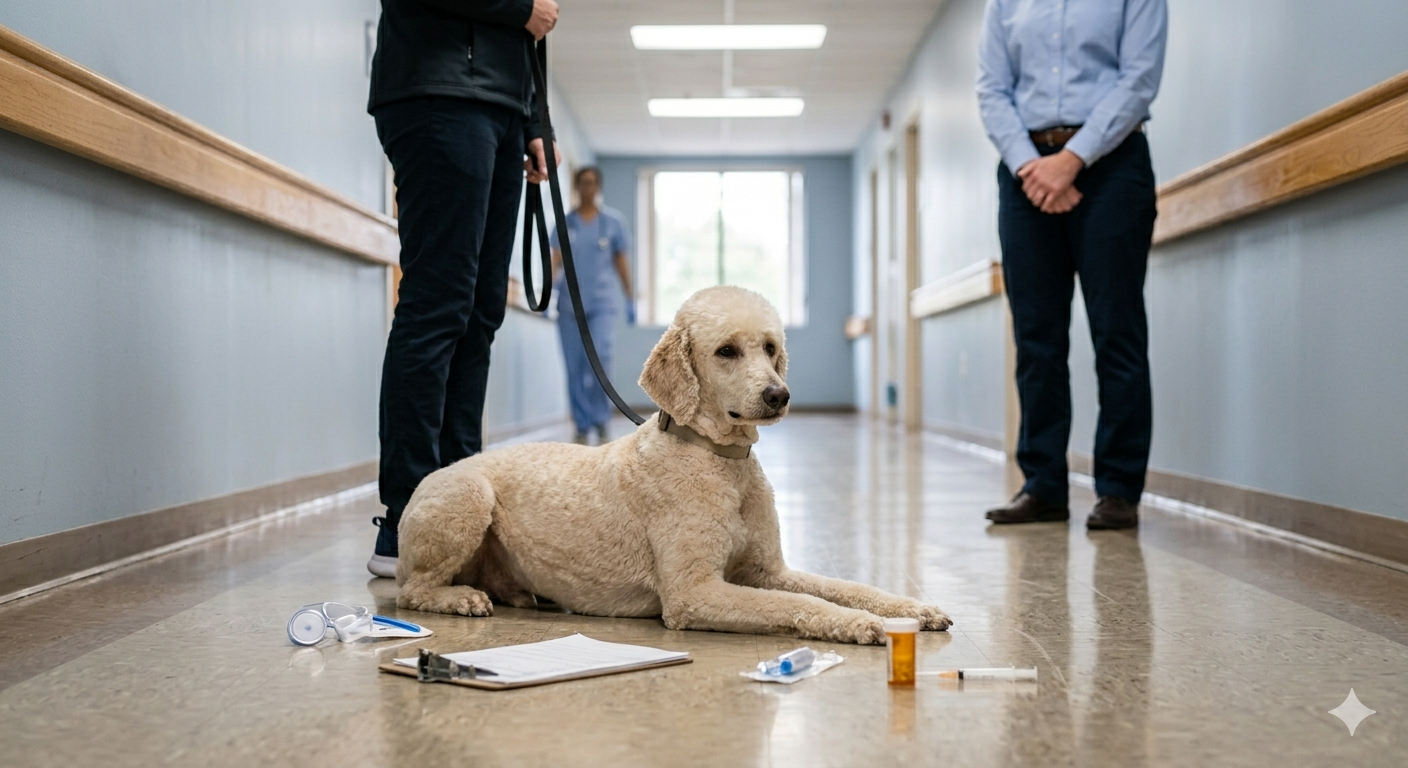
The gap between a friendly pet and a certified therapy dog is bridged through consistent, structured training. Professional programs give your dog exposure to real-world distractions in a controlled environment, correct small handling issues before they become patterns, and build the kind of reliability that holds up during a formal evaluation.
All Dogs Unleashed offers several program formats that suit different handler goals. In-home dog training works well for owners who want personalized instruction in the environment where the dog actually lives, which also allows the trainer to address household management issues that affect therapy readiness. Board and train programs are a good fit for dogs who need intensive foundation work before layering in therapy-specific skills, because the concentrated training window produces faster reliability on core commands.
Handlers who are new to Dallas-area training options may find it useful to review how to choose the right dog training program in Dallas, which covers the questions to ask and the factors that matter most when evaluating trainers.
Common Mistakes First-Time Therapy Handlers Make
Even motivated handlers run into predictable obstacles. Knowing what they look like in advance saves months of backtracking.
Rushing the evaluation is the most common one. Dogs who pass a CGC in a quiet training room sometimes fall apart in an active hospital hallway because the proofing work was never done. Give your dog real-world practice in parking lots, pet-friendly stores, outdoor patios, and parks before you schedule the formal test.
Skipping proper recall training is another frequent issue. Therapy visits do not involve off-leash work, but a dog with weak recall fundamentals typically also lacks the broader attentiveness that therapy work requires.
Some handlers confuse emotional support training with therapy dog training and end up pursuing the wrong goal. The skill sets overlap, but the purpose, legal status, and training path differ. Reading about emotional support dog training is worthwhile if you are still deciding which direction fits your situation.
Frequently Asked Questions
How old does my dog need to be to start therapy dog training in Dallas?
Most certifying organizations require dogs to be at least one year old at the time of evaluation. Foundation training can and should start well before that, with puppy socialization and basic obedience work beginning as soon as you bring the dog home. Early preparation makes the one-year mark feel like a natural progression rather than a rushed milestone.
Do I need a purebred dog to become a therapy team?
No. Mixed-breed dogs are welcome in every major therapy dog program, and many of the best therapy dogs are rescues. The focus is entirely on temperament, training, and reliability, not lineage.
How much does it cost to become a certified therapy dog team in Dallas?
Costs vary by training program, certification organization, and veterinary requirements. Contact each organization directly for current registration and testing fees. Ongoing costs include annual membership renewals and any required insurance fees.
Can any breed become a therapy dog?
Any breed or mix can qualify if the individual dog has the right temperament. That said, some breeds tend to produce more therapy dog candidates than others because of their typical disposition toward people. Golden Retrievers, Labradors, Poodles, Bernese Mountain Dogs, and Cavalier King Charles Spaniels are commonly seen in therapy work, but the individual dog always matters more than the breed.
What is the difference between a therapy dog and an emotional support animal?
A therapy dog is trained and certified to provide comfort to many different people in facilities like hospitals and schools. An emotional support animal provides companionship to one specific owner with a documented mental or emotional health condition and does not require specialized training or third-party certification.
How long does it take to train a therapy dog from scratch?
For a dog with no prior training, expect six to twelve months of consistent work to reach evaluation-ready status. Dogs with an existing obedience foundation can often move through the process in three to six months. The most important variable is how often you practice in realistic, distracting environments.
Ready to Start Therapy Dog Training in Dallas?
Building a therapy dog team takes patience, the right training foundation, and a dog with the temperament to thrive in high-touch environments. All Dogs Unleashed works with Dallas-area handlers to develop the obedience reliability and public-setting composure that certifying organizations look for. Call our Dallas team at (214) 807-1462 or reach out through our contact page to talk through your dog’s starting point and map out the right training path toward therapy certification.
About All Dogs Unleashed
All Dogs Unleashed has trained thousands of dogs across the Dallas-Fort Worth area using a results-driven method built around real-world obedience and lasting behavior change. Programs include Board and Train, private lessons, and in-home training, all designed to develop the calm, confident responsiveness that therapy work, service preparation, and everyday family life require.