Bringing home a puppy is one of those rare life moments that feels both joyful and slightly overwhelming. Everything is new to them, and most of it is new to you, too. Puppy training starts the moment your puppy walks through the front door, whether you realize it or not. Every interaction teaches your puppy something about how the world works, how you communicate, and what behavior earns rewards.
The good news is that puppies are built to learn. The first few months of a dog’s life are a remarkable window where the right habits form fast, bad habits stay shallow, and small daily choices add up to a confident, well-mannered adult dog. The goal isn’t perfect obedience overnight; it’s steady, consistent progress that turns a wiggly eight-week-old ball of energy into a stable, trustworthy companion.
Key Takeaways
- Puppy training starts the day your puppy comes home, not weeks or months later.
- The 3-3-3 rule (3 days to decompress, 3 weeks to settle, 3 months to bond) helps set realistic expectations.
- The critical socialization window runs from about 7 to 16 weeks and shapes adult behavior more than any other period.
- Five foundation commands (sit, come, stay, down, leave it) form the backbone of early obedience.
- House training works best on a predictable schedule tied to meals, naps, and play.
- Oklahoma City’s hot summers require early-morning or evening socialization outings to protect paw pads and prevent heat stress.
- Crate training and gradual alone-time conditioning prevent separation anxiety in adulthood.
- Consistency across the household matters more than any single training technique.
- Professional help (group classes, in-home training, or board and train) accelerates results and prevents common first-time-owner mistakes.
What to Expect in Your Puppy’s First Two Weeks at Home
Most new owners underestimate how unsettling the first few days are for a puppy. A puppy has just left their mother, littermates, the only environment they’ve known, and arrived somewhere with unfamiliar sounds, smells, people, and schedules. A well-known framework called the 3-3-3 rule captures what happens next:
- First 3 days: The puppy may seem shy, sleepy, or reluctant to eat. They’re decompressing.
- First 3 weeks: The puppy starts showing their real personality, learning the daily routine, and testing what works.
- First 3 months: The puppy builds trust, bonds with the household, and cements the habits that will shape their adult behavior.
Set up the home before the puppy arrives. Puppy-proof low cabinets, tuck away cords, remove toxic plants, and choose a designated “puppy zone” where your puppy can rest, play, and eat without constantly roaming the whole house. A small, quiet space with a crate, water, and a few chew toys helps a young puppy feel secure while they adjust.
Keep early visitors limited for the first few days. Meeting the whole extended family on day one is often too much stimulation for an eight-week-old puppy.
Why the First 16 Weeks Are the Most Important Training Window
Puppies go through a critical socialization period roughly between 7 and 16 weeks of age. During this window, their brain is actively forming associations with people, animals, environments, sounds, and surfaces. Positive exposure during this period produces confident, adaptable adult dogs. Lack of exposure, or negative exposure, tends to produce fearful or reactive adult dogs that are much harder to rehabilitate later.
For new owners, this means puppy training cannot wait. Waiting until your puppy is “old enough” (a common myth often tied to finishing vaccinations at 16 weeks) misses the exact window where training is easiest. Puppies can start learning foundation commands, basic manners, and socialization routines the first week they’re home.
Coordinate with your veterinarian about safe socialization during the vaccination schedule. Most vets recommend controlled exposure (clean homes of vaccinated dogs, puppy classes with vaccination requirements, carried outings) rather than no exposure at all. The risk of behavioral issues from under-socialization far exceeds the health risk in most controlled environments.
The Five Foundation Commands Every New Puppy Should Learn
Five commands form the backbone of puppy training. Each should be taught in short, upbeat sessions of 5 to 10 minutes, two or three times a day. Puppies have short attention spans, and tired puppies learn nothing.
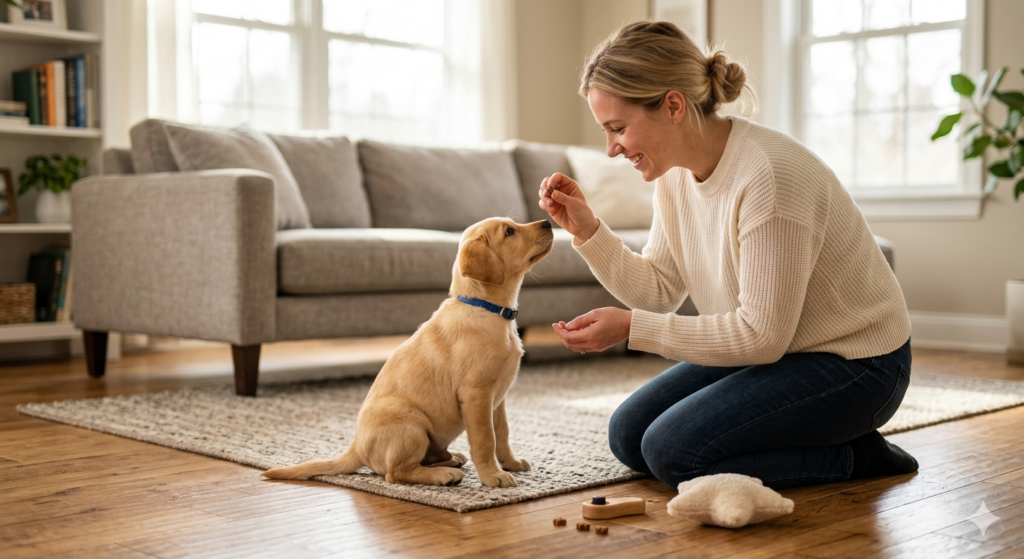
Sit. Hold a small treat just above your puppy’s nose, then move it slightly back over their head. Most puppies naturally lower their rear to follow the treat. Mark the moment with a cheerful “yes” and deliver the treat. Add the verbal cue “sit” only once the movement is consistent.
Come. Start in a quiet room with no distractions. Say your puppy’s name followed by “come” in an excited tone, take a small step back, and reward generously when they arrive. Never use “come” to call your puppy for anything unpleasant (bath time, crate at bedtime); protect the word as always meaning something good.
Stay. Ask your puppy to sit, open a flat palm toward them, say “stay,” wait one second, and reward while they’re still in position. Build duration slowly from one second to five, to ten, to longer. Release them with a clear word like “okay” or “free.”
Down. Lure your puppy from a sit by slowly moving a treat from their nose toward the floor, then slightly forward. As they follow the treat, their elbows drop. Mark and reward. Add the verbal cue “down” once the movement is reliable.
Leave it. Place a low-value treat under your closed hand. When your puppy stops sniffing and backs off, mark and reward with a higher-value treat from your other hand. Progress to leaving treats in the open, then to real-world items (shoes, socks, dropped food).
Keep sessions short, end on a win, and never repeat a command more than twice. If your puppy isn’t responding, they’re either overstimulated, underpracticed, or tired. Structured support through puppy training programs in Oklahoma City helps owners build these commands with proper timing and consistency.
House Training a Puppy Without the Frustration
House training is the single biggest source of stress for most new puppy owners, and it’s also the area where consistency pays off fastest. Puppies don’t have the bladder control of adult dogs; an 8-week-old puppy can typically hold it for 1 to 2 hours, a 12-week-old for 2 to 3 hours, and so on, roughly one hour per month of age, up to about 6 to 8 hours.
A realistic schedule looks like this:
- First thing in the morning
- After every meal (within 10 to 15 minutes)
- After every nap
- After every play session
- Before bedtime
- Once during the middle of the night for puppies under 12 weeks
Take your puppy to the same outdoor spot each time. Use a consistent verbal cue (“go potty”) while they’re eliminating, then reward immediately with a treat and praise the moment they finish. Reward timing matters; praise given after you’re back inside teaches nothing.
Accidents will happen. Never punish a puppy for an accident you didn’t catch in the act; they won’t connect the correction to the earlier behavior. If you catch them mid-accident, a quick “uh-oh” and a fast trip outside is enough. Clean accident spots with an enzymatic cleaner, not vinegar or regular household cleaner, so residual scent doesn’t draw them back to the same spot.
Socializing Your Puppy in Oklahoma City
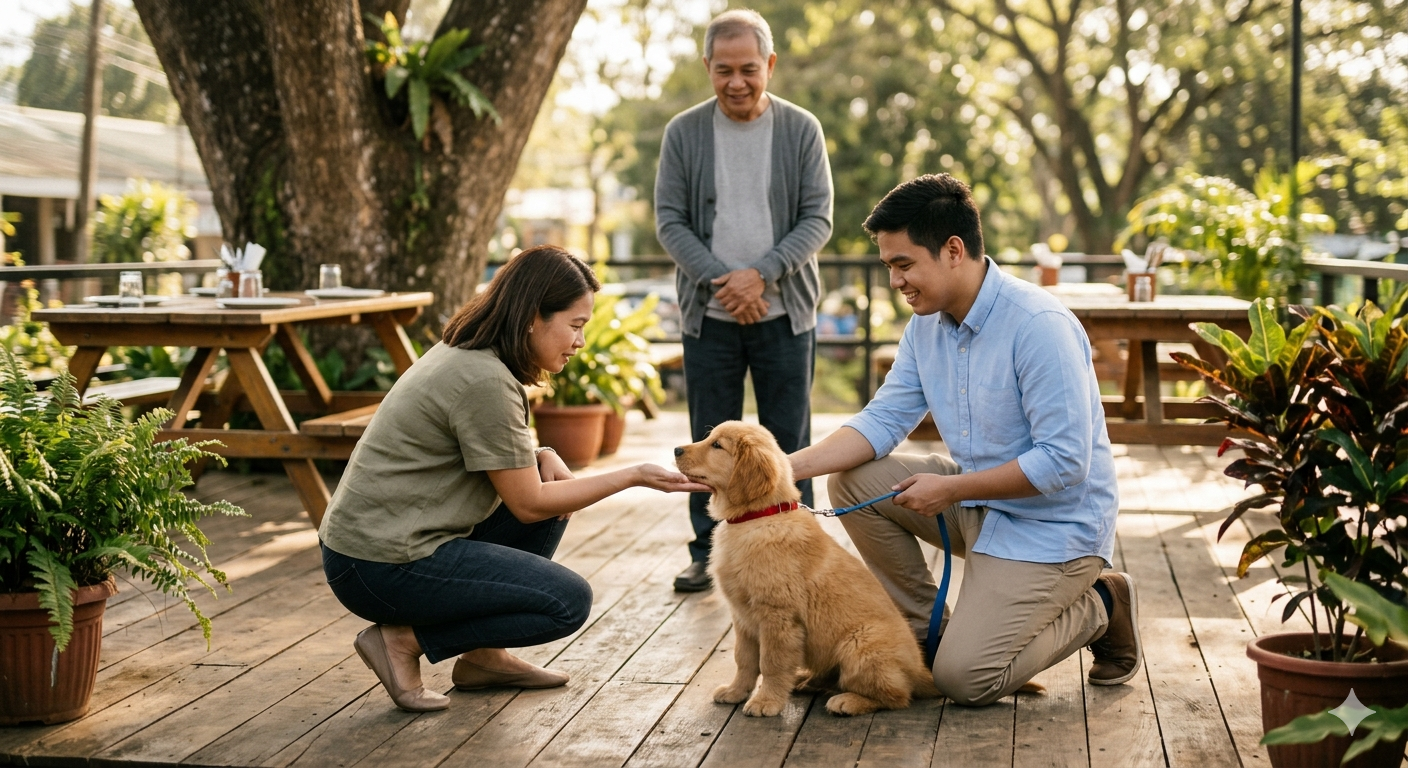
Oklahoma City offers a rich mix of puppy-friendly environments for socialization. The goal during the 7-to-16-week window is variety: different people, different surfaces, different sounds, and different settings, all paired with positive experiences and treats.
Good local socialization opportunities include:
- Outdoor walks in pet-friendly districts like the Plaza District, Automobile Alley, and parts of Bricktown where your puppy can experience sidewalks, cars, strollers, and foot traffic.
- Quiet park visits at neighborhood parks (before they’ve fully finished vaccinations, carry them or use a stroller rather than letting them walk where unknown dogs have been).
- Outdoor patio visits at dog-friendly restaurants and cafés, starting with quieter weekday hours rather than busy weekends.
- Home visits with friends and family who have calm, vaccinated adult dogs.
- Novel surfaces at home, like tile, grass, gravel, wood decks, metal grates, and carpet, so your puppy doesn’t develop fear of unfamiliar footing.
- Sound exposure to vacuums, doorbells, thunder recordings, and kitchen noises at low volume, rewarded with treats.
Oklahoma City’s hot summers deserve a specific call-out. Puppies overheat faster than adult dogs, and asphalt temperatures on a 95°F day can exceed 130°F, which burns paw pads in under a minute. Socialization outings in summer should happen in early morning or after sunset, and sidewalk temperature should always be tested with the back of your hand.
Avoid dog parks, pet store floors, and high-traffic trails until your puppy has completed their full vaccination series.
Crate Training and Alone-Time Conditioning
Crate training does two things at once: it helps with house training and builds independence. Puppies that never learn to be alone often develop separation anxiety as adults, which is one of the most difficult behavior problems to reverse.
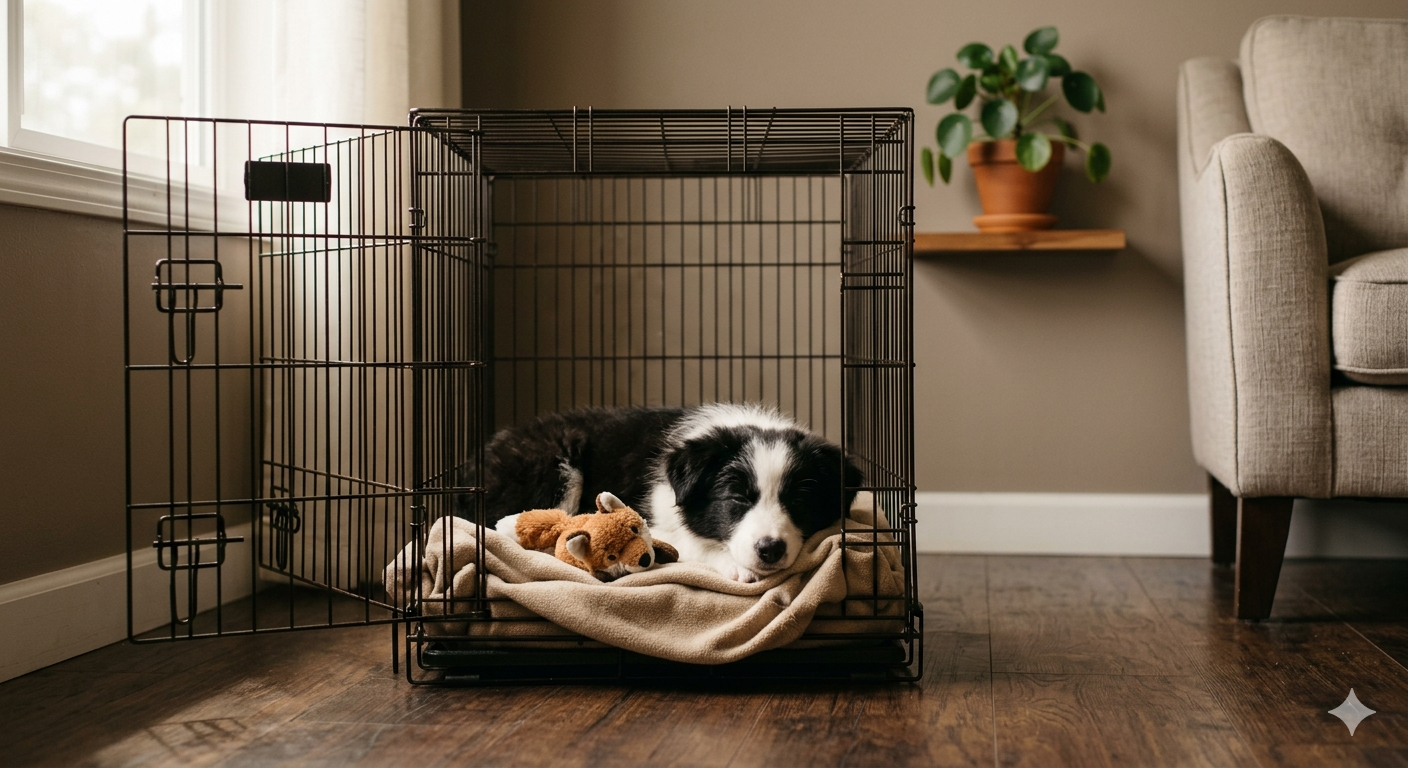
Introduce the crate as a positive space from day one. Feed meals inside the crate, leave the door open during naps, and scatter treats inside when your puppy isn’t looking so they discover them. Never use the crate as punishment.
Build alone time gradually. Start with 1 to 2 minutes of calm separation while you’re still in the house (behind a closed door, not in the same room), then work up to 5 minutes, 15 minutes, 30 minutes, and so on. By 12 to 14 weeks, most puppies can handle 2 to 3 hours of crate time during the day. Long departures should still be broken up with midday visits for puppies under 6 months.
Calm departures and calm returns are non-negotiable. Dramatic goodbyes and overly excited reunions teach puppies that your absence is a big event, which fuels anxiety rather than calming it.
Leash Training and Walking Manners in OKC Neighborhoods
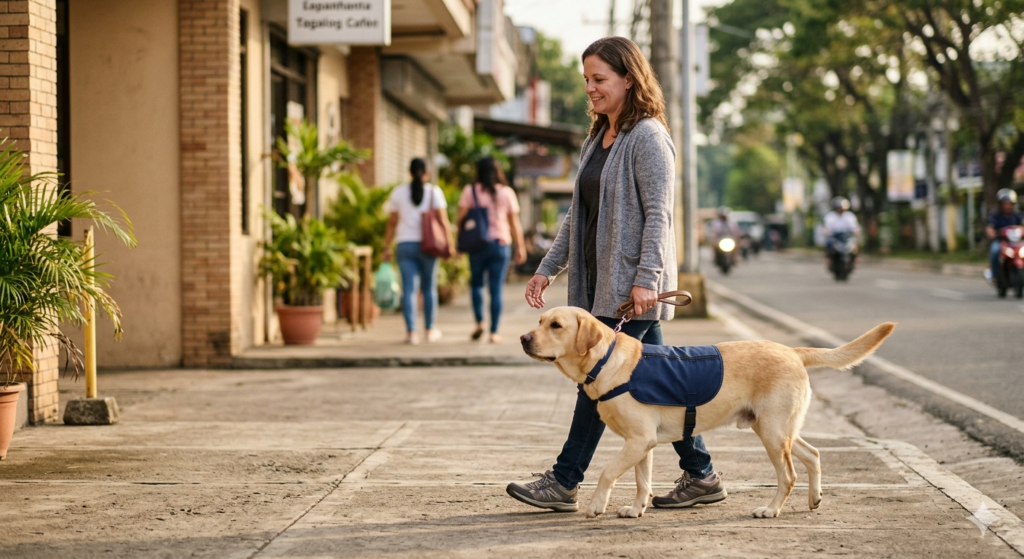
Leash walking is a learned skill, not an instinct. Start inside the house with a light leash clipped to a properly fitted harness or flat collar. Let your puppy drag the leash for a few minutes so they get used to the sensation, then pick it up and reward them for walking near your leg.
Begin short outdoor walks in quiet areas: your own yard, a quiet cul-de-sac, or a residential street with minimal traffic. Reward every few steps when your puppy is walking with a loose leash. If they pull, stop moving. Walking forward when the leash is tight teaches pulling; walking forward only when it’s loose teaches loose-leash manners.
OKC-specific considerations matter here. Sidewalks can be hot, busy with scooters, and lined with unpredictable smells. Many neighborhoods don’t have continuous sidewalks, which means walking in the street or on grass. Choose training routes based on your actual walking environment so the skills transfer.
Avoid retractable leashes during training. They teach a puppy that pulling extends their range, which is the opposite of what loose-leash walking requires.
Common Puppy Training Mistakes First-Time Owners Make
A few patterns appear over and over with first-time owners:
Inconsistency across household members. If one person lets the puppy on the couch and another scolds them for it, the puppy learns that rules are random. Hold a household meeting early and align on commands, hand signals, allowed furniture, feeding rules, and who handles what.
Waiting too long to start. Puppies are ready to learn the day they come home. Owners who wait three months to begin “real” training often spend the next year undoing habits that formed during the delay.
Using punishment instead of reinforcement. Positive reinforcement (rewarding what you want) builds confidence and accelerates learning. Harsh corrections on young puppies often produce fear, avoidance, or shutdown rather than compliance.
Skipping socialization during vaccination gaps. Under-socialized puppies become reactive adults. The safest path is controlled socialization in clean environments with known, vaccinated dogs and people, not zero socialization until 16 weeks.
Training only in one location. A puppy that only practices “sit” in the kitchen often doesn’t respond at the park. Every new environment requires a brief refresher at lower distraction levels before adding difficulty.
When to Consider Professional Puppy Training Help
Most puppies benefit from some level of professional input, even if you plan to do most of the training yourself. Professional trainers help with timing, technique, early problem-solving, and realistic expectations. The right option depends on your schedule, your puppy’s temperament, and how much ground you want to cover quickly.
| Training Option | Time Commitment | Best For | Strengths |
|---|---|---|---|
| Group puppy classes | 4 to 8 weeks, 1 hour per week | Puppies 10 to 16 weeks, first-time owners, socialization goals | Group setting, builds socialization alongside obedience, structured curriculum |
| In-home dog training | Flexible, 1:1 sessions in your home | Owners who want customized help, dogs with specific house behavior issues | Trains in the actual environment, addresses family-specific dynamics |
| Board and Train program | 2 weeks residential | Busy owners, dogs needing intensive foundation work, puppies with significant behavior concerns | Fast-tracks training, includes follow-up support, immersive structure |
For hands-on learning in your own home, in-home dog training lets a professional work directly with your puppy in the environment where problems occur. For accelerated foundation training, a Board and Train program gives your puppy two weeks of immersive instruction with follow-up sessions for the owner.
Frequently Asked Questions
How early can I start puppy training?
Training begins the day you bring your puppy home, typically around 8 weeks of age. Name recognition, basic potty routines, crate introduction, and simple commands like “sit” are all developmentally appropriate.
How long should puppy training sessions be?
Short. Aim for 5 to 10 minutes per session, 2 to 3 times a day. Puppies have short attention spans, and ending a session while they’re still engaged leaves them wanting more rather than burning out.
Is it too late to start puppy training if my puppy is already 5 months old?
No. Training is still very effective at 5 months, though the critical socialization window is beginning to close. Start immediately and focus on both obedience and continued positive exposure to new people, places, and experiences.
How do I stop my puppy from biting and nipping?
Puppy mouthing is normal. Redirect biting to appropriate chew toys, yelp or say “ouch” and briefly end playtime when teeth hit skin, and reward calm, non-biting interactions. Avoid wrestling games that encourage teeth on skin.
Should I use treats for every single command, forever?
No. Treats are essential in the early learning phase because they clearly mark the right behavior. Once a command is reliable in multiple environments, shift to intermittent rewards (treats some of the time, praise and play other times) to prevent dependence.
What’s the best approach to puppy training for a family with kids?
Involve the kids under adult supervision. Children can hold treats, give simple commands, and reward success, but they shouldn’t handle corrections or crate discipline. Align the whole family on the same commands, rules, and rewards before the puppy arrives.
Get Professional Puppy Training Support in Oklahoma City
Training a new puppy is one of the most rewarding projects you’ll ever take on, and it’s also one where a little professional guidance goes a long way. The right foundation now pays back for the next 10 to 15 years of your dog’s life.
Contact our Oklahoma City team at (405) 299-3386 to talk through puppy training options, book an in-home consultation, or ask about combining training with dog boarding in Oklahoma City or dog grooming services so your puppy gets everything they need under one roof.
About All Dogs Unleashed Oklahoma City
All Dogs Unleashed is a full-service dog facility in Oklahoma City offering puppy training, boarding, daycare, and grooming. The team focuses on balanced, positive, results-oriented training that fits each puppy’s personality and each family’s lifestyle. Owners can read testimonials from Oklahoma City dog owners who’ve raised confident, well-mannered adult dogs starting with their very first weeks at home.