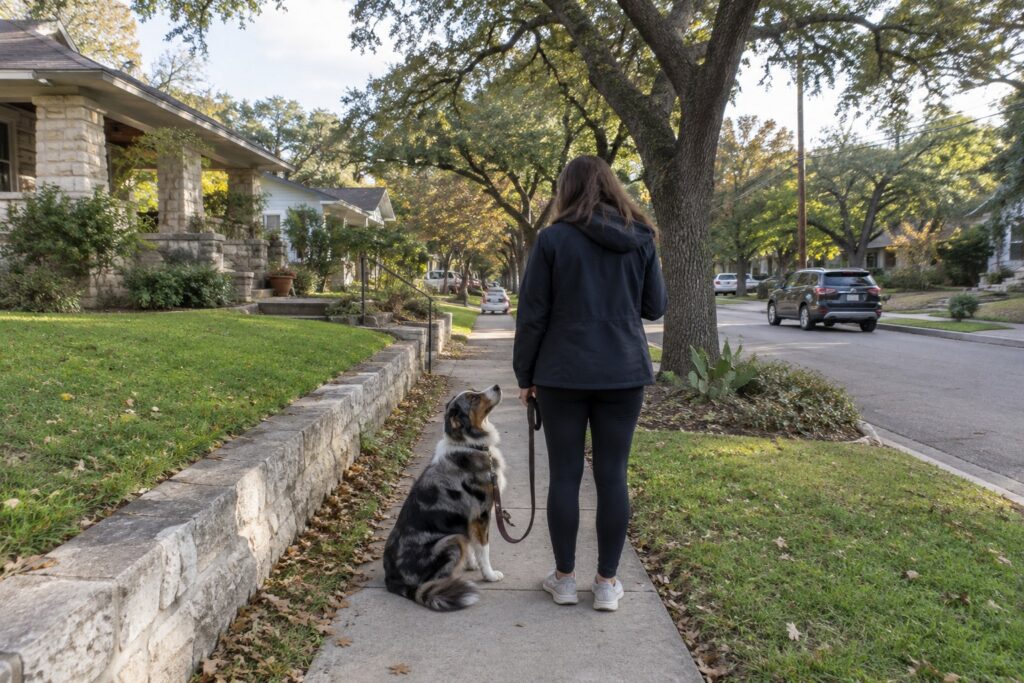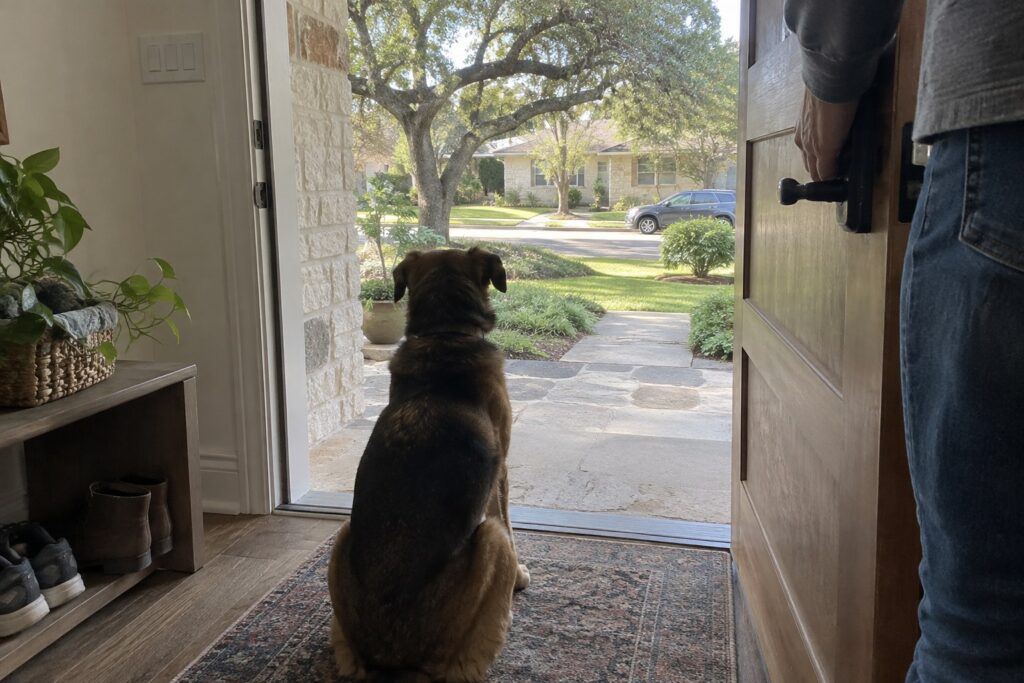

In behavioral terms, reinforcement refers to anything that increases the likelihood of a behavior being repeated. Positive reinforcement means adding something the dog wants (a treat, praise, a toy, or a chance to play) immediately after the desired behavior occurs.
For example, when your dog sits on command and you immediately give a treat, the dog learns that sitting on cue leads to something good. Over time, the dog begins offering that behavior more readily because it has been reliably rewarded.
Positive reinforcement is distinct from other training approaches that rely on corrections, pressure, or the removal of something uncomfortable to shape behavior. While those methods can produce results, research consistently shows that reward-based training builds a stronger bond between dog and owner and produces behaviors that are more durable and reliable under real-world conditions.
Choosing the Right Rewards
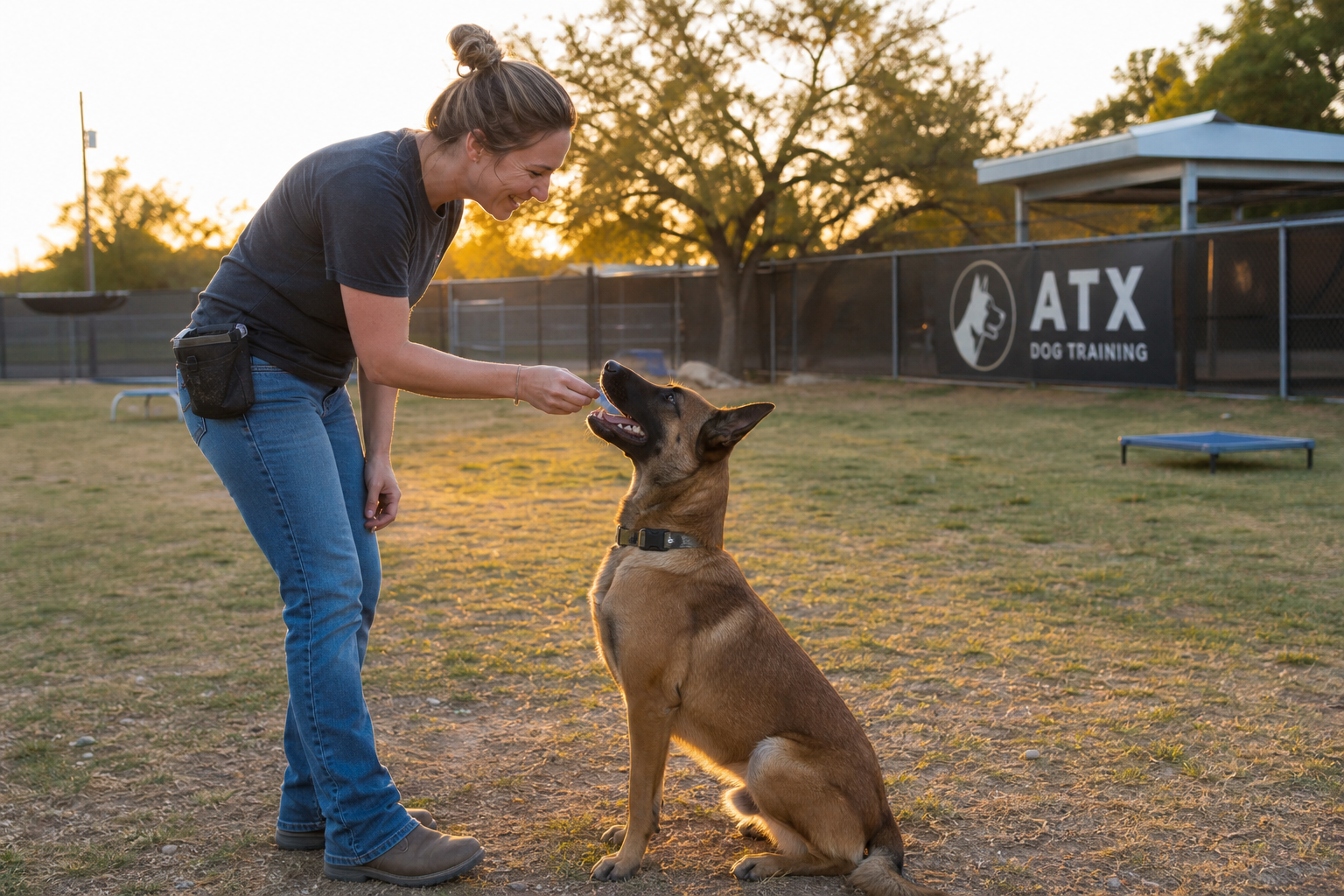
Not all rewards are created equal. Dogs are individuals, and what motivates one dog may do nothing for another. Common reinforcement options include:
- Food treats: Highly effective for most dogs, especially small, soft, high-value treats. Variety helps maintain engagement.
- Verbal praise: Works best when paired consistently with a warm, enthusiastic tone. Over time, praise alone can become reinforcing.
- Play and toys: For high-drive dogs, a brief game of tug or fetch after a correct response can be extremely motivating.
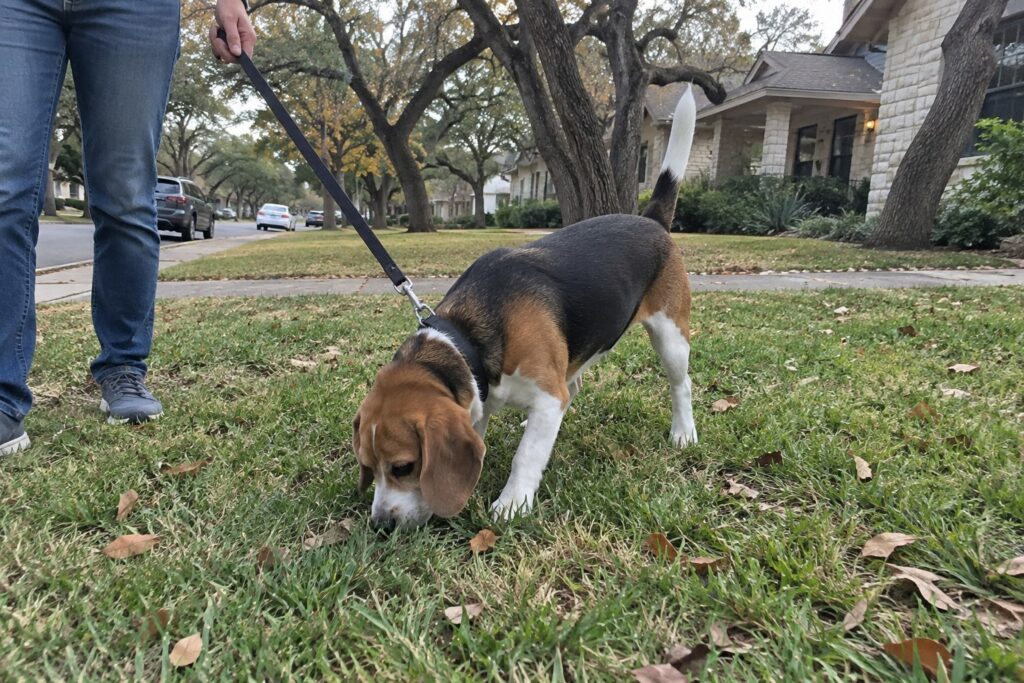
- Life rewards: Access to things your dog naturally wants, like going through a door, greeting a person, or sniffing a spot on the trail, can all be used as reinforcement.
Experiment with different rewards and pay attention to your dog’s enthusiasm. A dog that perks up, offers eye contact, and eagerly repeats behaviors is likely finding the reward worthwhile.
The Importance of Timing
Timing is one of the most critical factors in positive reinforcement. Dogs associate a reward with whatever they were doing the moment the reward arrives. If your dog sits and you wait five seconds before delivering the treat, your dog may have already shifted to sniffing the ground or looking away. That behavior, not the sit, gets reinforced.
The goal is to deliver the reward within one to two seconds of the desired behavior. Using a marker, either a clicker or a consistent word like “yes,” helps bridge any gap between the behavior and the delivery of the reward. The marker becomes a signal that says “that exact thing you just did is what earned the treat.”
Building a Strong Foundation: Core Commands
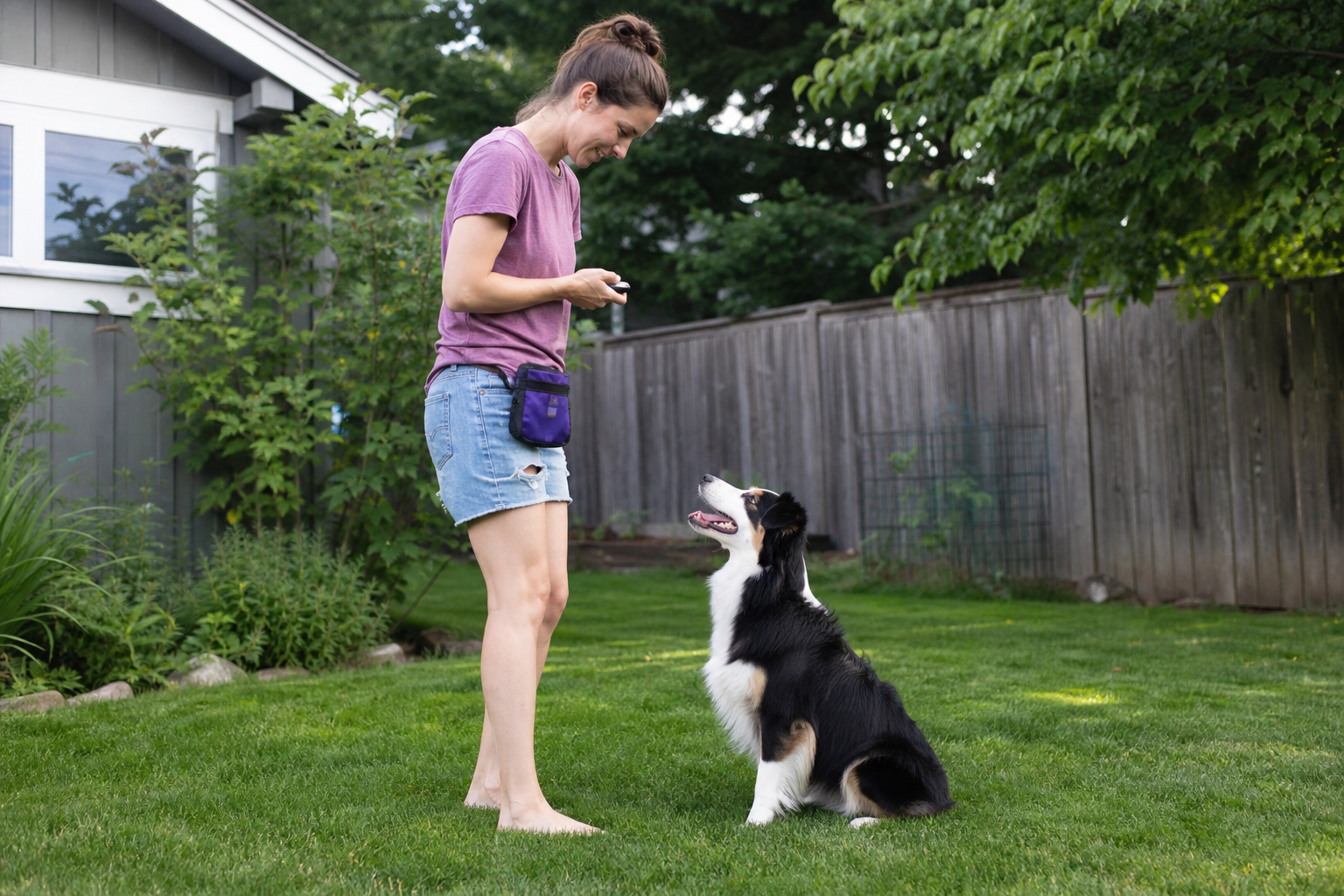
Positive reinforcement works well for teaching virtually any behavior. Starting with these foundational commands gives your dog the building blocks for more advanced skills:
- Sit: One of the easiest commands to teach. Ask for the sit, reward the moment your dog’s hindquarters touch the ground.
- Down: Builds impulse control and calm settling behavior.
- Stay: Teaches your dog to hold a position even with distractions present.
- Come (recall): The most important safety command. Should always be rewarded generously.
- Leave it: Teaches your dog to disengage from tempting objects, food, or other animals.
- Loose leash walking: Rewards your dog for walking near you without pulling.
Our in-home dog training service is an excellent option for Carrollton dog owners who want a professional trainer to work with them and their dog in the home environment where many of these behaviors matter most.
Common Mistakes to Avoid
Even well-intentioned owners can undermine their training progress. Here are some of the most frequent pitfalls:
- Rewarding at the wrong moment: Inadvertently reinforcing jumping, whining, or other unwanted behaviors that happen to occur just before the reward is delivered.
- Inconsistency: Some family members allow a behavior while others correct it. Dogs cannot generalize rules that are not applied consistently by everyone.
- Fading treats too quickly: Many owners stop using food rewards too early, before the behavior is truly reliable. Wean treats gradually by introducing intermittent reinforcement once the dog is performing consistently.
- Using punishment alongside positive reinforcement: Mixing the two approaches can confuse dogs and create anxiety. Positive reinforcement is most effective when used as the primary method.
- Training in only one setting: A dog that knows sit in the kitchen may not perform it reliably in the park. Practice in different locations to build true reliability.
When to Bring In a Professional
Positive reinforcement is a learnable skill, but some situations benefit from professional guidance. If your dog is showing aggression, severe anxiety, or has developed habits that have been reinforced for a long time, working with an experienced trainer can accelerate progress and prevent mistakes that set things back.
Our training programs at All Dogs Unleashed are designed to fit a range of needs, from basic obedience to more complex behavioral challenges.
Frequently Asked Questions
Can positive reinforcement training work for aggressive dogs?
Yes. Reward-based methods can be very effective for dogs with aggression, often working by building positive associations with previously threatening stimuli. However, aggression cases benefit significantly from professional guidance.
How long should training sessions be?
For most dogs, 5 to 15 minutes per session is ideal. Short, frequent sessions are more effective than long, infrequent ones. Puppies especially do better with very brief sessions of 3 to 5 minutes.
Does my dog need to be hungry to respond to treats?
Not necessarily hungry, but training works best when your dog has some food motivation. Avoid training right after a full meal. Using your dog’s regular kibble as training treats during mealtime is also a good approach.
Will my dog become dependent on treats forever?
No. Once a behavior is well-established, you can shift to an intermittent reward schedule and introduce other forms of reinforcement like praise and play. Dogs do not require a treat every single time forever.
Build a Stronger Bond Through Reward-Based Training
Positive reinforcement training is not just about getting your dog to follow commands. It is about building a relationship built on trust and clear communication. Dogs trained with reward-based methods tend to be more enthusiastic, more confident, and more willing to try new behaviors because they have learned that working with you leads to good things. At All Dogs Unleashed, we would love to help your Carrollton dog thrive. Contact us at (972) 484-3647 or visit us at 2401 Luna Rd, Carrollton, TX 75006.
Related Reading
Looking for hands-on help? See how Board and Train in Dallas and Carrollton works.