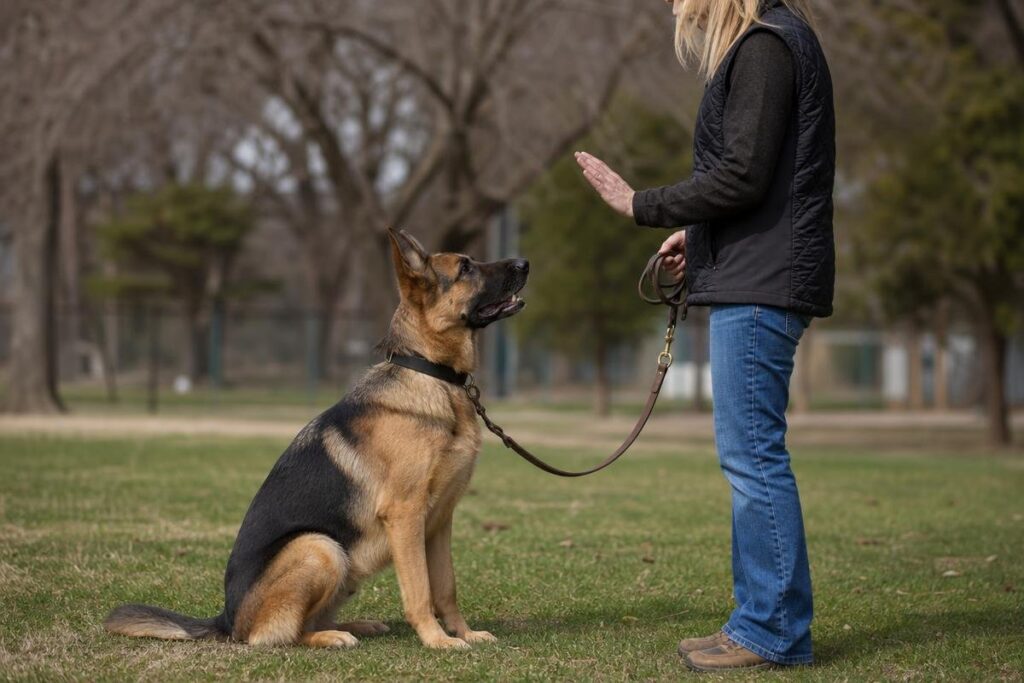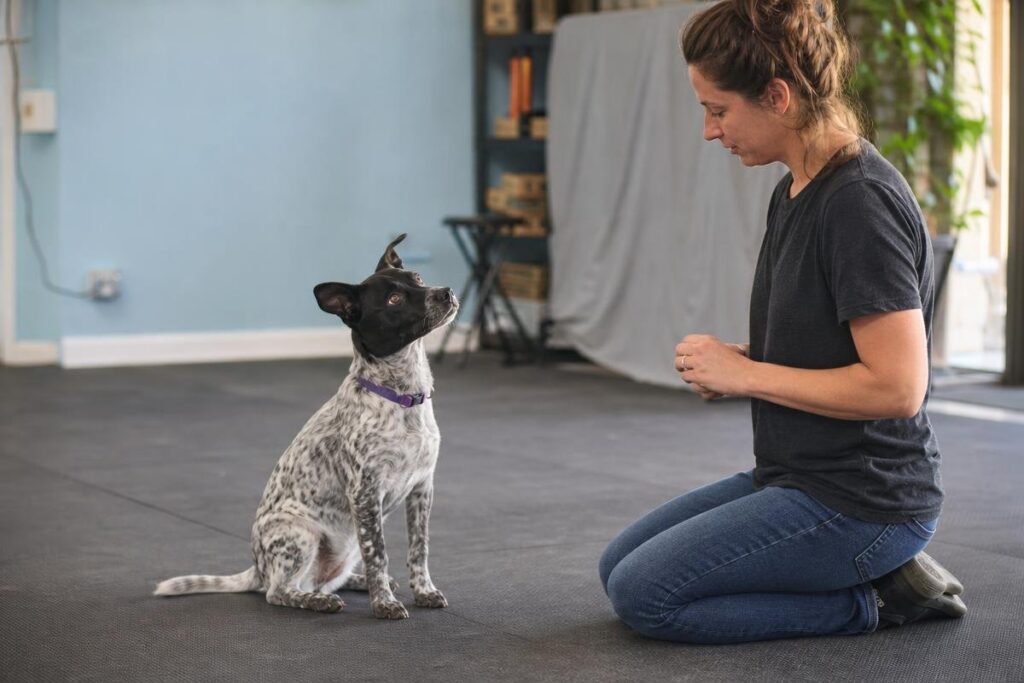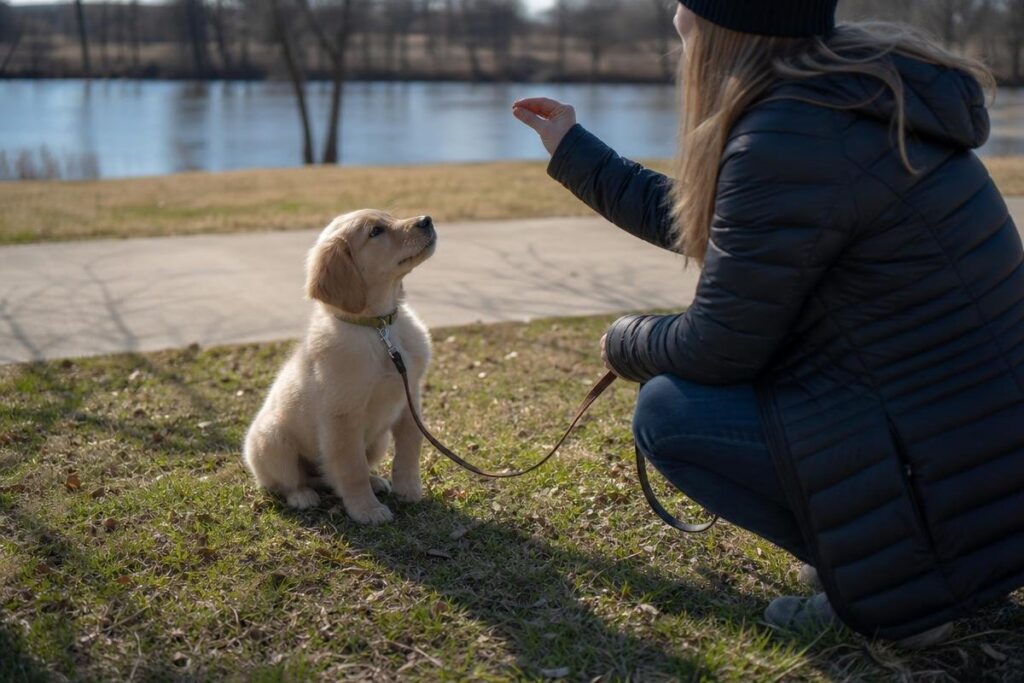
German Shepherd training demands more than basic obedience commands. This breed carries high drive, strong protective instincts, and an intelligence that requires structured, consistent handling to produce reliable results. Without a training program built around those breed-specific traits, behavioral problems compound quickly. All Dogs Unleashed Dog Training OKC works with German Shepherd owners across Oklahoma City to address those traits directly, using proven working-dog methods rather than one-size-fits-all obedience.
Ready to build reliable obedience in your German Shepherd? Contact our Oklahoma City team at 101 Park Ave, Suite 1300, and ask about our 30-day money-back guarantee.
Call (405) 299-3386 to speak with our team directly. We're ready to answer your questions, walk you through your options, and help you find the right solution for your needs. Whether you're just starting to plan or ready to move forward, we'll make the process simple and stress-free. Reach out today and let's talk about how we can help.
Key Takeaways
- German Shepherd training requires breed-specific methods that address high drive, protective instincts, and advanced working intelligence.
- Oklahoma City's summer heat above 100°F means scheduling outdoor training sessions before 9 a.m. or after 7 p.m. from June through August.
- Structured daily routines and progressive skill-building produce more dependable obedience than inconsistent, reward-only approaches.
- Our German Shepherd programs come with a 30-day money-back guarantee and lifetime support, which includes free follow-up sessions for the life of your dog.
Why German Shepherds Need a Breed-Specific Approach
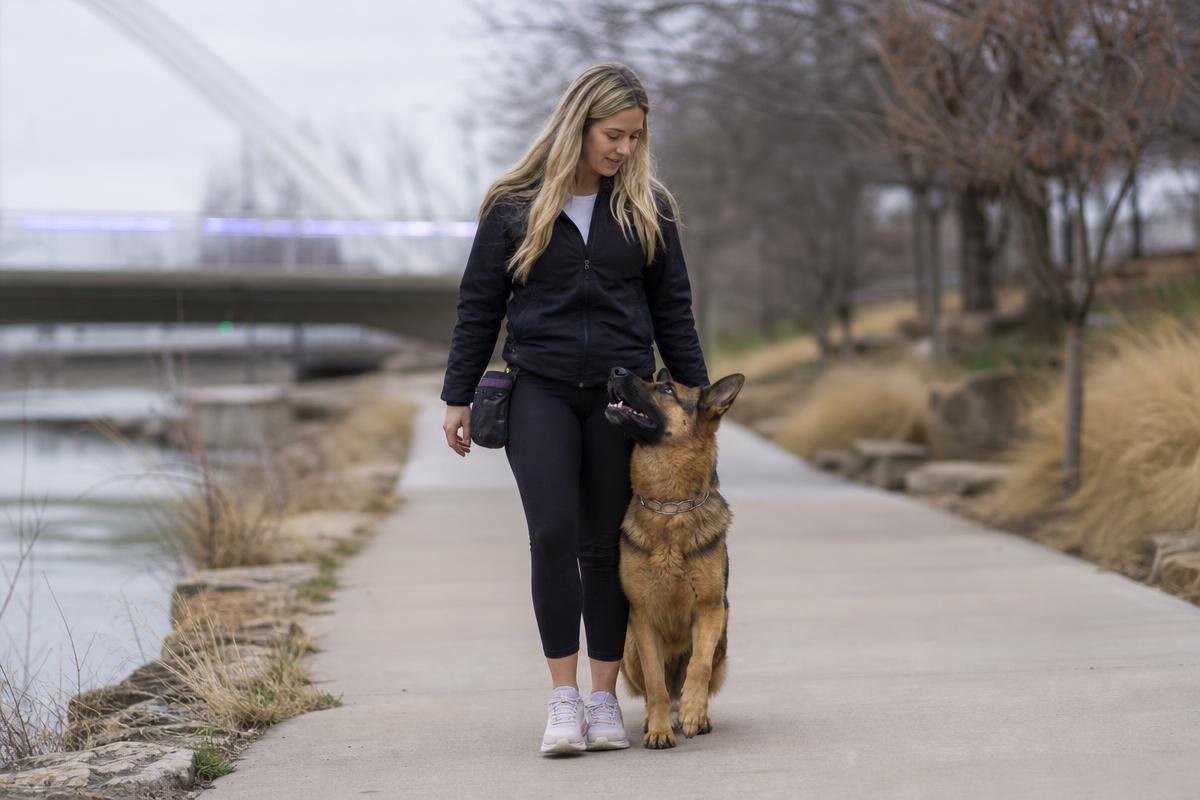
A German Shepherd pulling through Myriad Botanical Gardens or reacting to foot traffic along the Bricktown Riverwalk is not a discipline problem. It is a breed-specific response to an unstructured environment. German Shepherds are working dogs with high prey drive, environmental sensitivity, and a protective instinct that standard obedience curricula are not built to address. Left unstructured, those same traits escalate into leash reactivity, guarding, and compulsive habits that grow harder to unwind with each passing week.
German Shepherd training requires a different approach than general obedience work. This guide covers the breed-specific principles that produce reliable results, the most common mistakes owners in the OKC area make, and how a structured program builds lasting obedience. Our dog training programs in Oklahoma City are designed with these distinctions built in, and every program is backed by a 30-day money-back guarantee and lifetime follow-up support.
What Makes German Shepherd Training Different From General Obedience Work?
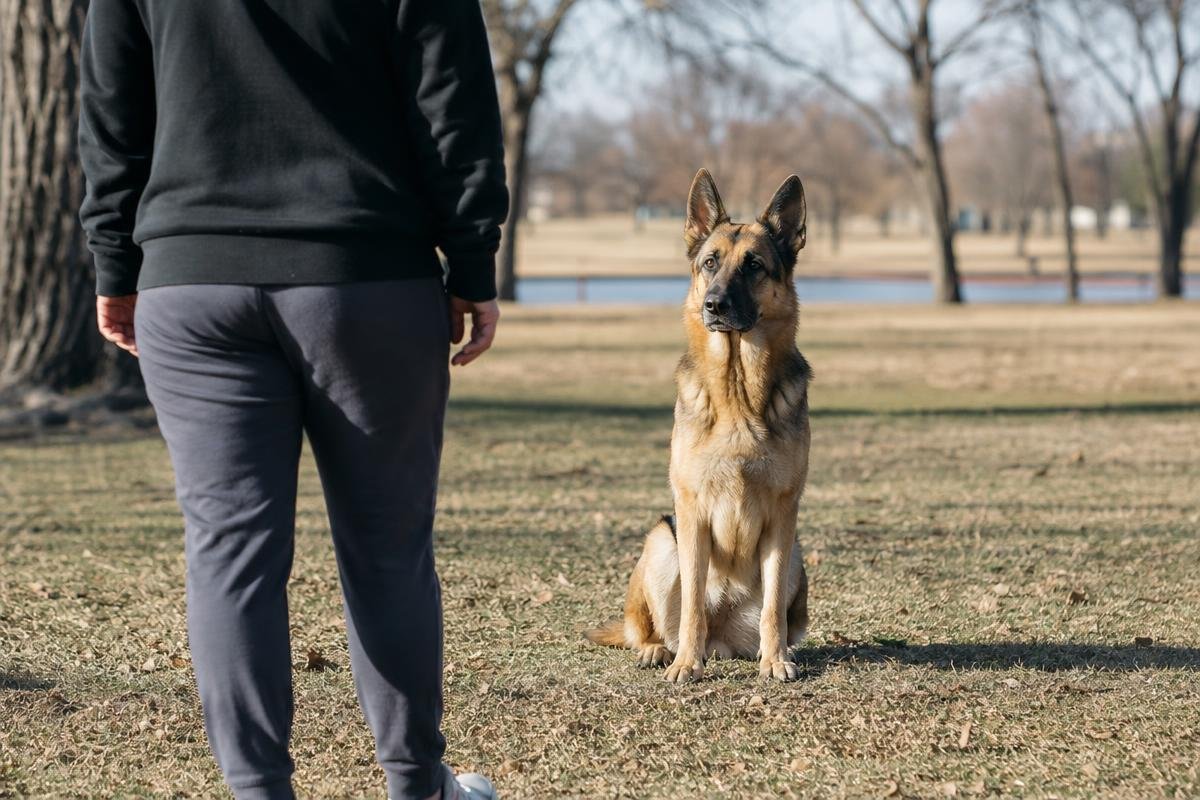
A standard group obedience class built for Labrador Retrievers or Golden Retrievers will not produce reliable results with this breed. The behavioral architecture of a working dog demands a different approach, and trainers who treat every dog the same will consistently fall short with this breed. Our team encounters this presentation regularly across Oklahoma City households, and the gap between what owners expect and what the dog actually needs is almost always rooted in breed-specific misunderstanding.
High Drive and Working Dog Instincts
This breed was selectively developed for herding and Schutzhund protection work over generations, producing prey drive and mental engagement requirements that far exceed most companion breeds. In daily life, high drive looks like a dog that cannot settle, fixates on moving objects, barks persistently, or pulls relentlessly on leash. Without structured outlets, that energy surfaces as destructive behavior, leash reactivity, or compulsive patterns.
Training high-drive dogs in OKC requires structured daily routines that give the dog a clear job, not simply commands to suppress behavior. Our dog training programs in Oklahoma City are built to channel that drive into reliable obedience rather than fight against it.
Protective Instinct and Socialization Demands
The breed's natural guardian instinct is an asset when properly developed and a liability when left unaddressed. A dog that has not been systematically socialized during critical developmental windows will often generalize its protective response to strangers, unfamiliar environments, and unpredictable stimuli. It is important to distinguish between a reactive presentation and a truly aggressive one, because the intervention differs significantly. Reactivity is a threshold problem driven by arousal and poor impulse control. Aggression involves intent and requires a more structured behavior modification protocol. German
Shepherd behavior modification in busy spaces like Scissortail Park, where the leashed lawns and open promenade put a dog within a few feet of joggers, strollers, and other dogs, is where that distinction becomes operationally visible. Our board and train program provides the controlled exposure and repetition this breed requires to generalize calm responses across real-world settings.
Wondering if board-and-train is the right fit for your Shepherd? Schedule a free assessment and let our team evaluate your dog's drive and threshold in person.
The Role of Conformation and Physical Development
Angular hindquarters, a large frame, and rapid adolescent growth all affect how and when training should be structured. Dogs under 18 months are still developing skeletal and joint integrity, and overloading them with prolonged repetitive sessions creates injury risk, not faster results. Shorter, more frequent sessions suit this developmental window and produce better retention. Training timing also matters in Oklahoma City's climate.
From June through August, temperatures regularly exceed 100°F, making early morning or evening sessions, before 9 a.m. or after 7 p.m., a practical requirement for double-coated breeds to avoid heat-related fatigue.
The Most Common German Shepherd Training Mistakes Oklahoma City Owners Make
Most training breakdowns with high-drive dogs trace back to a small number of predictable errors. These mistakes are not unique to any one owner, but they are especially costly with a breed that processes handler behavior as carefully as it processes commands. Identifying them early prevents months of retraining.
Inconsistent Command Structure and Mixed Signals
Your dog is not ignoring you out of stubbornness. A command given once without follow-through teaches that compliance is optional. If one family member says "down," another says "lay down," and a third lets the behavior slide entirely, your dog receives three different signals for the same expected behavior. The result is a dog that responds selectively, not reliably. Every handler in your household must use the same word, the same tone, and the same consequence, every single time. Consistency is not a training phase. It is the training.
Skipping Foundational Skills Before Advanced Work
Many owners attempt off-leash control or protection-oriented exercises before the dog has a reliable sit, down, stay, and recall under any distraction. That sequence does not work. Foundational commands must be proofed in low-distraction environments before real-world testing begins. Attempting advanced work on an unproofed foundation produces a dog that performs in the backyard and falls apart everywhere else.
Our structured program options for dogs in the OKC area are built around this progressive skill-building model, moving each dog through stages only after the prior stage is confirmed under controlled conditions.
Underestimating Environmental Distractions in OKC
Your dog listens at home because home is a low-distraction environment your dog has already mapped. Scissortail Park, the Bricktown Riverwalk, and the Lake Hefner trail system are entirely different environments. Cyclists, wildlife, other dogs, crowd noise, and unpredictable movement all compete for your dog's attention simultaneously.
High-drive dogs trained only in suburban backyards, including those in Edmond and Mustang, frequently fail their first real-world test not because the training was wrong, but because it was never proofed against the environments where it actually needs to hold. Distraction proofing is not a bonus step. It is a required stage of any training plan that produces dependable obedience outside your property line.
Core Training Principles That Produce Reliable German Shepherd Obedience
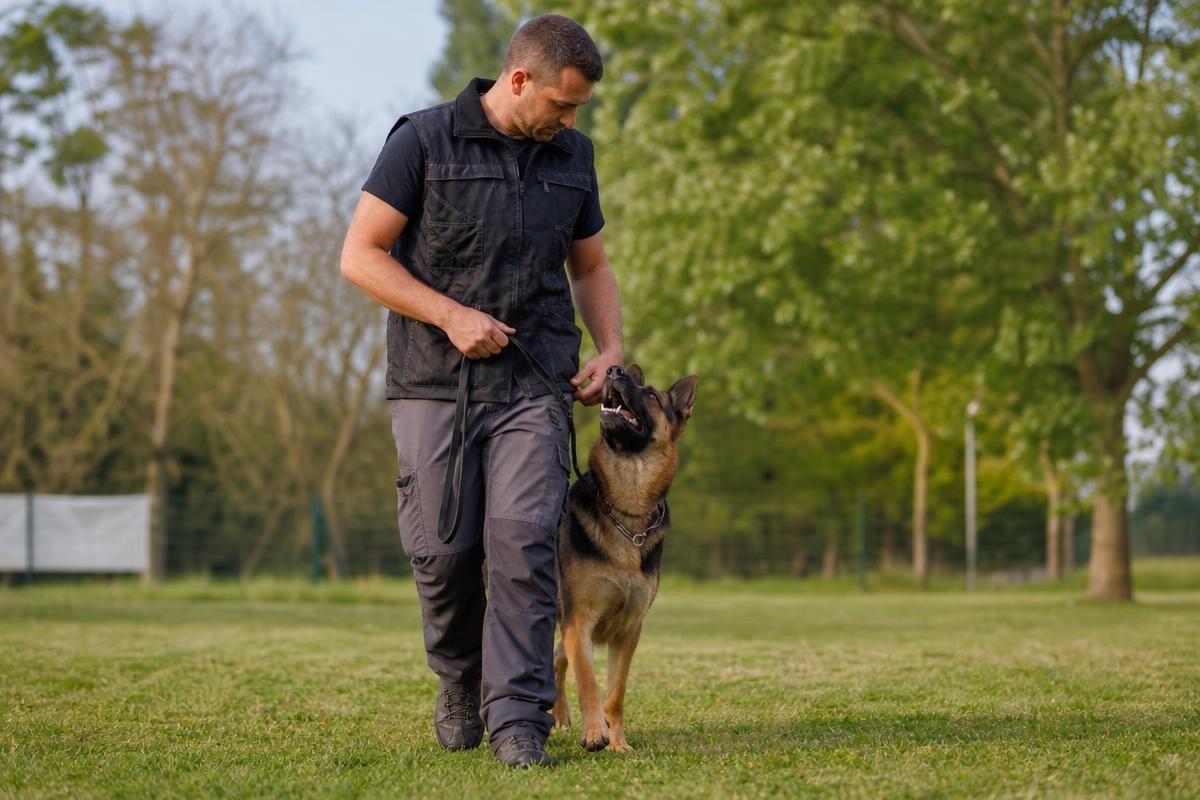
Reliable obedience in a high-drive working breed does not happen by accident. It is the product of three interconnected principles applied consistently: structured daily routines, precise marker timing, and systematic distraction proofing. Each principle builds on the last, and skipping any one of them produces gaps in behavior that surface under pressure.
Structured Daily Routines as the Foundation
Dogs that live in predictable environments learn faster and exhibit fewer anxiety-driven behaviors. A consistent daily schedule covering feeding, exercise, training blocks, and rest periods removes the ambiguity that causes reactive or compulsive behavior in working breeds. Structured daily routines are not simply a management tool; they are an active training mechanism. When your dog knows what to expect and when, the nervous system settles, and the dog becomes genuinely available to learn.
Marker Training and Precise Timing
Marker training uses a verbal cue or clicker to communicate the exact moment a correct behavior occurs. For a breed this sensitive to feedback, timing within a half-second window is not a preference; it is a requirement. A mark delivered one second late tells your dog something different than you intended. Delayed or imprecise marking creates confusion, slows skill acquisition, and can inadvertently reinforce the wrong behavior.
Our trainers drill marker timing as a technical skill before any obedience sequence is introduced, because the quality of communication between handler and dog determines the ceiling of what the dog can learn.
Progressive Distraction Proofing
German Shepherd off-leash training depends on a three-stage proofing model. Stage one establishes the behavior in a low-distraction setting such as a home or quiet yard. Stage two introduces moderate distraction in suburban environments like those found in Edmond or Yukon. Stage three tests the behavior against high-distraction urban settings. Each stage must be fully reliable before advancing; premature exposure to high distraction breaks the behavior rather than strengthening it.
The controlled environment of our board and train program allows our trainers to manage distraction exposure deliberately, progressing your dog through each stage at the correct pace. A home environment cannot replicate that level of control, which is why board and train german shepherd okc owners choose this format for accelerated, dependable results.
Ready to build reliable obedience in your dog? Call All Dogs Unleashed at (405) 299-3386 to find the right program for your companion.
Which Training Program Works Best for German Shepherds in Oklahoma City?
No single program fits every dog. The right choice depends on your dog's drive level, the specific behaviors you need to address, and your home environment. Our OKC training curriculum is structured to match each of those variables, not to place every dog in the same track regardless of temperament.
Board and Train: Immersive Results for High-Drive Dogs
High-drive dogs that struggle to focus in a distracting home environment respond well to the immersive structure of board and train. This format removes the inconsistencies of the home setting and allows our team to run multiple short, focused sessions each day, a schedule that matches the breed's drive and attention span more precisely than weekly lessons can.
Each dog receives individualized attention throughout the program, which accelerates foundational skill acquisition and produces more reliable responses before the dog ever returns home. For owners in Yukon dealing with a dog that has outpaced their ability to manage at home, board and train is frequently the most direct path to lasting results.
In-Home Training: Building Skills in Your Dog's Environment
When the problem behaviors are environment-specific, training must happen in that environment. Territorial barking at the front door, reactivity to neighborhood foot traffic, and resource guarding in the kitchen are all behaviors that surface at home and need to be addressed there. Our in-home program targets those triggers directly, building reliable responses in the exact context where the problems occur.
Suburban settings like Mustang and Piedmont provide moderate-distraction conditions that are well suited to intermediate-stage skill work, and our team can progress the dog toward more demanding environments as each skill becomes dependable.
Behavior Modification for Reactivity and Protective Instinct
Reactivity and over-threshold protective behavior are not obedience problems. They are emotional response problems, and they require a different approach entirely. German shepherd behavior modification targets the dog's underlying emotional state in the presence of a trigger, not just the surface behavior the owner sees. This distinction matters because obedience commands applied to a dog that is already over threshold will not hold.
If your dog is presenting with reactivity toward strangers, other dogs, or environmental stimuli, behavior modification is the correct starting point. A program that skips this step and moves directly to command work will produce inconsistent results at best. Our team assesses each dog's threshold levels before determining whether behavior modification, obedience training, or a combined approach is appropriate.
How Oklahoma City's Environment Shapes German Shepherd Training Outcomes
OKC's climate and geography create training conditions that demand deliberate planning. Dense double coats make shepherd breeds significantly more vulnerable to heat fatigue than short-coated dogs, and the distraction landscape across the metro varies enough that trainers must select environments that match each dog's current stage of development.
Our team works across the full metro, from the city core to communities like Moore, Midwest City, and Choctaw, and we account for these local variables in every training plan. You can contact our Oklahoma City team at (405) 299-3386 to discuss how we structure that work.
Heat, Humidity, and Session Timing in OKC Summers
OKC summers regularly push past 100 degrees Fahrenheit, and that heat directly degrades training performance. A dog showing slowed responses, heavy panting, or disengagement is not being stubborn. Those are early heat-stress signals, and continuing the session at that point produces no useful conditioning. Schedule outdoor sessions before 9 a.m. or after 7 p.m. during the summer months, and cap sessions at 15 minutes in peak heat.
Shorter, well-timed sessions produce more reliable obedience than longer sessions that push a dog past its physiological limit.
Urban and Suburban Distraction Profiles Across Oklahoma City
Distraction management is a core variable in german shepherd obedience training, and the OKC metro offers a full range of proofing environments. Lake Hefner trails introduce wildlife, cyclists, and other dogs simultaneously, making them one of the strongest real-world settings for proofing recall and leash manners at an intermediate to advanced level. For german shepherd off leash training at the highest difficulty, high-foot-traffic urban corridors around the downtown core present dense, unpredictable stimulation that tests reliability under genuine pressure.
Neighborhoods like Norman, Del City, and Bethany offer quieter residential settings suited to foundational and intermediate work, where a dog can build consistent responses before moving into higher-distraction environments. Progressive exposure across these settings, matched to each dog's current skill level, is how lasting results are built. Our team selects environments deliberately, not arbitrarily, as part of a structured development plan.
Frequently Asked Questions
At what age should German Shepherd training begin?
Foundational obedience can begin at 8 weeks with short, focused sessions of 5 to 10 minutes. Socialization is most critical between 8 and 16 weeks, when exposure to people, surfaces, sounds, and other animals shapes long-term behavioral responses. Advanced off-leash work is typically introduced after 12 to 18 months, once the dog's drive and impulse control are sufficiently developed.
How long does it take to train a German Shepherd?
Foundational obedience can be established in 2 to 4 weeks through a structured board and train program. Real-world reliability under high distraction, such as Lake Hefner trails with cyclists and wildlife, typically requires 3 to 6 months of progressive proofing. One client noted, "I'm so impressed with the transformation in our dog after only 2 weeks."
Can a German Shepherd with protective instinct be trained safely around other dogs and people?
Yes. Protective instinct is a breed trait, not a disqualifying flaw. Through behavior modification and systematic desensitization, that instinct can be channeled into controlled, predictable responses rather than suppressed entirely. The goal is a dog that reads context accurately and defers to handler direction.
Is board and train the right choice for a German Shepherd with high drive?
Board and train suits high-drive dogs because it allows multiple short sessions per day, consistent handler expectations, and controlled distraction exposure that private weekly lessons cannot replicate. Dogs with elevated prey drive or reactivity benefit from the structured daily routine that accelerates reliable responses.
What is the difference between obedience training and behavior modification for German Shepherds?
Obedience training teaches specific commands. Behavior modification targets the underlying emotional or conditioned response driving a problem behavior, such as reactivity, resource guarding, or separation anxiety. Many dogs benefit from both approaches running simultaneously, as command fluency supports the handler's ability to interrupt and redirect problematic responses.
Does All Dogs Unleashed offer a guarantee on German Shepherd training results?
Yes. Every program carries a 30-day money-back guarantee, and lifetime support means free follow-up sessions for the life of your dog, so training holds through new environments and life stages across the OKC metro. Whether your dog is 10 weeks or 10 years old, structured training produces dependable results when applied consistently.
Your dog has the drive to learn. The right structure makes the difference between a dog that listens only at home and one that holds a reliable heel on a busy trail. Call our team at (405) 299-3386 to discuss which program fits your dog's age, drive level, and specific behavior challenges.
Ready to Get Started with All Dogs Unleashed Dog Training OKC?
Call (405) 299-3386 to speak with our team directly. We're ready to answer your questions, walk you through your options, and help you find the right solution for your needs. Whether you're just starting to plan or ready to move forward, we'll make the process simple and stress-free. Reach out today and let's talk about how we can help.