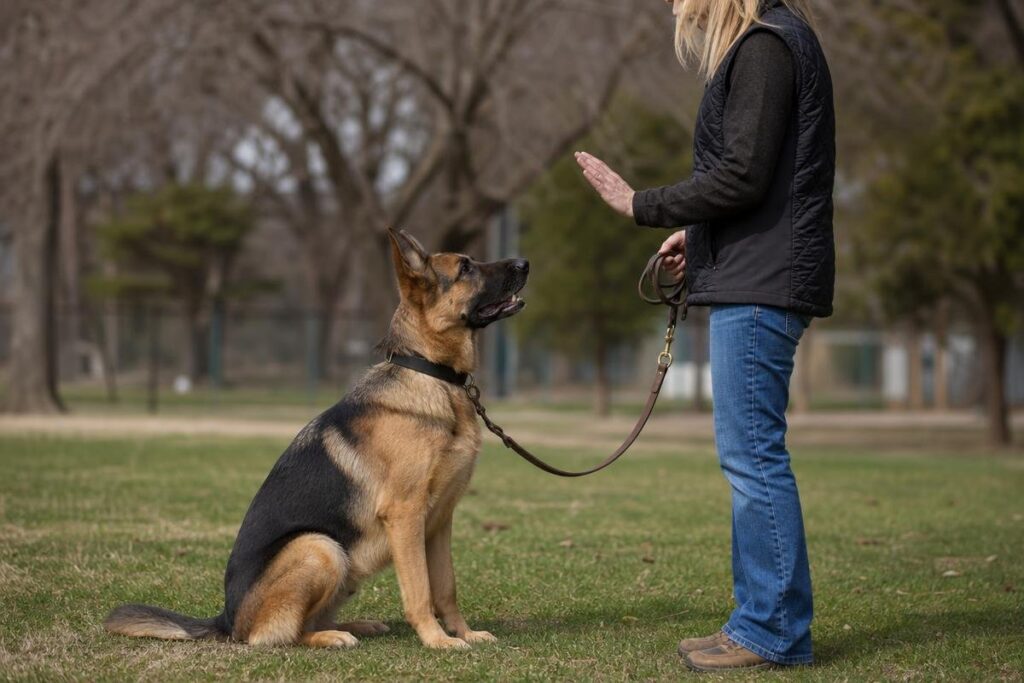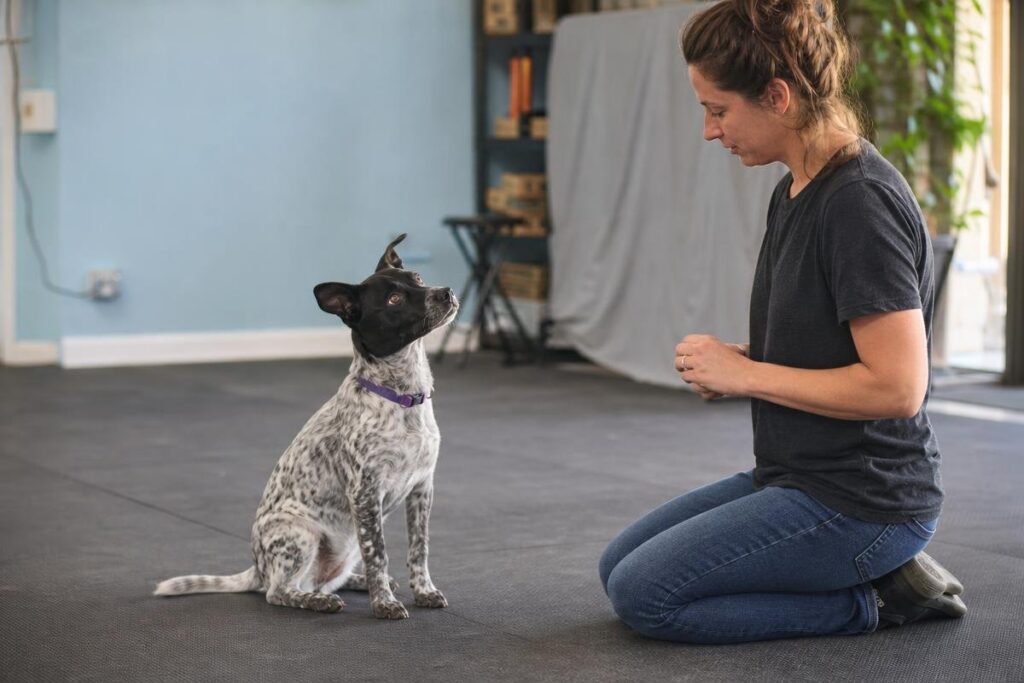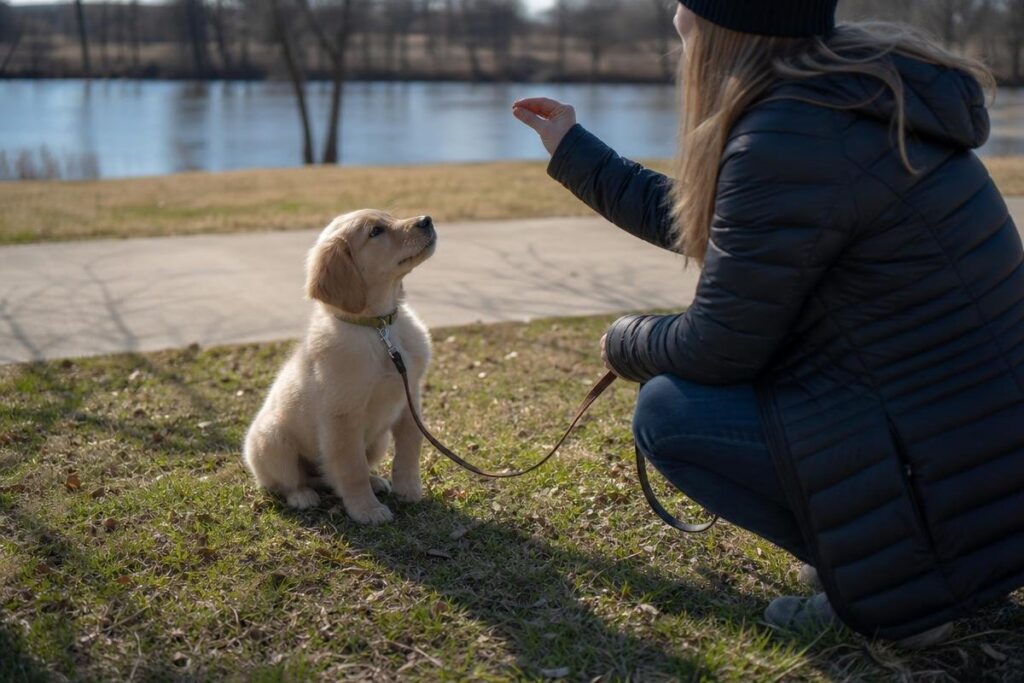
A structured puppy training schedule is the single most important tool a new owner can have, and most dogs that develop behavioral problems later in life never had one. All Dogs Unleashed Dog Training OKC, located in Oklahoma City at 101 Park Ave, Suite 1300, provides age-specific training guidance built around your puppy's developmental stages, from the critical 8-week window through the first full year.
Our trainers have worked with hundreds of dogs across the metro, from small companion breeds to working giants, and every program is backed by our 30-day money-back guarantee and ongoing owner support long after the initial training is complete. Ready to start your puppy on the right path? Our team is here to help you build a training plan that works.
Call (405) 299-3386 to speak with our team directly. We're ready to answer your questions, walk you through your options, and help you find the right solution for your needs. Whether you're just starting to plan or ready to move forward, we'll make the process simple and stress-free.
Reach out today and let's talk about how we can help.
Key Takeaways
- A consistent puppy training schedule started at 8 weeks produces more reliable obedience than training begun after 6 months.
- Each developmental stage, from 8 weeks to one year, requires different foundational skills and training intensity.
- Oklahoma City's severe weather seasons make a parallel indoor training protocol essential for uninterrupted progress.
- Socialization, crate training, and basic commands should all be introduced within the first 16 weeks of life.
- Professional guidance with continued support prevents small behavioral gaps from becoming lasting problems.
Why a Structured Timeline Matters More Than Reactive Training
Most puppy owners in the Oklahoma City area respond to behavioral problems after they appear rather than preventing them through a structured developmental timeline. Impulse control deficits, resource guarding, and leash reactivity do not emerge without cause. They solidify during specific growth stages when foundational learning either takes root or is left unaddressed. Once the critical socialization window closes, modifying these patterns requires significantly more time, consistency, and professional intervention.
This guide provides a week-by-week puppy training schedule calibrated to each developmental stage, from 8 weeks through 12 months, so you can build reliable behavior before problems have a chance to take hold. The same developmental milestones that structure this timeline form the foundation of the structured puppy programs offered through All Dogs Unleashed Dog Training OKC. Every plan comes with a 30-day money-back guarantee and continued access to our trainers, so the investment you make now produces dependable behavior for the life of your dog.
What Should You Do Before Formal Training Begins?
Formal training should begin the moment your puppy arrives home, but the groundwork starts even sooner with the environment itself. Puppies learn from every interaction, and a predictable daily routine establishes the behavioral foundation that makes all later skill development more effective and lasting.
Establishing a Structured Daily Routine
A dependable puppy training schedule starts with consistent feeding times, typically two to three meals per day depending on breed and age. Scheduled outdoor elimination trips should follow immediately after waking, after each meal, and after play sessions. This predictable sequence conditions your dog to anticipate and respond to biological cues before accidents occur, which is especially relevant in suburban yards across areas like Edmond and Yukon, where easy yard access can create a false sense of flexibility and lead owners to skip timed trips.
Unpredictable environments elevate stress hormones in young dogs and reduce their capacity to retain new behavioral conditioning. When your companion knows what to expect and when, self-regulation improves measurably. A fixed wake time, consistent meal schedule, structured play periods, and a designated sleep location are not optional comforts. They are the architecture of a learning-ready dog. Our OKC training curriculum is built on this same principle of structured progression from day one.
Crate Introduction and Safe Space Conditioning
Crate conditioning is rooted in the dog's natural den instinct, not punishment. A properly sized crate, one that allows your companion to stand, turn around, and lie down fully, prevents the puppy from designating one end as a bathroom, which directly reinforces elimination control. Introduced gradually with positive associations, the crate becomes a reliable anchor point that eases early signs of separation anxiety before they harden into lasting habits.
Begin with short crate intervals during the day while you remain present, then extend duration incrementally. Never use the crate as a consequence for unwanted behavior. Consistent, calm crate use during this pre-formal-training period builds the settled temperament that every subsequent stage of your puppy's development depends on.
When Should You Start Puppy Training?
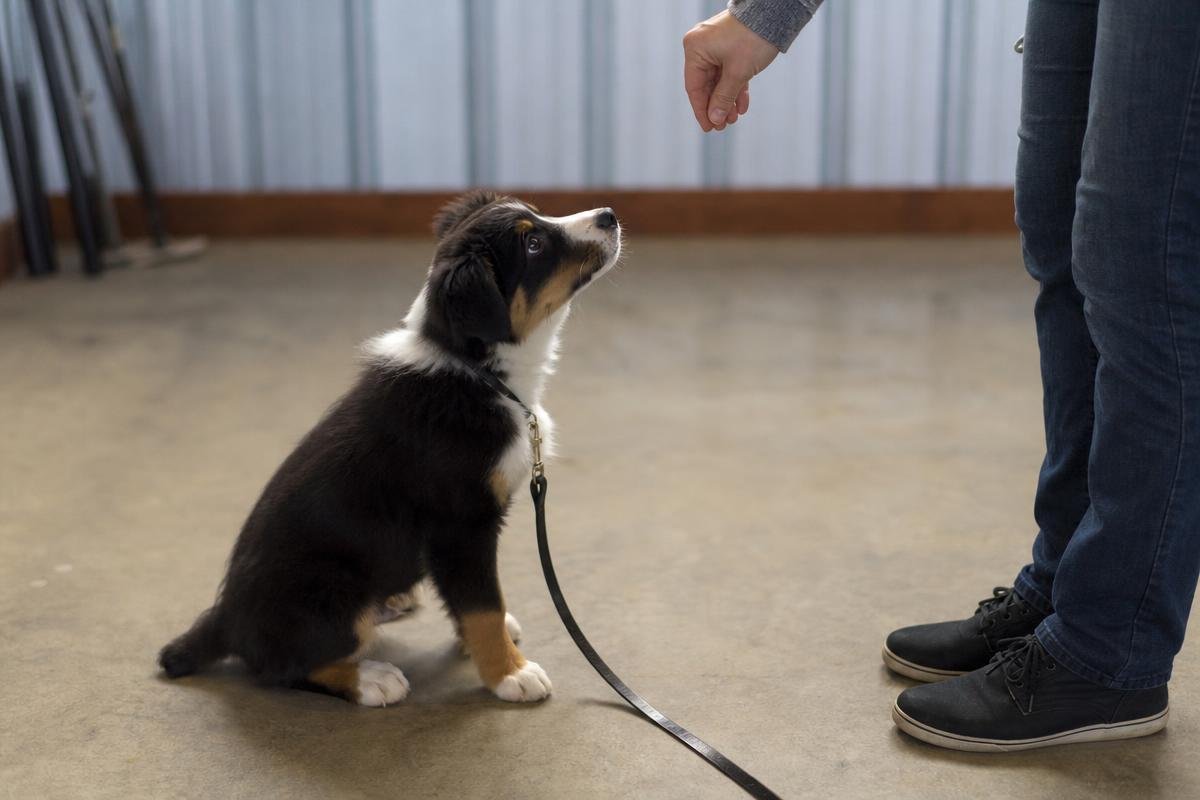
You should start puppy training as soon as your puppy comes home, ideally around 8 weeks old. At this age, your puppy is neurologically primed to absorb new experiences faster than at any other point in life. This growth stage, spanning weeks 8 through 12, is the single most important period in your puppy training schedule. What your dog encounters now, and how those encounters are framed, shapes behavioral patterns that persist for years.
What Commands Should an 8-Week-Old Puppy Learn?
An 8-week-old puppy should focus on four foundational behaviors: name recognition, sit, come (recall), and leash introduction. Keep sessions between three and five minutes. Your puppy's attention span and neurological development cannot support longer work periods, and pushing past that threshold produces frustration rather than progress.
Positive reinforcement with high-value food rewards is the only appropriate method at this age. Formal commands requiring sustained focus, including stay, heel, and down-stay, are developmentally premature and should not be introduced during this window.
Socialization Priorities During This Growth Stage
Behavioral science identifies weeks 8 through 12 as the primary socialization period. Exposure during this window should cover four categories:
- Novel surfaces: grass, gravel, hardwood floors, concrete
- Environmental sounds: traffic, household appliances, crowds
- People of varied appearances, ages, and movement patterns
- Other vaccinated, behaviorally stable dogs
The OKC area offers naturally varied environments for this work. Scissortail Park provides controlled urban exposure to cyclists, crowds, and varied ground surfaces. Bricktown's pedestrian corridors introduce busier sensory conditions, while quieter residential streets in Edmond allow lower-intensity outings when your puppy needs a calmer setting. Our structured puppy programs guide owners through age-appropriate socialization at each stage of this timeline. Want a socialization plan matched to your puppy's exact age and temperament?
What Should You Avoid in the First Month of Training?
Several common owner errors undermine puppy training milestones during this growth stage. Sessions that run too long, punishment-based corrections, and exposing your dog to too many new stimuli in a single outing all produce avoidance and anxiety rather than confidence. Skipping crate conditioning is equally damaging, as the crate establishes the structured environment your dog needs for rest, safety, and behavioral regulation.
Progressive skill-building depends on controlled exposure, not accelerated exposure. Introduce one or two new experiences per outing, observe your dog's response, and adjust accordingly.
Weeks 12 to 24: Building Obedience Through Progressive Skill Development
Between 12 and 24 weeks, your puppy's neurological development supports longer sessions of 5 to 10 minutes and more complex behavioral expectations than were appropriate in the earlier socialization window. This is the phase where a structured puppy obedience schedule by age produces the most measurable gains. Multiple short sessions distributed across the day consistently outperform a single long session, and the puppy training milestones you establish now become the foundation for everything that follows.
Commands to Solidify Between 12 and 16 Weeks
At 12 weeks, your dog is ready to work on sit-stay, down, leave it, and controlled recall with mild distractions present. Each command should be introduced in a low-distraction environment, then gradually tested against real-world interruptions as reliability builds. We have seen dogs as young as 16 weeks, including larger breeds such as North American Mastiffs, achieve a dependable foundation in basic obedience when owners follow a consistent puppy training schedule and apply systematic reinforcement across every repetition.
Our OKC training curriculum is structured around exactly these progressive development stages to ensure no foundational skill is skipped.
Introducing Impulse Control and Duration Behaviors
From 14 to 16 weeks, your puppy is developmentally ready for impulse control behaviors: waiting at doorways, sitting before meals, and holding a leave it with food placed on the floor. These exercises are not simply commands; they build the self-regulation your dog needs to function reliably in unpredictable environments.
Duration behaviors require your dog to hold a position while you increase distance or introduce distraction incrementally. Systematic reinforcement at each stage, rather than rushing to the finished behavior, is what produces lasting results rather than inconsistent compliance.
Leash Manners and Public Exposure
Loose-leash walking should be introduced during this phase using a clear reward position beside your left leg, direction changes to redirect pulling before it becomes habitual, and the "be a tree" method for persistent pullers, where you stop all forward movement the moment tension appears on the leash. Scissortail Park in the downtown core offers a controlled urban environment with cyclists, foot traffic, varied ground surfaces, and other dogs, making it well suited for practicing leash manners against moderate distraction.
Owners who have followed this puppy training timeline consistently report their dogs walking calmly without distraction during outings. If Oklahoma's summer heat is a factor, early morning sessions before 8 a.m. protect your puppy from heat stress while keeping the schedule intact. For owners who want structured guidance delivered at home, our team can explain what a board and train program covers for dogs at this exact developmental stage.
Months 6 to 12: Advancing to Reliable, Real-World Obedience
The six-to-twelve-month period is frequently the most challenging phase of any puppy training timeline. Adolescent hormonal changes can temporarily reduce responsiveness to commands your dog performed reliably just weeks earlier. Many owners interpret this as a training failure, but it reflects a predictable growth stage, not a permanent regression.
Proofing Commands Across Environments
Proofing means your dog performs a known command reliably across varied locations, distraction levels, and handler distances. In practice, trainers structure this around three variables: Duration, Distance, and Distraction. A command is not dependably trained until it holds across at least five distinct environments. Busy shopping districts near Penn Square and quieter suburban streets in Del City both serve as natural proofing environments, each presenting different sensory demands that test your dog's focus in ways a single location cannot replicate.
Advancing through these puppy training milestones requires a structured routine. Increase only one variable at a time. Raising distraction level while also extending distance sets most adolescent dogs up to fail, which erodes the foundational behaviors built in earlier weeks.
Addressing Adolescent Behavioral Challenges
Between six and nine months, many owners report regression in previously reliable behaviors. The neurological basis is straightforward: the prefrontal cortex, which governs impulse regulation, continues developing through eighteen to twenty-four months in most breeds. Common challenges during this growth stage include selective recall, increased reactivity, and renewed resource guarding.
If your dog's responsiveness has declined noticeably, a structured daily routine during this period is not optional; it is the primary mechanism that keeps adolescent challenges from hardening into permanent habits. Our board and train programs provide individualized attention during this critical window, maintaining consistency that is difficult to sustain through weekly sessions alone. Is your adolescent dog ignoring commands it used to know?
When to Transition to Advanced Obedience or Specialty Training
Dogs with a solid obedience foundation at nine to twelve months are candidates for advanced programs, including off-leash reliability, service dog foundation work, or structured group environments. Readiness indicators include consistent response to foundational commands across multiple environments, manageable reactivity on leash, and sustained focus during sessions of increasing duration. Review our full range of dog training programs to identify which progressive development path fits your dog's current puppy obedience schedule by age.
If your dog is between six and twelve months and showing signs of adolescent regression, call our team at (405) 299-3386 to discuss a structured plan that keeps your puppy's development on track.
Is It Ever Too Late to Train a Dog?
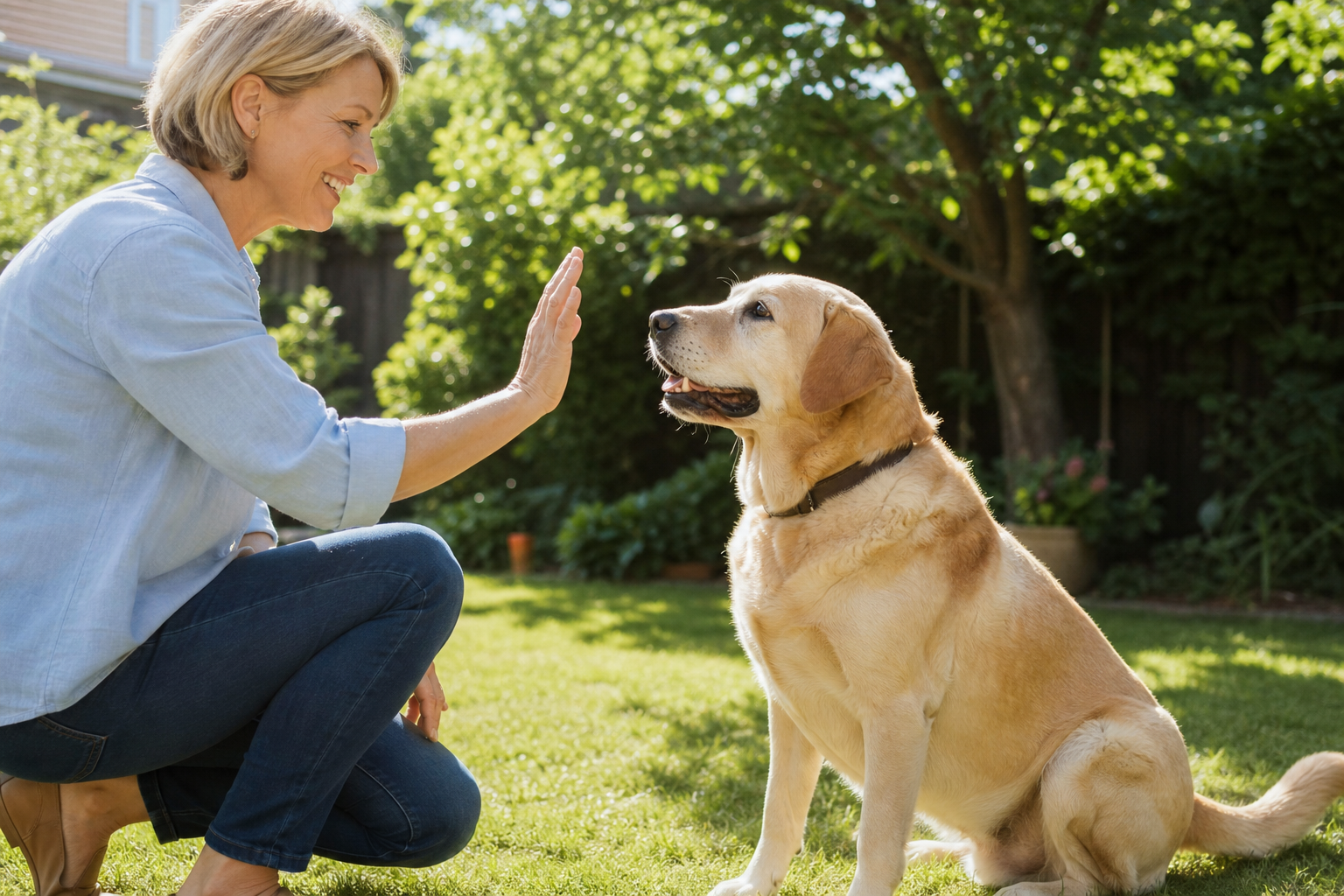
No, it is never too late to train a dog. While the 8 to 16 week window offers the greatest neuroplasticity for behavioral conditioning, dogs of any age can learn new behaviors and modify existing ones through systematic reinforcement. The puppy training timeline is the most efficient path, but it is not the only one.
Adult Dogs and Behavioral Modification
Dogs 12 months and older often respond well to structured reinforcement programs because they bring longer attention spans and more stable temperaments than young puppies. Entrenched habits do require more repetition and consistency than foundational commands introduced early in life, but lasting results are achievable with the right approach.
One client's 1.5-year-old labradoodle made significant behavioral gains through our structured program, demonstrating that the window for progress does not close at puppyhood. Our OKC training curriculum is designed to meet each dog at their current behavioral baseline, regardless of age, and build from there through progressive skill development.
How Do Rescue Dogs Respond to Structured Training?
Rescue dogs respond well to structured training when it is applied consistently and adapted to their individual history. Unknown histories, potential trauma responses, and variable socialization backgrounds all affect how a dog processes new expectations. These factors do not make behavioral modification impossible; they make individualized attention essential. The metro, including communities like Norman and Bethany, has a substantial rescue population drawn from local shelters and breed-specific organizations.
Structured reinforcement produces dependable responses even in dogs with significant behavioral gaps. Our board and train program is particularly effective for rescue dogs because it provides a structured daily environment with no gaps in consistency, which is exactly what dogs with uncertain backgrounds need most.
How Oklahoma City's Environment Shapes Your Puppy Training Timeline
Where you live directly affects how and when you can work through a structured puppy training schedule. The climate, geography, and seasonal patterns specific to the OKC metro create real constraints that any responsible owner needs to plan around. Our team serves puppies and dogs across the metro and surrounding communities, including Midwest City and Mustang, and we see these environmental factors affect progress regularly.
Seasonal Considerations for Outdoor Training in OKC
Summer temperatures in the metro routinely exceed 100°F from June through September. Puppies regulate body heat far less efficiently than adult dogs, making midday outdoor sessions genuinely dangerous during those months. Schedule outdoor work before 9 a.m. or after 7 p.m. to protect your companion from heat stress. Spring tornado season, which peaks from April into June, and winter ice storms create a separate challenge: outdoor schedules can be cancelled without warning.
Every owner needs an indoor protocol ready before the sirens sound or the roads glaze over. Hallway recall practice, stair navigation, scent games, and leash manners inside pet-friendly retail environments are all effective alternatives that keep your puppy's development on track when severe weather forces you inside. Building this parallel indoor routine early means a week of storms never becomes a week of lost progress.
Urban and Suburban Socialization Opportunities
The geographic spread of the metro works in your favor. The dense urban core near Bricktown and the Automobile Alley district offers high-distraction exposure to crowds, cyclists, varied surfaces, and other dogs. Scissortail, located in the downtown core, is one of the most productive controlled environments available for this kind of structured exposure.
For puppies in earlier developmental stages, quieter suburban neighborhoods in Nichols Hills and Warr Acres provide lower-distraction settings that match the progressive skill-building approach covered in earlier sections of this guide. Working with a professional dog trainer who understands these local environments helps you sequence socialization experiences appropriately for your puppy's current stage. Contact our OKC team at (405) 299-3386 to discuss which approach fits your dog.
Frequently Asked Questions
When should I start a puppy training schedule?
A structured puppy obedience schedule by age can begin as early as 7 to 8 weeks. The 8 to 16 week window is the most neurologically receptive period in a dog's development, and waiting until 6 months means forfeiting the growth stage where foundational learning takes hold most efficiently. Starting early does not mean demanding complex behaviors; it means introducing name recognition, basic cues, and structured routines while the brain is most receptive.
How long should each puppy training session last?
Puppies under 12 weeks benefit most from sessions of 3 to 5 minutes, repeated several times throughout the day. Between 12 and 24 weeks, sessions can extend to 5 to 10 minutes. Multiple short sessions consistently outperform a single long session because cognitive fatigue in young dogs leads to disengagement and undermines systematic reinforcement.
What are the most important commands to teach first?
During the 8 to 12 week growth stage, the four foundational behaviors are name recognition, sit, recall (come), and leash introduction. These establish the communication framework on which all subsequent progressive skill-building depends. Without reliable responses to these cues, advancing to stay, down, or distraction work becomes significantly harder.
How do I know if my puppy's training is on track?
A puppy on track at 12 weeks reliably responds to its name, offers a sit on cue, and follows on a loose leash for short distances. By 6 months, stay, down, leave it, and controlled recall with mild distractions should be consistent. If those milestones are not being met, a professional evaluation is warranted. Our board and train programs in Oklahoma City are specifically designed to address developmental gaps with individualized attention and structured daily routines.
Should I use a professional trainer or train at home?
Both approaches can produce results, but the optimal choice depends on the owner's schedule, the puppy's behavioral profile, and specific goals. Professional programs provide structured reinforcement, individualized techniques, and trainer expertise that accelerates progress in ways that informal home practice rarely matches. For owners weighing their options, our team can walk you through the differences between program formats to identify the right fit.
Does All Dogs Unleashed Dog Training OKC offer puppy-specific programs?
Yes. We provide professional obedience programs, board and train, and in-home sessions designed around each puppy's current growth stage, backed by a 30-day money-back guarantee and ongoing owner support. Your puppy's developmental window is open right now, and every week without a structured plan is a week of missed neurological opportunity. Call our team at (405) 299-3386 or visit our office at 101 Park Ave, Suite 1300, Oklahoma City, OK 73102 to discuss a program built around where your dog is today.
Ready to Get Started with All Dogs Unleashed Dog Training OKC?
Call (405) 299-3386 to speak with our team directly. We're ready to answer your questions, walk you through your options, and help you find the right solution for your needs. Whether you're just starting to plan or ready to move forward, we'll make the process simple and stress-free.
Reach out today and let's talk about how we can help.