Dog separation anxiety is one of the most misread behavior problems owners encounter, often mistaken for stubbornness or poor manners rather than a genuine stress response. Oklahoma City's unpredictable weather and shifting daily routines can intensify this condition quickly, leaving dogs in distress and owners facing damaged property or neighbor complaints.
All Dogs Unleashed Dog Training OKC works with dogs of every breed, size, and age to identify the specific signs of isolation distress and address them through structured, individualized training backed by a money-back guarantee. Recognize these signs in your dog? Our team can help you build a structured path forward.
Call (405) 299-3386 to speak with our team directly. We're ready to answer your questions, walk you through your options, and help you find the right solution for your needs. Whether you're just starting to plan or ready to move forward, we'll make the process simple and stress-free. Reach out today and let's talk about how we can help.
Key Takeaways
- Dog separation anxiety is a documented stress condition, not a training failure or personality flaw.
- Nine specific behavioral signs distinguish true isolation distress from general boredom or disobedience.
- Severity ranges along a spectrum, and matching the intervention to that severity is what produces lasting change.
- Structured training with individualized techniques produces reliable, lasting results where generic advice typically falls short.
- Early identification of the warning signs gives owners the best opportunity for a full behavioral recovery.
When Coming Home Means Damage and Complaints
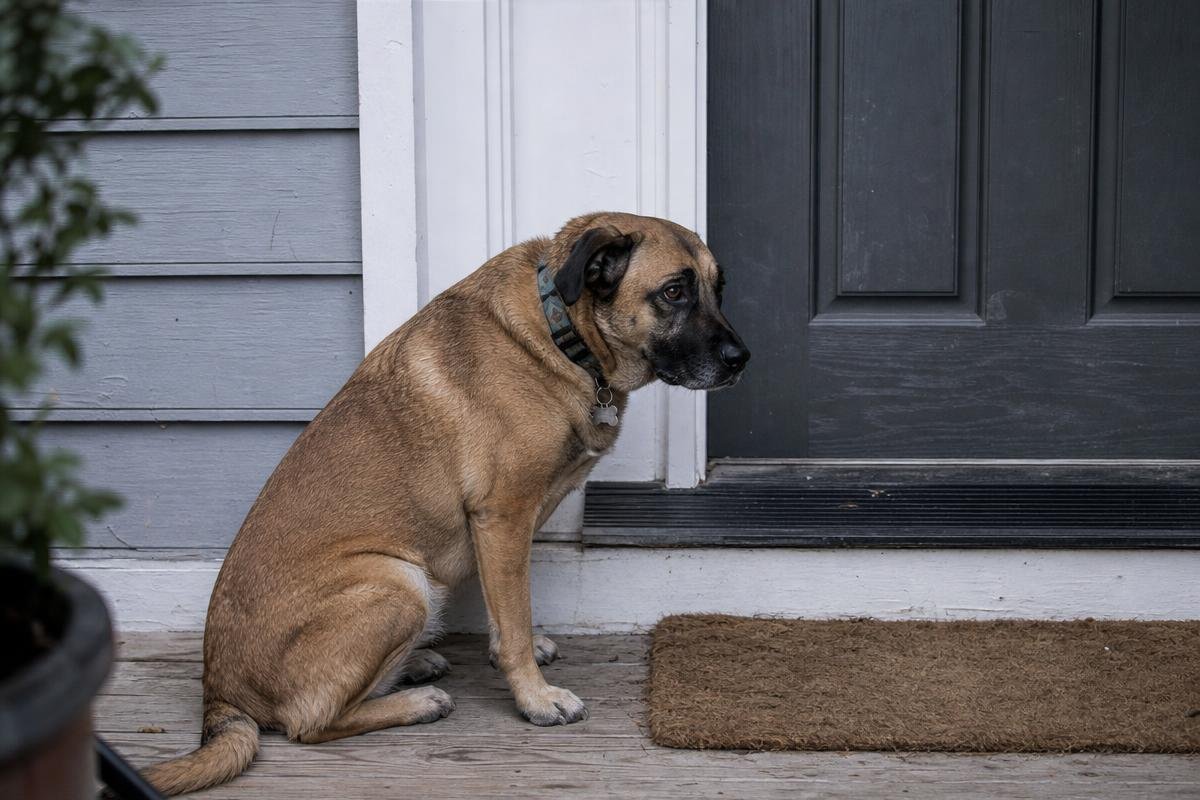
You came home to a destroyed door frame, a noise complaint from your Midtown neighbor, and a dog who looks like he has been in distress for hours. Most owners in the Oklahoma City area assume their dog acted out of spite or stubbornness. That assumption delays effective intervention by weeks or months, and the behavior does not improve on its own.
Dog separation anxiety is a clinical stress response, not a gap in manners or a dominance issue. Your dog is not misbehaving. Your dog is experiencing genuine psychological distress every time you leave, and the destructive or vocal behavior is a symptom of that distress, not a character flaw. Recognizing the difference between true isolation distress and ordinary boredom is the first step toward addressing it correctly.
This article identifies nine specific, observable signs that distinguish the condition from general misbehavior. Our team has earned hundreds of five-star reviews helping Oklahoma City owners work through exactly this problem. If you are already certain your dog needs structured support, you can review our dog training programs in Oklahoma City to see what a structured behavior modification path looks like.
What Is Canine Separation Anxiety, and Why Does It Happen?
Canine separation anxiety is a recognized clinical condition, documented extensively in peer-reviewed behavioral literature, in which a dog experiences acute psychological distress when separated from its primary attachment figure. This is not a reflection of poor ownership. It is a diagnosable problem with identifiable etiology, predictable symptom patterns, and established behavior modification protocols.
The Difference Between Separation Anxiety and Normal Boredom
Separation anxiety destruction targets exit points and begins at departure; boredom destruction is random and opportunistic. A bored dog chews whatever is accessible, a shoe left out, a couch cushion, a trash bin. An anxious dog directs its energy at specific barriers: doors, window frames, and crates. The distress begins at or immediately before the owner's departure and occurs almost exclusively during the owner's absence.
The progression typically moves from pacing and vocalization to elimination, and in severe cases, to self-injury. That predictable pattern is the clinical distinction between a dog that is understimulated and a dog that is genuinely distressed.
Predisposing Factors: Why Some Dogs Are More Vulnerable
Clinical literature identifies several consistent risk factors: abrupt routine changes, rehoming or shelter history, single-owner households, and prolonged confinement history. Dogs with prior rehoming experience are particularly predisposed, as attachment disruption is a primary driver of the behavior.
Genetic sensitivity plays a role as well, with certain working and companion breeds showing a lower threshold for isolation-related stress. Age is a factor too: senior dogs experiencing cognitive decline and puppies who missed early independence conditioning both fall into higher-risk groups. Understanding which of these factors applies to your dog shapes the right intervention.
Not sure whether your dog fits one of these risk categories? Our team can help you sort clinical anxiety from ordinary misbehavior.
The 9 Signs Your Oklahoma City Dog Has Separation Anxiety
The condition and ordinary misbehavior look different when you know what to examine. The signs below are clinically distinct from boredom or inadequate structure. Each one reflects a stress-driven response to isolation, not a choice your dog is making. If several of these patterns appear together, canine separation anxiety is the most likely explanation.
Sign 1: Destruction Targeting Exits, Not Random Objects
An affected dog chews, scratches, or digs specifically at doors, windows, and gate latches. This exit-focused destruction is the diagnostic marker that separates anxiety from boredom. A bored dog damages whatever is nearby; an anxious dog targets the barrier between itself and you.
Sign 2: Sustained Vocalization That Starts at Departure
Barking, howling, or whining that begins within minutes of your departure and continues throughout your absence is a primary behavioral sign of separation anxiety. In high-density neighborhoods like Mesta Park and the Paseo Arts District, this level of vocalization generates neighbor complaints and HOA violations. If a neighbor has already raised this concern, the behavior almost certainly predates that conversation.
Sign 3: Indoor Elimination Despite Being Housebroken
A reliably housebroken dog that eliminates indoors only during your absence is experiencing a physiological stress response, not a regression in house manners. Punishment after the fact does not address the cause and typically increases the underlying anxiety.
Sign 4: Physical Injuries from Escape Attempts
Broken nails, worn paw pads, or lacerations from breaching crates, doors, or fencing are red-flag severity markers. Self-injury at this level indicates the dog's distress has escalated beyond manageable thresholds and requires prompt professional assessment. If your dog is injuring itself trying to escape, waiting rarely helps. Let our team evaluate the severity and outline a plan.
Sign 5: Pre-Departure Anxiety Behaviors
Isolation distress frequently begins before you leave. Pacing, trembling, excessive salivation, or shadowing you from room to room as you gather keys and a coat are signs your dog has learned to read departure cues. These responses can appear 30 to 60 minutes before you actually exit the door.
Sign 6: Refusing Food During the Owner's Absence
Acute stress suppresses appetite. If a food-motivated dog consistently leaves meals or treats untouched during your absence but eats normally when you are home, that contrast is a reliable behavioral indicator of the condition.
Sign 7: Frantic, Prolonged Greeting After You Return
A greeting that remains frantic for more than two to three minutes after your return, regardless of how long you were gone, reflects sustained arousal rather than simple excitement. This disproportionate response indicates your dog did not regulate during the absence.
Sign 8: Inability to Tolerate Separation Even When You Are Home
Constant contact-seeking, doorway monitoring, or distress when placed in a separate room while you are still present is a precursor sign. This pattern often develops before full separation anxiety and signals that your dog has not built independent coping skills. Our dog training programs in Oklahoma City address this foundational deficit directly.
Sign 9: Repetitive Behaviors During or After Isolation
Circling, compulsive self-licking, or repetitive grooming that appears only during or immediately after isolation periods points to anxiety-driven displacement behavior. These patterns can intensify over time if the underlying cause goes unaddressed. Destructive and compulsive behaviors linked to canine separation anxiety share common roots with other behavior problems covered in our broader resources on behavior support for Oklahoma City dogs.
How Severe Is Your Dog's Separation Anxiety? Understanding the Spectrum
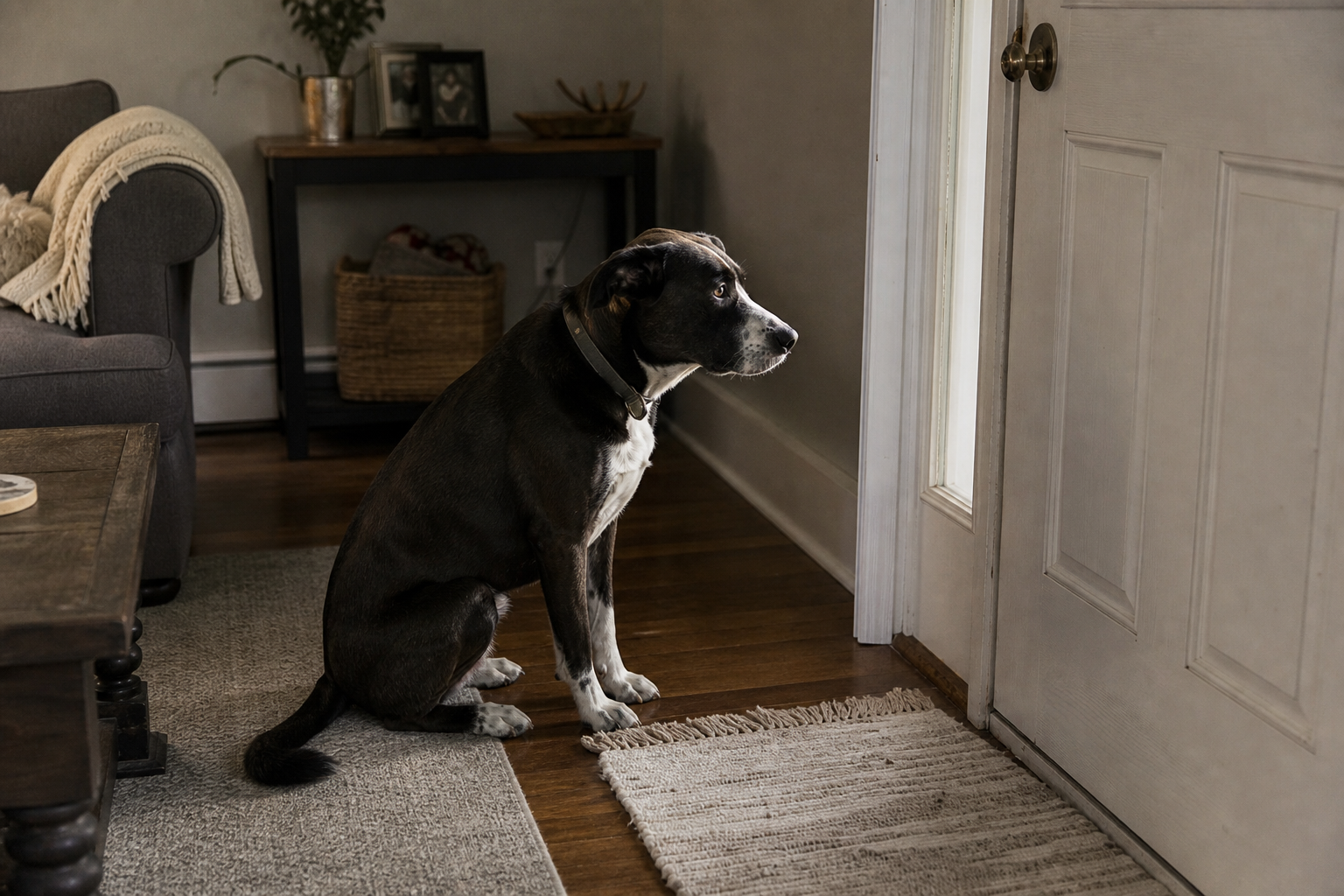
Not every case carries the same weight. Severity determines the intervention your dog actually needs, and misreading it is one of the most common reasons owners lose months waiting for a problem to resolve on its own. This condition rarely self-resolves without structured intervention.
Mild Separation Anxiety
A mild case typically involves one to three of the signs covered in the previous section, expressed at low intensity. Your dog settles within 10 to 15 minutes of your departure, causes no self-injury, and produces no significant property damage. At this level, graduated alone-time conditioning and a consistent daily routine are strategies owners can begin independently. Early intervention at this stage produces more dependable, lasting results than waiting for the behavior to escalate.
A dog managing brief absences comfortably in September can decompensate quickly during a stretch of triple-digit July heat that eliminates outdoor exercise, or during a January ice storm that keeps everyone housebound. Many Oklahoma dogs also carry an overlapping thunderstorm and tornado-siren phobia, and springtime storm season can push a mild case into a moderate one within a single volatile week.
Moderate to Severe Separation Anxiety
Four or more signs, escalation rather than settling, self-injury, or sustained destructive behavior indicate moderate to severe cases. This level requires systematic desensitization conducted by a qualified professional, and in the most serious cases, behavioral modification works best alongside veterinary behavioral counseling and, when appropriate, pharmacological support.
Our dog training programs in Oklahoma City are structured to address the condition at every point on this spectrum, with individualized techniques matched to your dog's specific severity level.
Professional Behavior Modification for Separation Anxiety in Oklahoma City
Behavior modification for dog anxiety is not a single technique. It is a structured, progressive protocol built around your dog's specific threshold for distress, applied consistently over time. Our team works with all breeds, sizes, and ages, from 16-week-old North American Mastiffs to adult labradoodles, corgis, and mini goldendoodles, because isolation distress does not discriminate by breed or size.
Systematic Desensitization: The Clinical Framework
The first step is identifying your dog's departure threshold, the precise moment anxiety begins. This might be when you pick up your keys, put on a coat, or simply walk toward the door. Our trainers then conduct repeated, controlled departures that stay below that threshold. Duration increases only when your dog demonstrates calm, settled behavior at the current level.
This is a foundational skill-building process, not a shortcut. The goal is a dog that can stay calm when left alone, building genuine confidence and independence rather than temporary suppression of symptoms.
Board and Train: Immersive Structured Rehabilitation
Dogs with moderate to severe cases often benefit most from our board and train program in Oklahoma City. The structured daily environment removes the reinforcement cycle that sustains anxiety at home. Your dog is no longer rehearsing the same distress response in the same familiar space. Clients consistently describe picking up a noticeably different dog after two weeks in the program. Reliable, lasting results come from immersive work, not occasional sessions.
In-Home Training: Addressing Environment-Specific Triggers
Some dogs develop anxiety responses tied to specific environmental cues in your home. A particular room, a garage door sound, or a daily departure routine can initiate the behavioral spiral before you have even left. In-home sessions allow our trainers to observe and address those precise triggers in the environment where they occur.
This approach is especially effective for dogs whose distress is context-dependent rather than generalized. Dog training for separation anxiety in Oklahoma City works best when the intervention matches the setting where the problem lives.
If your dog is showing signs of separation anxiety, our team can help. Call (405) 299-3386 to discuss which approach fits your dog's needs.
What Oklahoma City Dog Owners Can Do Right Now: Temporary Management Strategies
Professional behavior modification for dog anxiety when left alone produces the most dependable, lasting results. In the interim, several evidence-based management strategies can reduce your dog's distress and prevent the behavior from escalating while you arrange structured support.
Departure and Return Routines
Departure ritual desensitization is one of the most accessible interim tools available. Pick up your keys, put on your shoes, and grab your bag throughout the day without leaving. Repeating these cues randomly breaks the predictive chain that triggers pre-departure anxiety before you reach the door. On return, delay greeting your dog until it has remained calm for 60 to 90 seconds. That brief window begins to interrupt the hyper-greeting cycle that reinforces anxious anticipation.
Environmental Enrichment and Structured Confinement
Food-dispensing enrichment tools, such as frozen stuffed toys or puzzle feeders, give your dog a focused outlet during the early minutes of your absence, which is typically when anxiety peaks. Structured confinement can support this approach, but the space must be introduced gradually. Placing an already-anxious dog into an unconditioned crate typically worsens the behavior rather than containing it.
Owners across the metro should note that Oklahoma's triple-digit summer heat makes leaving a dog in a vehicle or unventilated space both dangerous and illegal. Indoor confinement with reliable climate control is the only responsible option during warm months. Our dog training programs in Oklahoma City address confinement conditioning as part of a structured behavior modification plan.
Veterinary Involvement in Severe Cases
Short-term anxiolytics prescribed by a veterinarian, used alongside behavior modification for dog anxiety, produce more dependable outcomes than either approach alone. This is a clinically recognized multi-modal strategy. Medication does not replace structured behavioral work; it reduces the physiological arousal threshold enough for that work to take hold. If your dog's distress is severe, contact your veterinarian before implementing any confinement protocol.
Why Oklahoma City Owners Trust All Dogs Unleashed for Separation Anxiety Training
Our practice has earned hundreds of five-star reviews with a 5.0 average rating from owners across the metro, from Edmond and Moore to Nichols Hills and Midwest City. That record reflects a consistent outcome: dogs that once could not tolerate being left alone developing reliable, calm behavior through structured, individualized programs. Read what our Oklahoma City clients are saying about results they did not expect to see this quickly.
Individualized Attention for Every Dog
No two cases present identically, and our team does not treat them as if they do. Our trainers, including Layton and Dylan, build each program around the specific dog in front of them: breed, age, history, and severity level all shape the approach. We have worked with 16-week-old North American Mastiffs, 1.5-year-old labradoodles, mini golden doodles, and corgis.
The program your dog receives is built for your dog, not adapted from a generic template. Owners also receive a transparent program structure before committing, so there are no surprises about what the process requires or how long it takes.
Lifetime Support and a Money-Back Guarantee
Our team backs every separation anxiety training program with a money-back guarantee and lifetime support. If your dog's behavior does not reach the goals established at the start of the program, you are not left without recourse. Lifetime support means that as your dog's environment changes, whether a move, a schedule shift, or a new household member, you have continued access to guidance.
Our office at 101 Park Ave, Suite 1300, Oklahoma City, OK 73102 serves as a centrally located resource for owners across the metro seeking dependable, lasting results.
Separation Anxiety and Oklahoma City's Unique Environment
Oklahoma's Climate and Its Effect on Dog Behavior
Oklahoma's climate is among the most volatile in the continental United States, and that volatility has direct consequences for dogs predisposed to isolation distress. Severe thunderstorms, tornado warnings, and ice storms all force extended indoor confinement and disrupt outdoor exercise routines, both documented triggers. Dogs accustomed to daily activity at Lake Hefner trails or Scissortail Park experience acute routine disruption when weather or a schedule change cuts that activity short.
Dogs that experienced storm-related shelter-in-place orders or temporary displacement may show acute spikes following those events. If your dog deteriorated after a tornado warning last spring, that disruption is a recognized predisposing trigger, not a coincidence. The underlying mechanisms are addressed in our dog training programs in Oklahoma City, which target the behavior at its behavioral root.
High-Density Neighborhoods and the Real Cost of Untreated Anxiety
In Bricktown and other shared-wall residential pockets downtown, a dog's vocalization during your absence carries consequences well beyond a welfare concern. Neighbor complaints, HOA violations, and lease terminations are real outcomes for owners who delay addressing the behavior. Untreated anxiety in a dense residential building is a social and financial liability, not simply a training inconvenience.
Our team serves owners across the metro from our office at 101 Park Ave, Suite 1300, and we understand exactly what it means to manage an anxious dog in a shared-wall building. Addressing it now protects your housing situation and your dog's quality of life.
Frequently Asked Questions
How Do I Know If My Dog Is Bored or Actually Anxious?
Boredom-driven behavior is opportunistic. Your dog chews the couch because it is available, not because you left. Separation anxiety follows a departure-triggered pattern: distress begins at or before the moment you leave and stops when you return. Record a short video of your dog during a brief absence. That footage is the most reliable self-diagnostic tool available.
Can Separation Anxiety Be Cured, or Only Managed?
Many dogs achieve full independence through systematic desensitization and consistent behavior modification for dog anxiety. Others reach a functional threshold where the distress no longer disrupts daily life, even if some sensitivity remains. Outcome depends on severity, history, and how consistently the protocol is applied.
How Long Does Treatment Take?
Mild cases often show measurable improvement within four to eight weeks of graduated departure work. Moderate to severe dog separation anxiety typically requires three to six months of structured behavioral modification. Progress is not linear. Plateaus are normal and should not be read as regression.
Is Board and Train Right for a Dog With Separation Anxiety?
It is appropriate for many dogs, particularly when the home environment contains strong departure cues or the owner's schedule does not allow the required training frequency. Our board and train program in Oklahoma City provides the structured daily routine that systematic desensitization requires to produce reliable results.
My Dog Is Hurting Itself When I Leave. What Should I Do?
Self-injury during absences requires immediate professional intervention. Call our team at (405) 299-3386 to schedule an assessment. A veterinary evaluation should occur in parallel to rule out pain-related contributors and to discuss whether pharmacological support is appropriate alongside behavior modification.
Do You Offer In-Home Training for Separation Anxiety in Oklahoma City?
Yes. In-home sessions allow our trainers to observe and address the specific environmental cues triggering your dog's response, from door-departure rituals to leash-grabbing sounds. This format is particularly effective when location-specific triggers are driving the behavior.
If your dog shows any of the nine signs covered in this article, a professional assessment is the most productive next step. Separation anxiety does not resolve on its own, but with the right protocol, most dogs make real, measurable progress. Call (405) 299-3386 or visit us at 101 Park Ave, Suite 1300, Oklahoma City, OK 73102. The sooner the behavior is assessed, the more options remain available to you.
Ready to Get Started with All Dogs Unleashed Dog Training OKC?
Call (405) 299-3386 to speak with our team directly. We're ready to answer your questions, walk you through your options, and help you find the right solution for your needs. Whether you're just starting to plan or ready to move forward, we'll make the process simple and stress-free. Reach out today and let's talk about how we can help.